


Summary
Discover the most unique and fascinating things you can see and experience in Nepal. From Mount Everest and the world's highest Himalayan peaks to the Living Goddess Kumari, the birthplace of Lord Buddha, ancient temples, rare wildlife, traditional villages and colourful festivals, explore what makes Nepal truly special. Learn about Nepal's rich culture, natural beauty, adventure opportunities and unforgettable travel experiences.
Nepal is a country where extraordinary experiences are part of everyday life. Home to Mount Everest, the world’s highest mountain, ancient Hindu and Buddhist heritage, remarkable wildlife, remote Himalayan villages and centuries-old living traditions. Things You Can See and Experience Only in Nepal with the culture and combination of experiences that is difficult to find anywhere else.
But there is much more to Nepal than mountains.
You can witness a Living Goddess in the heart of Kathmandu, walk through medieval cities where traditional craftsmanship continues to thrive, explore the birthplace of Lord Buddha, search for a rare bird found nowhere else in the world, watch the sunrise over eight of the world’s highest mountains and experience warm hospitality in remote Himalayan communities.
Within a relatively small geographical area, Nepal brings together subtropical jungles, terraced hillsides, alpine forests, glacial valleys and some of the most dramatic mountain landscapes on Earth.
What makes Nepal particularly special is the connection between its natural environment, people, culture and spirituality. A journey here is not simply about visiting beautiful places. It is about experiencing a living culture that has evolved over centuries.
If you are planning a holiday in the Himalayas, here are some of the most fascinating things you can see and experience in Nepal.
Major Highlights – Things You Can See and Experience Only in Nepal
1. See Mount Everest – The Highest Mountain on Earth
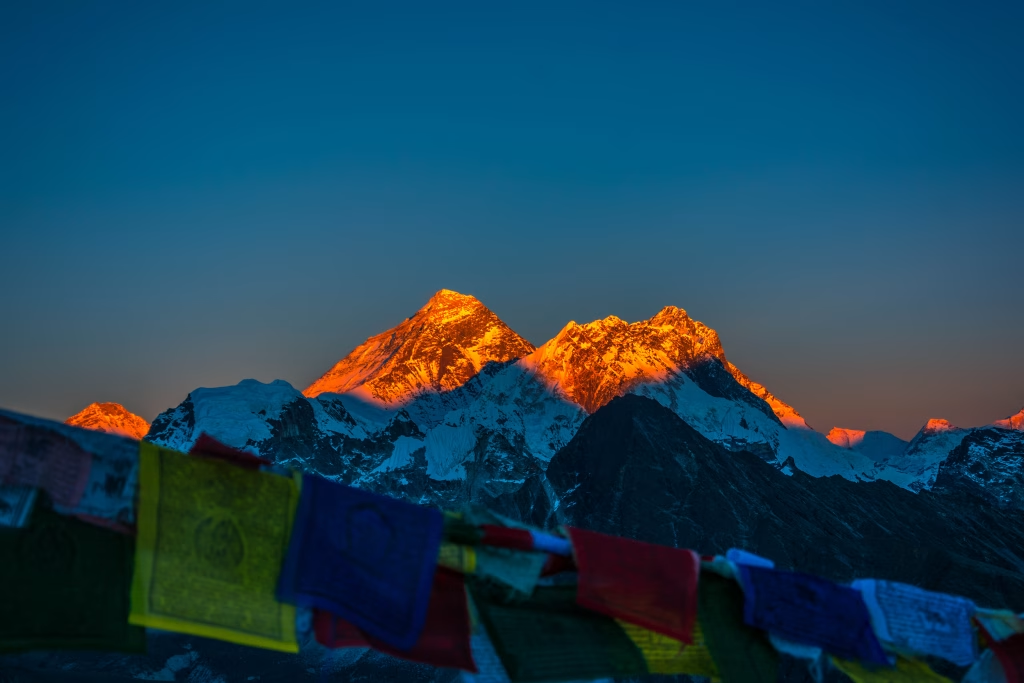
No discussion about Nepal’s uniqueness would be complete without Mount Everest.
Standing at 8,848.86 metres above sea level, Mount Everest, locally known as Sagarmatha in Nepali and Chomolungma in Tibetan, is the highest mountain on Earth. Located along the Nepal–China border, it has inspired explorers, mountaineers, photographers and travellers for generations.
What makes experiencing Everest in Nepal special is that you do not need to be a mountaineer to appreciate its extraordinary beauty.
There are several ways to experience the Everest region:
- Trek to Everest Base Camp and stand beneath the world’s highest mountain.
- Watch sunrise over Everest from Kala Patthar.
- Take a scenic mountain flight from Kathmandu.
- Explore Sherpa villages and traditional Buddhist monasteries.
- Enjoy spectacular mountain scenery from comfortable Himalayan lodges.
- Experience the legendary hospitality of the Sherpa people.
The Everest Base Camp Trek is one of the world’s most recognised Himalayan journeys. Along the route, you pass through Namche Bazaar, Tengboche, Dingboche and traditional Sherpa settlements while enjoying views of Everest, Lhotse, Nuptse, Ama Dablam and other magnificent peaks.
For travellers who prefer not to undertake a demanding trek, an Everest mountain flight offers an unforgettable aerial perspective of the Himalayas.
Recommended experiences:
- Everest Base Camp Trek – 12 Days
- Everest Luxury Trek – 12 Days with Helicopter and Luxury Lodges
- Nepal Tour Packages
2. Witness the Living Goddess Kumari in Kathmandu

One of the most fascinating cultural traditions you can encounter in Nepal is the worship of the Living Goddess Kumari.
Unlike most religious traditions, where deities are represented through statues or paintings, the Kumari tradition involves the worship of a young girl believed to embody the divine feminine energy of Goddess Taleju.
The tradition is particularly associated with the Newar community of the Kathmandu Valley. A young girl from the Shakya Buddhist community is selected according to traditional religious and cultural criteria and is revered by both Hindus and Buddhists.
The Royal Kumari of Kathmandu resides in the historic Kumari Ghar, a beautifully carved traditional building situated in Kathmandu Durbar Square.
Visitors may have an opportunity to glimpse the Kumari during designated viewing times, although appearances are not guaranteed.
The experience becomes particularly special during Indra Jatra, one of Kathmandu’s most important traditional festivals. During the celebrations, the Living Goddess is carried through the historic streets in a beautifully decorated chariot, accompanied by traditional music, dancers and thousands of devotees.
It is a remarkable example of how ancient religious traditions remain part of everyday cultural life in Nepal.
Where to experience it: Kathmandu Durbar Square, Basantapur.
Recommended experience: Kathmandu Cultural Tours
3. Discover Lumbini – The Birthplace of Lord Buddha

Nepal holds an important place in the spiritual history of the world because it is the birthplace of Siddhartha Gautama, who later became known as Gautama Buddha.
Lumbini, situated in the southern Terai plains of Nepal, is one of the most important Buddhist pilgrimage destinations in the world.
It is believed that Queen Maya Devi gave birth to Siddhartha Gautama in Lumbini around the sixth century BCE.
Today, the UNESCO World Heritage Site of Lumbini is a peaceful pilgrimage destination visited by Buddhist followers, historians, spiritual travellers and curious visitors from around the world.
Important places to explore include:
- Maya Devi Temple: The sacred temple marking the traditional birthplace of Buddha.
- Ashoka Pillar: An ancient stone pillar erected by Emperor Ashoka during his pilgrimage to Lumbini in the third century BCE.
- Sacred Garden: A peaceful area containing archaeological remains and important religious sites.
- World Peace Pagoda: A striking white Buddhist monument.
- International Monastic Zone: Monasteries built by Buddhist communities from different countries, each reflecting distinctive architectural styles and traditions.
Walking through the monastery area is particularly interesting because you can observe how Buddhist communities from countries such as Thailand, Myanmar, China, Japan, South Korea and other nations express their spiritual traditions through architecture and art.
Lumbini offers an entirely different atmosphere from the busy streets of Kathmandu and the adventurous trails of the Himalayas.
It is a place for reflection, learning and understanding the spiritual heritage of Nepal.
Recommended experience: Include Lumbini in a comprehensive Nepal Tour Package.
4. Explore a Country with the World’s Only Non-Rectangular National Flag

Here is an interesting fact about Nepal that many international visitors do not know.
Nepal has the only national flag in the world that is neither rectangular nor square.
Instead of the conventional rectangular design used by almost every other country, Nepal’s national flag consists of two overlapping triangular pennants.
The flag has a deep blue border and a crimson-red background, with a white crescent moon in the upper section and a white sun in the lower section.
The two triangular shapes are traditionally associated with the Himalayan mountains and Nepal’s historical heritage. The moon and sun are important national symbols.
The flag’s distinctive shape makes it one of the most recognisable national flags in the world.
You will see it flying above government buildings, temples, mountain viewpoints and traditional homes throughout Nepal.
It is a small but fascinating detail that reflects the country’s distinctive national identity.
5. See Eight of the World’s Fourteen Highest Mountains Above 8,000 Metres

Nepal is a dream destination for mountain lovers.
One extraordinary geographical fact is that eight of the world’s fourteen mountains higher than 8,000 metres are located in Nepal, either entirely within the country or along its international borders.
These mountains are:
- Mount Everest – 8,848.86m
- Kanchenjunga – 8,586m
- Lhotse – 8,516m
- Makalu – 8,485m
- Cho Oyu – 8,188m
- Dhaulagiri I – 8,167m
- Manaslu – 8,163m
- Annapurna I – 8,091m
These magnificent mountains create some of the most spectacular landscapes on Earth.
However, Nepal’s Himalayan beauty is not limited to the famous eight-thousanders. Thousands of smaller peaks, glaciers, alpine lakes, deep valleys and remote mountain settlements create an extraordinary natural environment.
You can experience these landscapes through different trekking routes, from comfortable short walks to demanding high-altitude expeditions.
Some popular choices include:
- Everest Base Camp Trek
- Annapurna Base Camp Trek
- Annapurna Circuit Trek
- Manaslu Circuit Trek
- Langtang Valley Trek
- Poon Hill Trek
- Kanchenjunga Circuit Trek
For experienced mountaineers, Nepal also offers technical climbing objectives and high-altitude expeditions.
Explore our Nepal Trekking Packages and Nepal Expeditions and Peak Climbing.
6. Search for the Spiny Babbler – A Bird Found Only in Nepal

Nepal is a wonderful destination for wildlife enthusiasts, but one of its most fascinating natural treasures is a small bird called the Spiny Babbler.
Scientifically known as Acanthoptila nipalensis, the Spiny Babbler is endemic to Nepal. This means that it is naturally found only in Nepal and has not been recorded naturally elsewhere in the world.
It is particularly interesting because it remained poorly known for a long period after its original scientific description and was rediscovered in the twentieth century.
The bird is generally associated with scrubland, bushy hillsides and suitable vegetation in Nepal’s middle hills.
Unlike colourful Himalayan pheasants, the Spiny Babbler has a relatively understated appearance. Its significance comes from its rarity and restricted natural distribution.
For birdwatchers, naturalists and wildlife photographers, searching for this endemic species can become a special part of a Nepal journey.
Nepal is also home to an extraordinary range of other birdlife, including Himalayan monals, blood pheasants, hornbills, kingfishers, eagles and migratory wetland species.
The country’s varied elevations and habitats support more than 850 recorded bird species.
Where to explore: Kathmandu Valley, the middle hills, Chitwan, Koshi Tappu and other birding destinations, depending on the species and season.
Recommended experience: Combine birdwatching with a Nepal Wildlife Tour.
7. Experience the Extraordinary Wildlife of Chitwan National Park

Imagine travelling from the cool Himalayan foothills to subtropical forests, grasslands and river wetlands where wild rhinoceroses roam.
This is one of the remarkable contrasts that makes Nepal special.
Chitwan National Park, located in the southern plains of Nepal, is a UNESCO World Heritage Site and one of Asia’s important wildlife conservation areas.
The park is famous for its population of endangered one-horned rhinoceroses and is also home to the Royal Bengal tiger, Asian elephant, sloth bear, leopard, gharial crocodile and numerous bird species.
A visit to Chitwan offers several memorable experiences:
Jeep safari
Travel through forest tracks and open grasslands with experienced naturalists while looking for rhinoceroses, deer, wild boar and other wildlife.
Canoe ride
A peaceful canoe journey along the Rapti or other suitable rivers offers opportunities to observe crocodiles, waterbirds and river ecosystems.
Birdwatching
Chitwan is an exceptional destination for bird enthusiasts, with hundreds of recorded species.
Tharu cultural experience
Meet members of the indigenous Tharu community and learn about their distinctive architecture, food, traditions, music and relationship with the surrounding natural environment.
Nature walks
Explore the forest environment with qualified naturalists, following park rules and safety guidance.
One of the most rewarding aspects of visiting Chitwan is seeing how wildlife conservation and local community traditions are connected.
Recommended experience: Nepal Wildlife Tour – 14 Days.
8. Walk Through Medieval Cities Where Ancient Traditions Are Still Alive

The Kathmandu Valley is one of the most fascinating cultural destinations in South Asia.
It is home to three historic cities: Kathmandu, Patan and Bhaktapur.
Together with other important monuments, these cities form the Kathmandu Valley UNESCO World Heritage property.
What makes the valley special is the extraordinary concentration of ancient temples, palaces, Buddhist stupas, traditional courtyards, wood carvings, metalwork and Newari architecture.
Kathmandu
Explore Kathmandu Durbar Square, Swayambhunath, Boudhanath and Pashupatinath.
Each site offers a different perspective on Nepal’s Hindu and Buddhist heritage.
Patan
Patan, also known as Lalitpur, is famous for its traditional craftsmanship, bronze sculptures, metalwork, wood carving and Buddhist heritage.
Visit Patan Durbar Square and explore the narrow streets where traditional artisans continue their work.
Bhaktapur
Bhaktapur is particularly special for its preserved medieval atmosphere.
Explore Nyatapola Temple, Pottery Square, the 55-Window Palace and traditional Newari settlements.
You may also see potters shaping clay by hand, artisans working with wood and metal, and local families preparing traditional Newari food.
The experience is not simply about visiting historical monuments. It is about seeing how traditional craftsmanship and community life remain connected to the city’s identity.
Recommended experience: Nepal Cultural Tours.
9. Witness the Rhododendron Forests Turn the Hills Red and Pink

Spring in Nepal brings one of the country’s most beautiful natural spectacles: blooming rhododendron forests.
Rhododendron, locally known as Laligurans, is Nepal’s national flower.
During spring, particularly from March to May depending on altitude and location, hillsides and mountain forests come alive with colourful rhododendron blossoms.
The colours range from deep red and pink to lighter shades and white.
Some of the best places to experience rhododendron forests include:
- Ghorepani and Poon Hill.
- Annapurna Conservation Area.
- Langtang region.
- Milke Danda in eastern Nepal.
- Various forest trails throughout the middle hills.
The Poon Hill region is particularly rewarding because you can combine beautiful rhododendron forests with spectacular Himalayan sunrise views.
Walking through these forests while enjoying views of Annapurna and Dhaulagiri is one of the most memorable spring experiences in Nepal.
Recommended experience: Poon Hill Trek – 4 Days.
10. Experience Hinduism and Buddhism Living Side by Side

Nepal is one of the most fascinating destinations for travellers interested in religion and spirituality.
Hinduism and Buddhism have coexisted in Nepal for centuries, influencing the country’s architecture, art, festivals, daily life and traditional communities.
In Kathmandu, it is possible to visit Hindu temples and Buddhist stupas within a relatively short distance.
Pashupatinath Temple is one of the most sacred Hindu temples dedicated to Lord Shiva. It attracts pilgrims from Nepal, India and other parts of the world.
Boudhanath Stupa is one of the largest Buddhist stupas in the world and an important centre of Tibetan Buddhist culture.
Swayambhunath, commonly known as the Monkey Temple, is another important Buddhist heritage site with a fascinating combination of Buddhist and Hindu symbolism.
The relationship between these traditions is particularly interesting in the Kathmandu Valley, where religious practices, festivals and community traditions sometimes overlap.
For visitors, this offers a rare opportunity to understand how different spiritual traditions have shaped the identity of one country.
Recommended experience: A private Kathmandu Cultural Tour.
11. Celebrate Festivals That Transform Entire Cities and Villages
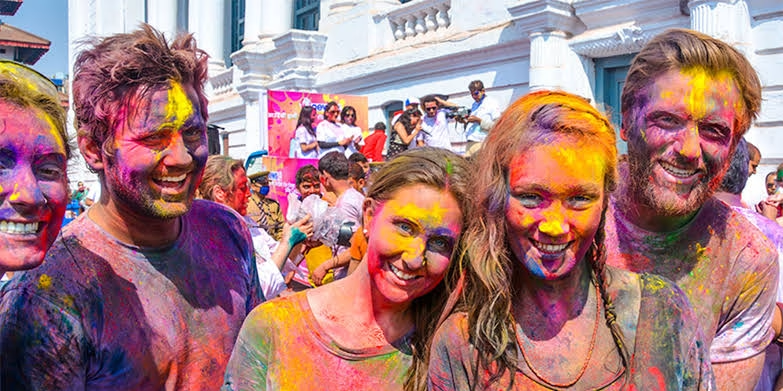
Nepal is a country of festivals.
Almost every season brings celebrations connected with religion, agriculture, family, community and the changing seasons.
Some festivals are celebrated throughout the country, while others are closely associated with particular ethnic communities or regions.
Dashain
Dashain is Nepal’s major Hindu festival, celebrating the victory of good over evil.
Families come together, elders bless younger family members with tika and jamara, and communities celebrate with traditional food and family gatherings.
Tihar
Known as the festival of lights, Tihar is celebrated over five days.
Different days are dedicated to crows, dogs, cows and oxen, followed by Laxmi Puja and Bhai Tika.
Homes and streets are decorated with oil lamps, candles and colourful lights.
Holi
Holi, the festival of colours, is celebrated with coloured powders, water and music.
It is one of the most cheerful festivals for visitors interested in experiencing Nepal’s festive atmosphere.
Indra Jatra
Celebrated in Kathmandu, Indra Jatra is one of the valley’s most spectacular traditional festivals.
It includes chariot processions, traditional masked dances and the public appearance of the Living Goddess Kumari.
Bisket Jatra
Bhaktapur celebrates Bisket Jatra with traditional chariot processions and distinctive local rituals around the Nepali New Year.
Experiencing a festival in Nepal provides an opportunity to understand the country’s cultural identity beyond museums and historical monuments.
Travellers should remember that festivals are important religious and community occasions. Visitors should observe local customs, respect photography restrictions and follow the guidance of their local hosts.
12. Experience Himalayan Village Life and Traditional Hospitality

One of the most rewarding experiences in Nepal is spending time in traditional villages.
Beyond the famous tourist destinations, Nepal has hundreds of settlements where people continue to maintain traditional lifestyles, architecture, agricultural practices, local food and community customs.
You can experience the hospitality of different communities, including Sherpa, Gurung, Tamang, Magar, Thakali, Newar and other ethnic groups.
Each community has its own language, traditions, food, clothing, architecture and cultural identity.
Some memorable village experiences include:
- Staying in a traditional Gurung village in the Annapurna region.
- Exploring Sherpa settlements in the Everest region.
- Visiting Tamang villages in Langtang.
- Discovering Newari architecture and traditional food in the Kathmandu Valley.
- Experiencing traditional Thakali hospitality in the Mustang region.
- Visiting remote settlements along the Manaslu trekking route.
In some destinations, travellers can also stay in community homestays, enjoy locally prepared meals and learn about traditional farming and village life.
These encounters are often among the most memorable parts of a Nepal holiday because they provide opportunities to connect with local people rather than simply observe landscapes.
13. Cross Dramatic Himalayan Landscapes Within a Relatively Small Country

One of Nepal’s most remarkable geographical features is its extraordinary variation in altitude and climate.
The country rises from the lowland Terai plains to the highest point on Earth within a relatively short north–south distance.
As you travel through Nepal, you can experience:
- Subtropical forests and grasslands.
- Fertile agricultural valleys.
- Terraced hillsides and traditional settlements.
- Temperate forests filled with oak and rhododendron.
- Alpine meadows and glacial valleys.
- High-altitude deserts and snow-covered Himalayan peaks.
This variation creates an exceptional diversity of plants, animals, landscapes and cultures.
For example, a journey combining Kathmandu, Chitwan and Pokhara introduces visitors to three very different environments.
Kathmandu offers ancient heritage and traditional city life. Chitwan introduces the subtropical wildlife environment. Pokhara provides lakeside relaxation and spectacular views of the Annapurna Himalayas.
A longer journey can include remote mountain destinations, high-altitude trekking routes and culturally distinctive Himalayan settlements.
This geographical diversity is one of the reasons Nepal offers so many different travel experiences.
14. See the Mysterious High-Altitude Landscapes of Mustang

Mustang is one of Nepal’s most fascinating destinations.
Located in the rain-shadow region of the Annapurna and Dhaulagiri ranges, Upper Mustang has a dramatic landscape of dry valleys, eroded cliffs, colourful rock formations and traditional settlements.
The region has strong historical and cultural connections with Tibet.
Its distinctive landscape is very different from the green forests and terraced hillsides found in other parts of Nepal.
Some highlights include:
- The ancient walled city of Lo Manthang.
- Traditional Tibetan-influenced villages.
- Ancient monasteries and Buddhist cultural sites.
- Dramatic cliffs and high-altitude desert scenery.
- Traditional mud-brick architecture.
- Panoramic views of the Annapurna and Dhaulagiri ranges.
The region is particularly appealing to travellers interested in cultural exploration, photography, history and less conventional Himalayan journeys.
Upper Mustang is a restricted trekking area, so visitors must arrange the required permits and travel in accordance with current regulations.
It is also possible to explore the lower Mustang region around Jomsom and Muktinath without undertaking the full Upper Mustang journey.
15. Enjoy the Unique Taste of Nepali Food

Food is another important part of experiencing Nepal.
Nepali cuisine is influenced by geography, agriculture, religion and the traditions of different ethnic communities.
Dal Bhat is one of the country’s most familiar traditional meals. It generally consists of steamed rice, lentil soup, vegetables, pickles and sometimes meat.
However, Nepal’s food culture extends far beyond Dal Bhat.
Some dishes and food experiences worth discovering include:
- Momos: Popular dumplings filled with vegetables or meat, served steamed or fried.
- Newari cuisine: A rich culinary tradition featuring dishes such as bara, yomari, chatamari and choila.
- Thakali food: Known for its traditional set meals with rice, lentils, vegetables and pickles.
- Sel Roti: A traditional ring-shaped rice bread commonly prepared during festivals.
- Gundruk: Fermented leafy vegetables that are an important part of traditional Nepali food.
- Dhido: A traditional dish made from millet or buckwheat flour.
- Juju Dhau: Bhaktapur’s famous traditional sweet yoghurt.
You can explore local food markets, visit traditional restaurants, take a cooking class or enjoy a meal in a village home.
For curious travellers, food provides another wonderful way to understand Nepal’s cultural diversity.
16. Watch the Sunrise over the Himalayas from Spectacular Viewpoints

There are few experiences more memorable than watching the first sunlight illuminate the Himalayan mountains.
Nepal offers several beautiful viewpoints where travellers can enjoy sunrise and sunset over the mountains without undertaking a demanding trek.
Some of the most popular locations include:
Sarangkot, Pokhara
Sarangkot offers spectacular views of the Annapurna range, Machhapuchhre and the surrounding Pokhara Valley.
Nagarkot
Located near Kathmandu, Nagarkot is a popular hill station known for its Himalayan panoramas and peaceful surroundings.
Poon Hill
Poon Hill is one of Nepal’s most famous trekking viewpoints, offering a spectacular sunrise over Annapurna and Dhaulagiri.
Kala Patthar
For trekkers in the Everest region, Kala Patthar offers one of the most iconic mountain panoramas, including a close view of Mount Everest.
The experience is different at each location, but the feeling of watching the Himalayan peaks gradually glow in the morning sunlight is something that stays with travellers long after their journey ends.
17. Experience Adventure Activities in the Heart of the Himalayas
Nepal is one of the world’s most exciting adventure travel destinations.
While trekking is the country’s most famous outdoor activity, there are many other ways to experience its mountains, rivers, forests and landscapes.
Popular adventure experiences include:
- White-water rafting on Himalayan rivers.
- Paragliding over Pokhara Valley.
- Mountain biking through traditional villages and mountain trails.
- Bungee jumping in spectacular river gorges.
- Ziplining above forested valleys.
- Rock climbing and canyoning.
- Peak climbing and technical mountaineering.
- Helicopter sightseeing and mountain flights.
For experienced climbers, Nepal offers opportunities ranging from trekking peaks to challenging technical expeditions.
Popular climbing objectives include Island Peak, Mera Peak, Lobuche East and Ama Dablam.
More demanding expeditions can be arranged for experienced mountaineers depending on the mountain, season, climbing regulations and logistical requirements.
Explore our Nepal Expeditions and Peak Climbing for more information.
18. Experience Nepal’s Extraordinary Combination of Culture, Nature and Spirituality in One Journey

Perhaps the most remarkable thing about Nepal is that you can combine so many different experiences within a single holiday.
Imagine beginning your journey in Kathmandu, exploring ancient temples and medieval royal squares.
Continue to Chitwan to discover the country’s wildlife and traditional Tharu culture.
Travel to Pokhara to enjoy peaceful lakeside surroundings and views of the Annapurna Himalayas.
Then spend several days trekking through traditional villages, rhododendron forests and mountain landscapes.
Alternatively, extend your journey to Lumbini to explore the birthplace of Buddha or travel to Mustang to discover ancient Himalayan culture.
Nepal allows you to combine:
- Cultural sightseeing.
- Wildlife and birdwatching.
- Spiritual and pilgrimage experiences.
- Luxury mountain holidays.
- Family adventures.
- Short Himalayan hikes.
- Multi-day trekking.
- Peak climbing and mountaineering.
This combination makes Nepal suitable for a wide range of travellers, from first-time visitors and families to experienced trekkers, photographers, wildlife enthusiasts and mountaineers.
What Makes Nepal Different from Other Himalayan Destinations?
Many countries offer beautiful mountains, wildlife and ancient cultural attractions. What makes Nepal special is the way these experiences come together.
Here are some of the country’s most distinctive characteristics:
| What makes Nepal special | Why it matters |
|---|---|
| World’s highest mountain | Mount Everest is a defining symbol of the Himalayas |
| Eight mountains above 8,000m | Exceptional opportunities for trekking and mountaineering |
| Unique national flag | The only national flag that is not rectangular or square |
| Living Goddess Kumari | A distinctive religious tradition in the Kathmandu Valley |
| Birthplace of Buddha | One of the world’s most important Buddhist pilgrimage destinations |
| Spiny Babbler | An endemic bird found naturally only in Nepal |
| Extraordinary biodiversity | A wide variety of ecosystems within a relatively small country |
| Medieval living heritage | Historic cities with active cultural and craft traditions |
| Diverse ethnic communities | Distinctive languages, food, festivals and village lifestyles |
| Dramatic geographical variation | From subtropical lowlands to the highest Himalayan peaks |
Best Way to Experience the Unique Things Nepal Has to Offer
The best way to discover Nepal depends on your interests, available time and preferred travel style.
Some visitors prefer a comfortable cultural holiday, while others want to combine wildlife experiences with Himalayan trekking.
Here are some suggested travel styles.
For First-Time Visitors
A 7–10-day private Nepal holiday is an excellent introduction.
You can combine Kathmandu’s heritage sites, Pokhara’s mountain scenery and Chitwan’s wildlife experiences.
Explore our Nepal Tour Packages for suitable itineraries.
For Culture and Spirituality Lovers
A cultural journey through Kathmandu, Patan, Bhaktapur and Lumbini offers a deeper understanding of Nepal’s history, Hindu and Buddhist heritage and traditional lifestyle.
For Wildlife and Nature Enthusiasts
Combine Chitwan or Bardia with birdwatching, nature walks and cultural village visits.
Our Nepal Wildlife Tour offers an excellent introduction to Nepal’s natural diversity.
For Adventure Seekers
Choose a Himalayan trekking experience according to your fitness and available time.
The Poon Hill Trek is a rewarding short journey, while Everest Base Camp and Manaslu offer more demanding high-altitude experiences.
Browse our Nepal Trekking Packages.
For Luxury Travellers
Nepal can also be explored in comfort.
Enjoy carefully selected hotels, private transportation, scenic mountain flights, premium lodges, cultural experiences and personalized itineraries.
A luxury Nepal holiday does not need to involve strenuous trekking. It can combine heritage, wildlife, beautiful mountain resorts and relaxing experiences.
Frequently Asked Questions About Unique Things to See and Experience in Nepal
1. What is Nepal most famous for?
Nepal is most famous for Mount Everest, the Himalayas, world-class trekking, ancient temples, Buddhist heritage, wildlife and its diverse cultural traditions. It is also the birthplace of Gautama Buddha and home to the world’s only non-rectangular national flag.
2. What are some things you can experience only in Nepal?
Some particularly distinctive experiences include witnessing the Living Goddess Kumari in Kathmandu, searching for the endemic Spiny Babbler, exploring the medieval heritage of the Kathmandu Valley, discovering Lumbini and experiencing the country’s traditional Himalayan village cultures.
3. Is Nepal only a destination for mountain trekking?
No. Nepal offers much more than trekking. Visitors can enjoy cultural sightseeing, wildlife safaris, birdwatching, spiritual journeys, food experiences, traditional festivals, luxury holidays, village visits and adventure activities.
4. Can I experience Nepal without trekking?
Absolutely. You can explore Kathmandu, Patan, Bhaktapur, Pokhara, Chitwan and Lumbini through comfortable private tours. Scenic mountain flights and short hikes also offer opportunities to enjoy Himalayan landscapes without undertaking a multi-day trek.
5. What is the best time to visit Nepal?
Spring (March to May) and autumn (September to November) are generally the most popular seasons for sightseeing and trekking because of their favourable weather and mountain visibility.
However, the best travel period depends on the region and experience. Winter can be excellent for cultural tours and lower-altitude destinations, while certain rain-shadow regions offer suitable summer travel opportunities.
6. Is Nepal suitable for families and senior travellers?
Yes. Nepal offers a wide range of experiences suitable for families, couples and senior travellers. Private cultural tours, wildlife safaris, scenic drives and comfortable mountain resorts can be arranged without demanding physical activities.
7. How many days do I need to explore Nepal?
Seven to ten days is a good starting point for a combination of Kathmandu, Pokhara and Chitwan. Travellers with 12–15 days or longer can explore more remote destinations, include additional cultural experiences or undertake a Himalayan trek.
8. Can I combine Nepal with Bhutan and Tibet?
Yes. Nepal can be combined with Bhutan and Tibet to create a memorable multi-country Himalayan holiday. These journeys offer a wonderful combination of Himalayan landscapes, Buddhist monasteries, ancient heritage and distinctive local cultures. Travel routes, border arrangements and permits should be checked for the intended dates.
Discover the Real Nepal with Local Travel Experts
Nepal is not simply a destination to visit. It is a country to experience.
From the towering Himalayas and ancient temples to remote mountain villages, wildlife-rich jungles and welcoming local communities, every part of Nepal has something different to offer.
What makes a journey here truly memorable is often not just the famous attractions, but the smaller experiences: sharing a traditional meal with a local family, walking through an old Newari courtyard, listening to monks chanting in a monastery, watching the sunrise over the mountains or meeting people whose traditions have been passed down through generations.
At Nepal Tours Packages, we believe the best way to discover Nepal is through a journey designed around your interests rather than a fixed itinerary.
With more than 25 years of tourism experience, Kishor Nepal and his local team specialize in private Nepal tours, cultural holidays, wildlife experiences, luxury travel and Himalayan trekking adventures.
We help international travellers discover the country through carefully planned itineraries, knowledgeable local guides, comfortable accommodation and personalized travel arrangements.
Whether you are planning your first Nepal holiday, a family adventure, a cultural journey, a wildlife safari or a challenging Himalayan trek, our team will be delighted to help you plan an unforgettable experience.
Explore Nepal with local experts. Experience more than the mountains.
Plan Your Nepal Holiday Today
Visit Nepal Tours Packages to explore our private tours and trekking packages, or contact our local team for a personalized itinerary and quotation.
About the Author
Kishor Nepal is Co-Founder and Holiday Expert – Nepal, Bhutan & Tibet at Nepal Tours Packages. With more than 25 years of tourism experience, he specializes in private Himalayan holidays, cultural tours, wildlife experiences, trekking adventures and personalized travel arrangements across Nepal, Bhutan and Tibet.
