

31 Days | 7,126m Maximum Elevation | Nar–Phu Valley, Annapurna Region | Spring & Autumn
The Himlung Himal Expedition is an outstanding opportunity to climb one of Nepal’s remarkable 7,000-metre Himalayan mountains. Rising to 7,126 metres near the Nepal–Tibet border, Himlung Himal offers an authentic high-altitude mountaineering experience in the remote and culturally rich Nar–Phu Valley.
The expedition combines a beautiful approach through traditional Himalayan settlements with a demanding period of glacier travel, high-altitude acclimatisation and a summit attempt. Along the way, you pass through Koto, Meta, Kyang and the historic village of Phu before reaching Himlung Himal Base Camp.
Himlung Himal is often considered by experienced climbers progressing from 6,000-metre peaks towards more demanding 7,000- and 8,000-metre objectives. However, it is a serious expedition, not a beginner’s climb. Participants should arrive with strong physical fitness, previous high-altitude experience and appropriate mountaineering skills.
At Nepal Tours Packages, we help plan personalised Himalayan adventures with local knowledge and carefully coordinated expedition logistics. Contact our team to discuss your climbing experience, preferred season and expedition requirements.
Himlung Himal Expedition – Trip Facts
| Trip Information | Details |
|---|---|
| Mountain | Himlung Himal |
| Summit Elevation | 7,126m / 23,379ft |
| Location | Nar–Phu Valley, Annapurna Region, Nepal |
| Duration | Approximately 31 days |
| Expedition Grade | Challenging high-altitude mountaineering |
| Best Seasons | Spring and Autumn |
| Starting Point | Kathmandu |
| Ending Point | Kathmandu |
| Approach Route | Koto – Meta – Kyang – Phu |
| Base Camp | Approximately 4,900m |
| High Camps | Established according to route and conditions |
| Accommodation | Hotel, mountain lodges and expedition tents |
| Transportation | Private road transportation and local mountain logistics |
| Suitable For | Experienced high-altitude trekkers and mountaineers |
The duration and itinerary are indicative. The final programme, camp elevations, climbing strategy and services will be confirmed according to the expedition season, route conditions and climbing team’s assessment.
Highlights of the Himlung Himal Expedition
- Summit a 7,000-metre Himalayan mountain: Aim for the 7,126m summit of Himlung Himal in the remote Annapurna region.
- Explore the remote Nar–Phu Valley: Follow a spectacular approach through traditional Himalayan villages and dramatic mountain landscapes.
- Experience authentic mountain culture: Discover the Tibetan-influenced settlements of Phu and the surrounding region.
- Enjoy spectacular Himalayan scenery: Experience views of the Annapurna and Manaslu mountain regions and the surrounding high Himalayan landscape.
- Develop high-altitude mountaineering experience: Take part in a structured expedition involving acclimatisation, glacier travel and high-camp preparation.
- Experience a genuine Base Camp expedition: Spend time in a remote mountain environment while preparing for the summit attempt.
- A stepping stone towards higher objectives: For appropriately experienced climbers, Himlung Himal can form part of a longer-term mountaineering progression towards 8,000-metre peaks.
About Himlung Himal (7,126m)
Himlung Himal stands at 7,126 metres in the remote Peri Himal area, close to the Nepal–Tibet border. Its location between the Annapurna and Manaslu regions makes it an attractive destination for climbers seeking a less-crowded Himalayan expedition.
The mountain is approached through the Nar–Phu Valley, an isolated region known for its dramatic landscapes, traditional settlements and strong Tibetan cultural influences. The journey to Base Camp is an important part of the experience, taking climbers away from the busier Annapurna trekking corridor into a remote mountain environment.
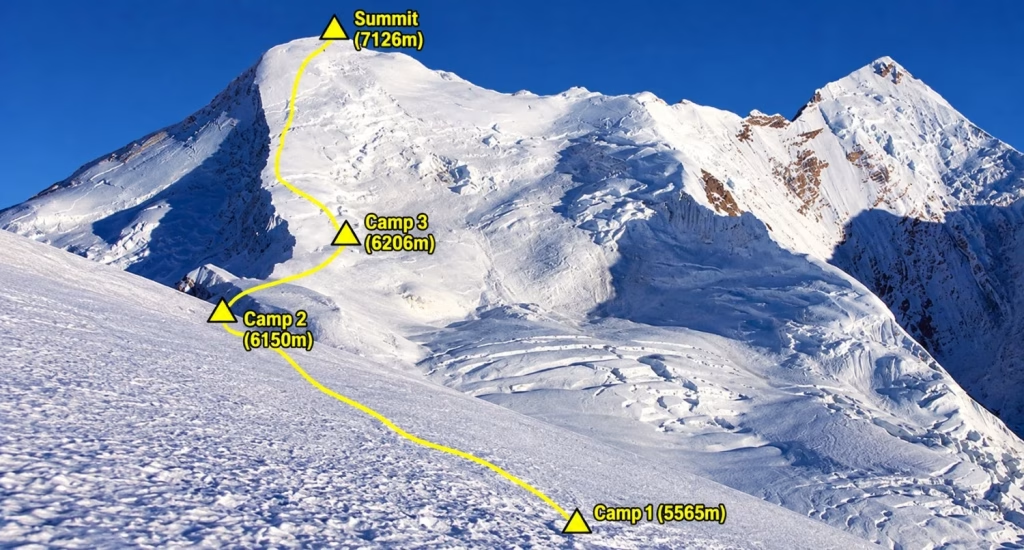
The normal expedition route involves glacier travel and climbing through a series of high camps before the summit attempt. Conditions can include crevasses, snow slopes, steep sections, fixed ropes and exposure to extreme altitude.
Although Himlung Himal is sometimes described as a comparatively accessible 7,000-metre objective, this should not be confused with an easy climb. The altitude, weather, physical demands and technical sections require careful preparation and professional mountain support.
31-Day Himlung Himal Expedition Itinerary
This sample itinerary provides a general outline of the journey from Kathmandu to Himlung Himal Base Camp, the climbing period and the return. The actual schedule may be adjusted to allow for acclimatisation, weather, route conditions and the expedition leader’s decisions.
Day 1: Arrival in Kathmandu (1,400m)
Arrive at Tribhuvan International Airport, where our representative will welcome you and transfer you to your hotel. Take time to rest after your international journey.
In the evening, meet the expedition team and receive an introduction to the programme.
Accommodation: Hotel in Kathmandu
Day 2: Expedition Briefing, Permit Formalities and Equipment Check
Spend the day completing expedition preparations, checking personal climbing equipment and reviewing the planned route.
Meet the expedition leader and discuss safety procedures, climbing support, communication arrangements, medical considerations and the expected conditions on the mountain.
Accommodation: Hotel in Kathmandu
Day 3: Drive from Kathmandu to Besisahar (Approximately 760m)
Begin the overland journey from Kathmandu towards Besisahar, following the Prithvi Highway and the Marsyangdi River valley.
Enjoy changing landscapes as you leave the Kathmandu Valley and enter the foothills of the Annapurna region.
Accommodation: Lodge in Besisahar
Day 4: Drive from Besisahar to Koto (Approximately 2,600m)
Continue by local road transportation towards Koto through the Marsyangdi Valley. The route passes mountain settlements and dramatic river landscapes.
Koto is the gateway to the restricted Nar–Phu Valley.
Accommodation: Lodge in Koto
Day 5: Trek from Koto to Meta (Approximately 3,560m)
Begin the trekking section of the expedition, entering the remote Nar–Phu Valley.
Follow a dramatic trail through forested sections, narrow gorges and mountain scenery. The route gradually gains elevation as you approach Meta.
Accommodation: Lodge or expedition accommodation, subject to availability
Day 6: Trek from Meta to Kyang (Approximately 3,840m)
Continue through the rugged valley, passing traditional settlements, chortens and impressive rock formations.
The landscape becomes increasingly alpine as you approach Kyang.
Accommodation: Lodge or expedition accommodation, subject to availability
Day 7: Trek from Kyang to Phu Gaon (Approximately 3,900m)
Continue towards Phu Gaon, one of the most fascinating settlements in the Nar–Phu region.
The trail passes through a dramatic gorge before reaching the traditional stone village. Explore the surroundings and experience the distinctive mountain culture of this remote community.
Accommodation: Lodge or camping, according to the final logistics plan
Day 8: Acclimatisation Day at Phu Gaon
Spend an important day allowing your body to adjust to the increasing altitude.
The expedition leader may arrange a short acclimatisation walk, equipment preparation or a visit to the village and nearby monastery.
The pace and activity will depend on the health and condition of the team.
Accommodation: Lodge or camping
Day 9: Trek from Phu Gaon to Himlung Himal Base Camp (Approximately 4,900m)
Leave Phu Gaon and follow the trail towards Himlung Himal Base Camp.
The landscape becomes more remote and alpine as you approach the mountain. After reaching Base Camp, settle into the expedition environment and receive a briefing about the climbing programme.
Accommodation: Expedition tent at Base Camp
Day 10: Base Camp Preparation and Puja Ceremony
Spend the day preparing for the climbing period.
The expedition team will organise equipment, review the route, check communication arrangements and discuss the planned acclimatisation and climbing strategy.
A traditional Buddhist puja ceremony may be held to seek blessings before beginning the ascent.
Accommodation: Expedition tent at Base Camp
Day 11: Acclimatisation and Technical Preparation
Undertake suitable acclimatisation activities around Base Camp under the guidance of the expedition leader.
Review the use of climbing equipment, including crampons, ice axes, harnesses, ascenders and fixed-rope systems where relevant.
Accommodation: Expedition tent at Base Camp
Day 12: First Acclimatisation Rotation
Begin the first planned climbing rotation above Base Camp, depending on the route and mountain conditions.
The climbing team will assess snow and glacier conditions while gaining experience at higher elevations.
Return to Base Camp or the designated overnight location according to the climbing strategy.
Accommodation: Expedition tent
Day 13: Rest and Recovery at Base Camp
Return to Base Camp for rest, hydration, meals and recovery.
The team will review progress and make any necessary adjustments to the climbing plan.
Accommodation: Expedition tent at Base Camp
Day 14: Second Acclimatisation Rotation
Continue the acclimatisation programme towards the higher mountain camps.
The climbing team may carry equipment and supplies to a higher camp before returning to Base Camp.
Accommodation: Expedition tent
Day 15: Rest and Preparation at Base Camp
Take a recovery day and prepare for the next stage of the expedition.
The expedition leader will assess the team’s physical condition, weather forecasts and route conditions.
Accommodation: Expedition tent at Base Camp
Day 16: Move Towards Camp 1
Begin the next stage of the ascent, following the established route above Base Camp.
The exact camp location and elevation depend on the climbing route and prevailing conditions.
Accommodation: High-altitude expedition tent
Day 17: Acclimatisation and Climbing Practice
Continue the acclimatisation process and familiarise yourself with the terrain above Camp 1.
The team may undertake additional technical practice and equipment checks.
Accommodation: High-altitude expedition tent or Base Camp, according to the climbing plan
Day 18: Return to Base Camp and Recovery
Return to Base Camp for rest and recovery if required by the expedition schedule.
The team will review the acclimatisation rotation and prepare for the summit phase.
Accommodation: Expedition tent at Base Camp
Day 19: Rest and Summit Preparation
Spend the day checking climbing equipment, personal supplies and communication systems.
Review the summit strategy and the weather forecast with the expedition leader.
Accommodation: Expedition tent at Base Camp
Day 20: Move to Camp 1
Begin the planned summit rotation, moving from Base Camp towards Camp 1.
Maintain a steady pace and follow the instructions of the climbing team.
Accommodation: High-altitude expedition tent
Day 21: Move to Camp 2
Continue towards Camp 2, following the established route and fixed-rope sections where required.
The ascent will be managed according to the team’s acclimatisation and the prevailing mountain conditions.
Accommodation: High-altitude expedition tent
Day 22: Move to Camp 3 or Designated High Camp
Continue to the designated higher camp if conditions and the climbing strategy allow.
The precise number and elevation of high camps can vary with route conditions and expedition planning.
Accommodation: High-altitude expedition tent
Day 23: Summit Attempt – Himlung Himal (7,126m)
The summit attempt begins according to the weather window and the expedition leader’s assessment.
Climb through the upper mountain terrain using the appropriate mountaineering equipment and fixed-rope systems where required.
From the summit, enjoy the extraordinary Himalayan panorama before beginning the descent.
Important: Reaching the summit is never guaranteed. The team may postpone or cancel the attempt if weather, route conditions or climber health make it unsafe.
Accommodation: High-altitude camp or Base Camp, depending on conditions
Day 24: Descend to Base Camp
Descend carefully to Base Camp and reunite with the support team.
Take time to rest and recover after the summit attempt.
Accommodation: Expedition tent at Base Camp
Day 25: Contingency, Rest or Additional Summit Window
This day provides flexibility for weather delays, a revised summit attempt or recovery.
The use of this day depends on the team’s progress and the available weather window.
Accommodation: Expedition tent at Base Camp
Day 26: Clean Base Camp and Trek Towards Phu
After completing the climbing programme, organise equipment and help the expedition team prepare Base Camp for departure.
Begin the return journey towards Phu Gaon.
Accommodation: Lodge or camping
Day 27: Trek from Phu to Meta
Retrace the trail through the dramatic Nar–Phu Valley towards Meta.
Enjoy the changing mountain scenery as you gradually descend to lower elevations.
Accommodation: Lodge or camping
Day 28: Trek from Meta to Koto
Continue through the valley towards Koto, following the route back through the gorge and forested sections.
Celebrate the completion of the mountain journey with the team.
Accommodation: Lodge in Koto
Day 29: Drive from Koto to Besisahar
Travel by local road transportation from Koto towards Besisahar.
The journey follows the Marsyangdi Valley and provides an opportunity to relax after the expedition.
Accommodation: Lodge in Besisahar
Day 30: Drive from Besisahar to Kathmandu
Return to Kathmandu by road.
After arriving at your hotel, enjoy a well-deserved rest and a farewell dinner with the expedition team, subject to the arrival time.
Accommodation: Hotel in Kathmandu
Day 31: Final Departure
Transfer to Tribhuvan International Airport for your onward international flight.
Our team will assist with your departure arrangements.
Meals: Breakfast, according to flight time
Note: This 31-day itinerary is a planning framework, not a fixed climbing schedule. A real expedition must retain sufficient flexibility for acclimatisation, weather delays, route conditions and safe descent. The final itinerary should be reviewed by the appointed expedition leader before publication and booking.
Difficulty Level and Climbing Experience
The Himlung Himal Expedition is a challenging high-altitude mountaineering undertaking. Although its normal route may be less technically demanding than some other 7,000-metre peaks, the mountain should never be underestimated.
Climbers face several challenges:
- Reduced oxygen levels above 5,000 metres.
- Long days of physical activity in remote mountain terrain.
- Glacier travel and possible crevasse exposure.
- Snow and ice slopes, with fixed-rope sections where required.
- Very cold temperatures and changing weather.
- Several days of living at high altitude.
- The physical and mental demands of a summit attempt above 7,000 metres.
Who Should Consider This Expedition?
This expedition is intended for climbers who:
- Have previous high-altitude trekking or mountaineering experience.
- Are physically fit and capable of sustained activity over several weeks.
- Have experience with basic mountaineering equipment and techniques.
- Understand the risks of high-altitude climbing.
- Are prepared to follow the expedition leader’s safety decisions.
Previous experience on 6,000-metre peaks or comparable high-altitude objectives is strongly recommended. Climbers should discuss their experience honestly with the expedition team before booking.
Himlung Himal should not be marketed as a beginner’s expedition or as a guaranteed preparation climb for an 8,000-metre summit.
Best Time for Himlung Himal Expedition
The main climbing seasons for Himlung Himal are generally spring and autumn. The most suitable departure period depends on the mountain’s snow conditions, weather forecasts and the expedition team’s assessment.
Spring Season (April–May)
Spring is a popular period for Himalayan mountaineering. Temperatures generally become more favourable as the season progresses, although snow conditions and weather can vary.
Spring can be considered by climbers who prefer a longer daylight period and the changing conditions of the pre-monsoon season.
Autumn Season (September–October)
Autumn is another major climbing season in Nepal. Following the monsoon, the skies often become clearer, providing excellent mountain visibility.
October is a popular month for many Himalayan expeditions, although temperatures become increasingly cold at higher elevations.
Our recommendation: Contact us with your preferred climbing year and dates so the expedition schedule can be checked against seasonal conditions and the availability of the climbing team.
Himlung Himal Expedition Cost
The cost of a Himlung Himal Expedition depends on the length of the programme, group size, climbing support, permit fees, transportation, accommodation and the level of Base Camp services.
Unlike a regular trekking package, a 7,000-metre expedition requires a much larger logistical operation.
Your personalised quotation can be prepared after confirming:
- Preferred climbing season and year.
- Number of climbers.
- Previous climbing experience.
- Required climbing Sherpa or guide support.
- Accommodation preferences in Kathmandu.
- Transportation and mountain logistics.
- Food, tents and equipment arrangements.
- Rescue and communication provisions.
What Affects the Expedition Price?
Climbing permits: Government expedition royalty and applicable permits depend on the mountain and season.
Climbing Sherpa support: The number and level of climbing staff can significantly affect the expedition cost.
Base Camp services: Food, tents, kitchen staff, communication, fuel and equipment support are important parts of the operation.
Transportation and porter logistics: Road transportation, local carriers and the movement of supplies into the remote valley contribute to the total cost.
Group size: A private expedition and a larger shared expedition have different cost structures.
Contact Nepal Tours Packages for a detailed quotation based on your preferred dates and support requirements.
Himlung Himal Expedition – What’s Included?
The final list of services will be confirmed in your individual proposal. Depending on the selected expedition arrangement, the package may include:
- Airport arrival and departure transfers in Kathmandu.
- Hotel accommodation in Kathmandu as specified in the itinerary.
- Ground transportation between Kathmandu, Besisahar and Koto.
- Required climbing permit arrangements.
- Applicable Nar–Phu restricted-area and conservation-area permits.
- Trekking and expedition logistics.
- Experienced trekking and climbing support as specified in the quotation.
- Climbing Sherpa support according to the agreed ratio.
- Porters and local transportation of expedition supplies.
- Base Camp accommodation and camping arrangements.
- Expedition meals and kitchen services during the climbing period.
- High-camp tents and agreed group climbing equipment.
- Expedition coordination and local staff arrangements.
- Government taxes and agency service charges as specified.
What’s Not Included?
Unless specifically stated in your final quotation, the following are generally excluded:
- International airfare to and from Nepal.
- Nepal entry visa fees.
- Personal travel, medical and high-altitude rescue insurance.
- Personal climbing equipment and clothing.
- Personal expenses, snacks, beverages and laundry.
- Additional hotel nights caused by early arrival, late departure or delays outside the agreed itinerary.
- Emergency evacuation and medical treatment costs.
- Tips and gratuities for guides, climbing Sherpas and support staff.
- Personal expenses and services not mentioned in the confirmed inclusion list.
A complete, itemised inclusion and exclusion list will be provided before booking confirmation.
Safety, Acclimatisation and Rescue Arrangements
Safety is the most important consideration during a 7,000-metre expedition.
The Himlung Himal climbing programme should include a gradual approach, planned acclimatisation, appropriate rest periods and a flexible summit window. The expedition leader must assess the health and condition of the climbers throughout the journey.
Climbers should understand that altitude-related illness can affect anyone, regardless of fitness. Symptoms must be reported promptly, and the team must follow appropriate medical advice and descent procedures.
Before departure, every climber should have suitable travel insurance that explicitly covers mountaineering at 7,126 metres and emergency helicopter evacuation where available. Check policy limits, exclusions and rescue procedures carefully.
Communication and emergency arrangements should be explained during the expedition briefing. Rescue availability in remote mountain areas depends on weather, access, aircraft capability and other operational factors. No evacuation can be guaranteed in every circumstance.
Essential Equipment for Himlung Himal
A detailed equipment list will be supplied after booking, based on the season, route and expedition arrangements.
Typical personal equipment includes:
- Mountaineering boots suitable for the expected conditions.
- Crampons compatible with the boots.
- Ice axe.
- Climbing harness and helmet.
- Ascender and other required technical hardware.
- Down suit or suitable high-altitude insulation system.
- Waterproof and windproof outer layers.
- High-altitude sleeping bag.
- Expedition backpack and daypack.
- Warm gloves, mittens, socks and headwear.
- Glacier sunglasses and suitable sun protection.
- Headlamp with spare batteries.
- Personal first-aid and prescribed medication.
- Water bottles or hydration system.
Do not purchase technical equipment without checking the final list with the expedition leader. Some group equipment may be provided as part of the agreed package.
Why Choose Nepal Tours Packages for Your Himlung Himal Expedition?
A successful Himalayan expedition requires careful planning, dependable local coordination and a clear understanding of the climbers’ needs.
Local Himalayan Knowledge: Our Nepal-based team understands the country’s trekking regions, mountain travel logistics and the importance of planning around local conditions.
25+ Years of Tourism Experience: Kishor Nepal, Co-Founder and Holiday Expert for Nepal, Bhutan and Tibet, brings more than 25 years of experience in the Nepal tourism industry.
Personalised Expedition Planning: We discuss your previous climbing experience, preferred season, group size and expectations before preparing a suitable proposal.
Local Coordination: Our team can coordinate the required permits, transportation, accommodation and mountain logistics through the appropriate local professionals.
Clear Information Before Booking: We provide an itinerary and an itemised list of included and excluded services so you understand the arrangements before confirming your expedition.
Responsible Mountain Travel: We believe that a summit objective must never take priority over the safety of the climbing team and the mountain staff.
Our goal is to help you plan a well-organised Himalayan experience with realistic expectations and appropriate professional support.
Frequently Asked Questions – Himlung Himal Expedition
1. How high is Himlung Himal?
Himlung Himal reaches 7,126 metres (23,379 feet) above sea level. It is located in the remote Peri Himal area near the Nepal–Tibet border.
2. How many days does the Himlung Himal Expedition take?
A typical expedition programme takes approximately 28–34 days, depending on the approach route, acclimatisation schedule, climbing strategy and weather contingency days. Our sample programme is 31 days.
3. Is Himlung Himal suitable for beginners?
No. Himlung Himal is a serious 7,000-metre mountaineering objective. It is intended for experienced and physically prepared climbers with previous high-altitude experience and suitable mountaineering skills.
4. What is the best season to climb Himlung Himal?
Spring (April–May) and autumn (September–October) are the main seasons generally considered for climbing Himlung Himal. Final dates should be selected according to the mountain’s conditions and the expedition team’s advice.
5. Where is Himlung Himal located?
Himlung Himal is situated in the Peri Himal area of Nepal, close to the Tibetan border. The usual approach is through the remote Nar–Phu Valley in the Annapurna region.
6. What is the altitude of Himlung Himal Base Camp?
The commonly used Base Camp location is approximately 4,900 metres. The exact location and elevation should be confirmed by the expedition team for the selected route and season.
7. Is Himlung Himal technically difficult?
Himlung Himal is often considered less technical than some other 7,000-metre Himalayan mountains, but it remains a demanding expedition. Glacier travel, crevasses, snow and ice slopes, fixed ropes and extreme altitude can all present serious challenges.
8. Do I need previous climbing experience?
Previous high-altitude mountaineering experience is strongly recommended. Experience on 6,000-metre peaks or comparable objectives can help prepare climbers for the physical and technical demands. Your experience should be assessed before booking.
9. Can Himlung Himal be climbed before attempting Manaslu or Everest?
Himlung Himal can be a useful part of a climber’s progression towards higher objectives, provided the climber develops the necessary experience and skills. However, summiting Himlung does not automatically qualify someone for an 8,000-metre expedition. Each mountain requires an individual assessment of fitness, technical ability and experience.
10. How many high camps are used on Himlung Himal?
The number and location of high camps depend on the selected route, conditions and expedition strategy. A typical climbing plan may use several camps above Base Camp, but the final arrangement should be confirmed by the climbing leader.
11. What permits are required for Himlung Himal?
Climbers need the applicable government mountaineering permit and the required permissions for the approach through the Nar–Phu restricted area and conservation region. Permit requirements and fees can change, so the current regulations must be checked before the expedition.
12. Is a climbing Sherpa included?
Climbing Sherpa support depends on the selected expedition package and the agreed service ratio. Your proposal should clearly state the number of climbing Sherpas, their responsibilities and the services included.
13. Is travel insurance necessary?
Yes. Climbers should have insurance that explicitly covers mountaineering at 7,126 metres, medical treatment and emergency helicopter evacuation where available. Standard trekking insurance may not provide adequate cover.
14. Can I join a private Himlung Himal Expedition?
Private expedition arrangements can be discussed according to the season, group size, permit requirements and availability of qualified climbing professionals. Contact our team to discuss a personalised programme.
15. What happens if the weather does not allow a summit attempt?
The expedition leader may delay or cancel a summit attempt if conditions are unsafe. Weather contingency days can provide flexibility, but no summit can be guaranteed. Safety must always come first.
Plan Your Himlung Himal Expedition with Local Experts
Are you preparing for your next 7,000-metre Himalayan challenge?
The Himlung Himal Expedition offers a remarkable combination of remote Himalayan culture, high-altitude mountaineering and a demanding summit objective. From the traditional villages of the Nar–Phu Valley to the high camps above Base Camp, this journey is an experience for climbers who are ready to take their mountaineering ambitions further.
At Nepal Tours Packages, we can discuss your previous climbing experience, preferred departure season, group size and expedition support requirements before preparing a personalised proposal.
Contact us today to plan your Himlung Himal Expedition.
Nepal Tours Packages
Kishor Nepal – Co-Founder & Holiday Expert, Nepal, Bhutan & Tibet
Kathmandu, Nepal
Website: https://nepaltourspackages.com/
Email: nepalholidaytravels@gmail.com
WhatsApp: +977 9851150010
Explore more: Nepal Expeditions & Peak Climbing | Nar–Phu Valley Trek | Contact Nepal Tours Packages
About the Author: Kishor Nepal is Co-Founder and Holiday Expert at Nepal Tours Packages, specialising in Nepal, Bhutan and Tibet travel. With more than 25 years of tourism experience, he works with the local team to plan personalised Himalayan journeys and travel experiences.
Overview
The Himlung Himal Expedition (7,126m) is an exciting high-altitude mountaineering adventure in the remote Nar–Phu Valley of Nepal. Located near the Nepal–Tibet border in the Peri Himal range, Himlung Himal offers experienced climbers an opportunity to take on a challenging 7,000-metre Himalayan summit.
The expedition begins with a scenic journey through the traditional villages of the Nar–Phu region, including Meta, Kyang and Phu Gaon. After reaching Himlung Himal Base Camp at approximately 4,900 metres, climbers follow a planned acclimatisation programme before progressing towards higher camps and the summit.
Although often considered a suitable progression for climbers moving towards more demanding Himalayan objectives, Himlung Himal is a serious mountaineering expedition requiring excellent physical fitness, previous high-altitude experience and appropriate climbing skills.
With careful preparation, experienced mountain professionals and well-coordinated logistics, this expedition offers a memorable combination of remote Himalayan culture, spectacular mountain scenery and the challenge of climbing above 7,000 metres.
Key Information
- Summit Elevation: 7,126m (23,379ft)
- Duration: Approximately 31 days
- Location: Nar–Phu Valley, Annapurna Region, Nepal
- Best Seasons: Spring (April–May) and Autumn (September–October)
- Difficulty: Challenging high-altitude mountaineering
- Base Camp: Approximately 4,900m
- Starting and Ending Point: Kathmandu, Nepal
- Accommodation: Hotels, mountain lodges and expedition tents
- Suitable For: Experienced high-altitude trekkers and mountaineers
The itinerary and climbing schedule are flexible and may change according to weather, snow conditions, acclimatisation and the expedition leader’s safety assessment. Summit success cannot be guaranteed.
Highlights
- Climb Himlung Himal (7,126m): Take on an exciting 7,000-metre Himalayan mountaineering challenge in Nepal.
- Explore the Remote Nar–Phu Valley: Trek through spectacular mountain landscapes and traditional Himalayan settlements.
- Discover Phu Gaon: Experience the unique Tibetan-influenced culture, ancient monasteries and traditional villages of the region.
- Experience a True Himalayan Expedition: Enjoy Base Camp life, acclimatisation rotations, glacier travel and high-altitude climbing.
- Achieve an Ambitious Himalayan Goal: Challenge yourself on a remarkable mountain that can be part of your progression towards higher Himalayan peaks.


