

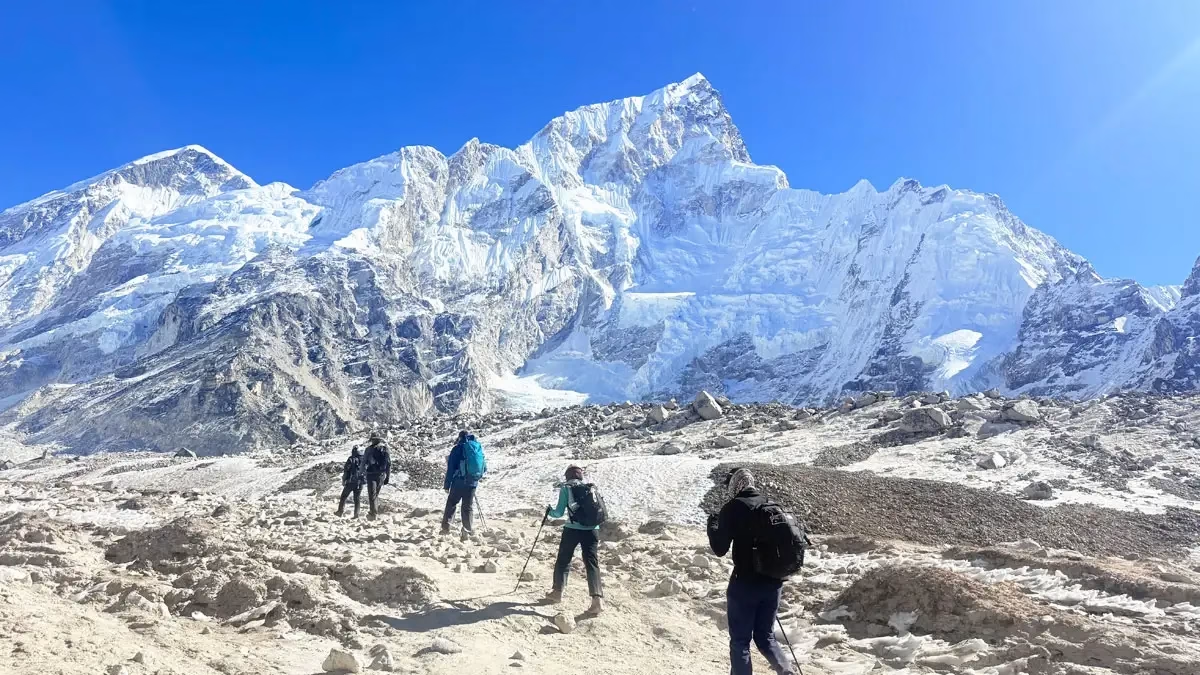
How Hard Is It to Trek to Everest Base Camp? this is one very important question every first time trekker to Everest region trek route consider. The Everest Base Camp trek is challenging, but it is not a technical climb. You do not need mountaineering experience, ropes, crampons, or previous experience climbing Everest. What makes the trek difficult is the combination of high altitude, long walking days, steep ascents and descents, cold weather, uneven mountain trails, and cumulative fatigue. Everest list one of the best 10 treks in Nepal.
For a reasonably fit person who follows a properly designed itinerary and allows enough time for acclimatization, Everest Base Camp is an achievable Himalayan adventure. The biggest challenge is usually altitude rather than technical terrain.
The standard route from Lukla to Everest Base Camp and back covers roughly 130 km, takes around 12–14 trekking days, and reaches 5,364 m (17,598 ft) at Everest Base Camp. Many trekkers also climb Kala Patthar at about 5,545 m (18,192 ft) for one of the finest views of Everest.
Everest Base Camp Trek Difficulty at a Glance
| Factor | What to Expect |
|---|---|
| Overall difficulty | Moderate to strenuous |
| Technical climbing | Not required |
| Typical trek duration | 12–14 days |
| Approx. distance | 130 km round trip |
| Starting altitude | Lukla – about 2,860 m |
| Everest Base Camp | 5,364 m |
| Kala Patthar | 5,545 m |
| Walking per day | Generally 5–8 hours |
| Main challenge | High altitude |
| Other challenges | Long days, cold, terrain and fatigue |
| Previous trekking experience | Helpful but not essential |
| Acclimatization | Essential |
The exact walking distance and hours vary depending on the itinerary, acclimatization schedule, weather, trail conditions and individual walking pace.
Is Everest Base Camp Hard for Beginners?
Yes, it can be done by beginners, but it should not be treated as an easy holiday hike.
You don’t need to be an experienced trekker to reach Everest Base Camp. A person who regularly walks, hikes, exercises and prepares properly can undertake the trek without previous high-altitude trekking experience.
However, there is an important difference between being fit enough to walk and being acclimatized to high altitude.
You can train your legs and cardiovascular system before leaving home, but you cannot fully train your body to cope with the thin air at 5,000 m. Acclimatization happens gradually during the trek.
That is why a sensible itinerary is more important than simply trying to complete the route as quickly as possible.
Indian travelers can read the essential resource for Everest Base Camp trek – Here
What Makes the Everest Base Camp Trek Difficult?
There are several factors, but altitude is the most important.
1. High Altitude Is the Biggest Challenge
You start the classic trek at Lukla at approximately 2,860 m and eventually reach Everest Base Camp at 5,364 m. Kala Patthar, commonly included in the itinerary, rises to around 5,545 m.
As you climb higher, the air becomes thinner and your body has less oxygen available. Consequently, an uphill section that might feel relatively easy at home can become surprisingly tiring in the Khumbu.
You may notice:
- Shortness of breath
- Headache
- Reduced appetite
- Fatigue
- Difficulty sleeping
- Slower walking pace
- Increased recovery time
Altitude sickness, including acute mountain sickness (AMS), is one of the most important risks on high-altitude treks. Symptoms should never simply be ignored or pushed through. If symptoms become severe or worsen, descent and medical assessment may be necessary.
Fitness does not eliminate altitude sickness. Even very fit trekkers need to acclimatize properly.
2. Long Days on the Trail
The Everest Base Camp trek isn’t necessarily difficult because of one enormous climb. The challenge comes from doing several hours of walking day after day.
Most trekking days involve approximately 5–8 hours of walking, depending on the section of trail and the pace of the group.
You will walk:
- Uphill
- Downhill
- Across rocky paths
- Over stone steps
- Through forests
- Across suspension bridges
- Along exposed mountain valleys
- Over increasingly barren terrain at higher elevations
By the second week, cumulative fatigue becomes significant.
This is why endurance is more important than being able to run fast or lift heavy weights.
3. The Trail Goes Up and Down
One common misconception is that the Everest Base Camp trek simply involves walking uphill from Lukla to Base Camp.
It doesn’t.
The trail follows the natural contours of the Khumbu Valley. You climb, descend, cross rivers and then climb again.
Some sections can therefore feel harder than their distance suggests.
The trail from Phakding to Namche Bazaar, for example, includes a substantial uphill section and is often one of the first days when trekkers realize that the Everest trek is more demanding than an ordinary hiking holiday.
Later, the combination of altitude and uneven rocky terrain makes relatively short distances feel much longer.
4. Cold Weather Makes the Trek Harder
Altitude isn’t the only environmental challenge.
Temperatures can become very cold as you climb toward Lobuche and Gorak Shep. Nights at high elevations can be particularly uncomfortable, especially when combined with limited heating and basic mountain accommodation.
Cold can affect:
- Sleep
- Appetite
- Energy levels
- Recovery
- Motivation
A good sleeping bag, warm layers, gloves, hat and proper trekking socks become increasingly important as you approach Base Camp.
5. Cumulative Fatigue
This is something first-time trekkers often underestimate.
You may feel excellent during the first few days.
Then the fatigue gradually builds.
Your legs have already walked for several consecutive days. Your sleep may be less comfortable. Your appetite may change. The altitude makes recovery slower.
By the time you reach the upper Khumbu, you are not simply dealing with one difficult hiking day. You’re dealing with the accumulated effect of the entire trek.
This is why pacing yourself from Day 1 is important.
Everest Base Camp Trek Difficulty Day by Day
A typical itinerary looks something like this:
| Section | Approx. Altitude | Difficulty |
|---|---|---|
| Lukla – Phakding | 2,610 m | Easy–Moderate |
| Phakding – Namche Bazaar | 3,440 m | Moderate–Hard |
| Namche acclimatization | 3,440 m | Moderate |
| Namche – Tengboche | 3,860 m | Moderate |
| Tengboche – Dingboche | 4,360 m | Moderate–Hard |
| Dingboche acclimatization | 4,360 m | Moderate |
| Dingboche – Lobuche | ~4,940 m | Hard |
| Lobuche – Gorak Shep | ~5,164 m | Hard |
| Gorak Shep – Everest Base Camp | 5,364 m | Hard |
| Gorak Shep – Kala Patthar | 5,545 m | Very Hard |
| Descent to Lukla | Lower altitude | Moderate |
Exact overnight elevations vary slightly between itineraries and accommodation stops.
Which Is the Hardest Day of the Everest Base Camp Trek?
There isn’t one universally hardest day because everyone responds differently to altitude.
However, several sections commonly stand out.
Phakding to Namche Bazaar
This is often the first major physical challenge.
You gain substantial elevation and encounter long uphill sections before reaching Namche Bazaar at around 3,440 m.
The difficulty is amplified because your body has only just begun adjusting to the altitude.
Dingboche to Lobuche
This section takes you deeper into the high-altitude environment.
The landscape becomes more barren and the air noticeably thinner.
Walking slowly is normal.
Lobuche to Gorak Shep
The distance isn’t necessarily enormous, but the altitude makes the day challenging.
At these elevations, even relatively gentle sections can require frequent pauses.
Gorak Shep to Everest Base Camp
Reaching Base Camp is emotionally rewarding, but the trail around the moraine and glacier can be rocky and tiring.
Remember that Everest Base Camp itself is not the highest point of the trek.
Gorak Shep to Kala Patthar
For many trekkers, the early-morning climb to Kala Patthar at approximately 5,545 m is physically harder than the walk to Base Camp because of the altitude and steep ascent.
The reward is spectacular Himalayan scenery, including views toward Mount Everest.
Is Everest Base Camp a Technical Climb?
No.
The standard Everest Base Camp trek is a high-altitude trek, not a technical mountaineering expedition.
You don’t normally need:
- Climbing ropes
- Ice axes
- Technical climbing skills
- Mountaineering experience
- Crampons for the standard trekking route in normal conditions
The trail consists primarily of established mountain paths, stone steps, rocky terrain, suspension bridges and glacial-moraine sections.
That doesn’t make it easy. It simply means the challenge is primarily endurance and altitude rather than technical climbing.
How Fit Do You Need to Be for Everest Base Camp?
You don’t need to be an elite athlete.
A good starting point is being comfortable with several hours of continuous walking and being able to exercise consistently before your trek.
Your preparation should focus on:
Cardiovascular endurance
Walking, hiking, cycling, swimming and running can improve your aerobic fitness.
Leg strength
Focus on:
- Squats
- Lunges
- Step-ups
- Stair climbing
- Calf exercises
Core strength
A stronger core helps with carrying a daypack and maintaining balance on uneven terrain.
Hiking practice
The best preparation is actual walking.
Gradually increase the duration of your hikes and, where possible, include hills and stairs.
How Long Should You Train for Everest Base Camp?
For someone who already exercises regularly, 8–12 weeks of focused preparation can be a useful target.
If you are currently inactive, allow more time.
You don’t need to train by trying to reproduce the altitude at home. Instead, develop the endurance and leg strength needed for long days on the trail.
A useful progression is:
Weeks 1–4: Build cardiovascular fitness and regular walking habits.
Weeks 5–8: Increase hiking duration and introduce hills, stairs and longer weekend walks.
Weeks 9–12: Include longer hikes on consecutive days while carrying a daypack.
The objective isn’t speed.
The objective is being able to walk steadily for several hours without exhausting yourself.
Do You Need Previous Trekking Experience?
No, previous trekking experience is helpful but not essential.
Many first-time Himalayan trekkers successfully complete Everest Base Camp when they:
- Prepare properly
- Walk at a comfortable pace
- Follow a sensible itinerary
- Allow sufficient acclimatization
- Stay hydrated
- Listen to their guide
- Pay attention to altitude symptoms
- Avoid rushing
The most important thing isn’t how fast you can walk.
It is how well you manage your energy and altitude over two weeks.
Why Acclimatization Is So Important
Acclimatization is one of the most important parts of an Everest Base Camp itinerary.
A good itinerary normally includes acclimatization stops, particularly around Namche Bazaar and Dingboche. These days aren’t simply days for doing nothing. Trekkers often take short hikes to higher elevations and return to sleep at the lower altitude.
This gradual exposure gives the body time to adapt.
A standard itinerary commonly includes two acclimatization days, although exact schedules vary.
Don’t rush the trek
Trying to cut one or two days from the itinerary may look attractive when comparing prices or holidays.
But when trekking at high altitude, a longer, properly paced itinerary can be much more comfortable and appropriate than the fastest possible itinerary.
Can You Get Altitude Sickness on the Everest Base Camp Trek?
Yes.
Altitude sickness can affect trekkers regardless of age, gender or physical fitness.
Common symptoms of acute mountain sickness include:
- Headache
- Nausea
- Loss of appetite
- Dizziness
- Fatigue
- Difficulty sleeping
Mild symptoms may improve with rest and acclimatization, but worsening or severe symptoms should never be ignored.
Serious altitude-related illnesses can become life-threatening. The safest response to significant deterioration is to descend and obtain appropriate medical assistance.
For this reason, your guide should monitor how you are feeling, and you should be honest about any symptoms.
Never try to prove your fitness by continuing upward when your body is telling you something is wrong.
How Can You Make the Everest Base Camp Trek Easier?
You cannot make Everest Base Camp effortless, but you can make it significantly more manageable.
1. Choose the right itinerary
Don’t choose an itinerary simply because it is the shortest.
Allow sufficient time for acclimatization.
2. Walk slowly
There is no prize for reaching the lodge first.
A steady pace conserves energy.
3. Carry less
A porter can carry your main luggage, allowing you to walk with a lighter daypack.
4. Stay hydrated
Drink regularly throughout the day and pay attention to your body’s needs.
5. Eat properly
Your appetite may decrease at altitude, but maintaining adequate nutrition is important.
6. Use trekking poles
Poles can be particularly helpful on steep descents and uneven terrain.
7. Prepare before arriving in Nepal
Good physical preparation reduces the strain of the walking.
8. Listen to your guide
An experienced local guide knows the route, weather patterns and common altitude problems.
9. Don’t ignore symptoms
If you feel unwell, tell your guide immediately.
10. Build flexibility into your schedule
Mountain weather can affect flights and trekking plans, so having some buffer time is sensible.
Is Everest Base Camp Harder Than Annapurna Base Camp?
It depends on the individual, but Everest Base Camp is generally more demanding from an altitude perspective.
Annapurna Base Camp reaches approximately 4,130 m, whereas Everest Base Camp reaches approximately 5,364 m and Kala Patthar reaches about 5,545 m.
The higher altitude on the Everest route means acclimatization becomes a particularly important part of the experience.
However, difficulty also depends on:
- Your itinerary
- Fitness
- Previous trekking experience
- Weather
- Acclimatization
- Individual response to altitude
A trek that is easier for one person may feel significantly harder to another.
Is Everest Base Camp Harder Than the Annapurna Circuit?
Again, there isn’t one simple answer.
The Annapurna Circuit involves considerable elevation gain and loss and crosses the Thorong La at approximately 5,416 m. Everest Base Camp has a lower highest trekking pass but involves extended time at very high elevations and reaches 5,364 m at Base Camp.
The nature of the difficulty is therefore different.
Everest Base Camp: prolonged high-altitude exposure and cumulative fatigue.
Annapurna Circuit: long trekking days, substantial elevation changes and the high Thorong La crossing.
Can Older Trekkers Do Everest Base Camp?
Age alone does not determine whether someone can complete the trek.
What matters more is:
- General fitness
- Previous activity level
- Ability to walk for several hours
- Response to altitude
- Preparation
- Medical suitability
- Appropriate pacing
Older trekkers should have an honest discussion with their healthcare professional before undertaking a high-altitude trek, particularly if they have any medical concerns.
The key is not trying to keep up with younger trekkers.
A slower, carefully paced private trek can be a much better experience.
What Should You Pack for Everest Base Camp?
Your exact packing list depends on the season, but essential categories include:
Clothing
- Moisture-wicking base layers
- Fleece or warm mid-layer
- Down or insulated jacket
- Waterproof jacket
- Trekking trousers
- Thermal underwear
- Warm hat
- Gloves
- Trekking socks
Footwear
- Comfortable broken-in trekking boots
- Camp shoes or sandals
- Spare socks
Equipment
- Sleeping bag suitable for high-altitude conditions
- Daypack
- Trekking poles
- Headlamp
- Water bottles or hydration system
- Sunglasses
- Sunscreen
- Personal first-aid supplies
Personal essentials
- Passport and required documents
- Cash
- Power bank
- Personal medications
- Toiletries
- Water purification method
Avoid bringing unnecessary items. Every extra kilogram becomes more noticeable as the altitude increases.
What Does the Everest Base Camp Trek Actually Feel Like?
This is perhaps the hardest question to answer because the experience changes throughout the journey.
At Lukla, you may feel excited and energetic.
Around Namche, you start realizing that this is a serious mountain trek.
At Tengboche and Dingboche, the landscape becomes increasingly dramatic and the altitude becomes more noticeable.
Beyond Lobuche, you are firmly in a high-altitude environment.
By Gorak Shep, ordinary activities can feel surprisingly demanding.
You may walk slowly, stop frequently and breathe heavily even when the trail doesn’t look particularly steep.
Then you reach Everest Base Camp.
The physical difficulty suddenly becomes secondary to the experience of standing beneath the world’s highest mountain.
Is Everest Base Camp Worth the Difficulty?
For most trekkers who dream of seeing Everest up close, yes.
The trek combines Himalayan scenery, Sherpa culture, Buddhist monasteries, mountain villages, suspension bridges, glaciers and some of the world’s highest peaks.
You aren’t simply walking to a geographic destination.
You are travelling through the Khumbu region and experiencing a landscape that changes dramatically as you gain altitude.
The difficult days are part of what makes reaching Base Camp meaningful.
Who Is the Everest Base Camp Trek Best Suited For?
Everest Base Camp may be suitable for you if you:
- Enjoy hiking and outdoor activities
- Can walk for several hours
- Are willing to train before the trek
- Understand that altitude cannot be rushed
- Are comfortable with basic mountain accommodation
- Can tolerate cold conditions
- Are patient with a slower pace
- Are prepared to follow acclimatization recommendations
It may not be appropriate to simply book the trek without preparation if you rarely exercise or have never undertaken a long walking journey.
How Hard Is Everest Base Camp Compared With Mountaineering?
This is an important distinction.
Everest Base Camp is a tea house trekking, not climbing Mount Everest.
You are travelling to the base camp used by mountaineering expeditions, but you are not attempting to summit Everest.
The standard trek doesn’t require the technical climbing skills associated with Himalayan mountaineering.
So although the altitude is serious, the technical difficulty is relatively low.
That makes Everest Base Camp accessible to a much wider range of travellers than an actual Himalayan climbing expedition.
A Sensible Everest Base Camp Trek Itinerary
For many trekkers, a 14-day itinerary provides a good balance between walking, acclimatization and mountain experience.
A typical itinerary includes:
Day 1: Kathmandu arrival
Day 2: Fly to Lukla and trek to Phakding
Day 3: Phakding to Namche Bazaar
Day 4: Acclimatization at Namche
Day 5: Namche to Tengboche
Day 6: Tengboche to Dingboche
Day 7: Acclimatization at Dingboche
Day 8: Dingboche to Lobuche
Day 9: Lobuche to Gorak Shep and Everest Base Camp
Day 10: Kala Patthar and return toward lower elevation
Days 11–13: Trek back toward Lukla
Day 14: Fly back and continue your journey
Actual itineraries vary, and additional contingency days can be valuable because mountain weather can disrupt flights.
Frequently Asked Questions About Everest Base Camp Difficulty
How hard is it to trek to Everest Base Camp?
Everest Base Camp is generally considered a moderate to strenuous high-altitude trek. It is physically demanding but does not require technical climbing skills. The biggest challenges are altitude, long walking days and cumulative fatigue.
Can a beginner trek to Everest Base Camp?
Yes. A reasonably fit beginner can complete the trek with proper preparation, acclimatization and a sensible itinerary. Previous Himalayan trekking experience is not essential.
How many hours do you walk each day?
Most trekking days involve approximately 5–8 hours of walking, although some days are shorter and others longer depending on the route and pace.
How far is Everest Base Camp?
The classic Lukla–Everest Base Camp–Lukla route is approximately 130 km round trip, although the exact distance varies according to the itinerary.
What is the highest altitude on the Everest Base Camp trek?
Everest Base Camp is approximately 5,364 m, while Kala Patthar reaches approximately 5,545 m.
Do I need climbing experience?
No. The standard Everest Base Camp trek does not require technical mountaineering skills.
Is Everest Base Camp harder than Annapurna Base Camp?
Generally, Everest Base Camp presents a greater altitude challenge because it reaches a significantly higher elevation. However, individual experiences vary.
Can I trek to Everest Base Camp without training?
It is possible for some naturally active people, but training is strongly recommended. You should prepare your cardiovascular fitness, leg strength and walking endurance before arriving in Nepal.
What is the hardest part of Everest Base Camp?
For most trekkers, the hardest part is high altitude combined with cumulative fatigue, rather than technical terrain.
Is Everest Base Camp dangerous?
The trek has genuine high-altitude risks, particularly altitude sickness. A responsible itinerary, proper acclimatization, experienced guidance and prompt response to symptoms are important.
The Bottom Line: How Hard Is Everest Base Camp?
The Everest Base Camp trek is hard enough to be a genuine adventure, but achievable enough that you don’t need to be a mountaineer.
If you are reasonably fit, prepare properly and give yourself enough time to acclimatize, you can approach the trek with confidence.
The most important lessons are simple, Choose the best time and follow basic rules.
Don’t rush.
Don’t underestimate altitude.
Train your legs and endurance.
Walk slowly.
Stay hydrated and well nourished.
Listen to your body.
And respect the mountain.
Everest Base Camp isn’t a race. The goal isn’t to reach the highest point as quickly as possible.
The goal is to enjoy the journey and arrive at Base Camp safely.
Planning Your Everest Base Camp Trek
If you’re considering the trek, a private Everest Base Camp itinerary allows the walking pace, acclimatization schedule and daily trekking distances to be adjusted around your needs.
For first-time trekkers, I would particularly recommend not choosing the shortest available itinerary simply because it is cheaper or saves a couple of days. At this altitude, allowing your body enough time to adapt can make a major difference to the experience.
About the Author
Kishor Nepal – Nepal Trekking & Travel Expert
Kishor Nepal is a Nepal-based travel expert with more than 25 years of experience in Nepal tourism, specializing in private trekking, tours and Himalayan journeys. He has extensive knowledge of the Everest, Annapurna, Manaslu and other trekking regions of Nepal and works closely with local guides and mountain support teams.
Through his experience helping international travellers plan treks in Nepal, Kishor focuses on practical advice covering trekking difficulty, altitude acclimatization, realistic itineraries, accommodation, local conditions and responsible travel. His aim is to help travellers understand what to expect before undertaking a Himalayan trek and choose an itinerary suited to their fitness, experience and travel goals.
Expertise: Everest Base Camp Trek • Nepal Trekking • Himalayan Travel • Altitude & Acclimatization • Private Treks • Nepal Tours
