

Summary
Everest Base Camp Trek from India is a complete 15-day Himalayan trekking guide designed for Indian travelers planning their Everest adventure via Kathmandu. The guide covers the detailed itinerary from Lukla to Everest Base Camp and Kala Patthar, the best time to visit, permits, fitness preparation, packing list, altitude safety, accommodation, food, and practical travel tips. It also explains why Nepal is one of the easiest international trekking destinations for Indians, as no visa is required for Indian citizens. This article is ideal for anyone looking for a safe, well-planned, and unforgettable Everest Base Camp trekking experience from India.
Planning for Everest Base Camp Trek from India? Trekking to the base of the world’s highest mountain is the definitive holy grail for adventure enthusiasts across the Indian subcontinent. The Everest Base Camp (EBC) Trek from India provides an unparalleled window into the raw heart of the Nepal Himalayas. This iconic route blends jaw-dropping vertical topography, ancient Sherpa culture, historic Buddhist monasteries, and the profound, life-altering experience of standing directly beneath the colossal South Face of Mount Everest (8,848.86 m).
For Indian citizens, the geographical proximity and geopolitical alignment between India and Nepal present an incredible advantage. Nepal remains remarkably accessible: direct, short-haul flights connect major metropolitan hubs like Delhi, Mumbai, Bengaluru, Kolkata, Chennai, and Hyderabad with Kathmandu. Crucially, under the treaty of peace and friendship, Indian citizens do not require a visa to enter, live, or travel in Nepal. This makes the Khumbu region not only the most prestigious international alpine setting but also one of the logistically smoothest options for Indian trekkers.
This masterguide provides a transparent, field-tested breakdown of everything required to successfully execute a 15-day Everest Base Camp itinerary from India. Unlike the normal Everest Base Camp trek prepared for Foreign nationals, our India specific EBC trek will offer best cost for valid Indian passport holders with detailed guide & inclusions. From localized physical conditioning and bureaucratic permits to precise altitude safety protocols, budgetary realities, and cultural etiquette, this document serves as your definitive strategic playbook.
Why the Everest Region Captivates Indian Trekkers
The Khumbu climate zone and geological progression are distinct from any domestic Indian trekking circuit, such as the Roopkund, Chadar, or Goechala treks. The trail is characterized by dramatic eco-zonal transitions. Over a matter of days, you ascend from the lush pine forests, rhododendron valleys, and roaring white waters of the Dudh Koshi River into high-alpine glacial scree, traversing massive moraines surrounded by the highest concentration of 7,000 and 8,000-meter peaks on earth.
Major Highlights of the Classic Route
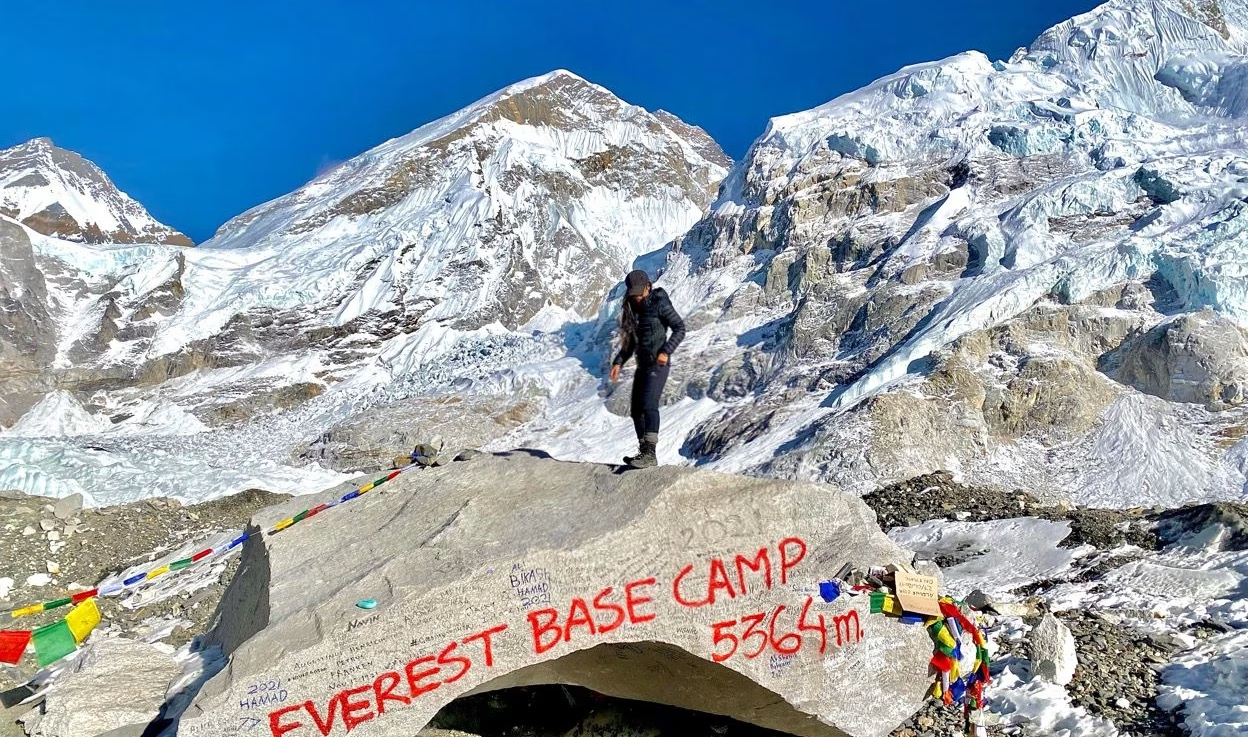
- Stand at Everest Base Camp (5,364 m): Touch the iconic, prayer-flag-draped rock marking the literal launching pad for historic global expeditions.
- Summit Kala Patthar (5,545 m): Experience the ultimate, unobstructed panoramic sunrise view of Everest, Lhotse, and Nuptse—a view hidden from the base camp itself.
- Explore Namche Bazaar (3,440 m): Discover the historic, amphitheater-shaped alpine capital filled with Sherpa trading centers, local bakeries, and gear shops.
- Visit Tengboche Monastery (3,860 m): Immerse yourself in the spiritual epicenter of the Khumbu region, set against the flawless backdrop of Ama Dablam.
- Experience Sherpa Hospitality: Live alongside the legendary mountain community, gaining deep insight into their unique Buddhist traditions and high-altitude heritage.
Expert Insight: Unlike the technical ascents of peaks like Stok Kangri or Kedarkantha during heavy winters, the standard EBC trek is entirely non-technical. It is a high-altitude lodge-to-lodge walk (tea house trekking). You do not require crampons, ice axes, fixed ropes, or mountaineering certifications. If you possess strong cardiovascular endurance, leg strength, and an intelligently paced itinerary that prioritizes acclimatization, reaching the base of the world’s tallest peak is fully within your grasp.
The Definitive 15-Day Acclimatization Itinerary
Kathmandu (1,400m) ➔ Lukla/Phakding (2,610m) ➔ Namche Bazaar (3,440m) [Acclimatization] ➔ Tengboche (3,860m) ➔ Dingboche (4,410m) [Acclimatization] ➔ Lobuche (4,940m) ➔ Gorakshep (5,164m) ➔ EBC (5,364m) ➔ Kala Patthar (5,545m) ➔ Pheriche (4,240m) ➔ Namche ➔ Lukla ➔ Kathmandu
This specific 15-day pacing structure incorporates two dedicated, stationary acclimatization pauses. Skirting or condensing these rest days to save time dramatically increases the failure rate due to Acute Mountain Sickness (AMS).
Day 1: Arrival in the Historic Capital of Kathmandu (1,400 m)
Your Himalayan expedition officially commences as you land at Tribhuvan International Airport (KTM) in Kathmandu. After clearing the dedicated immigration counter for Indian nationals, you will transfer to your hotel located within Thamel, a bustling tourist hub known for its lively labyrinth of gear outlets, currency exchanges, and multi-cuisine restaurants.
In the evening, you will gather at the operational headquarters for a mandatory pre-trip briefing. Here, your licensed Sherpa guide will inspect your clothing layers, verify your medical insurance documents, outline the logistics for the domestic mountain flight, and distribute your regional trekking permits.
- Accommodation: Tourist Standard Hotel (Thamel)
- Meals: Welcome Dinner (Traditional Nepalese Dal Bhat)
Day 2: Strategic Preparation and Contingency Buffer in Kathmandu
This day serves as a critical buffer for both logistical preparation and potential flight disruptions. The primary objective is to finalize your equipment. Thamel offers extensive rental facilities where high-performance down jackets, -10°C to -20°C rated sleeping bags, and premium carbon trekking poles can be rented for a nominal daily fee, saving you the high upfront cost of buying specialized gear back in India.
Additionally, this day is used to exchange Indian currency (INR) into Nepalese Rupees (NPR). Note that while Indian currency notes of ₹100 and below are widely accepted across Nepal, larger denominations (₹200, ₹500) are legally restricted in many areas. You will also use this time to stock up on high-calorie trail snacks, energy bars, and water-purification options.
- Accommodation: Tourist Standard Hotel (Thamel)
- Meals: Breakfast
Day 3: Mountain Flight to Lukla (2,840 m) and Trek to Phakding (2,610 m)
- Flight Duration: 30 to 35 minutes
- Trekking Distance: 7.8 km (4.8 miles)
- Time: 3 to 4 hours of active walking
- Terrain: Gradual descent along well-maintained stone trails, passing through terraced farmland and small agricultural hamlets.
An early morning transfer brings you to the domestic terminal for the legendary flight to Tenzing-Hillary Airport in Lukla. The flight offers mesmerizing views of the shifting Himalayan foothills before concluding with a thrilling landing on a short, upward-sloping hillside runway.
Upon landing, you meet your team of porters, balance the luggage distribution, and begin walking. The trail follows a gentle descent through the traditional stone villages of Chheplung and Ghat, weaving alongside the turquoise waters of the Dudh Koshi River. You cross your first high suspension bridges draped in colorful Buddhist prayer flags before arriving at the riverside village of Phakding.
- Accommodation: Local Alpine Tea House
- Meals: Breakfast, Lunch, Dinner
Day 4: The Ascent Through the Gateway to Namche Bazaar (3,440 m)
- Trekking Distance: 10.5 km (6.5 miles)
- Time: 6 to 7 hours
- Terrain: Challenging riverbed flats followed by a steep, relentless uphill climb through dense pine forests on uneven stone steps.
[Phakding: 2,610m] ➔ Monjo (Park Entrance) ➔ Larja Bridge (High Suspension) ➔ [Namche Bazaar: 3,440m]
This physically demanding day begins by tracking the course of the river, crossing back and forth over spectacular suspension bridges. You pass through the small settlement of Monjo to reach the official entry gate of the Sagarmatha National Park, a protected UNESCO World Heritage site. Here, park rangers verify your biometric documentation and tracking permits.
After dropping down to the confluence of the Bhote Koshi and Dudh Koshi rivers, you cross the famous, dizzying Larja Bridge, suspended high above the canyon floor. Immediately following the bridge, the trail transitions into a relentless, steep zigzag ascent through towering pine forests. This section tests your cardiovascular endurance. As you climb, you gain your first glimpse of Mount Everest peeking through the canopy, provided the weather is clear. The grueling climb culminates as you step into the vibrant, crescent-shaped mountain valley of Namche Bazaar.
- Accommodation: En-suite Tea House
- Meals: Breakfast, Lunch, Dinner
Day 5: Mandatory Acclimatization and Active Ascent Exercise in Namche
To ensure your body safely adapts to the lower oxygen levels at 3,440 meters, you spend a mandatory rest day here following the time-tested mountaineering philosophy of “Climb High, Sleep Low.” An active rest day is vital; sitting idle in a tea house does not stimulate the red blood cell production needed to handle the upcoming thin air.
In the morning, you tackle a steep, 400-meter vertical climb out of the Namche bowl to the historic Everest View Hotel (3,880 m). This stunning vantage point rewards you with an expansive, clear panoramic vista of Everest, Lhotse, Nuptse, and the striking, vertical profile of Ama Dablam. After enjoying a hot beverage on the outdoor terrace, you descend via the traditional villages of Khumjung and Khunde. In Khumjung, you can visit the local school founded by Sir Edmund Hillary and stop by the ancient monastery, which holds what is said to be a real Yeti scalp. Returning to Namche for the afternoon allows you plenty of time to rest and recover.
- Accommodation: En-suite Tea House
- Meals: Breakfast, Lunch, Dinner
Day 6: Trek Through Deep Valleys to the Spiritual Heart of Tengboche (3,860 m)
- Trekking Distance: 9.2 km (5.7 miles)
- Time: 5 to 6 hours
- Terrain: A smooth, scenic flat ridge trail followed by a steep descent into a deep river canyon, ending with a demanding climb up a forested mountainside.
The day starts with spectacular, unobstructed views as you walk along a wide, level trail carved into the valley wall. Below you, the Dudh Koshi River winds through the canyon floor, while directly ahead, the snow-capped giants of the Everest massif dominate the skyline.
The easy walking ends at Sanasa, where the trail drops steeply through shaded rhododendron and pine forests to Phunki Thenga, a small riverside settlement powered by water-driven prayer wheels. After a hearty lunch, you begin a tough, continuous afternoon climb up a shaded ridge. The thin air makes the ascent slow going, but your efforts are rewarded as you crest the ridge and enter the serene clearing of Tengboche. The village is home to the famous Tengboche Dawa Choling Monastery, the largest and most spiritually significant Tibetan Buddhist monastery in the entire Khumbu region. Trekkers are welcome to step inside in the late afternoon to observe the monks during their evening chanting and prayer rituals.
- Accommodation: Standard Mountain Tea House
- Meals: Breakfast, Lunch, Dinner
Day 7: Ascending Beyond the Tree Line to Dingboche (4,410 m)
- Trekking Distance: 10.8 km (6.7 miles)
- Time: 5 to 6 hours
- Terrain: Gradual, steady incline through sub-alpine scrub and open, windswept plains as the forest completely disappears.
[Tengboche: 3,860m] ➔ Pangboche (Lower Tree Line) ➔ Shomare ➔ [Dingboche: 4,410m]
You begin the morning by descending through a beautiful forest canopy to cross a sturdy suspension bridge over the Imja Khola. From here, the trail climbs gradually past the ancient stone walls of Pangboche village (3,930 m). As you move higher, the pine and rhododendron forests give way to dry, low-lying alpine scrub and hardy shrubs. The air grows noticeably cooler and thinner.
You stop for lunch in the small settlement of Shomare, after which the trail passes the junction where the route splits toward the Pheriche valley. You follow the right-hand fork, entering the wide, windswept Imja Valley. The final stretch of the day takes you across open plains framed by the massive stone walls of Ama Dablam, bringing you to the high-altitude agricultural village of Dingboche. The fields here are protected by intricate networks of dry stone walls designed to shield crops from the biting valley winds.
- Accommodation: Standard Mountain Tea House
- Meals: Breakfast, Lunch, Dinner
Day 8: Second Crucial Acclimatization Protocol in the Imja Valley
At 4,410 meters, your body is operating on roughly 60% of the sea-level oxygen pressure. A second structured acclimatization stop is mandatory here before pushing up into the extreme altitudes toward base camp. Just like in Namche, you follow the active ascent strategy to jumpstart your body’s adaptation process.
Your guide will lead you on a steep uphill hike to the top of Nangkartshang Ridge (5,083 m), located directly above the village. The steep climb on loose rock and gravel requires a slow, deliberate pace. Pushing through this challenging section rewards you with one of the most magnificent viewpoints on the entire trek: a stunning, close-up look at the soaring walls of Makalu (the world’s 5th highest mountain), Lhotse, Island Peak, Cho Oyu, and the sheer, dramatic northern face of Ama Dablam. After resting at the top to let your body adjust to the high elevation, you make your way back down to Dingboche for a warm lunch and a relaxed afternoon.
- Accommodation: Standard Mountain Tea House
- Meals: Breakfast, Lunch, Dinner
Day 9: Trekking Across Glacial Moraines to Lobuche (4,940 m)
- Trekking Distance: 8.4 km (5.2 miles)
- Time: 5 to 6 hours
- Terrain: A gentle, steady climb across an expansive alpine plateau followed by a steep scramble over raw glacial debris.
The trek resumes with a steady, gradual climb across a high, wide plateau, passing through the seasonal grazing area of Dughla (4,620 m) at the snout of the massive Khumbu Glacier. After a brief rest stop, you face the infamous Thukla Pass, a steep, exhausting scramble up a massive wall of loose rock and glacial debris.
At the top of the pass, you enter a somber and powerful landscape: the Everest Climbers’ Memorial. This open plateau is filled with dozens of stone monuments (chortens) dedicated to the memory of climbers, guides, and Sherpas who have lost their lives on Everest, including historic figures like Scott Fischer and Babu Chiri Sherpa. The atmosphere is moving, surrounded by prayer flags snapping in the cold wind. From the memorial, the trail levels out slightly, tracing the lateral moraine of the Khumbu Glacier up to the small, cold outpost of Lobuche.
- Accommodation: Basic High-Altitude Tea House
- Meals: Breakfast, Lunch, Dinner
Day 10: Reaching Everest Base Camp (5,364 m) and Returning to Gorakshep
- Trekking Distance: 15 km (9.3 miles) total round-trip
- Time: 7 to 9 hours of strenuous walking
- Terrain: Rough, uneven trails over shifting boulders, active glacial ice, and loose scree ridges.
[Lobuche: 4,940m] ➔ 3.5 hrs ➔ [Gorakshep: 5,164m] ➔ Quick Lunch ➔ 3 hrs ➔ [Everest Base Camp: 5,364m] ➔ 2.5 hrs ➔ [Gorakshep: 5,164m]
This is the big day you have been working toward. You start very early, walking along the rocky edges of the Khumbu Glacier. The trail twists and turns over challenging terrain, requiring careful footwork across loose shale and boulders before arriving at Gorakshep, the highest permanent lodge settlement on the route. Here, you check into your basic rooms, drop your heavy packs, and have a quick, high-energy lunch.
Setting out from Gorakshep, you begin the final 3-hour push to Everest Base Camp. The trail follows the lateral moraine of the glacier, tracking a path over raw ice and fields of boulders. The extreme altitude makes every step feel like a major effort, requiring focus and steady breathing. Finally, you drop down onto the active glacier itself to stand at Everest Base Camp (5,364 m).
Surrounded by the jaw-dropping ice towers of the Khumbu Icefall, you are immersed in the raw beauty of the high Himalayas. During the spring climbing season, the area comes alive with a vibrant city of yellow expedition tents. You will have plenty of time to take photos, celebrate with your team, and soak in the incredible feeling of standing beneath the roof of the world. As the afternoon chill sets in and shadows grow long, you trace your steps back across the moraine to Gorakshep for a well-earned dinner and a night of rest at high altitude.
- Accommodation: Basic High-Altitude Tea House
- Meals: Breakfast, Lunch, Dinner
Day 11: The Peak of the Journey at Kala Patthar (5,545 m) and Descent to Pheriche (4,240 m)
- Trekking Distance: 16 km (9.9 miles) total
- Time: 7 to 8 hours
- Terrain: A steep, freezing pre-dawn climb on loose rock, followed by a long, steady, and knee-jarring descent back into the lower valleys.
Your day starts in the freezing, pitch-black dark with a pre-dawn wake-up call. Layered in all your warmest clothing, you begin a slow, demanding climb up the steep, rocky slopes of Kala Patthar (5,545 m). The sub-zero temperatures and thin air make this the most physically demanding climb of the entire trip, but it is entirely worth the effort.
As you reach the prayer-flag-covered summit, the sun begins to rise behind the giant Himalayan wall. This spot offers the ultimate, unobstructed view of the Everest massif. While the base camp itself sits tucked behind lower ridges, the summit of Kala Patthar rewards you with a breathtaking view of Everest’s classic pyramid peak, along with Lhotse, Nuptse, and Pumori glowing in the early morning light.
After capturing the unforgettable view, you make a quick descent back to Gorakshep for a warm breakfast. You pack your gear and begin the long journey down the valley, passing through Lobuche and Dughla. You bypass the higher Dingboche trail, opting instead to drop down into the wide, peaceful valley floor to sleep at the much lower, oxygen-rich elevation of Pheriche. The extra oxygen makes a world of difference, allowing you to enjoy your first deep, comfortable sleep in days.
- Accommodation: Standard Mountain Tea House
- Meals: Breakfast, Lunch, Dinner
Day 12: Retracing the Trail Back Down to Namche Bazaar (3,440 m)
- Trekking Distance: 14.2 km (8.8 miles)
- Time: 6 to 7 hours
- Terrain: A continuous, long descent broken up by a few short, steep uphill climbs through familiar forests.
Leaving Pheriche behind, you rejoin the main trail and cross the Imja Khola. The journey back down takes you through Pangboche and down into the beautiful rhododendron forests surrounding Tengboche. You drop down a steep hillside to the river crossroad at Phunki Thenga before tackling a short but demanding climb up the opposite valley wall.
As you walk the scenic, level path back into Namche Bazaar, you will notice how much easier it is to breathe. Your body, now thoroughly adapted to the high altitude, thrives in the thicker air. Back in Namche, you can enjoy comforts that were unavailable higher up, like a hot shower, reliable Wi-Fi, and a celebratory coffee or pastry at a local bakery.
- Accommodation: En-suite Tea House
- Meals: Breakfast, Lunch, Dinner
Day 13: The Final Trek Back to Lukla (2,840 m)
- Trekking Distance: 18.3 km (11.3 miles)
- Time: 7 to 8 hours
- Terrain: A long descent down the steep Namche hill, followed by a rolling, undulating path along the riverbanks back up to Lukla.
Your final day on the trail is a long but rewarding walk. You leave Namche Bazaar and descend the steep, pine-forested hill back down to the spectacular Larja Bridge. The trail continues past the national park gate at Monjo and winds along the banks of the Dudh Koshi River, taking you across familiar suspension bridges and through small villages.
The final stretch requires a bit of determination, as the trail finishes with a steady uphill climb to the hillside town of Lukla. In the evening, you gather with your guide, porters, and trekking companions for a special farewell dinner. It is a time to share memories, celebrate the journey, and thank your incredible local support team for helping you reach base camp.
- Accommodation: Local Alpine Tea House
- Meals: Breakfast, Lunch, Dinner
Day 14: Morning Flight to Kathmandu and a Free Afternoon
You take an early morning flight out of Lukla, leaving the high peaks behind as you return to the warm air of Kathmandu. A private transfer brings you back to your hotel in Thamel.
The rest of the day is entirely yours to relax and enjoy at your own pace. It is the perfect opportunity to book a massage to soothe tired muscles, shop for local souvenirs like pashminas or singing bowls, or simply sit back and relax at a local cafe. In the evening, you will join your team for a final farewell dinner to celebrate the successful completion of your Himalayan expedition.
- Accommodation: Tourist Standard Hotel (Thamel)
- Meals: Breakfast, Celebration optional Dinner
Day 15: Final Departure and Journey Home
Your trek concludes today. After breakfast, a representative will coordinate your private transfer to Tribhuvan International Airport, ensuring you arrive in plenty of time for your flight back to India, carrying lifelong memories of your journey to the foot of Mount Everest.
- Meals: Breakfast
Seasonal Strategy and Climate Conditions
The Himalayan climate is dynamic, dictated by the broader South Asian monsoon system. Understanding the exact distinct seasonal bands is vital for maximizing safety and visibility.
| Parameter | Spring (March – May) | Autumn (October – December) |
| Primary Visual Characteristics | Wild rhododendrons blooming, active base camp culture, dramatic ice formations. | Crystal clear deep-blue skies, sharp mountain contours, dry hardpacked trails. |
| Photography Conditions | Moderate afternoon haze, stunning morning clouds, shifting ice colors. | Flawless, sharp contrast clarity, zero cloud interference, perfect long-exposure nights. |
| Daytime Temp (Namche) | 5°C to 15°C | 3°C to 12°C |
| Nighttime Temp (Gorakshep) | -5°C to -12°C | -10°C to -18°C |
| Trail Traffic Volume | Highly active (Expedition season) | Maximum density (Peak trekking month) |
Bureaucratic Framework and Entry Protocols
The administrative layout of the Khumbu region has been updated to channel revenue directly into local infrastructure development. The old TIMS (Trekkers’ Information Management System) card is no longer valid for the main Everest highway.
[Kathmandu Entry: Passport/Voter ID Verification] ➔ [Lukla Checkpoint: Khumbu Local Permit (NPR 3,000)] ➔ [Monjo Checkpoint: Sagarmatha National Park Permit (NPR 3,000)]
Mandatory Personal Documentation for Indian Nationals
Indian nationals do not need a passport visa stamp, but you must prove your citizenship at the international immigration counter in Kathmandu and at various military checkpoints along the trail. The only accepted documents are:
- A valid Indian Passport (Must have at least 6 months of validity remaining).
- A valid Voter ID Card issued by the Election Commission of India.
Critical Warning: Adhaar cards, PAN cards, driving licenses, or digital copies stored on phones are not legally recognized by Nepal Immigration. If you travel without an original passport or Voter ID, you will be denied entry at Kathmandu customs.
Regional Trekking Permits
- Khumbu Pasang Lhamu Rural Municipality Electoral Permit: This is a local government tax collected at the entry checkpoint in Lukla. The cost is NPR 3,000 per trekker. It cannot be obtained in Kathmandu; it must be purchased in person at the Lukla gateway.
- Sagarmatha National Park Entry Permit: This is a federal conservation permit collected at the park gates in Monjo. The cost is NPR 3,000 per person (plus applicable local government transaction taxes).
Localized 8-Week Physical Conditioning Blueprints
The primary cause of failure on the EBC trek among Indian corporate professionals is a lack of sustained cardiovascular conditioning. The trek requires functional, real-world leg strength and a strong aerobic foundation to help your body process thin air over multiple consecutive days of walking.
Weeks 1–2: Building an Aerobic Base
- Frequency: 4 days per week.
- Activity: 45 minutes of steady, continuous zone-2 brisk walking or outdoor cycling. Maintain a pace where you can converse comfortably without gasping for breath.
- Target: Complete a continuous 5 km walk within 45 minutes.
Weeks 3–4: Introducing Structural Resistance
- Cardio: Increase your steady-state running or cycling to 60 minutes, twice a week.
- Strength (Twice a week): High-repetition lower body exercises. Complete 3 sets of 20 bodyweight squats, 15 walking lunges per leg, and 20 calf raises.
- Stair Climbing: Find a local stadium or high-rise building. Climb up and down flight structures for 20 minutes continuously to condition your knees for steep descents.
Weeks 5–6: Specific Load Simulation
- Backpack Loading: Purchase a standard 30-liter daypack, load it with 5 kg of weight (using water bottles or books), and wear it during all your walking and stair-climbing sessions.
- Cardio: 45 minutes of continuous uphill treadmill walking set to a steep 8% to 12% incline.
- Endurance Test: Complete a continuous 12 km outdoor trek or walk over a single weekend session while wearing your loaded pack.
Weeks 7–8: Peak Conditioning and Tapering
- Peak Load: Carry a full 7 kg pack up stairs or steep hills for 60 minutes continuously.
- Tapering (Last 5 days): Stop all heavy weight training and intense cardio. Focus on light stretching and plenty of rest to ensure your muscles are fully recovered, fresh, and ready before flying to Kathmandu.
High-Altitude Safety Protocols and Medical Logistics
Managing altitude safely is the most critical part of an EBC trek. At 5,000 meters, atmospheric pressure drops significantly, meaning every breath you take delivers roughly half the oxygen molecules your body is used to at sea level.
Understanding and Recognizing Acute Mountain Sickness (AMS)
AMS affects trekkers regardless of age, physical fitness, or prior experience. Early warning signs should never be ignored.
- Mild Symptoms: A persistent, throbbing headache (usually behind the eyes or temples), mild dizziness, fatigue, loss of appetite, and difficulty sleeping.
- Action Plan: If you experience these symptoms, stop ascending. Stay at your current elevation for 24 hours. Drink plenty of water and rest. You can take an over-the-counter painkiller for the headache.
- Severe Complications (HAPE & HACE): If mild symptoms are ignored, they can rapidly progress to life-threatening conditions: High Altitude Pulmonary Edema (HAPE, fluid accumulation in the lungs) or High Altitude Cerebral Edema (HACE, brain swelling). Watch for critical danger signs like a persistent wet cough, severe breathlessness while resting, slurred speech, confusion, and an inability to walk in a straight line (ataxia).
The Golden Rule of High-Altitude Safety: If symptoms do not improve after 24 hours of rest, or if they worsen, you must begin an immediate descent to a lower elevation. Never ascend with symptoms of altitude sickness.
Preventive Guidelines
- Hydrate Consistently: Drink between 3 to 4 liters of clean water every day. The air at high altitudes is incredibly dry, and your breathing rate increases significantly, causing your body to lose moisture rapidly. Dehydration shares many of the same symptoms as altitude sickness, making proper hydration essential.
- Pace Yourself (Bistarai, Bistarai): Follow the local Sherpa advice and walk slowly and steadily. Keep your heart rate under control; overexerting yourself early in the day leaves your muscles starved for oxygen later on.
- Prophylactic Options (Acetazolamide/Diamox): Many trekkers use Diamox, a carbonic anhydrase inhibitor that helps the body acclimatize faster by increasing your breathing rate. A common preventive dose is 125 mg to 250 mg taken twice a day, starting in Namche Bazaar. Consult your personal physician before departure to discuss dosage and potential side effects, such as a harmless tingling sensation in your fingers and toes.
- Avoid Depressants: Do not consume alcohol, sleeping pills, or tobacco products during the ascent. These substances act as respiratory depressants, slowing your breathing rate at night and dramatically increasing your risk of developing altitude sickness.
Accommodation and Daily Life on the Trail
The classic Khumbu trail features an excellent network of local mountain lodges, traditionally known as tea houses. These family-run accommodations offer a simple, warm, and structured environment, though facilities become increasingly basic the higher you ascend.
What to Expect in Alpine Tea Houses
- Sleeping Accommodations: Rooms are arranged on a twin-sharing basis and are functionally simple. They typically feature two wooden twin beds equipped with basic foam mattresses, pillows, and a thick fleece blanket. The bedroom walls are usually constructed from thin plywood sheets, meaning sound travels easily between rooms. The bedrooms are unheated, so using a high-quality sleeping bag rated down to -10°C is essential for staying warm at night.
- Sanitary Facilities: In the lower parts of the trek (Phakding, Namche Bazaar), many tea houses offer en-suite rooms with Western-style flush toilets and running water. However, above Dingboche, toilets transition to shared facilities located down the hall, often featuring traditional squat toilets. Because temperatures regularly drop below freezing at night, running water lines can freeze solid. You will often need to use a bucket of water placed next to the toilet for flushing.
- Communal Dining Halls: The central dining room is the heart of every tea house. It is the only space in the lodge that is heated, usually by a central iron stove fueled by dried yak dung, which is lit every evening around 5:00 PM. This is where trekkers gather to eat, share stories, and relax before bed.
Navigating Food Options on the Trail
The selection of food along the EBC trail is surprisingly diverse, catering well to international travelers. For Indian trekkers, finding familiar options is rarely an issue.
[Breakfast: Oats/Pancakes/Eggs] ➔ [Lunch: High-Protein Dal Bhat] ➔ [Dinner: Garlic Soup + Veg Fried Rice]
- The Power of Dal Bhat: This traditional Nepalese meal consists of steamed rice, flavorful lentil soup (dal), vegetable curry, and spicy pickles. It is the ultimate fuel for high-altitude trekking. Dal Bhat is rich in complex carbohydrates and plant-based proteins, providing sustained energy for long days of walking. Best of all, it is served all-you-can-eat; lodge owners will gladly top up your plate with extra rice and lentils at no additional cost.
- Indian and Vegetarian-Friendly Choices: Most tea houses offer a wide variety of vegetarian options that feel familiar to Indian tastes. You will easily find freshly made chapatis, vegetable fried rice, mixed vegetable curries, plain parathas, hot noodle soups, and vegetable momos.
- High-Altitude Dietary Advice: As you climb above 4,000 meters, your body burns significantly more calories just to keep warm and function in the thin air, while your appetite naturally drops. Focus on nutrient-dense, easily digestible carbohydrates. Dishes like garlic soup are highly recommended by local guides, as garlic helps improve blood circulation and naturally aids the acclimatization process.
Important Food Safety Warning: We strongly advise against eating any meat products once you ascend past Namche Bazaar. Because the Sagarmatha National Park is a protected area where animal slaughter is prohibited, all meat must be carried up the trail from lower valleys by porters or mules, often uncovered and without refrigeration for days. Eating meat high up the trail carries a high risk of food poisoning, which can easily ruin your trek. Stick to a wholesome, nutritious vegetarian diet for the duration of the ascent.
Comprehensive Himalayan Packing Checklist
Keeping your gear organized and lightweight is key. Your main luggage will be carried by a porter in a durable duffel bag, which must respect a strict weight limit of 10 kg to 12 kg per trekker. You will carry your own daily essentials in a small 30-liter daypack.
High-Performance Clothing Layers
- Base Layer: 3 sets of moisture-wicking synthetic or merino wool thermal tops and bottoms. Avoid cotton entirely, as it holds sweat and cools down rapidly, increasing your risk of hypothermia.
- Insulating Layer: 2 mid-weight fleece jackets or lightweight synthetic down pullovers.
- Outer Weather Shell: 1 windproof and waterproof jacket and pants set (Gore-Tex or similar material) equipped with a protective hood.
- High-Altitude Insulation: 1 heavy-duty, baffled down jacket rated for sub-zero temperatures (Comfort rating of -15°C).
- Trekking Pants: 3 pairs of quick-drying, convertible hiking pants.
- Head and Hands: 1 warm fleece beanie that covers your ears, 1 wide-brimmed sun hat, 1 pair of lightweight inner liner gloves, and 1 pair of heavily insulated, windproof outer gloves or mittens.
Technical Footwear
- Trekking Boots: 1 pair of high-quality, ankle-supportive hiking boots. Ensure they are thoroughly broken in at least two months before your trek to prevent painful blisters.
- Camp Shoes: 1 pair of lightweight running shoes or durable sports sandals for wearing around the tea houses in the evening, allowing your feet to air out and rest.
- Socks: 4 pairs of thick, cushioned merino wool hiking socks and 2 pairs of thin synthetic liner socks to help reduce friction.
Specialized Gear and Accessories
- Sleeping Bag: 1 premium down sleeping bag with a comfort rating down to -10°C or -15°C.
- Trekking Poles: 1 pair of sturdy, adjustable trekking poles featuring secure lever-lock systems, which help reduce the impact on your knees by up to 20% during long descents.
- Headlamp: 1 high-intensity LED headlamp (minimum 300 lumens) along with extra sets of batteries, essential for the pre-dawn climb up Kala Patthar.
- Eye Protection: 1 pair of category-3 or category-4 UV protection sunglasses to protect your eyes from intense glare and snow blindness at high elevations.
Personal Electronics and Hydration
- Power Bank: 1 heavy-duty 20,000 mAh power bank. Keep it tucked inside your inner clothing layers during the day, as extreme cold causes lithium batteries to drain rapidly.
- Water Treatment: 2 durable, wide-mouth 1-liter water bottles (like Nalgene) paired with water purification tablets or a portable water filter (like a Sawyer Squeeze).
- Personal First-Aid Kit: Pack a supply of personal medications, a broad-spectrum antibiotic, Diamox for altitude support, rehydration salts (ORS), blister pads, adhesive tape, and water-resistant bandaids.
Logistical Realities of Lukla Flights
The short flight between Kathmandu and Lukla is widely considered one of the most exciting parts of the journey, but it is highly dependent on mountain weather conditions.
[Kathmandu Domestic Airport] ➔ Weather Clearance ➔ 30-Min Visual Flight ➔ [Lukla Runway]
                     └─ If Fog/Wind ➔ Delays/Rescheduling ➔ Utilize Buffer Days
- Understanding Weather Delays: Tenzing-Hillary Airport sits at an elevation of 2,840 meters, surrounded by steep mountain ridges. The runway operates entirely under Visual Flight Rules (VFR), meaning if there is heavy valley fog, high winds, or low cloud cover, all flights are immediately grounded. Delays can last for hours or even stretch across multiple days.
- Morning Flight Strategy: Standard itineraries always book flights for the earliest morning departures. The mountain air is generally calmest and clearest between 6:00 AM and 9:00 AM before the sun warms the valleys, causing clouds to build up and winds to pick up in the afternoon.
- The Value of Buffer Days: We strongly recommend scheduling at least two contingency buffer days at the end of your trip before booking your international flight back to India. This cushion protects you from missing your flight home if bad weather temporarily closes the Lukla airport.
- Helicopter Contingencies: If regular fixed-wing flights are grounded for consecutive days due to poor visibility, commercial helicopters can often still operate, as they can fly under lower cloud ceilings. A helicopter seat from Lukla back to Kathmandu typically costs between $400 to $600 USD per passenger, depending on availability and demand.
Daily Utility Costs and Connectivity Options
While your core costs like accommodation and standard meals are typically covered in a guided trekking package, you will want to budget for daily personal expenses along the trail.
[Namche: Affordable Wi-Fi/Power] ➔ ➔ ➔ [Gorakshep: Premium Paid Charging/Satellite Internet Only]
Staying Connected
- Local SIM Cards: You can easily pick up a local Ncell or Nepal Telecom (NTC) SIM card at the airport in Kathmandu using a copy of your passport or Voter ID. Ncell provides reliable 4G data coverage in larger hubs like Namche Bazaar and parts of the lower valley. NTC generally offers better network stability and basic connectivity at the higher elevations closer to base camp.
- Trail Wi-Fi Networks: In deeper parts of the valley where cell towers don’t reach, tea houses connect via a specialized regional satellite network called Air Link or Everest Link. You can purchase prepaid data cards directly at the lodges. A 10 GB data package valid for the entire trek costs roughly NPR 2,000 to NPR 3,000. Keep in mind that connection speeds can slow down significantly in the evening when everyone in the lodge logs on at the same time.
Device Charging and Hot Showers
- Power Access: Because the high-altitude lodges run entirely on independent solar setups, charging electronic devices requires a fee. Charging a phone or power bank costs between NPR 200 to NPR 600 per charge, and the price increases the higher you ascend. Carrying your own high-capacity power bank helps you save on these daily fees.
- Hot Water: Standard tea houses do not have piped hot water systems. If you want a hot shower, the lodge owners will heat a bucket of water over the kitchen fire or use a gas geyser, charging between NPR 500 to NPR 800 per shower. Above Dingboche, due to the intense cold and risk of chilling, most trekkers skip showers entirely and rely on wet wipes.
Cultural Traditions and Trail Etiquette
The Khumbu region is a deeply spiritual area, steeped in the ancient traditions of Tibetan Buddhism. Showing respect for local culture and customs ensures a welcoming and positive experience throughout the trek.
- Passing Sacred Landmarks: When you encounter mani stone walls, large boulders carved with Buddhist mantras, or historic stupas along the trail, always walk past them keeping the landmark on your right-hand side (clockwise direction). This follows ancient Buddhist tradition and shows respect for the sacred site.
- Visiting Ancient Monasteries: When stepping inside a Buddhist monastery, remove your shoes and leave them at the entrance. Turn off your phone, remove hats and sunglasses, and avoid taking photos inside the main prayer halls unless you have explicit permission from the resident monks. If you choose to leave a small donation in the offering boxes, it is traditionally seen as a gesture of respect and goodwill.
- Everyday Interactions: The standard Himalayan greeting is “Namaste” or the more formal Sherpa greeting “Tashi Delek.” Always ask for permission before taking close-up portraits of local people, particularly children or monks. When passing porters or pack animals on narrow sections of the trail, always step toward the inside wall of the mountain—away from the steep cliff edge—to let them pass safely.
Choosing Between a Guided Expedition and Independent Trekking
While it is legally possible for experienced trekkers to organize their own permits and hike the EBC trail independently, choosing a professionally guided trek offers major advantages for Indian travelers visiting Nepal for the first time.
The Value of a Licensed Sherpa Guide
- Proactive Health Monitoring: A professional guide carries a pulse oximeter on every daily hike. They check your blood oxygen saturation levels and heart rate every evening at dinner, catching potential signs of altitude sickness before they become dangerous.
- Logistical Support: During the peak spring and autumn trekking seasons, tea houses fill up quickly. A local guide has established relationships along the trail, ensuring you have confirmed twin-sharing rooms and hot meals waiting for you, rather than arriving to find full lodges.
- Flight and Emergency Management: If bad weather causes delays or cancellations at the Lukla airport, your guiding company handles the rebooking logistics directly with the airlines. In the event of a severe medical emergency or advanced altitude sickness, your guide will coordinate an emergency helicopter evacuation with your insurance company, managing the logistics so you can get down to a hospital safely.
The Support of a Porter Team
- Walking for 6 to 8 hours a day at elevations above 4,000 meters is physically demanding on its own. Attempting to carry a heavy 15 kg pack drastically increases your physical fatigue, strains your knees, and elevates the risk of altitude sickness.
- Entrusting your main gear bag to a porter allows you to hike with just a light daypack containing your water, jacket, and camera. This simple support makes the entire journey much more comfortable and lets you truly focus on enjoying the magnificent scenery.
Comparative Matrix: EBC vs Other Iconic Nepal Circuits
Nepal offers several world-class trekking routes. Choosing the right circuit depends on your specific goals, available time, and trekking experience.
| Feature | Everest Base Camp | Annapurna Base Camp | Annapurna Circuit | Langtang Valley |
| Maximum Elevation | 5,545 meters | 4,130 meters | 5,416 meters | 3,870 meters |
| Standard Duration | 15 Days | 11 Days | 18 Days | 9 Days |
| Difficulty Level | Moderate to Challenging | Moderate | Challenging | Moderate |
| Scenery Style | Dramatic vertical peaks, massive glaciers, rocky alpine scree. | An amphitheater of snow peaks, deep valleys, bamboo forests. | Diverse landscapes, arid plateaus, high mountain passes. | Wide, peaceful river valleys, traditional stone villages. |
| Access Logistics | Requires a domestic mountain flight to Lukla. | Simple, direct overland drive from Pokhara. | Overland drive from Kathmandu or Pokhara. | Direct overland drive from Kathmandu. |
Leave No Trace and Responsible Travel
The delicate environment of the Sagarmatha National Park faces significant pressure from the thousands of trekkers who visit every year. Doing your part to protect the trail ensures it remains pristine for generations to come.
- Say No to Plastic Bottles: Millions of single-use plastic water bottles are discarded along the trail every year, creating a major waste management challenge in remote mountain villages. Avoid buying bottled water on the trail. Instead, bring your own durable, reusable wide-mouth bottles and use water purification tablets, drops, or a reliable portable filter to treat local tap water.
- Manage Your Waste: Pack out all your non-biodegradable waste, such as empty energy bar wrappers, used batteries, plastic packaging, and personal toiletries. Keep them in a dedicated pocket in your pack and carry them back down to larger towns or Kathmandu, where proper waste disposal systems are available.
- Support the Local Economy: Choose locally owned tea houses, purchase snacks from family-run shops along the trail, and ensure you pay a fair wage to your local guides and porters. Your tourism spend directly supports the livelihoods of the mountain communities that welcome you into their homes.
Frequently Asked Questions
Is the Everest Base Camp trek suitable for absolute beginners?
Yes, beginners can successfully complete the trek, provided you are in good physical condition and choose a standard 15-day itinerary that includes proper acclimatization days. It is highly recommended to build your stamina by doing regular cardio and endurance training for at least two months before your trip.
Can I find authentic Indian food along the trail?
While you won’t find specialized regional Indian restaurants high up the trail, the local tea houses serve a variety of fresh, vegetarian-friendly options that feel very familiar. Staple dishes like fresh chapatis, mixed vegetable curries, steamed rice, and lentil soup (Dal Bhat) are widely available at every lodge and suit Indian tastes perfectly.
What is the single hardest day of the entire trek?
Most trekkers find Day 10 (the long hike from Lobuche to Gorakshep, followed by the push to Everest Base Camp) and Day 11 (the early morning pre-dawn climb up Kala Patthar) the most physically demanding. These days involve long hours of walking over rough, rocky terrain at elevations well above 5,000 meters, where the air is thinnest.
Will my mobile phone work while I’m on the trail?
You will find decent mobile network coverage (using local Ncell or NTC SIM cards) in major hubs like Namche Bazaar and lower parts of the valley. As you ascend higher toward Lobuche and Gorakshep, cell signals become weak or cut out completely. Most high-altitude tea houses offer satellite-based Wi-Fi access for an additional daily fee.
Is specialized high-altitude travel insurance mandatory?
Yes, having comprehensive travel insurance is essential. Your policy must explicitly cover high-altitude trekking up to 6,000 meters and include full coverage for emergency helicopter evacuation and medical treatment in Nepal. Ensure you print a copy of your policy documents to carry with you on the trek.
Turn Your Himalayan Dream Into Reality
The Everest Base Camp Trek from India is far more than a simple mountain holiday; it is an unforgettable journey of personal discovery, cultural connection, and physical achievement. From the thrilling mountain flight to Lukla to the quiet majesty of the Tengboche monastery and the unforgettable moment of watching the sun rise over the peak of Everest from Kala Patthar, every step offers a memory that stays with you for a lifetime.
With easy direct flights from major Indian cities, straightforward entry rules for Indian nationals, and an exceptional network of mountain lodges, reaching the foot of the world’s highest peak is closer and more accessible than ever. By choosing a well-paced, professionally guided 15-day itinerary and committing to a solid physical preparation plan, you can take on this legendary adventure with confidence and safety.
Are you ready to stand at the foot of the world’s highest mountain?
Don’t let another year pass just dreaming about the Himalayas. Explore Our 15-Day Everest Base Camp Trekking Package. Book your slot today to secure your regional permits, experienced Sherpa guides, and domestic Lukla flights for the upcoming premium trekking season. Turn your dream of standing at Everest Base Camp into reality!
Contact Us – Plan Your Everest Adventure
Ready to start your Everest Base Camp Trek from India? Our local Nepal trekking experts are here to help you with itinerary planning, Lukla flight arrangements, permits, hotel booking, equipment advice, and customized private trekking packages for Indian travelers.
Nepal Tours Packages
Local Himalayan Travel Expert
- Website: https://nepaltourspackages.com
- Email: nepalholidaytravels@gmail.com
- WhatsApp: +977 9851150010
- Location: Thamel, Kathmandu, Nepal
Why Contact Us?
- Personalized Everest Base Camp trek planning
- Assistance for travelers from Delhi, Mumbai, Bangalore, Chennai, Kolkata, and Hyderabad
- Experienced licensed Sherpa guides
- Flexible private and small-group departures
- Transparent pricing with no hidden costs
- Quick response for custom itineraries and departure dates
Send Us Your Travel Details
When contacting us, please mention:
- Your preferred travel month
- Number of travelers
- Departure city in India
- Previous trekking experience (if any)
- Whether you prefer a standard tea house trek or a helicopter return option
Start Planning Today
Our team will provide a free consultation and customized Everest Base Camp trekking proposal based on your travel dates, fitness level, and budget.
Contact Nepal Tours Packages today and let us help you experience the adventure of a lifetime in the Himalayas.
