

Summary
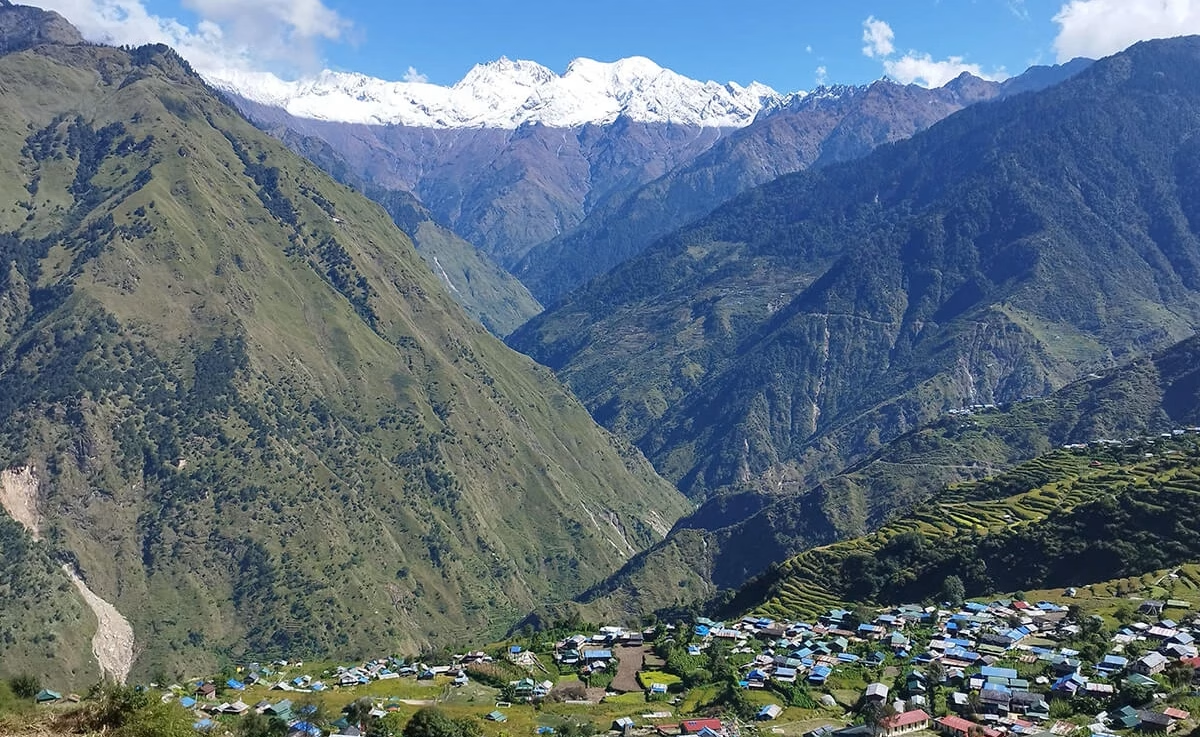
Why Off-the-Beaten-Path Treks Are the Future of Nepal Tourism explores how Nepal's lesser-known trekking routes are becoming increasingly popular among modern travelers seeking authentic, sustainable, and crowd-free experiences. The article explains how remote treks offer peaceful Himalayan landscapes, rich cultural immersion, greater wildlife encounters, and direct support for local communities through responsible tourism. It also highlights the best hidden trekking destinations, the advantages of community-based travel, and why these offbeat adventures represent the future of Nepal's tourism industry. The guide concludes with expert trekking advice, practical FAQs, and recommendations for choosing the right remote trek in Nepal.
For decades, Nepal has been recognized as the world’s greatest trekking destination. Legendary routes like Everest Base Camp, Annapurna Circuit, and Annapurna Base Camp have attracted hundreds of thousands of trekkers seeking breathtaking Himalayan scenery, rich mountain culture, and life-changing adventures.
These iconic trails deserve their reputation. They introduced generations of travelers to Nepal’s incredible landscapes and continue to inspire people from around the globe.
Yet travel trends are changing.
Today’s travelers are no longer searching only for famous destinations—they seek meaningful experiences, authentic local cultures, untouched wilderness, and responsible tourism. They want to escape crowds, reduce their environmental footprint, and discover places where tourism genuinely benefits local communities.
This shift is transforming Nepal’s tourism industry.
Off-the-beaten-path treks in Nepal are becoming the future of Himalayan tourism, offering experiences that combine adventure, sustainability, cultural immersion, and conservation in ways that mainstream trekking routes often cannot.
If you are planning your next Himalayan journey, here’s why choosing the road less traveled may become the most rewarding decision you make.
What Are Off-the-Beaten-Path Treks?
Off-the-beaten-path treks are routes that receive significantly fewer visitors than Nepal’s famous trekking circuits. Many pass through remote valleys, hidden villages, protected conservation areas, and culturally preserved Himalayan communities.
These treks generally feature:
- Minimal tourist traffic
- Authentic village life
- Less commercialized accommodation
- Incredible mountain scenery
- Rich indigenous cultures
- Greater biodiversity
- Sustainable community tourism
Some of Nepal’s finest hidden trekking destinations include:
- Tsum Valley Trek
- Nar Phu Valley Trek
- Upper Dolpo Trek
- Upper Mustang Trek
- Khopra Danda Trek
- Ruby Valley Trek
- Mohare Danda Trek
- Panch Pokhari Trek
- Dhaulagiri Circuit Trek
- Kanchenjunga Base Camp Trek
- Makalu Base Camp Trek
These regions showcase a side of Nepal that many visitors never experience.
1. Escape the Crowds and Experience True Himalayan Solitude
One of the biggest reasons travelers choose remote trekking routes is simple:
Peace.
The Himalayas have always represented silence, reflection, and connection with nature.
However, during spring and autumn trekking seasons, popular routes can become crowded with:
- Large organized trekking groups
- Long queues on suspension bridges
- Busy teahouses
- Frequent helicopter traffic
- Congested viewpoints
Although these routes remain spectacular, many trekkers now seek quieter alternatives.
Remote trekking routes restore what makes the Himalayas truly magical.
Imagine walking for hours while hearing nothing except:
- flowing rivers
- yak bells
- birdsong
- fluttering prayer flags
- mountain winds
Whether trekking through the isolated valleys of Upper Dolpo or climbing toward Khopra Ridge at sunrise, solitude becomes part of the experience.
Instead of competing for the perfect photograph, you’ll often have entire viewpoints to yourself.
2. Authentic Cultural Experiences That Cannot Be Manufactured
Nepal is home to dozens of ethnic communities, each preserving unique languages, traditions, festivals, architecture, and spiritual beliefs.
Popular trekking routes naturally evolved to serve international tourism.
Many villages now offer:
- International menus
- Espresso coffee
- Wi-Fi
- Attached bathrooms
- Western bakeries
These conveniences are welcome, but they sometimes reduce the authenticity many travelers hope to experience.
Remote trekking regions remain remarkably traditional.
In places like Tsum Valley, Nar Phu, and Upper Dolpo, centuries-old Tibetan Buddhist culture continues largely unchanged.
Visitors may witness:
- ancient monasteries
- monks performing daily rituals
- traditional yak caravans
- local farming practices
- stone-built villages
- spinning prayer wheels
- sacred festivals
- family-run homestays
Rather than feeling like a tourist, you become a welcomed guest sharing daily life with Himalayan communities.
These cultural exchanges often become the most memorable moments of an entire journey.
3. Sustainable Tourism Benefits More Communities
One of Nepal’s biggest tourism challenges is unequal economic distribution.
Large numbers of trekkers concentrate spending in a handful of famous destinations.
Meanwhile, many remote mountain communities receive very few visitors despite possessing extraordinary natural and cultural attractions.
Off-the-beaten-path trekking changes this.
Community-based tourism ensures that visitor spending directly supports local livelihoods.
Your trekking expenses contribute to:
- family-owned lodges
- local guides
- village porters
- women’s cooperatives
- schools
- health posts
- conservation projects
- community infrastructure
Trails like Ruby Valley and Mohare Danda have become successful examples of community-managed tourism, where local residents play a central role in planning, hosting, and protecting tourism development.
This creates a more balanced, Responsible tourism and resilient tourism economy across Nepal.
4. Better Opportunities for Wildlife Encounters
Nepal is far more than mountains.
The Himalayas are home to an extraordinary diversity of wildlife, including many globally threatened species.
Busy trekking corridors naturally reduce wildlife sightings because animals avoid areas with heavy human activity.
Remote trekking regions provide significantly better opportunities to observe Himalayan wildlife.
Depending on the season and location, trekkers may encounter:
- Red Panda
- Himalayan Tahr
- Blue Sheep
- Musk Deer
- Himalayan Monal
- Danphe (Nepal’s national bird)
- Blood Pheasant
- Griffon Vultures
- Snow Leopard tracks
- Himalayan Black Bear
Nature photographers especially appreciate the quieter trekking regions where wildlife behaves naturally without constant disturbance.
Many remote routes also pass through protected national parks and conservation areas that receive relatively few visitors.
5. Improved Trekking Infrastructure Makes Remote Adventures More Accessible
Years ago, remote trekking required extensive expedition logistics.
Trekkers needed:
- camping equipment
- kitchen staff
- cooks
- pack animals
- complicated supply chains
Today, many lesser-known trekking regions have developed excellent community teahouses.
While facilities remain simple compared to commercial trekking routes, trekkers can now enjoy:
- clean accommodation
- freshly prepared meals
- warm hospitality
- local cuisine
- experienced mountain guides
- improved trekking trails
This development makes remote trekking much more accessible while maintaining the wilderness experience.
Modern satellite communication, improved trail mapping, trained guides, and better emergency response systems have also significantly enhanced safety across many remote trekking destinations.
6. Travelers Want Experiences, Not Checklists
Modern tourism has evolved.
Many travelers no longer want to simply say:
“I reached Everest Base Camp.”
Instead, they seek stories that cannot be replicated.
They want experiences such as:
- sharing butter tea with local families
- sleeping beside ancient monasteries
- crossing untouched mountain passes
- watching sunrise alone over Himalayan peaks
- learning local traditions
- contributing positively to remote communities
These personal moments create deeper memories than simply checking famous destinations off a travel list.
Off-the-beaten-path trekking delivers these unforgettable experiences.
7. Conservation Through Responsible Tourism
Nepal’s remote mountain ecosystems remain among the most pristine on Earth.
Responsible trekking helps protect these fragile environments.
When managed properly, sustainable tourism supports:
- trail maintenance
- wildlife conservation
- forest protection
- waste management
- cultural preservation
- heritage restoration
- local employment
Many conservation projects rely directly on responsible tourism income.
Trekkers who choose licensed operators, local guides, and eco-friendly practices become active contributors to preserving Nepal’s natural heritage for future generations.
8. Local Guides Make Every Journey More Meaningful
Remote trekking such as Tsum Valley, Manaslu trek, Kanchanjunga Trek is not simply about finding a trail on a map.
Experienced local guides provide invaluable knowledge about:
- mountain safety
- altitude acclimatization
- local customs
- Buddhist traditions
- wildlife
- history
- weather conditions
- hidden viewpoints
Their stories transform beautiful landscapes into meaningful journeys.
Choosing a knowledgeable local guide also creates employment opportunities and ensures your adventure supports Nepal’s mountain communities.
Best Off-the-Beaten-Path Treks in Nepal
Here are some outstanding alternatives to Nepal’s busiest trekking routes:
| Trek | Best For | Duration |
|---|---|---|
| Tsum Valley Trek | Tibetan culture | 14–18 Days |
| Nar Phu Valley Trek | Hidden valleys | 12–16 Days |
| Upper Dolpo Trek | Wilderness | 20–28 Days |
| Upper Mustang Trek | Ancient Kingdom | 12–15 Days |
| Khopra Danda Trek | Quiet mountain views | 8–12 Days |
| Mohare Danda Trek | Community tourism | 5–8 Days |
| Ruby Valley Trek | Local villages | 10–14 Days |
| Kanchenjunga Base Camp | Remote expedition | 20–25 Days |
| Makalu Base Camp | Adventure | 18–22 Days |
| Dhaulagiri Circuit | Experienced trekkers | 18–22 Days |
Is an Off-the-Beaten-Path Trek Right for You?
These treks are ideal if you value:
- Authentic cultural experiences
- Peaceful trekking trails
- Sustainable travel
- Wildlife photography
- Adventure beyond famous destinations
- Responsible tourism
- Less crowded mountain views
- Supporting local communities
They may require slightly greater physical preparation and flexibility, but the rewards are extraordinary.
The Future of Nepal Tourism Lies Beyond the Famous Trails
Nepal’s iconic trekking routes will always remain among the world’s greatest adventures. Everest Base Camp and Annapurna Circuit have inspired millions and will continue welcoming travelers for generations.
Yet the future belongs to something deeper.
As travelers increasingly prioritize sustainability, authentic cultural encounters, environmental responsibility, and meaningful experiences, off-the-beaten-path treks are becoming the new standard for Himalayan exploration.
Hidden valleys, ancient monasteries, community-managed lodges, untouched forests, and peaceful mountain trails offer something increasingly rare in modern travel—genuine connection.
Choosing these lesser-known routes not only creates unforgettable personal memories but also supports local livelihoods, protects fragile ecosystems, and helps preserve Nepal’s remarkable cultural heritage.
For travelers seeking the true spirit of the Himalayas, the greatest adventures are no longer found on the busiest trails—they begin where the crowds end.
Why Travel with Nepal Tours Packages?
At Nepal Tours Packages, we believe trekking should be more than reaching a destination—it should create lasting connections with people, culture, and nature. With 25+ years of experience organizing tailor-made holidays across Nepal, our local team designs safe, responsible, and authentic adventures led by licensed guides who know every trail. We specialize in private and customized itineraries, support community-based tourism, and follow responsible trekking practices that benefit local villages while minimizing environmental impact. Whether you’re planning a remote trek in Tsum Valley or an adventure in Upper Dolpo, we’ll help you explore Nepal beyond the crowds with confidence and local expertise.
Ready to Explore Nepal Beyond the Crowds?
If you’re looking for an authentic Himalayan adventure away from busy trekking routes, our travel specialists can help you choose the perfect off-the-beaten-path trek based on your interests, fitness level, and travel season.
Contact Nepal Tours Packages today for expert advice and a personalized trekking itinerary, and discover the hidden side of Nepal that most travelers never get to see.
Frequently Asked Questions (FAQs) – Off-the-Beaten-Path Treks in Nepal
1. What are off-the-beaten-path treks in Nepal?
Off-the-beaten-path treks in Nepal are less-traveled and relatively remote trekking routes that take you beyond the country’s busiest Himalayan trails. Instead of following heavily developed routes, these journeys lead through remote valleys, traditional mountain villages, pristine forests, high mountain passes, ancient monasteries, and landscapes where everyday life remains closely connected to local traditions.
Unlike popular routes such as Everest Base Camp or the Annapurna Circuit, lesser-known treks generally offer fewer trekkers, quieter trails, more intimate encounters with local communities, and a stronger sense of exploration. Some routes are suitable for moderately fit hikers, while others involve challenging high-altitude terrain and require considerable trekking experience.
For travelers looking for authentic Himalayan experiences away from crowds, these treks provide an opportunity to explore another side of Nepal.
2. Which are the best off-the-beaten-path treks in Nepal?
Nepal has an extraordinary range of lesser-known trekking destinations, from relatively accessible community-based trails to demanding high-altitude wilderness expeditions.
Some of the best options include:
- Tsum Valley Trek
- Nar Phu Valley Trek
- Upper Dolpo Trek
- Upper Mustang Trek
- Khopra Danda Trek
- Mohare Danda Trek
- Ruby Valley Trek
- Panch Pokhari Trek
- Kanchenjunga Base Camp Trek
- Makalu Base Camp Trek
- Dhaulagiri Circuit Trek
- Manaslu Circuit Trek
Each route offers a different combination of mountain scenery, cultural heritage, remoteness, wildlife, and adventure.
For example, Tsum Valley is particularly appealing to travelers interested in Tibetan Buddhist culture, while Nar Phu offers dramatic Himalayan landscapes and remote traditional villages. Upper Mustang provides a fascinating combination of Tibetan-influenced culture and desert-like Trans-Himalayan scenery, while Khopra Danda and Mohare Danda offer more accessible alternatives to the busiest trekking routes.
The best trek depends on your available time, fitness, previous experience, interests, preferred accommodation, and desired level of remoteness.
3. Are off-the-beaten-path treks suitable for beginners?
Some lesser-known treks are suitable for fit beginners, while others are intended for experienced trekkers.
Relatively accessible options such as Mohare Danda, Khopra Danda, and Ruby Valley can be considered by first-time trekkers who have a reasonable level of fitness and are comfortable walking several hours a day.
More demanding routes such as Upper Dolpo, Dhaulagiri Circuit, Makalu Base Camp, and Kanchenjunga involve longer trekking days, greater altitude gain, remote terrain, and potentially difficult weather conditions. Previous trekking experience is strongly recommended for these journeys.
The important factor is not simply whether you have trekked before, but whether the selected itinerary matches your physical ability, experience, available preparation time, and comfort level.
A local trekking specialist can help you choose a route that provides adventure without being unnecessarily difficult.
4. Do I need a guide for remote treks in Nepal?
Yes, hiring an experienced local guide is strongly recommended for off-the-beaten-path trekking.
Some trekking areas have specific guide requirements and permit regulations, while other routes may be technically possible without a guide. However, remote trekking is very different from walking on heavily established trails.
A knowledgeable guide can assist with:
- Navigation
- Route planning
- Accommodation arrangements
- Weather and trail conditions
- Altitude management
- Communication with local communities
- Permit requirements
- Cultural interpretation
- Emergency assistance
- Local transportation
- Changes caused by weather or trail conditions
In remote areas, mobile connectivity may be limited and there may be fewer alternative routes or services available. An experienced local guide therefore provides both practical assistance and an additional level of safety.
5. Are special permits required for off-the-beaten-path treks?
Yes, depending on the trekking region.
Many remote trekking areas require permits in addition to regular conservation area or national park permits. Restricted areas such as Upper Mustang, Upper Dolpo, Nar Phu Valley, and Tsum Valley have additional permit requirements and regulations.
Permit fees and conditions vary according to the destination, season, duration, and applicable government regulations. Some restricted areas also require trekkers to travel through a registered trekking agency and meet specific guide or group requirements.
A reputable trekking agency can arrange the necessary permits and explain the applicable regulations before you begin your trek.
For current requirements, it is important to check the latest information from the Government of Nepal and use a registered trekking agency for restricted-area journeys.
6. What is the best time for off-the-beaten-path trekking in Nepal?
For most trekking regions, the best seasons are spring and autumn.
Spring – March to May
Spring is one of the most attractive times to trek in Nepal. The weather is generally favorable, temperatures are comfortable at lower and middle elevations, and the hills come alive with rhododendron flowers.
Spring offers:
- Colorful rhododendron forests
- Pleasant trekking temperatures
- Good mountain visibility
- Longer daylight hours
- Excellent opportunities for photography
Autumn – September to November
Autumn is traditionally regarded as one of the best trekking seasons. Following the monsoon, the atmosphere is often clearer, the mountain views can be spectacular, and trekking conditions are generally stable.
Autumn offers:
- Clear Himalayan views
- Comfortable daytime temperatures
- Stable trekking conditions
- Excellent visibility
- Crisp mountain landscapes
Summer and Monsoon
Some regions are less suitable during the monsoon because of rain, muddy trails, landslides, and cloud cover. However, Upper Mustang and parts of Upper Dolpo lie in Nepal’s rain-shadow region, making them possible options during the summer months.
Always check current trail, weather, permit, and transportation conditions before travelling.
7. Are there teahouses on remote trekking routes?
Yes, but the standard of accommodation varies significantly from one region to another.
Some increasingly popular off-the-beaten-path routes now have community-run teahouses, locally owned lodges, or homestays. These provide an opportunity to stay close to local communities and experience traditional hospitality.
Facilities are generally simpler than those available on the Everest Base Camp or Annapurna routes. You may find:
- Basic private or shared rooms
- Shared bathrooms
- Simple dining areas
- Traditional local meals
- Limited hot-water facilities
- Limited electricity or charging facilities
On extremely remote or expedition-style routes, such as parts of Upper Dolpo or Dhaulagiri, camping may still be necessary.
The accommodation style should therefore be considered carefully when choosing your trek.
8. How do off-the-beaten-path treks support local communities?
One of the major advantages of responsible trekking in less-visited areas is that tourism can distribute economic benefits beyond Nepal’s most established trekking destinations.
Tourism spending can directly or indirectly support:
- Local guides
- Porters
- Family-run lodges
- Homestays
- Restaurants
- Farmers
- Local transport operators
- Handicraft producers
- Small community businesses
When tourism income remains within local communities, it can create incentives to preserve traditional culture and protect the natural environment.
Community-based tourism initiatives may also contribute to local infrastructure, education, conservation, and other development activities.
Responsible trekking therefore has the potential to create a positive relationship between tourism, local communities, and conservation.
9. What wildlife can I see on remote treks in Nepal?
Nepal’s remote trekking regions are home to an impressive variety of Himalayan wildlife. What you see depends on the region, season, elevation, habitat, and luck.
Possible wildlife sightings include:
- Red Panda
- Himalayan Tahr
- Blue Sheep
- Musk Deer
- Himalayan Monal (Danphe)
- Himalayan Black Bear
- Griffon Vultures
- Various pheasant species
- Snow Leopard tracks or signs
The snow leopard, in particular, is extremely elusive, so seeing one in the wild is rare. However, trekkers travelling through suitable high-altitude habitats may occasionally discover tracks or other signs.
Remote conservation areas can offer some of Nepal’s most rewarding wildlife experiences because the landscapes remain relatively undisturbed and human density is lower.
10. Why are off-the-beaten-path treks considered the future of Nepal tourism?
The future of Himalayan tourism is increasingly about quality, authenticity, sustainability, and meaningful experiences, rather than simply visiting the most famous destinations.
Popular trekking routes remain extraordinary, but increasing visitor numbers can place pressure on trails, accommodation, natural resources, and local communities.
Promoting lesser-known trekking destinations can help:
- Spread tourism income to new communities
- Reduce pressure on crowded trails
- Encourage local employment
- Support community-based tourism
- Preserve traditional cultures
- Protect natural environments
- Create new tourism opportunities
- Encourage longer and more meaningful journeys
For travelers, these routes also provide something increasingly valuable: space, authenticity, and a stronger connection with local people and nature.
This does not mean that popular treks are no longer worthwhile. Rather, developing a broader range of destinations can help create a more balanced and sustainable tourism industry across Nepal.
11. Which hidden trek in Nepal offers the best cultural experience?
The Tsum Valley Trek is one of the strongest choices for travelers whose primary interest is culture and spirituality.
Located in the Manaslu region, Tsum Valley has a distinctive Tibetan Buddhist heritage and a long history of traditional mountain life. The trek passes through ancient villages, Buddhist monasteries, chortens, mani walls, prayer flags, and dramatic Himalayan landscapes.
The region’s relative isolation has helped preserve many traditional customs and architectural features.
Travelers interested in:
- Tibetan Buddhist culture
- Ancient monasteries
- Traditional mountain villages
- Spiritual experiences
- Local traditions
- Quiet Himalayan landscapes
may find Tsum Valley particularly rewarding.
Other culturally rich options include Nar Phu Valley, Upper Mustang, and Manaslu, each offering its own distinctive traditions and landscapes.
12. Are off-the-beaten-path treks more expensive than popular treks?
Not necessarily.
The cost depends on several factors, including:
- Trek duration
- Transportation
- Guide and porter services
- Accommodation
- Permit requirements
- Restricted-area fees
- Camping requirements
- Group size
- Season
- Level of comfort
Some restricted-area treks can be more expensive than popular routes because of special permit fees, limited accommodation, longer itineraries, and the additional logistics required to operate in remote areas.
However, community-based treks such as Mohare Danda, Khopra Danda, and Ruby Valley can be competitively priced.
A less-travelled route should not automatically be considered a luxury or expensive trekking option. There are off-the-beaten-path treks available across a broad range of budgets.
13. How long do off-the-beaten-path treks in Nepal take?
There is no standard duration because remote treks range from relatively short community-based journeys to multi-week wilderness expeditions.
For example, shorter treks may take around a week, while routes such as Kanchenjunga, Upper Dolpo, Makalu Base Camp, or Dhaulagiri Circuit can require several weeks depending on the itinerary.
The duration also depends on whether you include:
- Acclimatization days
- Rest days
- Scenic detours
- Side trips
- Cultural experiences
- Transportation days
- Contingency days
It is generally better to allow sufficient time rather than trying to complete a remote trek on an unnecessarily tight schedule.
14. Are remote treks safe?
Remote trekking can be very rewarding, but it requires more preparation than trekking on well-established routes.
Potential challenges include:
- High altitude
- Rapid weather changes
- Remote terrain
- Limited medical facilities
- Poor communication coverage
- Difficult trail conditions
- Landslides or snowfall
- Limited accommodation
Safety can be improved by choosing an appropriate itinerary, using an experienced guide, following acclimatization recommendations, carrying suitable equipment, checking weather conditions, and having appropriate travel insurance.
Your guide should also monitor your condition throughout the trek and make appropriate decisions if weather or health conditions require an itinerary adjustment.
15. What level of fitness do I need for an off-the-beaten-path trek?
Fitness requirements vary considerably between routes.
For easier and moderate treks, you should be comfortable walking for several hours on consecutive days, including uphill and downhill sections.
For demanding high-altitude routes, you should have:
- Good cardiovascular fitness
- Strong legs
- Good endurance
- Ability to walk for extended periods
- Mental preparation for remote environments
Preparing several weeks or months before your trek with hiking, walking, stair climbing, cardiovascular exercise, and strength training can make the journey more comfortable.
You do not need to be an athlete, but you should choose a trek that realistically matches your physical ability.
16. What kind of accommodation should I expect?
Accommodation depends heavily on the trekking region.
On established routes, you may find comfortable teahouses with private rooms, dining rooms, hot showers, charging facilities, and Wi-Fi in some locations.
On remote routes, facilities can be much simpler. Accommodation may consist of:
- Family-run teahouses
- Community lodges
- Homestays
- Basic mountain lodges
- Tented camps
The simpler accommodation is part of the experience of travelling in remote Himalayan communities. If comfort is particularly important to you, your itinerary should be designed around destinations where suitable accommodation is available.
17. What should I pack for an off-the-beaten-path trek?
Your packing requirements depend on the route and season, but essential items generally include:
- Good trekking boots
- Layered clothing
- Warm jacket
- Waterproof jacket
- Trekking trousers
- Warm socks
- Gloves
- Sun hat
- Warm hat
- Sunglasses
- Sunscreen
- Water bottles
- Personal medication
- First-aid essentials
- Headlamp
- Trekking poles
- Sleeping bag where required
- Personal toiletries
- Passport and permits
Remote treks can have fewer opportunities to purchase forgotten items, so preparation is especially important.
For camping treks, additional technical equipment and warmer sleeping systems may be required.
18. Can I combine an off-the-beaten-path trek with a Nepal tour?
Absolutely. Combining a remote trek with a cultural or wildlife tour is an excellent way to experience different sides of Nepal.
For example, you could combine trekking with:
- Kathmandu Valley sightseeing
- Bhaktapur and Patan
- Pokhara
- Chitwan National Park
- Lumbini
- Bandipur
- Nagarkot
- Mountain flights
This allows you to experience Nepal’s cultural heritage and lowland landscapes before or after your Himalayan trek.
A tailor-made itinerary can also be designed with additional rest days before the trek, which can be particularly useful for international travelers.
19. Can families or older travelers do off-the-beaten-path treks?
Yes, but the trek must be selected carefully.
Not every remote trekking route is suitable for families or older travelers. Routes with moderate elevations, shorter walking days, comfortable accommodation, and gradual ascents may be appropriate for fit and experienced travelers.
For families, factors such as children’s age, previous hiking experience, altitude, accommodation, and emergency access should be considered.
For older travelers, a slower itinerary with additional rest days can often make a significant difference.
The most important principle is to choose the right trek rather than simply the most famous or challenging trek.
20. What makes these treks different from Everest Base Camp or Annapurna?
Everest Base Camp and Annapurna are famous for good infrastructure, spectacular mountain scenery, established trekking routes, and a wide range of accommodation.
Off-the-beaten-path treks offer a different experience.
They generally provide:
- Fewer trekkers
- More remote landscapes
- Smaller mountain communities
- Less-developed infrastructure
- Greater cultural immersion
- More wilderness
- A stronger sense of exploration
The trade-off is that facilities may be simpler and logistics can be more complicated.
For travelers who value solitude, authenticity, and discovery, the additional effort can be well worth it.
21. Are off-the-beaten-path treks environmentally sustainable?
They can be, when managed responsibly.
Responsible trekking should minimize environmental impact through practices such as:
- Avoiding unnecessary plastic waste
- Using refillable water bottles
- Respecting local conservation rules
- Staying on established trails
- Supporting locally owned businesses
- Avoiding damage to vegetation
- Respecting wildlife
- Reducing waste
- Respecting local customs
Travelers can contribute by choosing responsible local operators and supporting communities rather than relying exclusively on imported services.
Sustainability is not only about protecting nature; it is also about ensuring that local communities benefit from tourism and that cultural traditions are respected.
22. Can I trek during the monsoon season?
Yes, depending on the region.
Most trekking areas on Nepal’s southern and eastern slopes receive significant rainfall during the monsoon. However, Upper Mustang and Upper Dolpo are located in rain-shadow areas, making them particularly attractive summer trekking destinations.
Other routes may also be possible during monsoon depending on current conditions, but muddy trails, landslides, leeches, clouds, and transportation disruptions should be considered.
If you are planning a summer trek, choose the region carefully and obtain current weather and trail information before departure.
23. Do remote trekking areas have internet and mobile connectivity?
Connectivity varies significantly.
Some villages have mobile network coverage or Wi-Fi, while extremely remote areas may have little or no reliable connectivity.
You should therefore avoid depending entirely on internet access for communication or work.
Download important information before starting the trek and inform family or friends that connectivity may be intermittent.
Your trekking guide and agency should also have appropriate communication arrangements for the route and group.
24. Can I customize an off-the-beaten-path trekking itinerary?
Yes. Private and tailor-made trekking itineraries are particularly useful for lesser-known routes because travelers often have different expectations regarding duration, difficulty, accommodation, and pace.
Your itinerary can potentially be adjusted according to:
- Travel dates
- Available time
- Fitness level
- Trekking experience
- Group size
- Accommodation preference
- Budget
- Cultural interests
- Wildlife interests
- Photography
- Desired level of remoteness
Additional acclimatization or rest days can also be incorporated where appropriate.
A customized itinerary allows you to experience a remote part of Nepal without forcing your journey into a standard fixed schedule.
25. How do I choose the right off-the-beaten-path trek in Nepal?
The best trek is not necessarily the longest, highest, or most remote one. It is the trek that matches your interests, fitness, experience, available time, and expectations.
Consider these questions before choosing:
- How many days do I have?
- How fit am I?
- Have I trekked at altitude before?
- Do I prefer culture or wilderness?
- Am I comfortable with basic accommodation?
- Do I want a teahouse trek or camping experience?
- How remote do I want to travel?
- Am I interested in wildlife?
- Do I want to cross high mountain passes?
- What is my budget?
- What season am I travelling?
If you are unsure, speaking with an experienced local trekking specialist can help you compare routes and choose a journey that is challenging enough to be rewarding without being unnecessarily demanding.
Final Thoughts
Off-the-beaten-path treks offer an opportunity to experience a quieter, more authentic, and less-commercial side of Nepal. From the ancient Buddhist communities of Tsum Valley and the remote landscapes of Nar Phu to the dramatic wilderness of Makalu, Kanchenjunga, Upper Dolpo, and Dhaulagiri, these routes reveal a side of the Himalayas that many visitors never experience.
They may require additional preparation, longer travel times, simpler accommodation, and careful logistical planning, but the rewards can be extraordinary: fewer crowds, deeper cultural encounters, spectacular landscapes, and a genuine sense of adventure.
If you are unsure which route is right for you, our local travel specialists can help you compare the different off-the-beaten-path treks in Nepal and design a private itinerary around your interests, fitness, available time, and preferred level of comfort.
About the Author: This article was written by Kishor, a Nepal tourism specialist with over 25 years of experience designing trekking and cultural tours across Nepal, Bhutan, and Tibet. Having personally explored many of Nepal’s remote trekking regions, he shares practical advice to help travelers experience the Himalayas responsibly and authentically.
