

Summary
This 18-day Mount Kailash Mansarovar Yatra from Nepal via Lhasa is thoughtfully designed as an alternative route following the major flooding and disruption along the Nepal–Tibet border in 2026. Instead of depending on the traditional overland route through Kerung/Gyirong, the journey connects Kathmandu, Pokhara, Lhasa and the Kailash region by air, subject to flight schedules and travel permits.
The itinerary combines Nepal’s cultural heritage and Himalayan scenery with the spiritual highlights of Lhasa, Lake Manasarovar and the sacred Mount Kailash Kora. With dedicated time for sightseeing, acclimatization and a carefully paced pilgrimage, it offers travellers a practical and more comfortable way to experience this remarkable Himalayan journey while the overland border route remains subject to changing conditions.
Kathmandu • Pokhara • Lhasa • Mount Kailash • Lake Manasarovar • Kathmandu
Nepal, Lhasa & Mount Kailash Mansarovar Yatra – 18 Days is a carefully designed Himalayan journey combining the cultural heritage of Kathmandu, the natural beauty of Pokhara, the spiritual heart of Lhasa, and the sacred pilgrimage to Mount Kailash and Lake Manasarovar in one unforgettable trip.
Designed as a comfortable alternative to the Kailash Mansarovar Yatra with traditional overland route through the Kerung–Gyirong border, this itinerary uses flights between Kathmandu, Lhasa and the Kailash region, reducing long road journeys and providing more time for acclimatization and meaningful exploration.
Following the major flooding and landslides along the Nepal–Tibet border in 2026, the future reopening of the Kerung route for normal international tourist travel remains uncertain. Rather than making your pilgrimage dependent on a border crossing, this alternative route is designed around Lhasa, offering a practical and more comfortable way to combine Nepal, Lhasa and the Mount Kailash Mansarovar Yatra in a single 18-day journey.
From the sacred temples of Kathmandu and the Annapurna foothills of Pokhara to the monasteries of Lhasa, the turquoise waters of Lake Manasarovar and the three-day Parikrama around Mount Kailash, every stage of the journey is carefully paced to balance spiritual significance, Himalayan scenery, comfort and acclimatization.
The route combines three very different Himalayan experiences in one carefully paced journey:
- The cultural and spiritual heritage of Kathmandu Valley
- The natural beauty of Pokhara and the Annapurna foothills
- Two full days of sightseeing and acclimatization in Lhasa
- The sacred pilgrimage to Mount Kailash and Lake Manasarovar
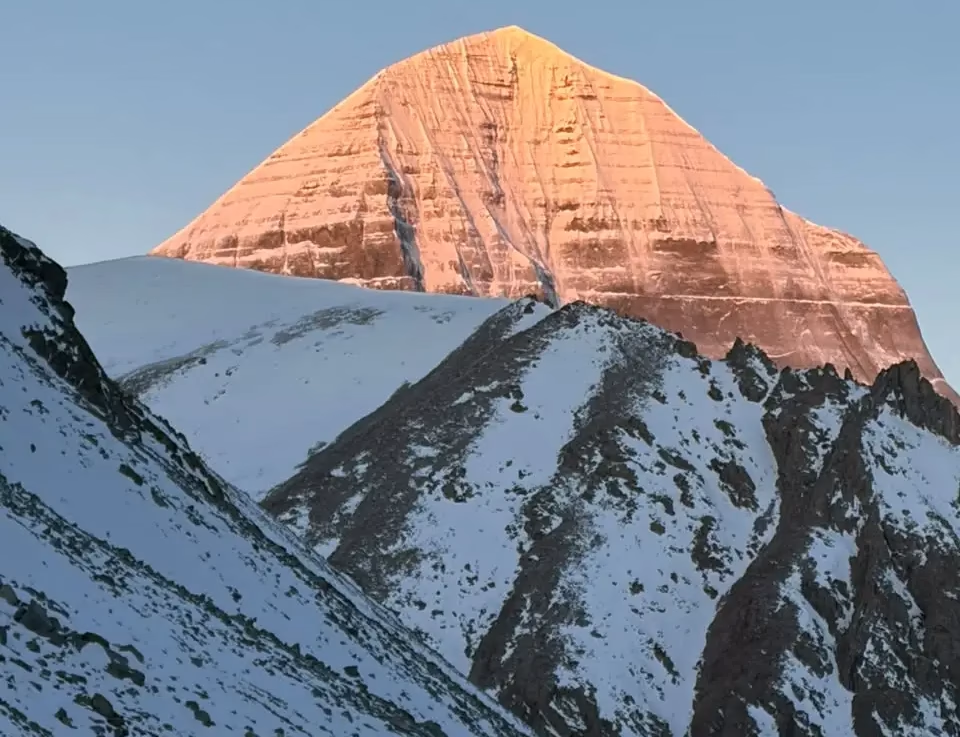
- A three-day Mount Kailash Parikrama/Kora
- Return to Kathmandu by air
This itinerary is particularly suitable for travellers who would prefer to avoid a long overland journey from the Nepal border and instead enjoy a more comfortable combination of private touring, carefully selected hotels, domestic flights and a well-planned Kailash pilgrimage.
Important Route Note – Nepal Lhasa & Mount Kailash Mansarovar Yatra
The exact flight schedules between Lhasa and Ngari/Purang are seasonal and subject to change. The final routing may therefore be adjusted between Lhasa–Ngari/Purang–Lhasa according to the operating schedule available for the confirmed travel dates.
Likewise, Tibet entry permits and other travel authorizations are subject to approval by the relevant Chinese/Tibetan authorities. We will coordinate these arrangements as part of the trip preparation.
Trip Facts
| Feature | Details |
|---|---|
| Duration | 18 Days / 17 Nights |
| Countries/Regions | Nepal & Tibet, China |
| Starting Point | Kathmandu, Nepal |
| Ending Point | Kathmandu, Nepal |
| Main Pilgrimage | Mount Kailash & Lake Manasarovar |
| Kailash Route | Lhasa – Ngari/Purang – Manasarovar – Darchen – Kailash Kora |
| Kora Duration | 3 Days |
| Highest Trekking Point | Dolma La Pass, approximately 5,630 m |
| Accommodation | Comfortable hotels in Kathmandu, Pokhara and Lhasa; appropriate accommodation during the Kailash section |
| Transport | Private vehicle in Nepal and Tibet; domestic flights as specified |
| Trekking Style | Pilgrimage trek with support crew |
| Fitness Level | Moderate to challenging due primarily to altitude |
| Best suited for | Pilgrims, spiritual travellers, families and experienced Himalayan travellers seeking a more comfortable route |
| Border Route | Air route via Lhasa rather than relying on Kerung/Gyirong |
Why Choose This Alternative Kailash Route?
1. Avoid dependence on the Kerung border
The traditional Nepal–Tibet overland route depends on the operational status of the Kerung/Gyirong crossing and the condition of the mountain road. Following the 2026 disaster, the timing of normal tourist operations through this corridor cannot be guaranteed for 2027.
This itinerary therefore provides a planned air-access alternative rather than waiting for the border situation to become certain.
2. A more comfortable journey
Instead of spending several days travelling by road between Kathmandu and Tibet, you fly directly from Kathmandu to Lhasa.
You also have two full days in Lhasa before continuing towards Mount Kailash, allowing valuable time for sightseeing and acclimatization.
3. Nepal is part of the experience
Rather than using Kathmandu simply as an entry and exit point, this itinerary allows you to experience some of Nepal’s most important cultural and natural highlights.
The journey includes:
- Pashupatinath Temple
- Boudhanath Stupa
- Patan Durbar Square
- Bhaktapur
- Nagarkot
- Pokhara
- Annapurna foothills
- Sarangkot sunrise
4. Lhasa acclimatization before Kailash
Lhasa is already at approximately 3,650 m, making it an important stage in the gradual acclimatization process before travelling towards the much higher altitude of the Kailash region.
Two complete days are allocated in Lhasa for sightseeing and acclimatization.
5. Fewer long overland transfers
The use of flights significantly reduces the amount of time spent on long road journeys, particularly between Kathmandu and Tibet.
Detailed Day-by-Day Itinerary – Nepal Lhasa & Mount Kailash Mansarovar Yatra
Day 1: Arrive in Kathmandu
Arrive at Tribhuvan International Airport in Kathmandu.
Our representative will meet you at the airport and transfer you to your hotel.
After check-in, the remainder of the day is free to relax after your international journey.
Depending on your arrival time and energy level, we can also arrange a short orientation walk or briefing.
Overnight: Kathmandu
Meals: Welcome/assistance only
Day 2: Kathmandu Heritage Tour
Today we explore some of the most important cultural and spiritual landmarks of Kathmandu Valley.
Pashupatinath Temple
Begin with a visit to Pashupatinath Temple, one of the most important Hindu temples dedicated to Lord Shiva and one of the most sacred pilgrimage sites in Nepal.
The temple complex lies beside the Bagmati River and is also an important centre for Hindu religious ceremonies.
Boudhanath Stupa
Continue to Boudhanath, one of the world’s great Buddhist stupas.
The huge white dome and golden pinnacle are surrounded by monasteries, prayer wheels and traditional Tibetan Buddhist shops.
You will have time to walk around the stupa and experience the atmosphere of this important spiritual centre.
Patan
Continue to Patan, also known as Lalitpur.
Visit Patan Durbar Square, renowned for its Newari architecture, temples, courtyards and traditional artistic heritage.
Return to Kathmandu in the afternoon.
Overnight: Kathmandu
Meals: Breakfast
Day 3: Bhaktapur & Nagarkot
After breakfast, drive to Bhaktapur, one of the best-preserved historic cities in the Kathmandu Valley.
Explore Bhaktapur Durbar Square, including its traditional Newari architecture, temples, courtyards and historic streets.
After sightseeing, continue to Nagarkot, a hill station on the eastern edge of Kathmandu Valley.
Nagarkot is known for its Himalayan views and peaceful countryside setting.
If weather permits, sunset and mountain views can be enjoyed from the hotel.
Overnight: Nagarkot
Meals: Breakfast
Day 4: Nagarkot – Kathmandu – Pokhara
After breakfast, drive back towards Kathmandu.
Continue to the airport and board your flight to Pokhara.
The short flight provides an easy transition from the Kathmandu Valley to the beautiful lakeside city of Pokhara.
Upon arrival, transfer to your hotel.
The remainder of the afternoon is free to relax beside Phewa Lake or explore the Lakeside area.
Overnight: Pokhara
Meals: Breakfast
Flight: Kathmandu–Pokhara
Day 5: Annapurna Foothills Hike
Today enjoy a beautiful short hike in the foothills of the Annapurna region.
Drive towards Kande, the starting point of the hike.
Kande – Australian Camp – Dhampus – Phedi
The trail passes through forest, traditional villages and beautiful Himalayan landscapes.
The route offers impressive views of the Annapurna range and surrounding hills, particularly in clear weather.
Continue through Australian Camp and towards Dhampus, a traditional Gurung settlement.
From Dhampus, continue downhill towards Phedi, where the vehicle will meet you.
Drive back to Pokhara.
This is not intended as a strenuous high-altitude trek but as a scenic Himalayan walking experience before your Tibet journey.
Overnight: Pokhara
Meals: Breakfast
Walking: Approximately 4–5 hours, depending on pace
Day 6: Sarangkot Sunrise & Pokhara Sightseeing – Kathmandu
Early morning drive to Sarangkot for sunrise.
Weather permitting, enjoy panoramic views towards the Annapurna, Machhapuchhre/Fishtail and surrounding Himalayan peaks.
Return to Pokhara for breakfast.
Continue with a sightseeing tour covering selected highlights of Pokhara, such as:
- Phewa Lake
- Lakeside
- Davis Falls
- Gupteshwor Cave
- International Mountain Museum, subject to opening arrangements
In the afternoon, transfer to Pokhara Airport for your flight back to Kathmandu.
On arrival in Kathmandu, transfer to your hotel.
Overnight: Kathmandu
Meals: Breakfast
Flight: Pokhara–Kathmandu
Day 7: Fly Kathmandu – Lhasa
After breakfast, transfer to the airport for your flight from Kathmandu to Lhasa.
This is the major transition from Nepal into Tibet.
Upon arrival in Lhasa, complete immigration and customs formalities before meeting your Tibetan guide and transferring to your hotel.
The remainder of the day is intentionally kept free.
Because Lhasa is at approximately 3,650 m, it is important not to overexert yourself after arrival.
Drink plenty of water, eat lightly and rest.
Overnight: Lhasa
Meals: Breakfast
Flight: Kathmandu–Lhasa
Day 8: Lhasa Sightseeing & Acclimatization
Today begins your exploration of Lhasa while continuing to acclimatize.
Depending on local conditions and permit arrangements, sightseeing may include:
Jokhang Temple
The spiritual heart of Lhasa and one of the most important pilgrimage destinations in Tibetan Buddhism.
Barkhor Square
Walk through the historic Barkhor area surrounding Jokhang Temple and observe pilgrims performing traditional devotional practices.
The remainder of the day is deliberately relaxed.
Your guide will monitor the pace and allow sufficient time for acclimatization.
Overnight: Lhasa
Meals: Breakfast
Day 9: Lhasa Sightseeing & Acclimatization
Your second full day in Lhasa provides further acclimatization before travelling towards the much higher Kailash region.
Depending on permits and opening arrangements, sightseeing may include:
Potala Palace
The magnificent Potala Palace dominates the Lhasa skyline and is one of Tibet’s most recognizable landmarks.
Sera Monastery
If time and local arrangements permit, visit Sera Monastery, traditionally associated with Tibetan Buddhist philosophical debate.
The day’s programme will be paced carefully.
The priority is not to rush sightseeing but to prepare your body for the altitude ahead.
Overnight: Lhasa
Meals: Breakfast
Day 10: Fly Lhasa – Ngari/Purang
After breakfast, transfer to the airport for your flight towards Ngari/Purang, depending on the operating flight schedule.
The Ngari region is the gateway to Mount Kailash and Lake Manasarovar.
On arrival, transfer to your comfortable hotel and rest.
This is another important acclimatization stage before reaching the higher altitude around Manasarovar and Darchen.
Overnight: Ngari/Purang area
Meals: Breakfast
Flight: Lhasa–Ngari/Purang, subject to seasonal operation
Day 11: Holy Lake Manasarovar – Chiu Gompa – Darchen
Today begins the sacred pilgrimage towards Mount Kailash.
Drive towards Lake Manasarovar, one of the most revered lakes in the Himalayas.
The lake is sacred to Hindus, Buddhists, Jains and followers of the Bon tradition.
Subject to local conditions and available time, there will be an opportunity for an optional hike towards Chiu Gompa, dramatically located above the lake.
Enjoy views across the vast turquoise waters towards the surrounding mountains.
Continue towards Darchen, the principal starting point for the Mount Kailash Kora.
Rest and prepare for the following day’s trek.
Overnight: Darchen
Meals: Breakfast
Day 12: Begin Mount Kailash Parikrama – Darchen to Derapuk
Today begins the main pilgrimage.
The Mount Kailash Parikrama, also known as the Kora, traditionally takes three days.
Begin walking from the Darchen area towards Derapuk.
The trail gradually enters the dramatic valley beneath Mount Kailash.
As you approach Derapuk, views of the sacred northern face of Mount Kailash become increasingly impressive.
The pace will be slow and steady because of the extreme altitude.
Overnight: Guesthouse/lodge in Derapuk
Meals: Breakfast
Trekking: Approximately 12–14 km, subject to the actual route and local conditions
Day 13: Derapuk – Dolma La – Zuthulpuk
This is the most demanding day of the Kailash Kora.
Continue towards the high point of the pilgrimage at Dolma La Pass, approximately 5,630 m.
The combination of altitude, steep terrain and weather makes this the physically most challenging section.
After crossing Dolma La, descend towards the valley and continue towards Zuthulpuk.
This day should be approached slowly and without rushing.
Our local trekking support team will assist throughout the route.
Overnight: Guesthouse/lodge in Zuthulpuk
Meals: Breakfast
Trekking: Approximately 18–22 km, depending on final route and local conditions
Important
The Kailash Kora is a high-altitude pilgrimage, not an ordinary sightseeing excursion. Previous trekking experience is helpful, but the most important factors are acclimatization, physical preparation and the ability to walk steadily at high altitude.
Day 14: Complete Kailash Parikrama – Darchen – Ngari/Purang
Complete the final section of the Mount Kailash Kora.
After completing the pilgrimage, return towards Darchen.
Meet your vehicle and continue towards the Ngari/Purang area.
After the demanding previous day, the road journey provides an opportunity to rest.
Overnight: Ngari/Purang area
Meals: Breakfast
Day 15: Fly Ngari/Purang – Lhasa
After breakfast, transfer to the airport for your return flight to Lhasa.
On arrival, transfer to your hotel.
The remainder of the day is free to relax.
This also provides an important buffer between the high-altitude Kailash section and your return flight to Kathmandu.
Overnight: Lhasa
Meals: Breakfast
Flight: Ngari/Purang–Lhasa, subject to seasonal operation
Day 16: Fly Lhasa – Kathmandu
After breakfast, transfer to the airport for your flight from Lhasa to Kathmandu.
Upon arrival in Kathmandu, meet our representative and transfer to your hotel.
The remainder of the day is free for relaxation, shopping or enjoying your final evening in Nepal.
Overnight: Kathmandu
Meals: Breakfast
Flight: Lhasa–Kathmandu
Day 17: Buffer Day in Kathmandu
This day is intentionally kept free as a buffer day.
It is particularly valuable on a journey involving high-altitude travel and international/domestic flights.
It provides flexibility in case of:
- Weather-related flight delays
- Changes to the Tibet travel schedule
- Delays during the Kailash section
- Additional rest following the Kora
- Other unforeseen operational circumstances
If everything operates according to schedule, you can use the day to relax, shop for souvenirs or explore Kathmandu independently.
Overnight: Kathmandu
Meals: Breakfast
Day 18: Departure from Kathmandu
After breakfast, at the appropriate time, transfer to Tribhuvan International Airport for your onward flight home.
Your Nepal, Tibet and Mount Kailash Mansarovar Yatra concludes with our assistance at the airport.
Meals: Breakfast
China Visa & Tibet Travel Permit
Chinese Visa from Kathmandu
For travellers who require a Chinese visa, the application is handled through the Chinese Visa Application Service Center in Kathmandu.
The current Kathmandu procedure requires applicants to complete the online application and upload the required documents for preliminary review. Once the application reaches the appropriate status, the applicant submits the passport and required documents at the Visa Application Service Center.
The current centre is located at:
Chinese Visa Application Service Center
1st Floor, Rising Mall, Kamaladi, Kathmandu
Current published submission hours are Monday–Friday, 09:00–15:00, with passport collection Monday–Friday, 13:00–16:00. These hours and requirements should be reconfirmed before applying for your 2027 trip.
Basic documents currently required for an L Tourist Visa
For a standard tourist visa, the current published requirements include:
- Original passport
- Passport with at least six months’ remaining validity
- At least two blank visa pages
- Completed online visa application form
- Recent passport photograph
- Evidence of legal status in Nepal if applying outside the country of citizenship
- Previous Chinese visa, where applicable
- Flight booking/itinerary
- Hotel reservation and daily itinerary, or an appropriate invitation letter
- Additional financial/supporting documents where required
The current Kathmandu guidance specifically states that first-time applicants may be required to provide a three-month personal bank statement showing a closing balance of NPR 200,000 per applicant. Requirements can change, so the current official checklist should always be followed when the application is made.
Timing
The Chinese Visa Application Service Center currently advises applicants to begin the process well in advance. The centre’s current website recommends applying approximately three months before travelling, while the formal processing timeline depends on the application and whether additional documentation is requested.
For this Kailash journey, we recommend starting the visa and Tibet documentation process well before departure, rather than leaving it until the final weeks.
Important for travellers of different nationalities
Visa requirements depend on your nationality, passport type and legal status in Nepal. Travellers who are not Nepalese citizens should normally carry evidence of their legal status in Nepal when applying from Kathmandu.
The current Chinese Visa Center states that visa applications from outside the applicant’s country of citizenship require proof of legal status in Nepal.
We will provide the itinerary and supporting documents required for the travel arrangement, but the final decision on visa issuance, validity, duration and number of entries rests with the Chinese authorities.
Tibet Travel Permit & Kailash Authorization
A Chinese visa alone does not mean that an independent foreign traveller can simply enter Tibet and travel freely to Mount Kailash.
Travel to Tibet and particularly the Ngari/Kailash region requires additional permissions and arrangements.
For this reason, the Tibet section will be organized through our local Tibet travel partner.
The required documentation and permits will be arranged according to the regulations applicable to your nationality and travel dates.
These may include:
- Tibet Travel Permit
- Additional permits required for the Ngari/Kailash region
- Local travel authorization
- Group travel documentation where applicable
- Vehicle and guide arrangements
- Entry/exit documentation
Because regulations can change before 2027, the final permit requirements will be confirmed closer to the departure date.
What Makes This a Comfortable Kailash Journey?
This is not designed as a budget or rushed Kailash trip.
The itinerary deliberately incorporates:
✓ Kathmandu cultural experience
Two days of sightseeing introduce you to Nepal’s Hindu and Buddhist heritage before entering Tibet.
✓ Pokhara & Annapurna
The Pokhara extension adds a beautiful Himalayan landscape experience without requiring a long trek.
✓ Two full days in Lhasa
Rather than arriving in Lhasa and immediately travelling onward, you have two complete days for sightseeing and acclimatization.
✓ Air connection to Ngari/Purang
Where flights operate on the confirmed dates, flying reduces the amount of very long overland travel.
✓ Three-day Kailash Kora
The pilgrimage is maintained as a three-day walking journey rather than attempting to compress the experience.
✓ Buffer day
A full additional day in Kathmandu provides useful protection against unexpected delays.
Trip Highlights
- Explore the spiritual heart of Kathmandu
- Visit Pashupatinath Temple
- Experience Boudhanath Stupa
- Discover historic Patan and Bhaktapur
- Enjoy sunset and Himalayan views from Nagarkot
- Fly to beautiful Pokhara
- Hike through the Annapurna foothills
- Experience Sarangkot sunrise
- Fly directly from Kathmandu to Lhasa
- Explore Jokhang Temple and Barkhor Square
- Visit Potala Palace and Sera Monastery, subject to opening arrangements
- Allow two full days for Lhasa acclimatization
- Fly towards the remote Ngari/Kailash region
- Visit sacred Lake Manasarovar
- Optional hike to Chiu Gompa
- Complete the Mount Kailash Parikrama/Kora
- Cross the challenging Dolma La Pass
- Return to Lhasa by air
- Fly back to Kathmandu
- Enjoy a dedicated buffer day before your international departure
Inclusions
Nepal
- Airport arrival and departure transfers in Kathmandu
- All accommodation in Kathmandu as per agreed category
- Accommodation in Nagarkot
- Accommodation in Pokhara
- Breakfast throughout the Nepal section
- Private sightseeing transportation
- Professional local guides for Kathmandu, Bhaktapur and Pokhara
- Kathmandu Valley sightseeing
- Pokhara sightseeing
- Annapurna foothills hike
- Sarangkot sunrise excursion
- Kathmandu–Pokhara flight
- Pokhara–Kathmandu flight
- Entrance fees to the listed sightseeing places
- Trek support for the Annapurna foothills hike
Tibet / China
- Kathmandu–Lhasa flight
- Lhasa–Ngari/Purang flight, subject to scheduled operation
- Ngari/Purang–Lhasa flight, subject to scheduled operation
- Lhasa–Kathmandu flight
- Comfortable accommodation in Lhasa
- Accommodation during the Kailash section as available/appropriate
- Private transportation in Tibet
- Tibetan guide
- Kailash pilgrimage support
- Required Tibet travel permits and local travel documentation arranged by our team
- Lake Manasarovar visit
- Mount Kailash Kora support
General
- Government/local taxes applicable to the included services
- Professional coordination throughout the journey
- Pre-departure briefing
- Emergency assistance during the trip
Exclusions
- International flights to and from Kathmandu
- Chinese visa fee
- Visa application service charges
- Travel insurance
- Emergency evacuation/medical expenses
- Personal expenses
- Lunch and dinner unless specifically stated
- Alcoholic beverages and bottled drinks
- Personal trekking equipment
- Sleeping bags/down jackets where not specifically provided
- Porter service for personal luggage unless specifically included
- Tips and gratuities
- Additional accommodation caused by delays outside the control of the operator
- Costs arising from flight cancellations, weather disruption or changes imposed by airlines or authorities
- Any service not specifically listed under inclusions
Altitude & Acclimatization
Altitude is the most important physical consideration on this journey.
The itinerary intentionally provides progressive acclimatization:
Kathmandu: approximately 1,400 m
↓
Pokhara: approximately 800 m
↓
Lhasa: approximately 3,650 m
↓
Kailash/Ngari region: considerably higher
↓
Dolma La: approximately 5,630 m
The two complete days in Lhasa are an important part of the programme.
Even with good acclimatization, altitude sickness can affect anyone. Travellers should consult their doctor before departure, particularly if they have any pre-existing medical conditions.
The itinerary may be modified locally if the guide considers this necessary for safety.
Mount Kailash Kora – Important Information
The Kailash Parikrama is the physical heart of the pilgrimage.
The three-day route includes:
Day 1: Darchen – Derapuk
Day 2: Derapuk – Dolma La – Zuthulpuk
Day 3: Zuthulpuk – Darchen
The second day is particularly demanding due to the combination of altitude, steep ascent/descent and changing mountain weather.
There is no requirement to rush.
The journey should be approached with patience, proper hydration, appropriate clothing and careful attention to the guide’s instructions.
Accommodation
We will use carefully selected comfortable hotels in Kathmandu, Pokhara and Lhasa.
In the remote Kailash region, accommodation standards are naturally more basic than in Kathmandu or Lhasa. Facilities around Darchen and along the Kora are limited by the extreme environment and remoteness.
Our objective is therefore to select the best practical accommodation available in each location, rather than promise city-style hotel facilities where they simply do not exist.
Flights
The following flights are included in the planned routing:
Kathmandu → Pokhara
Pokhara → Kathmandu
Kathmandu → Lhasa
Lhasa → Ngari/Purang
Ngari/Purang → Lhasa
Lhasa → Kathmandu
Flight schedules, operating days, aircraft and routing can change seasonally.
The Lhasa–Ngari/Purang flights are particularly subject to the operating schedule available for the selected travel dates. We will reconfirm the actual flight routing before finalizing the programme.
If operational requirements require a different routing or additional overnight stay, the itinerary may be adjusted accordingly.
Best Time to Travel
The ideal travel window depends on the operating season for Tibet and Kailash, as well as the availability of flights and permits.
For a 2027 departure, we recommend selecting dates only after the Tibet travel season, permit procedures and Lhasa–Ngari/Purang flight schedules are confirmed.
We will monitor these arrangements and advise you before final confirmation.
Travel Insurance
Comprehensive travel insurance is strongly recommended.
The policy should cover:
- High-altitude travel
- Trekking up to approximately 5,600 m
- Emergency medical treatment
- Helicopter evacuation where medically required and available
- Trip cancellation
- Flight delays/cancellations
- Lost baggage
- Personal belongings
Travellers should check the altitude limits and exclusions carefully. Some standard travel policies do not automatically cover activities above certain elevations.
Weather & Operational Flexibility
The Himalayas are a high-altitude environment and weather can change quickly.
Flights may occasionally be delayed or cancelled due to:
- Cloud
- Wind
- Visibility
- Snow
- Airport restrictions
- Operational conditions
For this reason, the itinerary includes a buffer day in Kathmandu before the international departure.
The programme may also be adjusted by the local team if required for safety or due to government, permit, weather or transportation restrictions.
A Different Way to Experience Kailash
This itinerary has been created around one simple principle:
The journey to Mount Kailash should be meaningful, comfortable and carefully planned — not dependent on a single mountain border crossing.
By combining Kathmandu, Pokhara, Lhasa, Lake Manasarovar and Mount Kailash into one journey, travellers can experience the cultural and natural highlights of Nepal and Tibet while using air connections to reduce lengthy overland travel.
The result is a more comfortable and comprehensive Himalayan pilgrimage that brings together Nepalese culture, Tibetan Buddhist heritage, Himalayan landscapes and the sacred Mount Kailash–Manasarovar pilgrimage in one carefully coordinated journey.
Nepal, Lhasa & Mount Kailash Mansarovar Yatra – 18 Days brings together some of the Himalayas’ most remarkable cultural, natural and spiritual experiences in one thoughtfully connected journey. From the ancient temples and heritage of Kathmandu to the serene landscapes of Pokhara, the timeless Buddhist culture of Lhasa and the sacred pilgrimage around Mount Kailash, each stage offers a distinctly different Himalayan experience.
Created for travellers seeking a more comfortable and well-organized way to experience Kailash, the itinerary created by Nepal Tours Packages balances sightseeing, rest, acclimatization and pilgrimage while keeping the overall journey practical and enjoyable. The combination of Nepal’s cultural heritage, Tibet’s spiritual landscape and the remote grandeur of the Kailash–Manasarovar region makes this much more than a pilgrimage—it is a complete Himalayan experience.
With more than 25 years of experience in Nepal and Himalayan travel, our local team provides personal assistance and practical guidance throughout the journey. We coordinate the different elements carefully, from accommodation and transportation to local guides, flights and travel documentation, while keeping the experience personal and flexible.
Share your requirements with us and let our local experts help you plan your Nepal, Tibet & Mount Kailash Mansarovar Yatra around your preferred dates, comfort level and travel interests.
Frequently Asked Questions – Mount Kailash Mansarovar Yatra
1. What is included in the 18-day Mount Kailash Mansarovar Yatra from Nepal?
This 18-day journey combines Kathmandu, Pokhara, Lhasa, Lake Manasarovar and the Mount Kailash Kora. It includes domestic and international flights within the planned route, accommodation, sightseeing, transportation, local assistance and arrangements required for the Tibet and Kailash portion of the journey, according to the final confirmed itinerary.
2. How does this Kailash Mansarovar Yatra travel from Nepal to Tibet?
This itinerary uses an alternative air route via Lhasa rather than relying on the traditional Nepal–Tibet overland route through Kerung/Gyirong. Kathmandu–Lhasa and Lhasa–Kailash-region flights are incorporated into the journey, subject to the operating schedule and required permits.
3. Why choose the Lhasa route for a Kailash Mansarovar Yatra?
The Lhasa route provides an opportunity to experience Tibet’s cultural and spiritual heritage while allowing additional time for acclimatization before travelling to the high-altitude Kailash region. It also means the itinerary is not entirely dependent on the reopening and operational status of the Nepal–Tibet overland border.
4. Does the journey include the Mount Kailash Kora?
Yes. The itinerary includes the traditional three-day Mount Kailash Parikrama (Kora), beginning from Darchen and travelling through the high-altitude landscape around Mount Kailash. The most demanding section includes the crossing of Dolma La Pass, after which the Kora continues towards completion.
5. Is Lake Manasarovar included in the itinerary?
Yes. The journey includes a visit to Lake Manasarovar, one of the most sacred lakes in the Himalayan region. Depending on local conditions and the final operating arrangements, there may also be an opportunity to visit or hike towards Chiu Gompa.
6. How difficult is the Mount Kailash Kora?
The Kora is physically demanding because of the high altitude, steep terrain and changing mountain conditions. The crossing of Dolma La is particularly challenging. Good preparation, gradual acclimatization, a suitable pace and following the guidance of the local trekking team are important.
7. How much time is provided for acclimatization?
The itinerary includes two full days in Lhasa before travelling onward to the Kailash region. This provides valuable time to explore Lhasa while allowing the body to begin adjusting to the increasing altitude.
8. Can I join this Kailash Mansarovar Yatra as a private trip?
Yes. We specialize in private and tailor-made Himalayan journeys. The itinerary can be discussed around your preferred travel dates, accommodation preferences, group size and desired level of comfort, subject to Tibet’s travel regulations and permit requirements.
9. What type of accommodation is available during the journey?
The itinerary is designed with comfort in mind, using carefully selected hotels wherever suitable accommodation is available. Accommodation in the remote Kailash region is more basic than in Kathmandu, Pokhara or Lhasa because of the high altitude and limited infrastructure.
10. What permits and travel documents are required for Tibet and Mount Kailash?
Travel to Tibet and the Kailash region requires the appropriate Chinese visa and Tibet travel permits, together with any additional documentation required for the Kailash area. Requirements can change, so our team coordinates the applicable arrangements according to the regulations in force for your travel dates.
11. Is this journey suitable for senior travellers?
It can be suitable for experienced and reasonably fit senior travellers, but the high altitude and Mount Kailash Kora are physically demanding. Travellers should consider their individual fitness and obtain appropriate medical advice before undertaking a high-altitude pilgrimage.
12. What is the best time for a Mount Kailash Mansarovar Yatra?
The main pilgrimage season generally falls during the warmer months when the Kailash region is accessible and travel conditions are more suitable. Exact operating dates depend on Tibet travel regulations, flight schedules, weather and local conditions for the particular year.
13. Can the itinerary be customized?
Yes. We can discuss adjustments to the Nepal sightseeing, Pokhara stay, accommodation level, travel dates and other elements of the journey, subject to flight schedules, permits and Tibet travel regulations.
14. Why book a Mount Kailash Mansarovar Yatra with a local Nepal travel expert?
Our team brings more than 25 years of experience in Nepal and Himalayan travel, with local knowledge of Nepal, Tibet and the practical requirements of organizing complex multi-destination journeys. We provide personal assistance from the planning stage through the journey and coordinate accommodation, transportation, flights, local teams and travel documentation.
15. How can I plan my Mount Kailash Mansarovar Yatra from Nepal?
Share your travel requirements with us. Tell us your preferred dates, number of travellers and preferred comfort level, and our local experts can help you develop a practical Nepal, Tibet & Mount Kailash Mansarovar Yatra based on the latest travel arrangements and regulations.
