

Summary
This Kanchenjunga Circuit Trek Guide covers everything you need to know about one of Nepal’s best off-the-beaten-path trekking adventures. Discover why the Kanchenjunga Circuit Trek is a spectacular alternative to the popular Everest and Annapurna routes, with remote trails, dramatic Himalayan landscapes, North and South Base Camp experiences, authentic mountain culture and fewer trekkers.
Learn about the Kanchenjunga trek route, difficulty, best time to trek, permits, accommodation, preparation and practical travel tips before setting out on this unforgettable Himalayan journey.
Ready to explore the remote eastern Himalayas? Join our private 20-day Kanchenjunga Circuit Trek and let our experienced local team arrange your permits, guides, accommodation and trekking logistics. View the itinerary and plan your Kanchenjunga adventure today.
If you have already considered Nepal’s famous Everest and Annapurna trekking routes but are looking for something more remote, quieter and genuinely adventurous, the Kanchenjunga Circuit Trek deserves serious consideration. This article provide the essential information on Kanchenjunga Circuit Trek Guide – Exploring Nepal beyond Everest and Annapurna with remote Himalayan trails, towering peaks, authentic villages and a true wilderness experience.
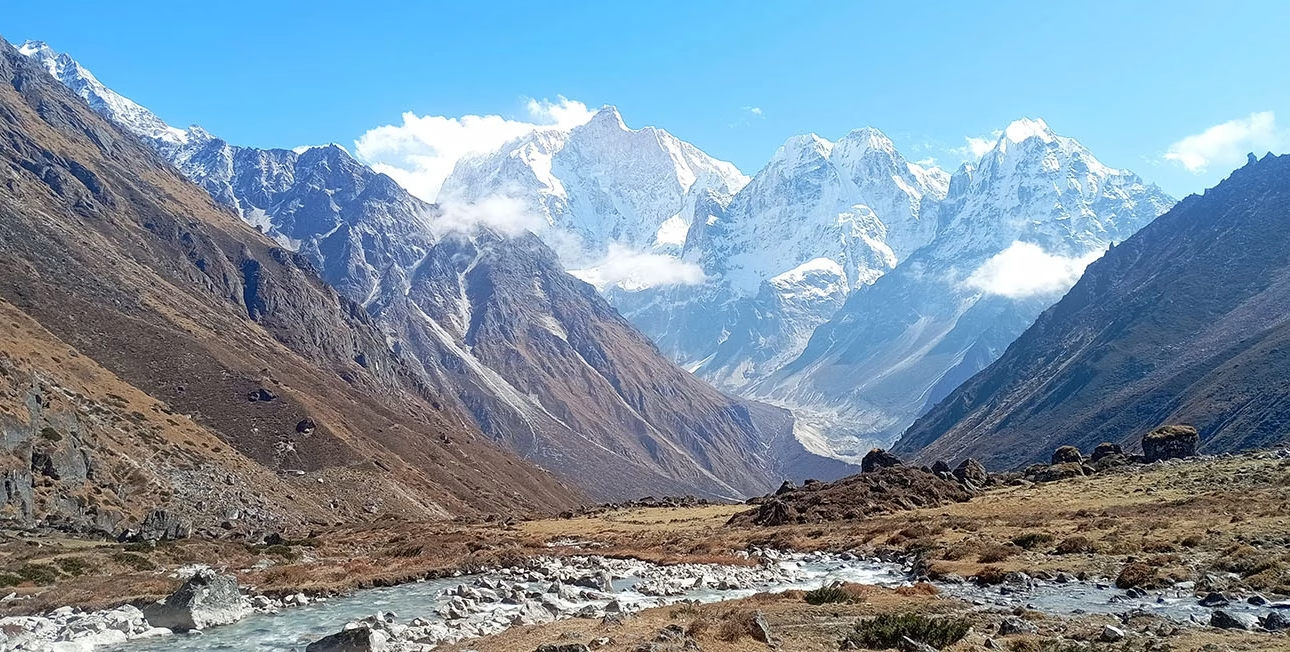
In eastern Nepal, far from the busiest trekking corridors, Kanchenjunga offers a very different Himalayan experience. Instead of following one of Nepal’s heavily travelled trails, you enter a remote mountain landscape of deep valleys, rhododendron forests, high alpine meadows, glaciers, traditional villages and spectacular Himalayan peaks.
The Kanchenjunga Circuit Trek is particularly special because it can combine both sides of Mount Kanchenjunga: the North Base Camp at Pangpema and the South Base Camp area at Oktang. At 8,586 metres, Kanchenjunga is the world’s third-highest mountain.
For experienced trekkers who have already explored or simply want to look beyond the popular Everest, Annapurna and Langtang routes, Kanchenjunga is one of the finest alternatives in Nepal.
Planning the complete journey? See our Kanchenjunga Trek – 20 Days Ultimate Kanchenjunga Circuit Trek for the detailed itinerary, inclusions, permits and current package information.
Kanchenjunga Circuit Trek Guide at a Glance
| Feature | Details |
|---|---|
| Region | Eastern Nepal |
| Main attraction | Mount Kanchenjunga |
| Mountain height | 8,586 m |
| Trek duration | Around 20 days for the complete circuit |
| Highest point | Pangpema, approximately 5,140 m |
| Trek difficulty | Challenging |
| North Base Camp | Pangpema |
| South Base Camp | Oktang area |
| Major pass | Sele La |
| Accommodation | Local teahouses and mountain lodges |
| Best seasons | Spring and autumn |
| Trek style | Remote wilderness / teahouse trekking |
| Guide | Required in the restricted area |
| Permits | Kanchenjunga Restricted Area Permit and Conservation Area Permit |
Your complete route, day-by-day itinerary and current trekking arrangements are available on our main Kanchenjunga Circuit Trek page.
Why Choose Kanchenjunga Instead of Everest or Annapurna?
Everest Base Camp and Annapurna treks are famous for good reasons. They offer extraordinary scenery, established trekking infrastructure and iconic Himalayan experiences.
But popularity also means that many travellers now want something different.
If your idea of a great Himalayan trek is walking through quiet valleys, staying in small mountain villages, meeting local people and spending days surrounded by wilderness rather than crowds, Kanchenjunga can be a better choice.
The difference is not simply about seeing fewer trekkers. Kanchenjunga offers a fundamentally different feeling of exploration.
1. Kanchenjunga Is Much More Remote
The Everest and Annapurna regions have become well-established trekking destinations with extensive tourism infrastructure.
Kanchenjunga remains considerably more remote.
The approach itself is part of the adventure. From Kathmandu, you fly towards eastern Nepal and travel overland through the hills before reaching the trekking gateway. Once you begin walking, the settlements become smaller, the trails quieter and the landscape increasingly wild.
This sense of remoteness is one of the strongest reasons experienced trekkers choose Kanchenjunga.
2. It Is an Excellent Alternative to Everest Base Camp
Everest Base Camp is perhaps the world’s most famous trekking destination.
But not every traveller needs to follow the most famous trail.
If you have already completed Everest Base Camp, or if you simply want a less-commercialized Himalayan experience, Kanchenjunga provides a compelling alternative.
You still experience:
- Extremely high mountains
- Glaciers and dramatic valleys
- High-altitude trekking
- Buddhist and Himalayan cultures
- Remote mountain villages
- Challenging terrain
- Exceptional photography opportunities
- A genuine sense of wilderness
The difference is that Kanchenjunga gives you these experiences in a much quieter environment.
For comparison, our Everest Base Camp Trek follows the classic Khumbu route through Lukla, Namche, Tengboche and Everest Base Camp.
3. It Is More Than a Single Base Camp Experience
One of the great advantages of the Kanchenjunga Circuit Trek is its geographical diversity inside Kanchenjunga Conservation Area.
The journey can include both the northern and southern sides of Kanchenjunga.
At Pangpema, you approach the mountain from the north and experience an extraordinary high-altitude landscape of glaciers and enormous Himalayan peaks.
Later, the route crosses towards the southern side, leading to Ramche and the Oktang area, providing a completely different perspective of the Kanchenjunga massif.
This makes the circuit much more than simply walking to one destination and returning by the same route.
4. The Landscape Changes Dramatically
Kanchenjunga is a trek of remarkable geographical diversity.
The lower sections are green and relatively warm, with forests, cultivated land and traditional villages.
As you climb higher, the landscape gradually changes:
Subtropical valleys → cardamom-growing areas → rhododendron forests → alpine meadows → glacial valleys → high Himalayan wilderness
This gradual transformation is one of the most rewarding aspects of the trek.
You are not looking at the same scenery every day.
5. The Cultural Experience Is Different
The Kanchenjunga region is home to communities including Limbu, Rai, Sherpa and Tibetan-influenced Himalayan communities.
The cultural character changes as the trail climbs into the higher valleys.
You encounter:
- Traditional mountain villages
- Buddhist monasteries
- Mani walls
- Prayer flags
- Chortens
- Traditional stone houses
- Himalayan farming and pastoral lifestyles
Because tourism is less developed than in Everest and Annapurna, cultural encounters can feel more personal and less commercial.
Kanchenjunga vs Everest vs Annapurna
Choosing a trek is often easier when you understand the personality of each region.
| Experience | Kanchenjunga | Everest | Annapurna |
|---|---|---|---|
| Remoteness | Very high | Moderate | Moderate |
| Crowds | Low | Higher | Higher |
| Mountain scenery | Exceptional | Exceptional | Exceptional |
| Cultural experience | Limbu, Rai, Sherpa & Tibetan influences | Sherpa | Gurung, Thakali & Tibetan influences |
| Wilderness feeling | Excellent | Moderate | Moderate |
| High-altitude challenge | High | High | High |
| Two-base-camp experience | Yes | No | No |
| Infrastructure | Basic in remote sections | More developed | More developed |
| Trekking experience | Expedition-style wilderness | Classic Himalayan | Highly diverse |
| Best for | Experienced trekkers seeking solitude | First iconic Himalayan trek | Variety and accessibility |
This does not mean Kanchenjunga is “better” than Everest or Annapurna for everyone.
It is different.
If your priority is the iconic Everest experience, choose Everest.
If you want spectacular landscape diversity and a highly established trekking network, Annapurna remains an excellent choice.
But if you want remote trails, fewer trekkers and a deeper wilderness experience, Kanchenjunga should be high on your list.
Why Kanchenjunga Is One of Nepal’s Best Alternative Treks
Nepal has become famous for several classic trekking routes.
Everest, Annapurna and Langtang are often the first names travellers encounter.
However, Nepal has a much larger trekking landscape.
For travellers looking beyond the most popular routes, Kanchenjunga stands among the country’s most rewarding alternatives.
Kanchenjunga offers a different kind of adventure
This is not simply a trek where you arrive, walk for a few days and return.
The journey to Kanchenjunga is long and remote. The trail takes you progressively deeper into eastern Nepal, where the environment becomes increasingly wild.
That extra commitment is exactly what attracts experienced trekkers.
It offers solitude
There are sections where the mountain landscape feels much larger than the number of people walking through it.
For many experienced trekkers, this is increasingly valuable.
The attraction is not simply avoiding crowds. It is having time to appreciate the mountains without feeling that you are following a heavily commercialized tourist trail.
It feels like an expedition
The Kanchenjunga Circuit Trek requires more preparation than many shorter Himalayan journeys.
The combination of remoteness, altitude, long walking days and basic accommodation means that trekkers need to be properly prepared.
That is also what makes completing the trek so rewarding.
The Kanchenjunga Circuit Route
A typical complete Kanchenjunga Circuit itinerary takes around 20 days, although the exact duration can be customized according to transportation, acclimatization and trekking conditions.
The journey generally follows this pattern:
Kathmandu → Bhadrapur → eastern Nepal → Taplejung → Sekathum → Amjilosa → Gyabla → Ghunsa → Kambachen → Lhonak → Pangpema → Ghunsa → Sele La → Cheram → Ramche/Oktang → lower valleys → Taplejung → Birtamode → Bhadrapur → Kathmandu
The detailed 20-day route is available on our Kanchenjunga Circuit Trek itinerary.
Major Highlights of the Kanchenjunga Trek
Taplejung and the Eastern Himalayan Approach
Taplejung is one of the important gateways to the Kanchenjunga region.
The journey towards the mountains takes you through eastern Nepal’s beautiful hill country, with terraced fields, forests, villages and tea-growing landscapes.
The approach is part of the experience because it gradually takes you away from urban Nepal and into a much more rural environment.
Ghunsa Village
Ghunsa is one of the most important settlements on the northern side of the Kanchenjunga trek.
The village has a strong Tibetan Buddhist influence, with prayer flags, traditional houses and mountain culture.
It is also an important acclimatization location before moving towards higher elevations.
Kambachen
As the route continues towards Kambachen, the landscape becomes increasingly alpine.
Forests give way to rocky terrain, glaciers and high mountain valleys.
The enormous presence of Jannu, also known as Kumbhakarna, adds another spectacular dimension to the scenery.
Lhonak
Lhonak sits deep within the high Kanchenjunga valley.
At this point, the environment is dramatically different from the green hills encountered at the beginning of the journey.
The mountains become larger, the vegetation becomes sparse and the trail feels increasingly remote.
Pangpema – Kanchenjunga North Base Camp
Pangpema is one of the major highlights of the entire trek.
At approximately 5,140 metres, the North Base Camp provides an extraordinary viewpoint towards Kanchenjunga and the surrounding Himalayan landscape.
Reaching Pangpema is not simply about ticking another base camp off a list.
It is about experiencing the immense scale and isolation of the Kanchenjunga massif.
Sele La Passes
Crossing the Sele La section is another major highlight of the circuit.
The route climbs through high alpine terrain before descending towards the southern side.
Weather and trail conditions can make this section demanding, which is why careful planning and an experienced trekking crew are important.
Ramche and Oktang
The southern side provides a different perspective of Kanchenjunga.
From Ramche and the Oktang area, trekkers can appreciate the mountain, glaciers and surrounding peaks from another direction.
Together, Pangpema and Oktang make the complete circuit particularly special.
Kanchenjunga Conservation Area
Much of the trek takes place within the Kanchenjunga Conservation Area, an important protected landscape in eastern Nepal.
The region supports a remarkable range of habitats, from lower forests to high Himalayan environments.
Wildlife in the wider region includes species such as:
- Red panda
- Himalayan black bear
- Musk deer
- Blue sheep
- Himalayan tahr
- Himalayan monal
- Other Himalayan birds and wildlife
Wildlife sightings are never guaranteed, particularly on a trekking journey, but the biodiversity adds another dimension to the experience.
What Is the Kanchenjunga Trek Difficulty?
The Kanchenjunga Circuit Trek is considered challenging.
It is not the trek I would normally recommend as a first Himalayan trek for someone with little hiking experience.
You should be prepared for:
- Long trekking days
- Steep ascents and descents
- High altitude
- Basic accommodation in remote sections
- Variable mountain weather
- Rocky and uneven trails
- Limited services at higher elevations
- Crossing high mountain terrain
The highest point on the standard route is around 5,140 metres at Pangpema.
Previous trekking experience is highly recommended, although the right itinerary, preparation and professional guide support can make the journey achievable for fit and determined trekkers.
How to Prepare for the Kanchenjunga Trek
Physical preparation should begin well before your departure.
Focus on:
Cardiovascular fitness
Walking, hiking, cycling, running or other aerobic exercise can help improve endurance.
Hill walking
If possible, regularly hike on uneven and uphill terrain.
Strength
Strengthen your legs and core because the trek involves repeated ascents and descents.
Back-to-back hiking
Practising several consecutive days of walking is particularly useful.
Altitude awareness
Fitness does not eliminate altitude sickness.
Proper acclimatization, gradual ascent, hydration, rest and listening to your guide are important.
Best Time for Kanchenjunga Circuit Trek
The main trekking seasons are spring and autumn.
Spring: March to May
Spring is one of the most beautiful times to trek in Kanchenjunga.
You can expect:
- Rhododendron flowers
- Greener lower valleys
- Pleasant trekking conditions
- Good mountain visibility
- Excellent photography opportunities
Autumn: September to November
Autumn is traditionally considered one of the best seasons for high-altitude trekking in Nepal.
The weather is generally more stable, skies are often clearer and mountain visibility can be excellent.
For the complete Kanchenjunga Circuit, the exact departure date should always consider current trail and weather conditions.
Is Kanchenjunga Suitable for First-Time Trekkers?
The answer depends on the individual.
The Kanchenjunga Circuit is not the easiest introduction to Himalayan trekking.
If this is your first trek and you have limited hiking experience, a shorter and more accessible route such as Langtang or an appropriate Annapurna itinerary may be more suitable.
Our Langtang Valley Trek is a shorter option for travellers looking for spectacular mountain scenery and authentic Himalayan culture without committing to a three-week remote expedition.
For experienced trekkers, however, Kanchenjunga can be an outstanding next step after completing routes such as Everest Base Camp, Annapurna or other high-altitude treks.
Kanchenjunga Compared With Manaslu
Another excellent alternative to Everest and Annapurna is the Manaslu Circuit.
The Manaslu Circuit Trek combines remote Himalayan scenery, Tibetan-influenced culture and the challenging Larkya La Pass.
Kanchenjunga is generally a step further towards wilderness and remoteness.
Choose Manaslu if you want:
- A shorter overall itinerary
- A dramatic high-pass crossing
- Tibetan-influenced villages
- Remote Himalayan scenery
- A strong alternative to Everest and Annapurna
Choose Kanchenjunga if you want:
- A longer wilderness journey
- Very remote eastern Nepal
- Both North and South Base Camp experiences
- Fewer trekkers
- A deeper sense of exploration
- One of Nepal’s most demanding classic trekking adventures
Both are excellent choices for travellers who want to move beyond Nepal’s busiest trekking routes.
Accommodation on the Kanchenjunga Trek
Accommodation is primarily in local teahouses and mountain lodges.
As you move higher and deeper into the region, facilities become increasingly basic.
Do not choose Kanchenjunga expecting the same range of accommodation found on the established Everest or Annapurna routes.
The reward is the experience itself: local hospitality, remote mountain villages and a much stronger connection with the landscape.
Food and Meals
Teahouses generally provide simple but filling meals suitable for trekkers.
Typical choices can include:
- Dal bhat
- Rice
- Noodles
- Pasta
- Soups
- Potatoes
- Eggs
- Tibetan-style breads
- Tea and hot drinks
At higher elevations, food choices can be more limited.
We recommend carrying a few personal snacks that you enjoy, particularly for long trekking days.
What Permits Are Required?
The Kanchenjunga region is a restricted trekking area.
The main permits include the Kanchenjunga Restricted Area Permit and Kanchenjunga Conservation Area Permit, with other trekking documentation subject to current government regulations.
Because regulations can change, permits should be checked and arranged according to the rules in force at the time of your trek.
When you travel with Nepal Tours Packages, our team handles the necessary permit arrangements and trekking logistics.
Why a Local Guide Matters on Kanchenjunga
A professional local guide is especially valuable on a remote trek such as Kanchenjunga.
Your guide provides more than navigation.
A good guide helps with:
- Route decisions
- Altitude management
- Weather awareness
- Accommodation arrangements
- Local communication
- Cultural interpretation
- Trekking pace
- Emergency coordination
In a remote region, having a reliable local team can make a significant difference.
Responsible Tourism in Kanchenjunga
Because Kanchenjunga is less developed than Everest and Annapurna, responsible tourism is particularly important.
Travellers can help by:
- Using local lodges
- Hiring local guides and porters
- Avoiding unnecessary plastic waste
- Carrying reusable water bottles
- Respecting local traditions
- Staying on established trails
- Taking rubbish back when appropriate
- Supporting local businesses
The goal should be to experience the region while helping protect the environment and supporting communities along the trail.
Kanchenjunga Trek Packing List
For a challenging high-altitude trek, your packing should include:
Clothing
- Moisture-wicking base layers
- Fleece layer
- Warm down jacket
- Waterproof jacket
- Trekking trousers
- Thermal layers
- Warm hat
- Gloves
- Warm trekking socks
Trekking equipment
- Good trekking boots
- Trekking poles
- Headlamp
- Sunglasses
- Sunscreen
- Water bottles or hydration system
- Sleeping bag
- Daypack
- Duffel bag
Personal essentials
- Personal medication
- Basic first-aid supplies
- Water purification tablets or treatment
- Power bank
- Camera
- Travel documents
- Insurance details
Your final equipment list should be adjusted according to the season, itinerary and current conditions.
How Long Should You Spend on Kanchenjunga?
For the complete North and South Base Camp experience, around 20 days is a practical starting point.
However, a responsible itinerary should not be designed purely around the shortest possible duration.
Acclimatization, weather, road conditions and the physical condition of the group all matter.
Our 20-day Kanchenjunga Circuit Trek is designed to cover the principal highlights of the region while allowing time for acclimatization and the necessary transportation.
Private departures can also be adjusted where appropriate.
Who Should Choose the Kanchenjunga Circuit Trek?
Kanchenjunga is particularly suitable for travellers who:
- Have previous trekking experience
- Enjoy remote destinations
- Prefer quiet trails
- Want a genuine wilderness experience
- Are comfortable with basic mountain accommodation
- Have good physical fitness
- Want to explore beyond Everest and Annapurna
- Have around three weeks available
- Are interested in mountain photography
- Want a challenging Himalayan adventure
It may not be ideal for travellers who:
- Have very limited hiking experience
- Want luxury accommodation throughout the trek
- Prefer short itineraries
- Require extensive infrastructure
- Are uncomfortable with remote environments
Kanchenjunga Circuit Trek Guide: The Right Choice After Everest or Annapurna?
For many experienced trekkers, this is where Kanchenjunga becomes especially interesting.
You may have already walked through Namche Bazaar, visited Everest Base Camp or crossed Thorong La.
Perhaps you have experienced the Annapurna landscapes and now want something less familiar.
Kanchenjunga offers that next level of exploration.
Instead of asking, “Where can I see another famous mountain?”, the question becomes:
“Where can I experience the Himalayas with a stronger sense of wilderness?”
For many trekkers, the answer is eastern Nepal.
Other Alternative Treks in Nepal
Kanchenjunga is not the only alternative to Everest and Annapurna.
Depending on your time and fitness, consider:
Manaslu Circuit
A spectacular restricted-area trek around the eighth-highest mountain in the world, with Tibetan-influenced villages and the Larkya La Pass.
Explore the Manaslu Circuit Trek
Langtang Valley
A more accessible alternative for travellers who want beautiful Himalayan scenery and cultural experiences within a shorter itinerary.
Explore the Langtang Valley Trek
Langtang Gosaikunda
A combination of Himalayan trekking, Tamang culture, forests and the sacred Gosaikunda Lake.
Explore the Langtang Gosaikunda Trek
For a wider selection of routes, see our Trekking in Nepal collection.
Kanchenjunga Is Not for Everyone — And That Is Its Strength
The fact that Kanchenjunga requires more time, more preparation and a greater commitment than many popular Nepal treks is not necessarily a disadvantage.
It is part of what makes the experience special.
There are fewer shortcuts.
The journey takes you deeper into eastern Nepal. The infrastructure is simpler. The walking is demanding. The mountains are enormous.
And the sense of achievement at the end is correspondingly greater.
For travellers searching for an authentic Himalayan experience rather than simply another famous trekking destination, this is exactly what makes Kanchenjunga so attractive.
Frequently Asked Questions About Kanchenjunga Circuit Trek
Is Kanchenjunga better than Everest Base Camp?
Neither trek is universally better. Everest is the iconic choice for travellers who want to experience the world’s highest mountain and the famous Sherpa heartland. Kanchenjunga is better suited to travellers who prioritise remoteness, solitude and wilderness.
Is Kanchenjunga Trek harder than Everest Base Camp?
The complete Kanchenjunga Circuit is generally considered a challenging and more remote trek. The combination of long duration, basic facilities, high altitude and remote terrain requires good preparation and previous trekking experience.
How high is the Kanchenjunga Circuit Trek?
The highest point on the standard itinerary is Pangpema at approximately 5,140 metres.
Can I see Kanchenjunga from the trek?
Yes. The trek provides exceptional opportunities to see Mount Kanchenjunga from different perspectives, particularly around Pangpema on the northern side and the Ramche/Oktang area on the southern side.
Is Kanchenjunga a crowded trekking route?
Compared with Everest and Annapurna, Kanchenjunga is significantly less busy and offers a much stronger sense of remoteness.
How many days do I need for Kanchenjunga?
A complete circuit generally requires around 20 days or more depending on the itinerary, transportation, acclimatization and trekking conditions.
Do I need a guide for Kanchenjunga?
Yes. Because the region includes restricted trekking areas, trekkers must follow current government regulations regarding guides, permits and group arrangements.
What is the best month for Kanchenjunga Trek?
March to May and September to November are generally considered the best trekking periods, with spring offering rhododendron blooms and autumn usually providing stable weather and clear mountain views.
Is Kanchenjunga suitable for beginners?
It is better suited to experienced or well-prepared trekkers. Beginners should consider a shorter and more accessible route before attempting the complete Kanchenjunga Circuit.
Final Thoughts on Kanchenjunga Circuit Trek Guide: Why Kanchenjunga Deserves a Place on Your Nepal Trekking List
Everest and Annapurna will always be among Nepal’s legendary trekking destinations.
But Nepal’s Himalayas are much bigger than its most famous trails.
For travellers willing to spend more time in the mountains, the Kanchenjunga Circuit Trek offers something increasingly difficult to find: genuine Himalayan wilderness.
You get towering 8,000-metre peaks, remote valleys, ancient mountain cultures, diverse landscapes, high-altitude glaciers and two extraordinary perspectives of the Kanchenjunga massif.
Most importantly, you experience these places with far fewer trekkers around you.
That makes Kanchenjunga one of the best alternative treks in Nepal for experienced adventurers looking beyond the popular Everest and Annapurna routes.
If your idea of the Himalayas is not just reaching a famous destination but travelling deeper into the mountains and experiencing the journey itself, Kanchenjunga may be the trek you have been looking for.
Plan Your Kanchenjunga Adventure
Ready to explore eastern Nepal?
Our 20-day Kanchenjunga Circuit Trek combines the North Base Camp at Pangpema, the southern side of Kanchenjunga, Sele La, remote mountain villages and the spectacular wilderness of eastern Nepal.
View the complete Kanchenjunga Circuit Trek itinerary, cost and inclusions.
At Nepal Tours Packages, we design private and personalised Himalayan trekking experiences with experienced local guides and on-the-ground support in Nepal.
About the Author
This guide has been reviewed and curated by Kishor Nepal, a Nepal, Bhutan and Tibet travel expert with more than 25 years of experience in Himalayan tourism. Based in Nepal, Kishor works with international travellers to design private trekking and cultural journeys throughout the country, with a focus on practical local knowledge, responsible travel and personalised service.
Last reviewed: October 2026
