

Summary
The Kailash Mansarovar Yatra for NRI is a once-in-a-lifetime spiritual pilgrimage to the sacred Mount Kailash and Lake Manasarovar in Tibet, specially designed for Non-Resident Indians (NRIs), foreign passport holders, and overseas travelers. Starting from Kathmandu, Nepal, the journey includes complete assistance with the Chinese Group Visa, Tibet Travel Permit, comfortable accommodations, experienced Tibetan guides, and carefully planned transportation. Pilgrims travel across the breathtaking Tibetan Plateau before completing the sacred 52 km Kailash Kora (Parikrama), believed to bring spiritual purification and inner peace. This comprehensive guide explains eligibility, visa procedures, travel routes, best time to visit, fitness requirements, packing tips, costs, and essential travel advice, helping NRIs confidently prepare for a safe, comfortable, and unforgettable Kailash Mansarovar Yatra in 2026 and 2027.
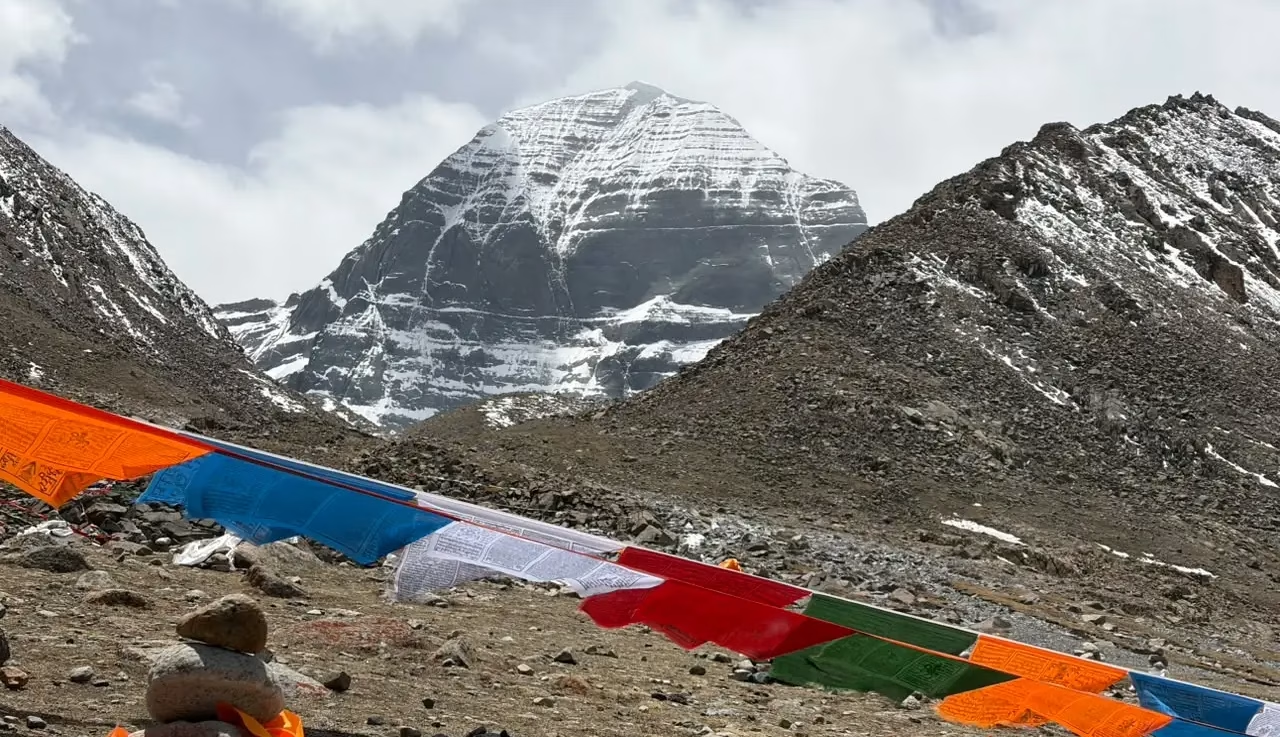
How to Join the Kailash Mansarovar Yatra is major question for many Hindus, Buddhists, Jains, and followers of the Bon religion, visiting Mount Kailash and Lake Manasarovar. The Yatra is not simply another journey—it is the fulfillment of a lifelong spiritual dream. Hidden deep within the remote Tibetan Plateau, Mount Kailash is regarded as one of the holiest mountains on Earth and remains untouched by climbers due to its immense religious significance.
Every year, thousands of pilgrims from across the globe travel to Tibet to complete the sacred Kailash Mansarovar Yatra, seeking spiritual peace, divine blessings, and personal transformation. For Non-Resident Indians (NRIs) living in countries such as the United States, the United Kingdom, Australia, Canada, New Zealand, Singapore, the UAE, and across Europe, the pilgrimage offers an opportunity to reconnect with faith, culture, and heritage while experiencing one of the world’s most extraordinary landscapes.
Unlike Indian passport holders, whose pilgrimage is generally organized through government channels, NRIs and foreign passport holders can join professionally organized tours via Nepal, making the process more flexible and convenient. With complete assistance for the Chinese Group Visa, Tibet Travel Permit, accommodation, transportation, and experienced guides, the journey becomes significantly easier and more enjoyable.
This comprehensive guide explains everything you need to know before booking your Kailash Mansarovar Yatra for NRI, including eligibility, visa requirements, the best travel season, routes, costs, permits, preparation tips, health advice, and why Nepal remains the preferred gateway to Mount Kailash.
Whether you are planning your pilgrimage in 2026 or 2027, this guide will help you prepare confidently for one of the most meaningful journeys of your life.
Why Is the Kailash Mansarovar Yatra So Special?
The Kailash Mansarovar Yatra is unlike any other pilgrimage in the world. While many sacred destinations can be reached within hours, Mount Kailash lies in one of the most remote regions of western Tibet, surrounded by towering Himalayan peaks, vast high-altitude plains, pristine rivers, and ancient monasteries.
For centuries, saints, monks, scholars, and pilgrims have believed that Mount Kailash is the spiritual center of the universe. Instead of climbing the mountain, devotees express their reverence by walking around it, completing the sacred 52-kilometre Kailash Kora (Parikrama).
The pilgrimage combines:
- Spiritual devotion
- Himalayan adventure
- Tibetan culture
- High-altitude trekking
- Ancient history
- Spectacular natural beauty
- Personal transformation
Many travelers describe the journey as life-changing, not because of the physical challenge alone, but because of the profound sense of peace and accomplishment they experience.
What Is the Difference Between Indian Citizens and NRIs?
One of the most common questions we receive is whether NRIs can travel to Mount Kailash in the same way as Indian citizens.
The answer depends on the passport you hold.
Indian Passport Holders
Travelers holding an Indian passport generally undertake the Kailash pilgrimage through official government-approved channels or authorized operators, depending on the latest regulations.
Non-Resident Indians (NRIs)
If you are an NRI holding a foreign passport, you are treated as an international traveler rather than an Indian citizen for Tibet travel purposes.
This means you can join organized overland group tours departing from Kathmandu, Nepal.
The process is generally simpler because experienced tour operators arrange:
- Chinese Group Visa
- Tibet Travel Permit
- Border permits
- Transportation
- Accommodation
- Guides
- Meals
- Border formalities
This makes Nepal the preferred starting point for most NRIs planning the pilgrimage.
Who Can Join the Kailash Mansarovar Yatra for NRI?
This pilgrimage is suitable for a wide range of international travelers who meet the travel and health requirements.
Eligible participants include:
- Non-Resident Indians (NRIs)
- Overseas Citizens holding foreign passports
- Nepali citizens
- Foreign nationals
- Families
- Couples
- Solo travelers
- Small private groups
- Senior travelers in good health
- Spiritual seekers
- Adventure enthusiasts
- Cultural travelers
Regardless of your background or religious beliefs, the journey offers a unique opportunity to experience one of the world’s most revered spiritual destinations.
Why Nepal Is the Best Gateway to Mount Kailash
Kathmandu has served as the traditional gateway to Tibet for centuries. Today, it continues to be the most convenient starting point for international travelers undertaking the Kailash Mansarovar Yatra for NRI.
There are several reasons why Nepal remains the preferred route.
Easy International Access
Kathmandu is well connected with major international cities across Asia and the Middle East, with convenient flight connections from destinations such as Dubai, Doha, Delhi, Bangkok, Kuala Lumpur, Singapore, and Istanbul. This makes it accessible for NRIs traveling from Europe, North America, Australia, and the Gulf region.
Complete Visa Assistance
Unlike independent travel to Tibet, pilgrims traveling via Nepal receive complete assistance with the Chinese Group Visa and Tibet Travel Permit. Experienced tour operators coordinate the paperwork, reducing the complexity of the application process.
Better Acclimatization
Spending several days in Kathmandu before entering Tibet gives travelers valuable time to adjust, attend pre-departure briefings, and prepare for high-altitude travel. This gradual approach contributes to a safer and more comfortable journey.
Scenic Overland Journey
The route from Kathmandu through the Kerung border offers breathtaking Himalayan scenery, traditional mountain villages, dramatic river valleys, and expansive views of the Tibetan Plateau. Many travelers consider the drive itself an unforgettable part of the pilgrimage.
Professional Support
Joining an organized tour means you benefit from experienced guides, dedicated support staff, comfortable transportation, and carefully planned logistics throughout the expedition. This allows you to focus on the spiritual aspects of the journey rather than administrative details.
Spiritual Significance of Mount Kailash
Mount Kailash is one of the few places in the world that holds profound spiritual importance for multiple religions.
Hinduism
According to Hindu belief, Mount Kailash is the eternal abode of Lord Shiva and Goddess Parvati. It symbolizes meditation, enlightenment, and the cosmic balance of creation and destruction.
Completing one full Kailash Parikrama is believed to cleanse the sins of a lifetime, while repeated circumambulations are associated with spiritual liberation.
Buddhism
For Tibetan Buddhists, Mount Kailash represents Mount Meru, the mythical center of the universe. Pilgrims perform the Kora in a clockwise direction while chanting prayers and turning prayer wheels.
The annual Saga Dawa Festival, celebrated near Mount Kailash, commemorates the birth, enlightenment, and passing of Buddha, attracting thousands of pilgrims.
Jainism
Jain tradition identifies Mount Kailash as the place where the first Tirthankara, Rishabhadeva, attained liberation, making it one of the most sacred sites in Jainism.
Bon Religion
Followers of the ancient Bon religion consider Mount Kailash the spiritual center of their faith and traditionally perform the Kora in an anti-clockwise direction.
The Sacred Lake Manasarovar
No Kailash Mansarovar Yatra for NRI is complete without visiting the breathtaking Lake Manasarovar.
Located at an altitude of approximately 4,590 meters, this pristine freshwater lake is revered as one of the holiest bodies of water in Asia. According to Hindu mythology, Lord Brahma created the lake through the power of his mind, giving rise to its name, which translates to “Lake of Consciousness.”
Pilgrims visit the lake to:
- Offer prayers and perform religious rituals.
- Meditate in peaceful surroundings.
- Collect holy water to take home.
- Witness spectacular sunrises and sunsets over Mount Kailash.
- Experience a deep sense of spiritual calm.
The tranquil waters of Lake Manasarovar, reflecting the snow-covered peaks of Mount Kailash, create one of the most memorable and inspiring landscapes in the Himalayas.
Why More NRIs Are Choosing the Kailash Yatra
Interest in the Kailash Mansarovar Yatra for NRI has grown significantly in recent years. Improved travel arrangements, better road access, experienced support teams, and simplified permit assistance have made this once-difficult pilgrimage more accessible than ever before.
For many NRIs, the journey represents an opportunity to reconnect with their spiritual roots while sharing a meaningful experience with family and fellow pilgrims from around the world. It is not just a pilgrimage—it is a journey of faith, reflection, and personal discovery that leaves a lasting impression long after returning home.
Eligibility Criteria for Kailash Mansarovar Yatra for NRI
Planning the Kailash Mansarovar Yatra for NRI begins with understanding whether you meet the travel requirements. Since the pilgrimage takes place in the Tibet Autonomous Region of China, travelers must comply with both Chinese and Tibetan travel regulations before joining the tour.
Fortunately, the process is straightforward when you travel with an experienced tour operator like Nepal Tours Packages, as all necessary permits and documentation are arranged on your behalf.
Who Is Eligible?
The pilgrimage is open to:
- Non-Resident Indians (NRIs) holding foreign passports
- Overseas Citizens of India (OCI) traveling with a foreign passport
- Foreign nationals from eligible countries
- Nepali citizens
- Families and couples
- Solo travelers
- Senior travelers in good health
- Small private groups
If you hold a foreign passport, you can normally join one of our fixed departure tours via Nepal without following the separate procedures that apply to Indian passport holders.
Health Requirements for the Kailash Mansarovar Yatra
Unlike ordinary sightseeing holidays, this pilgrimage reaches elevations exceeding 5,600 meters, making good physical health essential.
You do not need to be an athlete, but you should be capable of walking several hours each day at high altitude.
You should be able to:
- Walk 5–8 hours comfortably.
- Handle moderate uphill and downhill trails.
- Carry a small daypack.
- Travel long distances by road.
- Adapt to cold and windy weather.
Medical Advice
Before confirming your trip, consult your physician if you have:
- Heart disease
- High blood pressure
- Asthma or chronic lung conditions
- Recent major surgery
- Diabetes requiring close medical supervision
- Any serious medical condition that could be affected by high altitude
A medical check-up before departure is strongly recommended for all travelers, especially those over 60 years of age.
Documents Required for the Kailash Mansarovar Yatra for NRI
Preparing the correct documents in advance will help ensure a smooth visa and permit process.
Generally, you will need:
Valid Passport
Your passport should:
- Be valid for at least six months beyond your travel date.
- Have at least two blank visa pages.
- Be in good physical condition without damage.
Passport-Sized Photographs
Recent passport photographs may be required depending on current visa regulations.
Tour Booking Confirmation
A confirmed booking with an authorized tour operator is required before permit applications can begin.
Travel Insurance
Although not always required for visa processing, comprehensive travel insurance covering high-altitude travel is strongly recommended and may be requested before departure.
Emergency Contact Details
Provide emergency contact information for a close family member or friend before the expedition begins.
Chinese Group Visa Explained
One of the biggest advantages of joining the Kailash Mansarovar Yatra for NRI through Nepal is that the complicated visa process is handled professionally.
Unlike a standard Chinese tourist visa, travelers entering Tibet from Nepal require a Chinese Group Visa.
Important Things to Know
- It is issued only in China Embassy Kathmandu.
- Individual Chinese tourist visas cannot normally be used for this route.
- Travelers must submit their original passport.
- The visa is processed as part of the tour group.
- Everyone in the group receives the visa together.
This is why travelers generally need to arrive in Kathmandu several days before entering Tibet.
Tibet Travel Permit
The Chinese Group Visa alone does not allow travel within Tibet.
Every traveler also requires a Tibet Travel Permit, issued by the Tibet Tourism Bureau.
Your tour operator arranges this permit before your journey begins.
The permit includes:
- Your passport information
- Tour itinerary
- Travel dates
- Entry and exit points
- Approved travel route
Independent travel in Tibet is generally not permitted for international visitors, making organized tours the standard and most practical option.
Additional Tibet Permits
Depending on the itinerary and local regulations, travelers may also require additional permits, including:
- Alien Travel Permit
- Military Permit (where applicable)
- Border Passes
These are arranged by Nepal Tours Packages as part of your tour package.
Why You Cannot Travel Independently
Many first-time travelers wonder whether they can organize the pilgrimage themselves.
The simple answer is no.
Current Tibet travel regulations require international visitors to:
- Travel with an approved tour operator.
- Have a licensed Tibetan guide.
- Use pre-approved transportation.
- Follow an approved itinerary.
- Carry all required permits throughout the journey.
These regulations help ensure smooth border crossings and compliance with local travel requirements.
Step-by-Step Booking Process
Booking your Kailash Mansarovar Yatra for NRI is simple when you follow the correct steps.
Step 1 – Choose Your Departure Date
Select one of the fixed departures that best matches your travel plans.
Popular months include:
- May
- June
- September
- October
Festival departures such as Saga Dawa often sell out quickly.
Step 2 – Contact Nepal Tours Packages
Our travel specialists will answer your questions, confirm availability, explain the itinerary, and provide a detailed quotation.
At this stage, you can discuss:
- Private departures
- Group tours
- Accommodation preferences
- Dietary requirements
- Horse and porter options
- Additional sightseeing in Nepal
Step 3 – Confirm Your Reservation
To secure your seat, submit:
- Passport copy
- Booking form
- Required deposit
Once confirmed, your place on the departure is reserved.
Step 4 – Prepare for Your Journey
Before traveling to Nepal, begin preparing by:
- Walking regularly
- Purchasing travel insurance
- Buying suitable clothing
- Organizing medications
- Reviewing the packing list
Good preparation greatly improves your overall experience.
Step 5 – Arrive in Kathmandu
Upon arrival:
- Meet our airport representative.
- Transfer to your hotel.
- Submit your original passport.
- Attend the pre-departure briefing.
- Complete the Chinese Group Visa process.
During your stay, you can also explore Kathmandu’s famous UNESCO World Heritage Sites.
Step 6 – Begin the Sacred Journey
Once your visa and permits are issued, your overland journey into Tibet begins.
From this point onward, every aspect of the expedition—including transportation, accommodation, meals, permits, guides, and logistics—is managed by Nepal Tours Packages, allowing you to focus entirely on your pilgrimage.
The Route to Mount Kailash from Nepal
The overland route from Kathmandu is one of the most scenic and rewarding ways to reach Mount Kailash.
Kathmandu (1,400 m)
The journey starts in Nepal’s historic capital, where visa formalities are completed and travelers have time to prepare.
↓
Kerung Border (2,700 m)
After crossing into Tibet, you’ll enter the peaceful mountain town of Kerung, where the first acclimatization stop takes place.
↓
Saga (4,450 m)
Travel across the spectacular Tibetan Plateau, passing rivers, mountain passes, and wide-open grasslands.
↓
Lake Manasarovar (4,590 m)
Experience the breathtaking beauty of one of the world’s highest freshwater lakes, where pilgrims perform prayers and rituals.
↓
Darchen (4,670 m)
The small town of Darchen serves as the starting point for the sacred Kailash Kora.
↓
Dirapuk – Dolma La Pass – Zutulpuk
Complete the three-day, 52-kilometre Kailash Parikrama, crossing the legendary Dolma La Pass at 5,630 meters before returning to Darchen.
Why Choose a Guided Kailash Tour?
A professionally organized tour offers far more than transportation and accommodation—it provides peace of mind throughout one of the world’s most challenging pilgrimages.
With Nepal Tours Packages, you benefit from:
- Complete visa and permit management
- Experienced English-speaking Tibetan guides
- Dedicated Nepali support staff
- Carefully planned acclimatization
- Reliable transportation
- Comfortable hotels and guesthouses
- Full-board meals in Tibet
- Emergency oxygen support
- 24/7 assistance throughout the journey
- Transparent pricing with no hidden charges
Most importantly, a guided tour allows you to immerse yourself in the spiritual significance of Mount Kailash while experienced professionals take care of every logistical detail.
Best Time and How to Join the Kailash Mansarovar Yatra?
One of the most important factors when planning your Kailash Mansarovar Yatra for NRI is choosing the right travel season. Since Mount Kailash lies in the remote Tibetan Plateau at elevations above 4,500 meters, weather conditions vary significantly throughout the year.
The pilgrimage season generally runs from April to October, when roads remain accessible and weather conditions are favorable. Among these months, May, June, September, and early October are considered the best times for a safe and enjoyable journey.
Kailash Yatra in April
April marks the beginning of the pilgrimage season. Snow begins to melt, roads gradually reopen, and the surrounding Himalayan landscapes are exceptionally beautiful.
Advantages
- Fewer tourists
- Peaceful pilgrimage experience
- Snow-covered mountain scenery
- Pleasant daytime temperatures
Things to Consider
- Nights remain cold.
- Some high passes may still have snow early in the month.
Kailash Yatra in May
May is widely regarded as one of the finest months for visiting Mount Kailash.
The skies are usually clear, temperatures become comfortable, and mountain visibility is excellent.
Many travelers choose May because it offers an ideal balance of pleasant weather and moderate visitor numbers.
Weather
- Day: 8°C to 15°C
- Night: -2°C to 3°C
Kailash Yatra in June
June is another excellent month and is especially famous for the Saga Dawa Festival, Tibet’s most important religious celebration.
Thousands of Tibetan pilgrims gather around Mount Kailash to celebrate the birth, enlightenment, and passing of Buddha.
Witnessing this festival is considered an extraordinary spiritual experience.
Why Visit During Saga Dawa?
- Colorful religious ceremonies
- Thousands of Tibetan pilgrims
- Traditional prayer rituals
- Unique cultural experience
Kailash Yatra in July and August
Although Nepal experiences the monsoon season during July and August, Tibet remains comparatively dry due to the Himalayan rain shadow.
The landscape becomes greener, temperatures remain comfortable, and road conditions are generally good.
Travelers should, however, allow some flexibility as weather in Nepal can occasionally affect road travel near the border.
Kailash Yatra in September
Many experienced guides consider September the best month for the Kailash Mansarovar Yatra for NRI.
Why?
- Crystal-clear skies
- Stable weather
- Comfortable temperatures
- Excellent photography opportunities
- Outstanding Himalayan views
September is ideal for travelers seeking both spiritual fulfillment and spectacular mountain scenery.
Kailash Yatra in October
October brings cool, dry weather and exceptional visibility across the Tibetan Plateau.
The post-monsoon atmosphere creates some of the clearest mountain views of the year, making it a favorite month for photographers.
By late October, temperatures begin to drop significantly as winter approaches.
Weather and Temperature
Weather changes quickly in Tibet, so travelers should be prepared for all conditions.
| Month | Day Temperature | Night Temperature |
|---|---|---|
| April | 6°C–12°C | -5°C–0°C |
| May | 8°C–15°C | -2°C–3°C |
| June | 10°C–17°C | 2°C–5°C |
| July | 12°C–18°C | 5°C–8°C |
| August | 11°C–17°C | 4°C–7°C |
| September | 8°C–15°C | 0°C–4°C |
| October | 4°C–12°C | -6°C–0°C |
Always pack warm clothing, even during summer months, as temperatures can drop below freezing at higher elevations.
Understanding High Altitude
The greatest challenge during the Kailash Mansarovar Yatra is not the trekking itself but traveling at high altitude.
The oxygen level at Mount Kailash is approximately 50–60% of that at sea level, meaning your body needs time to adapt.
Key Altitudes
| Location | Elevation |
|---|---|
| Kathmandu | 1,400 m |
| Kerung | 2,700 m |
| Saga | 4,450 m |
| Lake Manasarovar | 4,590 m |
| Darchen | 4,670 m |
| Dirapuk | 5,080 m |
| Dolma La Pass | 5,630 m |
How Nepal Tours Packages Helps You Acclimatize
Our itineraries are carefully designed to reduce the risk of altitude sickness.
We include:
- Gradual ascent
- Dedicated acclimatization day in Kerung
- Slow driving schedule
- Experienced high-altitude guides
- Emergency oxygen cylinders
- First-aid support
- Daily health monitoring
These measures significantly improve your chances of enjoying a safe and successful pilgrimage.
Symptoms of Altitude Sickness
Although many travelers adjust without difficulty, it is important to recognize early symptoms.
These may include:
- Mild headache
- Loss of appetite
- Fatigue
- Difficulty sleeping
- Dizziness
- Nausea
- Shortness of breath during exertion
If symptoms become severe, your guide will take immediate action, which may include additional rest or descent if necessary.
Physical Fitness for Kailash Yatra
One of the biggest misconceptions is that only experienced trekkers can complete the Kailash Kora.
In reality, many first-time trekkers and senior pilgrims successfully complete the pilgrimage every year.
Recommended Preparation
Begin preparing 6–8 weeks before departure.
Focus on:
- Walking 5–8 km daily
- Stair climbing
- Light jogging
- Cycling
- Swimming
- Yoga
- Breathing exercises
Consistency is more important than intense workouts.
Suggested 8-Week Training Plan
Weeks 1–2
- Walk 30–40 minutes daily
- Gentle stretching
- Weekend walk of 5 km
Weeks 3–4
- Walk 45–60 minutes
- Add stair climbing
- Increase weekend walk to 8 km
Weeks 5–6
- Light hill walking if available
- Carry a small backpack
- Build endurance with longer weekend walks
Weeks 7–8
- Walk 10–15 km once a week
- Continue cardio exercises
- Prioritize hydration and recovery
This preparation helps your body adapt to sustained walking and high-altitude conditions.
Accommodation During the Journey
Accommodation varies throughout the pilgrimage due to the remote nature of Tibet.
Kathmandu
Before entering Tibet, you’ll stay in a comfortable tourist-standard hotel offering:
- Private rooms
- Attached bathrooms
- Wi-Fi
- Hot showers
- Restaurant facilities
- Comfortable beds
Tibet
Accommodation in Tibet is simpler but clean and comfortable.
You can expect:
- Tourist-standard hotels in larger towns
- Local guesthouses near Mount Kailash
- Twin-sharing rooms where available
- Heated dining areas
- Shared bathrooms in some remote locations
Although luxury hotels are not available around Mount Kailash, the accommodation provides everything needed for a comfortable stay.
Meals During the Pilgrimage
Proper nutrition is essential at high altitude.
In Kathmandu
Breakfast is included daily.
Lunch and dinner can be enjoyed at local restaurants offering:
- Nepali cuisine
- Indian food
- Tibetan dishes
- Chinese cuisine
- Continental meals
In Tibet
The package includes full-board meals.
Typical meals include:
- Rice
- Dal
- Vegetable curry
- Noodles
- Soup
- Eggs
- Chicken (where available)
- Tea and coffee
- Seasonal fruits
Vegetarian meals are readily available and commonly preferred by pilgrims.
What Should You Pack?
Packing correctly is one of the keys to a comfortable pilgrimage.
Essential Clothing
- Down jacket
- Waterproof jacket
- Thermal base layers
- Fleece jacket
- Hiking trousers
- Warm gloves
- Wool hat
- Sun hat
- Hiking boots
- Comfortable walking shoes
Essential Accessories
- UV-protection sunglasses
- Sunscreen (SPF 50+)
- Lip balm
- Trekking poles
- Water bottle
- Power bank
- Camera
- Headlamp
- Personal toiletries
Recommended Medicines
Always consult your doctor before travel, but a basic personal medical kit may include:
- Prescription medications
- Altitude medication (if advised by your physician)
- Pain reliever
- Motion sickness tablets
- Anti-diarrheal medication
- Rehydration salts
- Bandages and blister care
- Multivitamins
How Much Does the Kailash Mansarovar Yatra Cost?
The cost of a Kailash Mansarovar Yatra for NRI varies depending on several factors, including:
- Group size
- Travel season
- Hotel category
- Transportation type
- Visa and permit fees
- Exchange rates
- Optional horse or porter services
A typical package generally includes:
- Hotels
- Transportation
- Tibet permits
- Chinese Group Visa
- Guide services
- Meals in Tibet
- Airport transfers
- Support staff
Additional personal expenses may include travel insurance, Nepal visa fees, lunches and dinners in Kathmandu, tips, personal equipment, and optional horse or porter hire during the Kailash Kora.
Group Discount Price-
No. of travelerPrice per person
- 4 – 7 pax US$2300
- 8 – 11 pax US$2250
- 12 – 15 pax US$2150
- 16 – 20 pax US$2050
Why Early Booking Matters
Demand for the Kailash Mansarovar Yatra for NRI continues to grow each year, especially for departures during Saga Dawa, September, and Full Moon dates.
Booking several months in advance offers important advantages:
- Greater choice of departure dates
- Smoother visa and permit processing
- Better hotel availability
- More time to prepare physically
- Opportunity to secure promotional pricing where available
Planning early also gives you peace of mind, allowing you to focus on preparing for this remarkable spiritual journey.
Cost of the Kailash Mansarovar Yatra for NRI
One of the most common questions travelers ask is, “How much does the Kailash Mansarovar Yatra cost for NRIs?” The answer depends on several factors, including the travel season, group size, hotel category, transportation, and government permit fees.
A well-organized package generally includes accommodation, transportation, Tibet Travel Permit, Chinese Group Visa, licensed Tibetan guide, meals during the Tibet section, airport transfers, and all necessary logistical support.
While choosing a tour based solely on price may be tempting, it is important to remember that the Kailash pilgrimage takes place in one of the world’s most remote high-altitude regions. Selecting an experienced and reputable tour operator ensures better safety, smoother permit processing, reliable transportation, and professional support throughout your journey.
When comparing packages, always review what is included, ask about hidden charges, and ensure emergency support and proper acclimatization are part of the itinerary.
Price Guidelines
Group Discount Price-
No. of travelerPrice per person
- 4 – 7 pax US$2300
- 8 – 11 pax US$2250
- 12 – 15 pax US$2150
- 16 – 20 pax US$2050
Common Mistakes to Avoid During the Kailash Mansarovar Yatra
Proper preparation can make the difference between a comfortable pilgrimage and a difficult experience. Here are some of the most common mistakes first-time pilgrims should avoid.
Booking at the Last Minute
Kailash departures have limited capacity, and Tibet permit processing requires time. Booking early gives you more departure options and allows sufficient time to prepare physically and mentally.
Ignoring Physical Preparation
Although the Kailash Kora is not a technical trek, walking at altitudes above 5,000 meters requires stamina. Begin regular walking or light hiking several weeks before departure to improve endurance.
Carrying Too Much Luggage
Pack only essential items. A lighter backpack makes walking more comfortable, while your main duffel bag is transported separately during the Kora.
Walking Too Fast
Many travelers underestimate the effects of altitude. Walking slowly, maintaining a steady pace, and conserving energy significantly reduce fatigue and help with acclimatization.
Drinking Too Little Water
High altitude increases the risk of dehydration. Drink plenty of water throughout the day, even if you do not feel thirsty.
Ignoring Early Symptoms of Altitude Sickness
Never ignore headaches, dizziness, nausea, or unusual fatigue. Inform your guide immediately so appropriate action can be taken.
Our insight on essential packing for Everest Base Camp trek will help you to understand the packing list required for Kailash Yatra.
Essential Safety Tips for a Successful Pilgrimage
Your safety is our highest priority. Following these practical tips can help ensure a comfortable and enjoyable journey.
Stay Hydrated
Drink 3–4 litres of water each day to help your body adjust to the altitude.
Walk at Your Own Pace
Avoid competing with others. Slow, steady walking is the safest and most effective approach.
Eat Regularly
Even if your appetite decreases at altitude, continue eating nutritious meals to maintain energy.
Dress in Layers
Weather in Tibet can change quickly. Layering allows you to adjust comfortably throughout the day.
Protect Yourself from the Sun
High-altitude sunlight is much stronger than at sea level. Use sunscreen, sunglasses, and a wide-brimmed hat.
Follow Your Guide’s Advice
Our experienced Tibetan guides understand local conditions and will provide valuable guidance throughout the pilgrimage.
Responsible Travel at Mount Kailash
Mount Kailash and Lake Manasarovar are among the world’s most sacred and environmentally sensitive destinations. Every visitor shares the responsibility of preserving their spiritual and natural beauty.
As a responsible traveler, you should:
- Respect local religious customs and traditions.
- Dress modestly when visiting monasteries and sacred sites.
- Avoid littering and carry reusable water bottles whenever possible.
- Never disturb wildlife or remove natural or religious objects.
- Support local communities by purchasing locally made handicrafts where appropriate.
- Minimize plastic waste and dispose of rubbish responsibly.
- Follow designated walking trails to help protect the fragile alpine ecosystem.
Responsible tourism ensures that future generations can continue to experience the unique spiritual atmosphere of Mount Kailash.
Why Choose Nepal Tours Packages for Your Kailash Mansarovar Yatra?
Choosing the right tour operator is one of the most important decisions you will make when planning your pilgrimage. Nepal Tours Packages combines years of Himalayan travel experience with personalized service to provide a safe, comfortable, and spiritually rewarding journey.
Himalayan Travel Expertise
Our experienced team specializes in tours across Nepal and Tibet, with in-depth knowledge of high-altitude travel, local culture, and pilgrimage logistics.
Complete Visa and Permit Assistance
We manage the entire process for the Chinese Group Visa, Tibet Travel Permit, and all required travel documentation, making your journey simple and stress-free.
Carefully Planned Itineraries
Every itinerary is designed with gradual acclimatization, comfortable travel distances, and sufficient rest to help maximize your safety and enjoyment.
Professional Guides and Support Team
Travel with licensed English-speaking Tibetan guides and experienced Nepali coordinators who are dedicated to providing exceptional service throughout the journey.
Transparent Pricing
We believe in honest pricing with no hidden costs. Our packages clearly outline inclusions and exclusions so you can book with confidence.
Personalized Service
From your first inquiry until your return home, our travel consultants are available to answer questions, provide expert advice, and assist with every stage of your pilgrimage.
Our Experience, Expertise, Authoritativeness & Trust (EEAT)
At Nepal Tours Packages, we understand that a journey to Mount Kailash is more than a holiday—it is a deeply personal and spiritual experience.
Our team has extensive experience organizing Himalayan tours and pilgrimages, working with licensed Tibetan partners and local authorities to ensure every departure operates smoothly and complies with current travel regulations.
We are committed to providing:
- Accurate and up-to-date travel information.
- Transparent pricing with no hidden fees.
- Professionally planned itineraries.
- Responsible and sustainable tourism practices.
- Reliable customer support before, during, and after your trip.
- Experienced guides who prioritize your safety and comfort.
Our goal is to help every traveler experience the sacred beauty of Mount Kailash with confidence, peace of mind, and exceptional service.
Frequently Asked Questions – How to Join the Kailash Mansarovar Yatra
Can I complete the Kailash Kora without hiring a horse?
Yes. Most pilgrims complete the Kora on foot. However, horses and local helpers can be hired in Darchen if you prefer additional assistance, subject to availability.
Is there internet access during the tour?
Wi-Fi is available in most hotels in Kathmandu. In Tibet, internet access is limited and may not be available in remote areas around Mount Kailash. Purchasing a local SIM card in Nepal before departure is recommended for communication while in Kathmandu.
What currency should I carry?
The official currency in Tibet is the Chinese Yuan (RMB). It is advisable to carry small denominations for personal purchases, snacks, drinks, and tips. Credit card acceptance is limited outside major towns.
Can I charge electronic devices?
Electricity is available in most hotels and guesthouses, but charging facilities in remote areas may be limited. Carrying a high-capacity power bank is highly recommended.
Is drinking water available?
Safe drinking water is provided during the Tibet portion of the tour where available. Bringing a reusable water bottle and water purification tablets or a portable filter is also a good idea.
Final Thoughts
The Kailash Mansarovar Yatra for NRI is far more than a high-altitude adventure—it is a journey of faith, self-discovery, and spiritual awakening. Standing on the shores of the sacred Lake Manasarovar, walking beneath the majestic north face of Mount Kailash, and completing the revered Kailash Kora are experiences that leave a lasting impression on every pilgrim.
While the journey demands preparation, patience, and determination, the rewards are immeasurable. The breathtaking landscapes of the Tibetan Plateau, the rich cultural heritage, and the profound spiritual atmosphere combine to create one of the most extraordinary pilgrimages on Earth.
With careful planning, expert guidance, and the support of an experienced tour operator, your pilgrimage can be both safe and deeply fulfilling.
Ready to Begin Your Kailash Mansarovar Yatra?
If you are planning your Kailash Mansarovar Yatra for NRI in 2026 or 2027, now is the ideal time to secure your preferred departure date.
Nepal Tours Packages offers guaranteed fixed departures, complete Tibet permit and Chinese Group Visa assistance, experienced Tibetan guides, carefully designed itineraries, and personalized service from arrival in Kathmandu until your return journey.
Whether you are traveling alone, with family, or as part of a group, our experienced team is committed to making your pilgrimage smooth, safe, and truly memorable.
Contact Nepal Tours Packages today to receive your personalized itinerary, confirm availability, and reserve your place on one of the world’s most extraordinary spiritual journeys to Mount Kailash and Lake Manasarovar.

I really enjoyed this comprehensive guide to joining the Kailash Mansarovar Yatra, especially the clear explanation of eligibility, Chinese Group Visa requirements, Tibet permits, preparation, and the route from Kathmandu through Kerung, Saga, Manasarovar, and Darchen. The step-by-step booking process is particularly useful for first-time pilgrims trying to understand how to prepare for the journey.
I also appreciated the focus on the practical realities of high-altitude travel, including acclimatization, fitness, insurance, and the Kailash Kora. It makes the article a helpful starting point for anyone considering the Yatra from Nepal.