

Experience the World’s Highest Mountains with High-Altitude Expeditions Above 8,000m – Nepal.
Nepal is home to eight of the world’s fourteen mountains rising above 8,000 metres, including Mount Everest, the highest mountain on Earth. These legendary Himalayan giants represent the ultimate challenge in mountaineering, attracting experienced climbers from around the world.
At Nepal Tours Packages, we aim to connect experienced mountaineers with carefully coordinated high-altitude expedition opportunities in the Nepal Himalayas. From the iconic summit of Mount Everest to the demanding slopes of Annapurna I, Dhaulagiri and Makalu, each mountain presents a different combination of technical challenges, extreme altitude, weather conditions and expedition logistics.
Our High-Altitude Expeditions Above 8,000m category is designed for climbers seeking serious Himalayan objectives. Expedition arrangements can include permit coordination, approach trekking, Base Camp logistics, high-altitude support, climbing Sherpa arrangements and expedition planning, according to the selected mountain and confirmed service package.
Whether you are considering your first 8,000-metre mountain or planning another major Himalayan objective, our team can help you explore suitable expedition options and understand the preparation involved.
Explore Nepal’s Eight 8,000-Metre Mountains
Nepal offers access to eight mountains above 8,000 metres. Each has its own character, climbing route, geographical setting and level of difficulty.
1. Mount Everest Expedition – 8,848.86m
Mount Everest is the highest mountain in the world and one of the most recognised mountaineering objectives. Located in the Khumbu region along the Nepal–Tibet border, Everest attracts climbers seeking the extraordinary experience of reaching the highest point on Earth.
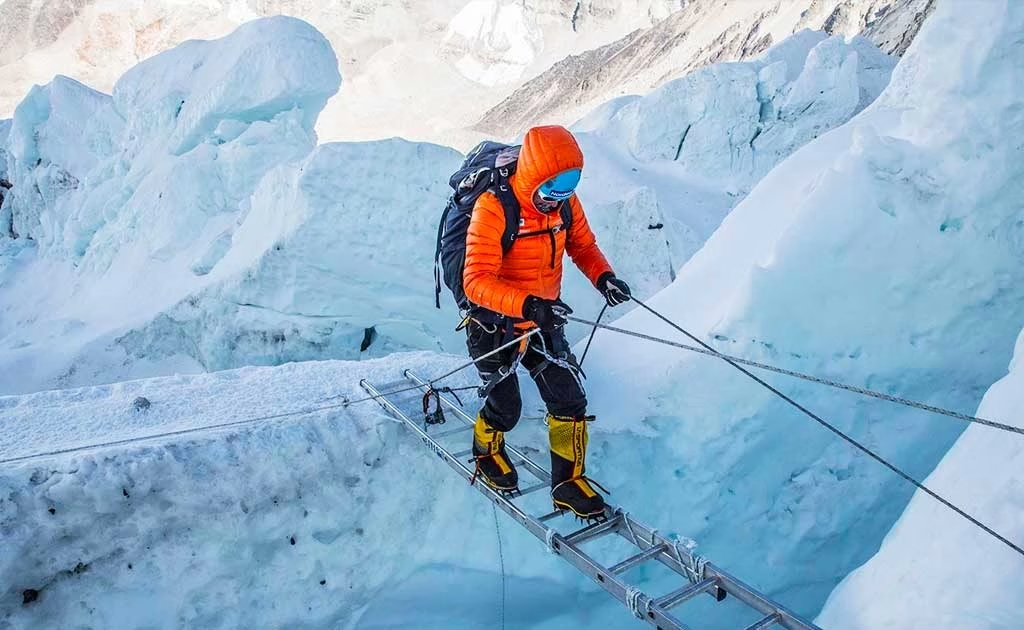
The Nepal-side expedition generally follows the South Col route, approaching through the Khumbu Valley and establishing a series of high-altitude camps above Everest Base Camp. The climb involves the Khumbu Icefall, Western Cwm, Lhotse Face and South Col before the final summit push.
An Everest expedition requires extensive preparation, previous high-altitude experience, strong physical conditioning and a carefully organised support system.
2. Mount Kanchenjunga Expedition – 8,586m
Mount Kanchenjunga is the world’s third-highest mountain, located in eastern Nepal along the border with India. Its remote location, long approach and demanding climbing conditions make it a serious objective for experienced mountaineers.
The mountain is known for its spectacular Himalayan scenery, challenging terrain and relatively remote expedition environment. Climbers must be prepared for a lengthy approach, complex logistics and demanding high-altitude conditions.
3. Mount Lhotse Expedition – 8,516m
Mount Lhotse is the world’s fourth-highest mountain and shares part of its climbing approach with Mount Everest. Located in the Khumbu region, it rises directly south of Everest and is connected to the Everest massif by the South Col.
The standard Nepal-side route follows the Khumbu Icefall and Western Cwm before climbing the steep Lhotse Face. The final section towards the summit is technically demanding and requires excellent mountaineering ability and high-altitude experience.
4. Mount Makalu Expedition – 8,485m
Mount Makalu is the world’s fifth-highest mountain, situated in eastern Nepal near the border with Tibet. Recognised for its distinctive pyramid-shaped summit, Makalu is considered one of the more technically demanding 8,000-metre peaks.
The expedition approaches through the remote Makalu-Barun region, passing through spectacular valleys, glaciers and rugged mountain terrain. Its steep slopes, exposed ridges and challenging summit sections require strong technical climbing skills.
5. Mount Cho Oyu Expedition – 8,188m
Mount Cho Oyu is the world’s sixth-highest mountain, situated on the Nepal–Tibet border west of Mount Everest. Its name is often translated as the Turquoise Goddess.
Cho Oyu is an important objective for experienced mountaineers preparing for higher-level Himalayan expeditions. The mountain is commonly approached from the Tibetan side, so expedition arrangements depend on current access permissions, regulations and border conditions.
6. Mount Dhaulagiri I Expedition – 8,167m
Mount Dhaulagiri I is the world’s seventh-highest mountain, located in western Nepal. Its name means White Mountain, reflecting its enormous snow-covered slopes and impressive Himalayan appearance.
The expedition involves a remote approach through the Dhaulagiri region, glacier travel and demanding high-altitude climbing. Dhaulagiri is a serious mountaineering objective requiring previous expedition experience, careful acclimatisation and strong technical ability.
7. Mount Manaslu Expedition – 8,163m
Mount Manaslu is the world’s eighth-highest mountain, located in the Mansiri Himal range of western-central Nepal. Its name is associated with the Sanskrit word Manasa, meaning spirit or soul.
Manaslu is a major Himalayan expedition objective, approached through the beautiful Manaslu region. The standard climbing route involves a series of high camps, glacier travel and fixed-rope sections. Climbers must be prepared for rapidly changing weather, avalanche exposure and extreme altitude.
8. Mount Annapurna I Expedition – 8,091m
Mount Annapurna I is the world’s tenth-highest mountain and one of Nepal’s most challenging 8,000-metre objectives. It is located in the Annapurna Himalaya and is known for its demanding climbing conditions and serious objective hazards.
The expedition involves remote mountain terrain, steep snow and ice sections, glacier travel and complex high-altitude logistics. Annapurna I is an exceptionally serious undertaking and is suitable only for highly experienced mountaineers.
Why Choose Nepal for an 8,000m Expedition?
Nepal offers an extraordinary concentration of the world’s highest mountains, established mountaineering routes and a long history of Himalayan expedition activity.
Reasons experienced climbers choose Nepal include:
- Eight 8,000m peaks: Access to some of the world’s most iconic high-altitude mountaineering objectives.
- Established expedition regions: Recognised approach routes and Base Camp locations across the Himalayas.
- Experienced mountain workforce: Access to Nepalese trekking and mountaineering professionals, subject to the requirements of each expedition.
- Himalayan expedition infrastructure: Established mountain communities, trekking routes and logistical networks in several major climbing regions.
- A wide range of climbing objectives: From demanding 7,000-metre peaks to the world’s highest mountains.
Our High-Altitude Expedition Services
Every 8,000-metre expedition requires detailed preparation and mountain-specific arrangements. The exact services depend on the peak, climbing route, team size and selected expedition package.
Depending on the confirmed programme, expedition arrangements may include:
- Mountaineering permit and government documentation coordination.
- Route-specific approach trekking and accommodation arrangements.
- Base Camp establishment and expedition support.
- High-altitude food, kitchen and camping logistics.
- Qualified climbing Sherpa arrangements.
- Fixed-rope and group climbing equipment logistics, where included.
- High-altitude camp support and expedition supplies.
- Domestic transportation and internal flight arrangements, where applicable.
- Staff coordination and expedition administration.
- Pre-departure information and equipment guidance.
We provide clear information about the services included and excluded before confirming an expedition. Personal mountaineering equipment, insurance, oxygen arrangements, climbing Sherpa ratios and other specialist services must be agreed for each mountain.
Preparing for an 8,000m Expedition
Climbing above 8,000 metres is an extreme mountaineering undertaking. At this altitude, the human body is exposed to critically low oxygen availability, severe cold, unpredictable weather and significant objective hazards.
A successful expedition requires much more than physical fitness. Climbers should have appropriate technical ability, sound judgement, high-altitude experience and the ability to operate safely in a demanding mountain environment.
Previous Mountaineering Experience
Previous experience on 6,000m and 7,000m mountains is strongly recommended. Climbers should have experience with glacier travel, crampons, ice axes, fixed ropes, ascenders, harness systems and high-altitude camping.
Physical and Mental Preparation
A structured training programme should include cardiovascular endurance, strength, flexibility and sustained uphill activity. Mental resilience, patience and the ability to make responsible decisions are equally important.
Acclimatisation and Altitude Awareness
A suitable acclimatisation programme is essential. Climbers must understand the symptoms of altitude illness and follow the expedition leader’s guidance. Acclimatisation schedules may change according to individual health, weather and mountain conditions.
Personal Equipment and Insurance
Climbers need appropriate high-altitude clothing, mountaineering boots, technical climbing equipment and sleeping systems. Comprehensive insurance must explicitly cover mountaineering at the intended altitude, helicopter evacuation, medical expenses and repatriation. Always check policy exclusions before travelling.
Best Seasons for 8,000m Expeditions in Nepal
The main climbing seasons for many Nepalese 8,000-metre mountains are spring and autumn, although the suitable season depends on the individual mountain and route.
Spring (March–May): Spring is the principal climbing season for several major Himalayan peaks, including Everest, Lhotse, Makalu, Kanchenjunga, Dhaulagiri and Annapurna I. Longer daylight hours and seasonal weather patterns provide potential climbing windows, although conditions remain unpredictable.
Autumn (September–November): Autumn is an important season for mountains such as Manaslu and other Himalayan objectives. Post-monsoon conditions can offer suitable climbing opportunities, but snow, wind and temperature conditions vary.
Winter and summer: Winter expeditions are specialist undertakings involving severe cold and challenging weather. Summer climbing is generally affected by the monsoon in many Nepalese mountain regions. Mountain-specific advice is essential before selecting a departure date.
Start with the Right Mountain
An 8,000-metre summit should be selected according to your previous climbing experience, technical ability, altitude history and personal objectives. There is no easy 8,000-metre mountain, and no single peak is suitable for every climber.
If you are building your Himalayan mountaineering experience, explore our existing Nepal Expeditions and Peak Climbing collection.
You may also consider these established climbing objectives:
- Himlung Himal Expedition (7,126m) – a major high-altitude objective in the remote Nar-Phu region.
- Baruntse Expedition (7,129m) – a demanding 7,000-metre climb involving technical snow and ice terrain.
- Ama Dablam Climb (6,812m) – a technical Himalayan climbing objective in the Everest region.
- Mera Peak Climbing (6,476m) – a high-altitude trekking peak that can help develop Himalayan experience.
- Island Peak Climbing with Everest Base Camp – a popular trekking and climbing combination.
- Lobuche Peak Climbing – a challenging trekking peak in the Everest region.
Why Plan Your Expedition with Nepal Tours Packages?
Nepal Tours Packages is a Nepal-based travel company offering locally coordinated Himalayan travel and expedition arrangements. Our work in Nepal’s tourism industry gives us a local understanding of mountain travel, regional logistics and the importance of responsible trip planning.
For high-altitude mountaineering, we recognise that every mountain requires specialist knowledge, experienced climbing leadership and careful operational preparation. We coordinate expedition services according to the selected objective and confirmed team arrangements, working with appropriately qualified mountain professionals where required.
Our approach focuses on:
- Clear communication about expedition arrangements and package services.
- Local coordination of permits, transport and logistical requirements.
- Mountain-specific planning rather than a one-size-fits-all programme.
- Transparent information about preparation, costs and exclusions.
- Respect for mountain safety, local communities and the Himalayan environment.
We do not promise summit success. The safety of the climbing team and responsible decisions on the mountain must always come before reaching the summit.
Plan Your 8,000m Himalayan Expedition
Are you preparing for Mount Everest, Manaslu, Lhotse, Makalu or another Himalayan giant?
Contact Nepal Tours Packages to discuss your preferred mountain, previous climbing experience, team size and planned expedition season. We can help you explore the relevant arrangements and determine whether the selected expedition can be organised to meet your requirements.
Take the next step towards your Himalayan mountaineering objective.
Contact Nepal Tours Packages to discuss your 8,000m expedition.
Frequently Asked Questions About 8,000m Expeditions in Nepal
1. How many mountains above 8,000 metres are there in Nepal?
Nepal is home to eight internationally recognised mountains above 8,000 metres, making it one of the world’s most important destinations for high-altitude mountaineering. These mountains are Mount Everest (8,848.86m), Kanchenjunga (8,586m), Lhotse (8,516m), Makalu (8,463m), Cho Oyu (8,201m), Dhaulagiri I (8,167m), Manaslu (8,163m) and Annapurna I (8,091m).
These peaks are located in different Himalayan regions of Nepal, with some situated along international borders. Nepal’s Department of Tourism has also added six additional peaks above 8,000m to its national records, although their separate international recognition remains under consideration.
2. Which is the highest mountain in Nepal?
Mount Everest, also known locally as Sagarmatha, is the highest mountain in Nepal and the world, with an official height of 8,848.86 metres. It lies in the Khumbu region along the Nepal–China border.
The Everest expedition is one of the most demanding mountaineering objectives in the world. Climbers must prepare for extreme altitude, prolonged exposure, technical climbing sections, changing weather and the challenges of the Khumbu Icefall and upper mountain route.
3. How long does an 8,000m expedition take?
Most 8,000-metre expeditions take approximately 40–65 days, although the duration varies considerably depending on the mountain, climbing route, approach, acclimatisation schedule and weather conditions.
An expedition generally includes arrival and preparation in Kathmandu, travel to the mountain region, trekking to Base Camp, acclimatisation rotations, higher-camp preparation, the summit window and the return journey. Additional contingency days are important because weather delays, route conditions and climbers’ health can affect the schedule.
Everest and other technically demanding mountains may require longer expedition periods. The final duration should be confirmed in the individual expedition itinerary.
4. What is the best season for climbing 8,000m peaks in Nepal?
Spring (March–May) is the principal climbing season for many of Nepal’s 8,000-metre mountains, including Everest, Lhotse, Makalu and Annapurna I. Autumn (September–November) is also an important season, particularly for mountains such as Manaslu and other objectives where conditions are suitable.
The best season depends on the individual mountain, route, prevailing weather patterns, snow conditions and expedition strategy. Climbers should not assume that every 8,000m peak has the same ideal climbing window.
Nepal Tours Packages can help prospective climbers discuss suitable departure periods and the practical arrangements for their chosen mountain.
5. Do I need previous experience to climb an 8,000m mountain?
Yes. Previous high-altitude mountaineering experience is essential for an 8,000m expedition. These mountains are not suitable for beginners or people whose experience is limited to ordinary trekking.
Climbers should ideally have experience on 6,000m and 7,000m peaks, together with proven physical endurance, technical climbing ability and experience living and working in remote high-altitude environments.
Depending on the mountain and route, useful skills include glacier travel, crampon techniques, ice axe use, rope management, ascender operation, fixed-line climbing and efficient movement in extreme cold.
An assessment of your previous climbs, altitude experience and technical skills should be part of the preparation and booking discussion.
6. Which 8,000m mountain should I climb first?
There is no single best first 8,000m mountain for every climber. The right choice depends on your mountaineering background, previous summit experience, technical ability, fitness, altitude tolerance and the type of challenge you want to undertake.
Manaslu is sometimes considered by experienced climbers preparing for their first 8,000m summit. However, it remains an extremely demanding high-altitude expedition and should never be considered an easy introduction to extreme mountaineering.
Everest, Annapurna I, Kanchenjunga and other 8,000m mountains each present different technical, logistical and environmental challenges. A suitable objective should be selected after reviewing your climbing history and preparation.
7. What permits are required for an 8,000m expedition in Nepal?
Climbers need the applicable mountaineering expedition permit issued by the Government of Nepal through the relevant authority. Depending on the mountain and route, additional national park, conservation-area, local and administrative permissions may also be required.
Permit fees and regulations can change. The Department of Tourism publishes the current mountaineering royalty provisions, including different rates according to the mountain and climbing season.
Nepal Tours Packages can coordinate the applicable permit arrangements as part of an agreed expedition service. All permit requirements and costs should be confirmed before booking.
For official information, visit the Department of Tourism Nepal.
8. Is supplemental oxygen necessary for an 8,000m expedition?
Supplemental oxygen is commonly used on several commercial 8,000m expeditions, particularly on Everest. However, oxygen strategies vary according to the mountain, route, expedition plan, climber’s experience and medical considerations.
An oxygen plan should specify the intended flow rates, number of cylinders, masks, regulators, storage, transport and emergency reserves. The climbing team must also understand the procedures for managing oxygen equipment at high altitude.
Climbers should discuss oxygen use with their expedition leader before departure. The decision to use supplemental oxygen should form part of a properly planned climbing and safety strategy, not an improvised arrangement.
9. Does the expedition package include climbing Sherpas, oxygen and fixed ropes?
These services depend on the selected mountain and the type of expedition package. Some packages include climbing Sherpa support, supplemental oxygen, high-altitude camps, fixed-rope logistics and group climbing equipment, while others may offer different levels of support.
Before confirming an expedition, request a written breakdown covering:
- Climbing Sherpa support and the Sherpa-to-climber ratio.
- Oxygen cylinders, masks, regulators and emergency reserves, if applicable.
- Fixed ropes, anchors and high-altitude route preparation.
- Base Camp and higher-camp accommodation.
- Meals, kitchen services and expedition staff.
- Personal climbing equipment versus group equipment.
- Emergency communication and evacuation arrangements.
At Nepal Tours Packages, the services, responsibilities and exclusions should be clearly explained in the individual expedition proposal before a booking is confirmed.
10. How difficult is an 8,000m mountain expedition?
An 8,000m expedition is an extreme mountaineering undertaking. Above 8,000 metres, climbers enter what is commonly called the death zone, where the human body cannot acclimatise adequately to the low oxygen environment for prolonged periods.
The challenges include severe cold, strong winds, high-altitude exhaustion, technical terrain, crevasse hazards, avalanches, changing weather and the possibility of altitude-related medical emergencies.
Even highly experienced climbers must make careful decisions throughout the expedition. Physical fitness alone is not enough; sound judgement, technical skills, acclimatisation and a disciplined climbing strategy are equally important.
11. How should I prepare physically for an 8,000m expedition?
Preparation should begin many months before the planned expedition. Climbers need a structured training programme that develops cardiovascular endurance, leg strength, core stability, muscular endurance and the ability to carry loads over long periods.
Useful preparation may include:
- Long-distance hiking with a weighted backpack.
- Uphill walking and stair climbing.
- Aerobic endurance training.
- Strength training for legs, hips and core.
- Multi-day trekking and mountaineering experience.
- Technical climbing practice on snow, ice and glaciers.
- Recovery, nutrition and appropriate rest.
Training should be progressive and suited to your existing fitness and climbing background. A qualified coach or mountaineering professional can help develop a suitable programme.
12. What are the main risks of climbing above 8,000 metres?
High-altitude mountaineering involves serious and sometimes life-threatening risks. These include acute mountain sickness, high-altitude pulmonary oedema (HAPE), high-altitude cerebral oedema (HACE), frostbite, hypothermia, exhaustion, avalanches, falling ice, crevasse falls and severe weather.
The risks vary by mountain and route. Proper acclimatisation, experienced expedition leadership, appropriate equipment, reliable communication and a willingness to turn around are essential.
Climbers should understand the symptoms of altitude-related illnesses and follow the expedition leader’s medical and safety instructions. No operator can eliminate the risks associated with extreme-altitude climbing.
13. What type of insurance is required for an 8,000m expedition?
Standard travel insurance is generally not sufficient for an 8,000m mountaineering expedition. Climbers need a policy that explicitly covers high-altitude mountaineering at the intended summit elevation and the specific climbing activities planned.
Insurance should be checked for coverage of:
- Mountaineering at the intended altitude.
- Emergency helicopter evacuation where operationally available.
- Emergency medical treatment and hospitalisation.
- Search and rescue expenses, where covered.
- Medical repatriation and travel-related emergencies.
- Expedition cancellation or interruption, if available.
Read the policy exclusions carefully. Some policies exclude climbing above a specified altitude or technical mountaineering, even when trekking or general adventure activities are covered.
Climbers must arrange appropriate insurance before travelling and provide the required policy details to the expedition organiser.
14. Can I join a group 8,000m expedition or arrange a private expedition?
Both options may be possible depending on the mountain, departure schedule, route and operational arrangements.
A group expedition can allow climbers to share certain logistical services and expedition resources. A private expedition offers greater flexibility in departure dates, climbing support and individual arrangements, but may involve higher costs.
For either option, the expedition team, climbing Sherpa support, oxygen arrangements, fixed-rope services, Base Camp facilities and safety procedures should be clearly defined.
Contact Nepal Tours Packages to discuss whether a group or private arrangement is suitable for your chosen mountain and experience level.
15. Is reaching the summit of an 8,000m mountain guaranteed?
No. Summit success can never be guaranteed on an 8,000m expedition. Weather, route conditions, avalanches, altitude-related health problems, equipment issues and the physical condition of the climbing team can all affect the outcome.
The expedition leader must make safety-based decisions, including delaying a summit attempt or turning the team around when conditions become unsafe.
A responsible expedition is not measured only by reaching the summit. Good preparation, professional decision-making, respect for the mountain and returning safely are equally important.
Plan Your 8,000m Himalayan Expedition with Nepal Tours Packages
Standing on the summit of an 8,000-metre Himalayan mountain is one of the greatest challenges in mountaineering. Whether your ambition is Mount Everest, Manaslu, Lhotse, Makalu, Dhaulagiri, Annapurna I or Kanchenjunga, a successful expedition begins with the right preparation, realistic planning and reliable local coordination.
Nepal Tours Packages welcomes enquiries from experienced mountaineers, private climbing teams, international expedition organisers and specialist adventure travel partners interested in climbing Nepal’s highest mountains.
Our Nepal-based team can assist with planning and coordinating the local arrangements required for an expedition, including:
- Expedition permit coordination and applicable government formalities.
- Trekking and approach-route arrangements.
- Local transport, domestic flights and accommodation.
- Base Camp and expedition logistics according to the agreed service level.
- Coordination with qualified climbing Sherpas and specialist mountain staff.
- Food, camping and support arrangements as specified in the expedition proposal.
- Customised itineraries for private teams and individual climbers.
Every 8,000m mountain has different technical, logistical and safety requirements. We therefore prepare expedition proposals according to the selected peak, climbing season, route, team size and level of support required.
Discuss your expedition plans with our team. Share your previous climbing experience, mountains you have summited, preferred peak and intended season so we can understand your requirements and discuss the appropriate local arrangements.
Contact Nepal Tours Packages to start planning your Himalayan expedition.
Why Choose Nepal Tours Packages for Your Nepal Expedition?
Local Knowledge and Nepal-Based Coordination
Nepal Tours Packages is a Nepal-based travel and expedition service provider operating through its local team in Kathmandu. Our knowledge of Nepal’s tourism infrastructure, trekking regions, mountain access routes and local travel arrangements helps us coordinate the ground services required for Himalayan journeys.
For 8,000m expeditions, local coordination is particularly important because permits, transport, staff, supplies, accommodation and Base Camp arrangements must be planned well in advance.
More Than 25 Years of Tourism Experience
Our leadership brings more than 25 years of experience in Nepal’s tourism industry, with knowledge of local travel operations, destination logistics and international client requirements.
This wider tourism experience supports our approach to planning and coordinating Himalayan travel. Technical climbing leadership and high-altitude mountaineering decisions remain the responsibility of appropriately qualified and experienced expedition leaders and climbing professionals.
Tailor-Made Expedition Arrangements
Every climber and expedition team has different requirements. We understand that an Everest expedition, a Manaslu climb and a Kanchenjunga expedition cannot be organised using identical arrangements.
We work towards preparing individual proposals based on the selected mountain, climbing season, route, team size, previous experience and requested support services.
Coordination with Local Mountain Professionals
High-altitude climbing requires specialist knowledge and experienced mountain personnel. Depending on the selected expedition and agreed service level, we coordinate with appropriate local climbing professionals, Sherpa support teams, guides, porters and logistical staff.
The qualifications, responsibilities, experience and support ratios of the relevant personnel should be confirmed in the expedition proposal.
Transparent Planning and Clear Package Details
We believe climbers should understand exactly what they are booking. Our expedition proposals should clearly explain the included services, exclusions, permits, staff arrangements, climbing support, oxygen provisions, equipment responsibilities, insurance requirements and additional costs.
This helps climbers and expedition organisers make informed decisions before confirming their departure.
Responsible and Safety-Conscious Expedition Planning
Mountaineering above 8,000 metres involves serious risks. We support careful preparation, suitable acclimatisation, appropriate insurance, qualified leadership and responsible decisions on the mountain.
We do not promise summit success. The safety of climbers and mountain staff must always take priority over reaching the summit.
Official Information and Mountaineering Resources
For further information about Nepal’s mountains, permits and mountaineering regulations, we recommend consulting the following official organisations:
- Nepal Tourism Board – Eight Thousanders
- Department of Tourism Nepal – Mountaineering Fees
- Nepal Tourism Board – Mountaineering in Nepal
- Nepal Mountaineering Association
Our commitment: We aim to provide clear information, reliable local coordination and properly defined expedition arrangements. Technical climbing decisions, summit attempts and safety management must always remain with qualified expedition leadership.