

Summary
Learn how to manage currency and payments while travelling in Nepal, including Nepalese Rupees, money exchange, ATMs, credit cards, cash, digital payments and practical tips for cities and trekking areas. Get essential advice from local Nepal travel experts before your trip.
Currency payments while travelling in NepalCurrency payments while travelling in Nepal are generally straightforward, but knowing when to use cash, cards, ATMs and foreign exchange services can make your trip much easier. The official currency of Nepal is the Nepalese Rupee (NPR), and cash remains important, particularly when travelling outside the major cities or into the Himalayan trekking regions.
For most travelers, the best approach is to use a combination of Nepali rupees, international debit or credit cards, and a small emergency reserve of cash. Cards are increasingly accepted in Kathmandu, Pokhara, major hotels, restaurants and established shops, while smaller businesses, local markets, rural areas and mountain lodges may require cash.
If you are planning a Nepal tour, trekking holiday, wildlife safari or customized Himalayan journey, understanding how to pay in Nepal before arrival will help you budget confidently and avoid unnecessary difficulties.
At Nepal Tours Packages, we provide practical local travel advice as part of our private and customized Nepal journeys. With more than 25 years of experience in Nepal tourism, our local team can also advise you about practical payment arrangements for your specific itinerary.
What Currency Is Used in Nepal?
The official currency of Nepal is the Nepalese Rupee, abbreviated as NPR or commonly written as Rs.
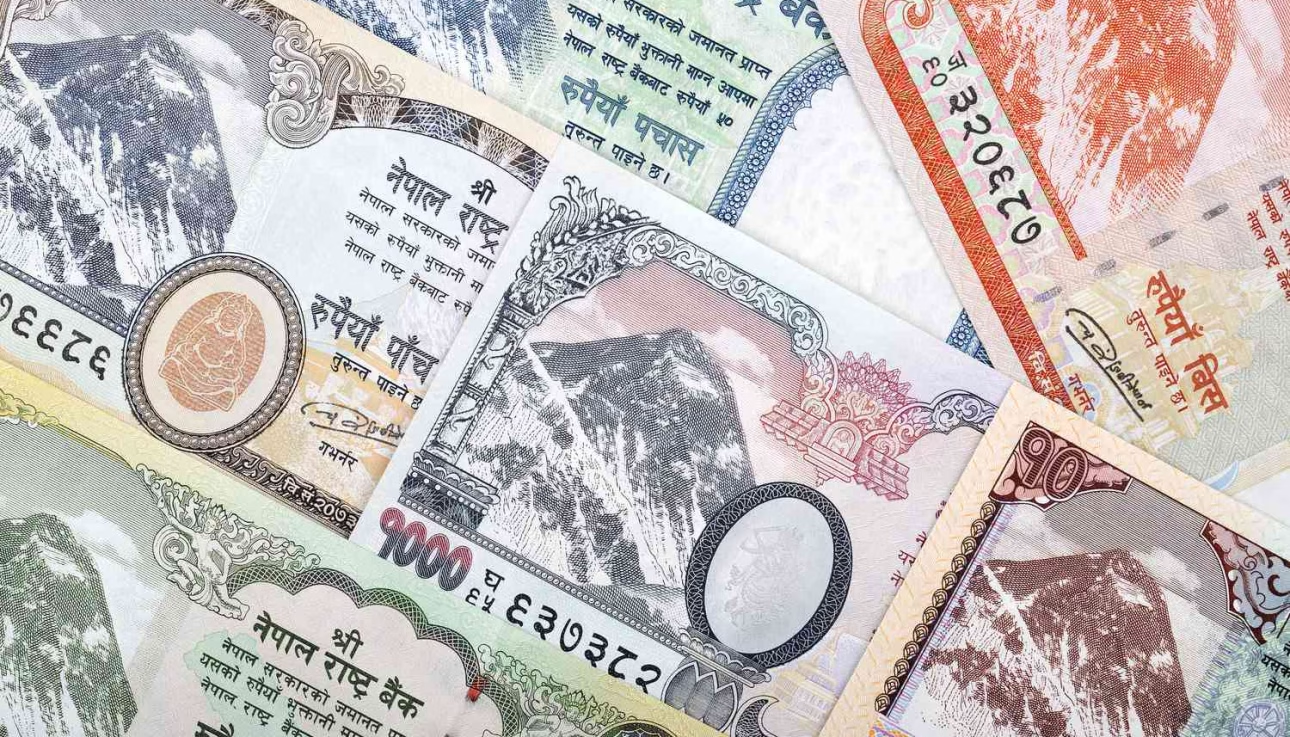
Nepalese banknotes are issued in several denominations, including Rs. 5, Rs. 10, Rs. 20, Rs. 50, Rs. 100, Rs. 500 and Rs. 1,000. Coins are also used, although they are less common in everyday tourist transactions.
The Nepal Tourism Board confirms that the Nepalese Rupee is the country’s local currency and that foreign currency exchange facilities are available through banks, authorized exchange counters and other licensed providers.
For a first-time visitor, it is useful to keep smaller Nepalese notes available for:
- Local restaurants
- Small shops
- Taxi fares
- Tips
- Entrance fees
- Bottled or filtered water
- Snacks
- Local markets
- Rural accommodation
- Trekking lodges
Large Rs. 1,000 notes can sometimes be difficult to use for small purchases, particularly in rural areas.
Can You Use US Dollars, Euros or British Pounds in Nepal?
Foreign currencies are generally not the normal everyday payment method for ordinary purchases in Nepal. Travelers should normally convert their foreign currency into Nepalese Rupees.
Some hotels, travel companies and businesses serving international travelers may quote or accept payment in foreign currency under applicable foreign-exchange rules. However, for everyday spending, Nepalese Rupees are the safest option.
The Nepal Tourism Board notes that foreign exchange facilities are available at banks, authorized money changers and major locations including Tribhuvan International Airport.
Our advice is simple:
Use NPR for everyday expenses and use international cards where card payment is available and convenient.
Where Can You Exchange Money in Nepal?
Foreign currency can be exchanged through licensed banks and authorized money changers.
Kathmandu has numerous exchange facilities, particularly around major tourist areas such as Thamel. Foreign exchange services are also available at Tribhuvan International Airport and in other major tourist destinations.
Nepal Rastra Bank maintains lists of licensed entities authorized to conduct foreign-exchange transactions. The central bank’s current foreign-exchange information includes licensed money changers in Kathmandu, Pokhara and other parts of Nepal.
Our Advice for Travelers
When exchanging money:
- Use an authorized money changer or bank.
- Compare the displayed exchange rate where practical.
- Count the money before leaving the counter.
- Keep your exchange receipt.
- Avoid informal street currency exchange.
- Exchange enough cash before travelling into remote areas.
Keeping your exchange receipt can also be useful when you need to reconvert remaining Nepalese currency before leaving Nepal. The Nepal Tourism Board specifically advises travelers to retain foreign-exchange encashment receipts.
Should You Carry Cash in Nepal?
Yes.
Even if you normally prefer using cards, carrying some Nepalese Rupees is strongly recommended.
Cash is particularly useful when travelling:
- Outside Kathmandu
- In rural villages
- During trekking
- In mountain regions
- At small restaurants
- At local markets
- In small shops
- At some family-run lodges
- During road journeys
- When card or internet connectivity is unavailable
For a city holiday, you may not need to carry large amounts of cash every day. However, before leaving Kathmandu or Pokhara for a remote trekking region, it is sensible to withdraw or exchange enough money for the expected expenses.
Your required cash amount depends heavily on whether your meals, accommodation, transportation and permits are already included in your tour or trekking package.
Are Credit Cards Accepted in Nepal?
Yes, Visa and Mastercard are widely accepted in established tourist businesses, particularly in Kathmandu and Pokhara. The Nepal Tourism Board also notes acceptance of major international cards at major hotels, shops and restaurants.
Card acceptance is generally strongest at:
- Major hotels
- Established restaurants
- Travel agencies
- Larger shops
- Tourist businesses
- Some supermarkets
- Higher-end restaurants
- Some trekking and tour operators
However, card acceptance should not be assumed everywhere.
A small restaurant, local tea shop, village lodge or rural business may accept only cash.
Best Practice
Carry your card as your primary payment method where convenient, but always keep backup Nepalese cash.
Can You Use Debit Cards in Nepal?
International debit cards with Visa or Mastercard functionality can often be used at ATMs and card terminals in Nepal.
Before travelling, check with your bank about:
- International ATM withdrawals
- Foreign transaction fees
- Daily withdrawal limits
- International card activation
- PIN requirements
- Fraud protection
- Dynamic currency conversion
It is also a good idea to have two different cards from different banking networks if possible.
That way, if one card is declined, lost or temporarily blocked, you have another option.
ATMs in Nepal
ATMs are widely used in Kathmandu and other major tourist destinations.
The Nepal Tourism Board specifically notes that ATMs are widely available in Kathmandu.
You will generally find more ATM options in:
- Kathmandu
- Thamel
- Pokhara
- Chitwan
- Major towns
- Popular trekking hubs
ATM availability becomes less predictable as you travel deeper into remote mountain regions.
For this reason, do not depend entirely on your ATM card during a trek.
ATM Tips for Nepal
Before withdrawing money:
- Use ATMs operated by established banks.
- Keep your card and PIN secure.
- Check your bank’s international withdrawal fees.
- Withdraw enough cash before entering remote areas.
- Keep some emergency cash separately.
- Do not rely on a single ATM or single card.
Our current Nepal travel guide also recommends carrying backup cash before travelling to trekking regions, where ATM reliability can be less predictable.
How Much Cash Should You Carry in Nepal?
There is no single amount that is suitable for every traveler.
Your cash requirement depends on:
- Trip duration
- Accommodation
- Whether meals are included
- Trekking route
- Shopping
- Restaurant choices
- Transportation
- Travel style
- Whether you are travelling independently or on a package
If you have booked a private tour where accommodation, transportation, sightseeing, guides and many meals are already included, your personal daily cash requirement may be relatively modest.
For independent trekking, you should budget more carefully because food, drinks, accommodation, charging and other small expenses accumulate during the journey.
Currency payments while travelling in Nepal – Payments During Trekking in Nepal
This is where planning becomes particularly important.
In Kathmandu and Pokhara, you can often use cards and ATMs. Once you enter remote trekking areas, cash becomes increasingly important.
For popular routes such as Everest, Annapurna and Langtang, some established businesses may offer card or digital payment options, but connectivity and availability can vary.
Before beginning a trek, ask your trekking agency or local guide about:
- Where to withdraw cash
- Where ATMs are available
- Expected daily expenses
- Accommodation payment
- Meal costs
- Charging fees
- Wi-Fi fees
- Tips
- Emergency funds
A good local travel company can provide much more useful advice because payment conditions vary between trekking regions.
Payment Methods in Kathmandu
Kathmandu offers travelers the widest range of payment options.
You can generally use:
Cash:
Nepalese Rupees are accepted everywhere for ordinary transactions.
Credit and debit cards:
Widely available at established hotels, restaurants and tourist businesses.
ATMs:
Widely available in central areas.
Digital payments:
Nepal has a growing digital-payment ecosystem, although availability and suitability for international visitors can vary by provider and merchant.
For most international travelers, a combination of cash + international card remains the easiest approach.
Payment Methods in Pokhara
Pokhara is another destination where travelers have relatively good access to ATMs and card payments.
In the Lakeside tourist area, many hotels, restaurants, shops and travel businesses accept international cards.
However, if you are leaving Pokhara for a trek or rural area, withdraw sufficient cash before departure.
This is particularly important if your itinerary includes remote villages where banking facilities are limited.
You can explore our wider Nepal Travel Guide for practical information about Kathmandu, Pokhara, trekking, transportation, accommodation and other aspects of planning your Nepal holiday.
Paying for Hotels in Nepal
Major hotels commonly accept international credit and debit cards.
When booking through a tour operator, your accommodation may already be included in your package, meaning you may only need money for personal expenses and optional services.
Before arrival, check whether your hotel booking includes:
- Breakfast
- Taxes
- Service charges
- Airport transfer
- Other meals
- Extra beds
- Additional services
If you are arranging your own accommodation, check the hotel’s accepted payment methods before arrival.
Paying for Restaurants in Nepal
Restaurants in Kathmandu and Pokhara vary considerably.
Larger and established restaurants often accept cards, while smaller local restaurants may prefer or require cash.
When visiting a local restaurant, it is useful to have smaller Nepalese notes available.
If you are unsure, simply ask before ordering:
“Can I pay by card?”
This avoids surprises at the end of your meal.
Tipping and Small Payments
Tipping is not identical to a fixed service charge, and practices vary depending on the type of service.
Travelers commonly tip guides, drivers, trekking staff and other service providers when they feel the service has been good.
For small tips and purchases, cash is much easier than using a card.
If you are joining a trek or private tour, your travel company can explain appropriate tipping practices for your particular itinerary.
Paying for Nepal Tours and Treks
If you book a private Nepal tour or trek with Nepal Tours Packages, your payment arrangements will be explained clearly before confirmation.
The exact deposit and balance arrangements can depend on:
- Trip type
- Travel dates
- Hotel bookings
- Domestic flights
- Permits
- Trekking arrangements
- Group size
- Special services
Our team provides a personalized quotation so you know what is included before making your booking.
You can explore our Nepal Tour Packages or View All Nepal Packages to compare private and customizable travel options.
Currency payments while travelling in Nepal for Customized Nepal Tours
One advantage of a private customized tour is that many of your major travel expenses can be arranged in advance.
For example, depending on your itinerary, we can organize:
- Hotels
- Private transportation
- Domestic flights
- Guides
- Sightseeing
- Trekking services
- Permits
- Wildlife activities
- Airport transfers
This means you can spend less time worrying about daily logistics and more time enjoying Nepal.
Our About Nepal Tours Packages page explains how our local team designs private and tailor-made journeys around travel dates, interests, accommodation preferences, group size and preferred pace.
Currency Tips for Nepal Trekking
If your trip includes trekking, follow these simple rules:
1. Carry cash before leaving the city
Do not wait until the last available ATM.
2. Keep emergency cash separate
Keep a small reserve away from your main wallet.
3. Carry smaller notes
Smaller denominations are useful in villages and tea houses.
4. Do not depend completely on cards
Technology and connectivity can fail.
5. Ask your guide
Your local guide knows where cash is available and what expenses you are likely to encounter.
6. Budget for unexpected expenses
Weather, delays and itinerary changes can sometimes create additional costs.
Is Nepal Expensive for Travelers?
Nepal can suit different travel styles.
Your overall cost depends on whether you choose:
- Independent travel
- Private tours
- Trekking
- Luxury accommodation
- Local restaurants
- International-standard hotels
- Domestic flights
- Private vehicles
- Optional activities
A carefully planned private tour can also make budgeting easier because many major expenses are arranged in advance.
Our Popular Nepal Tour Packages guide explains how travelers can choose between shorter holidays, comprehensive tours, trekking combinations and customized itineraries.
Currency Tips for Different Nepal Holidays
Cultural Tour
If you are mainly visiting Kathmandu, Bhaktapur and Patan, you will have easy access to ATMs and card facilities. Still, carry cash for entrance fees, local food, taxis and small purchases.
Pokhara Holiday
Cards are widely useful in the main tourist areas, but cash remains convenient for smaller businesses and excursions.
Chitwan Safari
Carry Nepalese Rupees for local purchases, tips and small expenses, particularly if you are staying outside the main tourist areas.
Himalayan Trek
Cash becomes much more important. Withdraw sufficient money before beginning the trek and ask your local trekking team for current advice.
Luxury Nepal Holiday
Major hotels, restaurants and established businesses are more likely to accept international cards, although having some cash remains advisable.
What About Indian Rupees in Nepal?
Indian Rupees have a particular status in Nepal and travelers should not assume that every Indian banknote or denomination is accepted everywhere.
Rules and exchange arrangements can change, so travelers carrying INR should check current guidance before departure and use authorized channels.
For most international visitors, the simplest approach is to obtain Nepalese Rupees through authorized exchange facilities.
What About Leftover Nepalese Rupees?
Try not to exchange much more money than you expect to spend.
If you have Nepalese Rupees remaining at the end of your trip, keep your foreign-exchange receipts. The Nepal Tourism Board advises travelers to retain exchange receipts because they may be needed when converting remaining Nepalese currency back into hard currency, subject to applicable rules.
Current foreign-exchange rules are administered by Nepal Rastra Bank, so travelers should rely on current official guidance rather than old travel advice.
Is It Safe to Carry Cash in Nepal?
For most travelers, carrying reasonable amounts of cash is a normal part of travelling in Nepal.
However:
- Do not display large amounts of cash unnecessarily.
- Keep your wallet secure in crowded areas.
- Divide emergency cash between different locations.
- Use a hotel safe where appropriate.
- Keep cards separate from your main cash.
- Carry only what you need for the day.
Normal travel precautions are sufficient for most visitors.
Responsible Travel and Money in Nepal
Your spending choices can also contribute to responsible tourism.
Whenever possible, consider spending with:
- Locally owned restaurants
- Family-run guesthouses
- Local guides
- Small businesses
- Local artisans
- Community tourism projects
Choosing local businesses helps tourism income reach communities beyond large international chains.
At Nepal Tours Packages, responsible and sustainable tourism is part of our approach. We work with local guides, locally owned accommodation and community businesses wherever practical, while encouraging travelers to respect local culture and reduce unnecessary environmental impact.
Read more about our Responsible & Sustainable Tourism approach.
Practical Currency Checklist Before Travelling to Nepal
Before your flight, make sure you have:
- A Visa or Mastercard-enabled card
- A second payment card if possible
- Your bank’s international-use enabled
- Knowledge of your ATM withdrawal limit
- Some emergency cash
- A plan for exchanging foreign currency
- A secure place for your cards and cash
- Travel insurance
- Copies of important documents
If you are trekking, add:
- Enough Nepalese Rupees for the expected trek
- Emergency cash
- Information about ATM availability on your route
- A waterproof wallet or pouch
Expert Advice From a Nepal-Based Travel Team
One of the advantages of arranging your trip with a local Nepal travel company is that payment advice can be matched to your actual itinerary.
A traveler spending ten days in Kathmandu, Pokhara and Chitwan has very different cash requirements from someone trekking to Everest Base Camp or travelling through remote Mustang.
At Nepal Tours Packages, we have more than 25 years of experience in Nepal tourism and specialize in private, tailor-made journeys. Our team can advise you about practical expenses, cash requirements, transportation, accommodation, trekking arrangements and other local considerations before your trip.
You can also meet our Nepal travel experts and learn more about the people supporting our travelers.
Book Your Nepal Holiday With Local Experts
Planning a Nepal tour becomes easier when the major travel arrangements are organized before you arrive.
Whether you are interested in a cultural holiday, Himalayan trekking, Chitwan wildlife safari, luxury travel or a fully customized Nepal itinerary, Nepal Tours Packages can design your journey around your travel dates, interests, accommodation preferences and preferred pace.
BOOK NOW – Plan Your Private Nepal Journey
Tell us:
- Your preferred travel dates
- Number of travelers
- Destinations you want to visit
- Preferred hotel category
- Trekking or adventure interests
- Approximate travel style
Our Nepal-based team will prepare a personalized itinerary and quotation.
Nepal Tours Packages
Kishor Nepal – Co-Founder & Holiday Expert
25+ years of Nepal tourism experience
WhatsApp/Phone: +977 9851150010
Email: nepalholidaytravels@gmail.com
Frequently Asked Questions About Currency and Payments in Nepal
What currency is used in Nepal?
The official currency is the Nepalese Rupee (NPR). It is the main currency used for everyday purchases throughout Nepal.
Can I use US dollars in Nepal?
Major hotels, travel businesses and some tourist services may accept foreign-currency payments under applicable rules, but everyday purchases are normally made in Nepalese Rupees. It is best to carry NPR for regular expenses.
Are credit cards accepted in Nepal?
Yes. Visa and Mastercard are commonly accepted at major hotels, restaurants, shops and tourist businesses, particularly in Kathmandu and Pokhara. Cash remains important in smaller businesses and remote areas.
Are ATMs available in Nepal?
Yes. ATMs are widely available in Kathmandu and other major tourist areas. Availability becomes less predictable in remote trekking regions, so travelers should carry sufficient cash before leaving major cities.
Should I carry cash when trekking in Nepal?
Yes. Cash is strongly recommended for trekking because ATM and card facilities are not consistently available in remote areas.
Where can I exchange foreign currency in Nepal?
You can exchange foreign currency through authorized banks and licensed money changers. Major tourist areas and Tribhuvan International Airport have exchange facilities.
Is it better to exchange money at the airport or in Kathmandu?
Airport exchange facilities are convenient when you first arrive. Travelers who need larger amounts may also compare rates at authorized exchange facilities in Kathmandu. Always use licensed providers.
Can I pay for my Nepal tour by card?
Payment arrangements depend on the tour and booking conditions. When you book a private journey with Nepal Tours Packages, we explain the payment schedule and available payment methods before confirmation.
How much cash should I take on a Nepal trip?
There is no fixed amount. Your requirements depend on your itinerary and what is already included in your tour. Travelers going trekking or into remote areas should carry more cash than those staying mainly in Kathmandu and Pokhara.
What should I do with leftover Nepalese Rupees?
Keep your foreign-exchange receipts and use an authorized bank or exchange facility if you need to convert remaining NPR before departure. Rules can apply to reconversion.
Final Advice: Carry Both Cash and Cards
The easiest approach to currency and payments while travelling in Nepal is not to choose between cash and cards—it is to use both.
Use your card when it is convenient and secure, but keep enough Nepalese Rupees for everyday expenses, rural travel, trekking and unexpected situations.
Most importantly, plan your cash requirements around your actual itinerary. Kathmandu and Pokhara offer many payment options, while remote Himalayan areas require greater preparation.
With advice from a Nepal-based local travel team, you can arrive prepared and spend more time enjoying Nepal’s mountains, culture, wildlife and welcoming communities.
Plan your private Nepal holiday with Nepal Tours Packages and travel with the confidence of local expertise from arrival to departure.
