

Summary
Planning an Everest Base Camp EBC Trek from India? This guide explains everything Indian trekkers need to know before booking their Everest adventure, including the route, itinerary, cost, flights from India, permits, best trekking seasons, fitness requirements, altitude, accommodation, food, packing, safety and acclimatization.
It also explains private trekking options, the classic Everest Base Camp route, and alternative Everest experiences such as Gokyo Lakes, Three High Passes and luxury/comfort treks.
Dreaming of standing at the foot of Mount Everest? An Everest Base Camp EBC trek from India is an unforgettable way to experience the world’s highest mountain while travelling through the spectacular Sherpa homeland of Nepal.
For Indian travellers, Nepal is particularly accessible, with close geographical and cultural connections and convenient international travel from major Indian cities to Kathmandu.
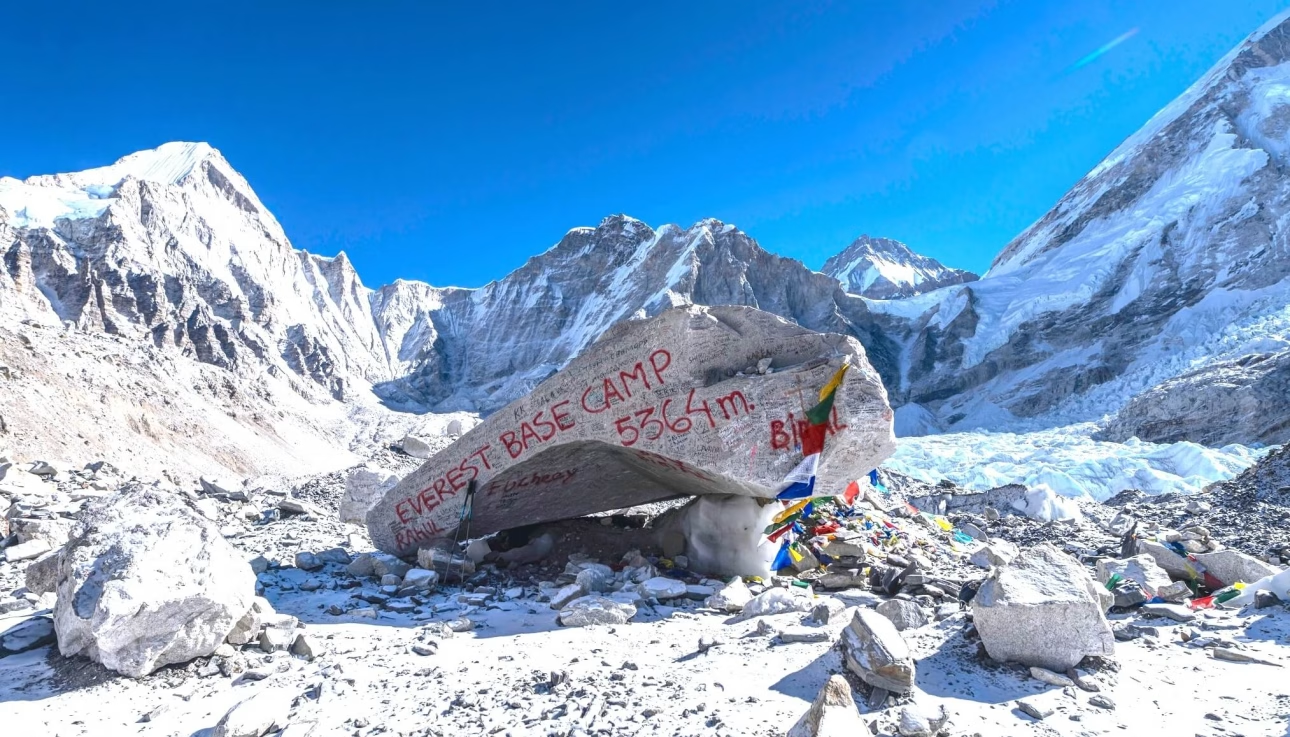
The journey begins in Kathmandu before continuing towards Lukla and following the legendary Everest trail through Phakding, Namche Bazaar, Tengboche, Dingboche, Lobuche and Gorakshep. The trek reaches Everest Base Camp at 5,364 metres, followed by an early-morning hike to Kala Patthar at approximately 5,545 metres for spectacular views of Mount Everest and the surrounding Himalayas.
Our Everest Base Camp Trekking from India – 15 Days is designed for Indian travellers looking for a privately organized Himalayan trekking experience with local guides, accommodation, permits, domestic flights and trekking support.
Why Trek to Everest Base Camp from India?
Nepal and India share a close geographical and cultural relationship, making Nepal one of the most accessible international destinations for Indian travellers.
But convenience is only part of the attraction.
The Everest Base Camp trail offers an extraordinary combination of:
- Mount Everest and spectacular Himalayan scenery
- Traditional Sherpa villages
- Buddhist monasteries and prayer flags
- High mountain valleys and glaciers
- Namche Bazaar
- Tengboche Monastery
- Everest Base Camp
- Sunrise from Kala Patthar
- Authentic high-altitude trekking
Unlike a sightseeing trip where you simply view Everest from a distance, trekking to Base Camp allows you to experience the landscape on foot and gradually move from the lower valleys into the high Himalayas.
For travellers interested in other Himalayan adventures, our Trekking in Nepal collection includes Everest, Annapurna, Gokyo and other trekking experiences.
How Do You Travel from India to Everest Base Camp?
There is no direct route from India to Everest Base Camp.
The normal journey is:
India → Kathmandu → Lukla → Phakding → Namche Bazaar → Tengboche → Dingboche → Lobuche → Gorakshep → Everest Base Camp
After reaching Base Camp and Kala Patthar, trekkers normally descend through the Khumbu trail before returning towards Lukla and Kathmandu.
Step 1: Travel from India to Kathmandu
Indian travellers can travel to Kathmandu from major Indian cities according to current airline schedules.
Delhi is one of the most convenient gateways, while travellers from Mumbai, Bengaluru, Kolkata, Chennai, Hyderabad and other cities can connect to Kathmandu depending on available flights.
We recommend arriving in Kathmandu at least one day before beginning the trek.
This gives you time to:
- Rest after your international journey
- Meet your trekking guide
- Check your equipment
- Complete your trek briefing
- Prepare your trekking bags
- Allow some flexibility for flight delays
Step 2: Kathmandu to Lukla
The Everest trek normally begins with a flight towards Lukla, the gateway to the Everest region.
From Lukla, the journey continues on foot through the Dudh Koshi Valley towards Phakding and then Namche Bazaar.
The mountain flight is itself an exciting part of the journey, but flights are weather dependent, so flexibility is important.
Everest Base Camp EBC trek Route from India
The route itself is the same classic Everest Base Camp trail used by trekkers from around the world.
A typical 15-day itinerary includes:
| Day | Route |
|---|---|
| 1 | Arrival in Kathmandu |
| 2 | Kathmandu – trek preparation |
| 3 | Fly to Lukla and trek to Phakding |
| 4 | Phakding to Namche Bazaar |
| 5 | Acclimatization in Namche |
| 6 | Namche to Tengboche |
| 7 | Tengboche to Dingboche |
| 8 | Acclimatization in Dingboche |
| 9 | Dingboche to Lobuche |
| 10 | Lobuche to Everest Base Camp and Gorakshep |
| 11 | Kala Patthar and trek to Pheriche |
| 12 | Pheriche to Namche |
| 13 | Namche to Lukla |
| 14 | Fly to Kathmandu |
| 15 | Departure from Nepal |
For travellers who want a conventional Everest Base Camp experience, you can also explore our Everest Base Camp Trek.
The standard route combines Lukla, Namche Bazaar, Tengboche, Dingboche, Lobuche, Gorakshep, Everest Base Camp and Kala Patthar.
How Difficult Is the Everest Base Camp EBC trek from India?
The Everest Base Camp trek is moderate to challenging.
You do not need mountaineering or technical climbing experience, but you should be prepared for long days of walking at high altitude.
A typical trekking day may involve approximately 5–7 hours of walking, although the duration varies according to the route, weather and walking conditions.
The greatest challenge is not simply distance.
It is altitude.
As you ascend above Namche Bazaar, the air becomes progressively thinner. Your body therefore needs time to adapt.
This is why a properly designed itinerary should include adequate acclimatization.
Read our detailed guide to How Hard Is It to Trek to Everest Base Camp? for more information about fitness, altitude, walking and preparation.
What Fitness Level Do You Need?
You should have good general fitness before attempting the trek.
Useful preparation includes:
- Long-distance walking
- Hiking on uneven terrain
- Stair climbing
- Cardiovascular exercise
- Strength training
- Regular weekend hikes
- Practising with a daypack
If you live in an Indian city without access to mountains, stair climbing and long walks can be particularly useful preparation.
The objective is to become comfortable walking continuously for several hours rather than simply training for speed.
Do Indian Citizens Need a Visa for Nepal?
Indian citizens generally do not need a Nepal tourist visa for entry.
Travellers should carry acceptable identification documents and check the latest entry requirements before departure.
Your trekking company can assist with the practical arrangements required after your arrival in Kathmandu.
Because entry requirements and accepted travel documents can change, Indian travellers should confirm the latest requirements before travelling.
How Much Does Everest Base Camp EBC trek from India Cost?
The cost depends on several factors, including:
- Number of trekkers
- Travel season
- Kathmandu hotel category
- Domestic flights
- Guide and porter services
- Tea-house accommodation
- Meals
- Trek duration
- Optional helicopter services
- Personal equipment
When comparing Everest Base Camp packages from India, look carefully at what is included.
A lower advertised price may exclude domestic flights, permits, meals, guide services, porter services or accommodation.
Our Everest Base Camp Trekking from India package is designed to make the major trekking arrangements clear before you travel.
Private Everest Base Camp Trek or Group Trek?
Indian travellers can choose between a private trek and a shared group departure.
A private trek is particularly attractive for:
- Couples
- Families
- Groups of friends
- Small groups travelling together
With a private trek, your itinerary can be organized around your own travel dates and group rather than another company’s fixed departure.
You also have greater flexibility regarding walking pace and daily arrangements.
If you are unsure which option suits you, read our detailed guide:
Everest Base Camp Trek: Private vs Group Trek – Is a Private Trek Worth the Extra Cost?
What Is Accommodation Like on the Everest Trek?
During the trek, accommodation is generally provided in local mountain tea houses.
Rooms are usually simple and practical, commonly with twin beds.
At lower elevations, facilities are generally more comfortable. As you climb higher, accommodation becomes increasingly basic because of the remote environment.
Common facilities include:
- Twin-sharing rooms
- Dining rooms
- Basic toilets
- Hot showers in some locations for an additional charge
- Charging facilities in many villages
- Wi-Fi in some locations
The objective is not luxury accommodation but experiencing the Himalayan environment while having a warm place to sleep and eat.
What Food Can Indian Trekkers Expect?
Tea houses commonly serve a mixture of Nepalese, Tibetan, Indian and international dishes.
Depending on the lodge, you may find:
- Dal bhat
- Rice
- Vegetables
- Noodles
- Pasta
- Soup
- Potatoes
- Chapati
- Eggs
- Porridge
- Momo
- Tea
- Coffee
Vegetarian food is widely available.
Indian travellers who are accustomed to rice, dal, vegetables and chapati will generally find familiar choices along the route.
At higher elevations, however, the menu becomes more limited because food has to be transported into remote mountain settlements.
What Should Indian Trekkers Pack?
You do not need to carry excessive luggage.
Essential clothing
- Thermal base layers
- Fleece layer
- Down jacket
- Waterproof jacket
- Trekking trousers
- Warm hat
- Gloves
- Trekking socks
- Comfortable trekking boots
- Warm sleeping clothes
Trekking equipment
- Daypack
- Duffel bag
- Headlamp
- Sunglasses
- Water bottles or hydration system
- Sunscreen
- Trekking poles
- Personal medication
- Small first-aid supplies
A good pair of trekking boots should be broken in before arriving in Nepal.
Kathmandu is also a convenient place to purchase or rent trekking equipment before starting the trek.
When Is the Best Time for an Everest Base Camp Trek from India?
The main trekking seasons are spring and autumn.
March to May
Spring offers:
- Pleasant trekking conditions
- Good mountain visibility
- Rhododendron flowers
- Increasingly warm daytime temperatures
September/October to November
Autumn traditionally provides some of the best conditions for Everest trekking, with clear mountain views and generally stable weather.
December can also offer beautiful clear skies, although temperatures become significantly colder.
June to August
The summer monsoon can bring rain, cloud and potential flight disruptions.
For most travellers, spring and autumn are therefore preferable.
Is Everest Base Camp Safe for Indian Travellers?
Safety depends on preparation, acclimatization, weather awareness and responsible trekking practices.
Altitude is the most important consideration.
Never ignore symptoms such as:
- Persistent headache
- Nausea
- Dizziness
- Unusual fatigue
- Difficulty sleeping
- Loss of coordination
- Shortness of breath at rest
Tell your guide immediately if you feel unwell.
Travel insurance with high-altitude trekking and helicopter evacuation coverage is strongly recommended.
Why Acclimatization Matters
Two important acclimatization stops are normally included in a well-designed Everest Base Camp itinerary:
Namche Bazaar – approximately 3,440 m
and
Dingboche – approximately 4,410 m
These rest days allow your body to adapt while giving you opportunities to explore the surrounding mountains.
The principle is simple:
Ascend gradually, stay hydrated, listen to your body and follow your guide’s advice.
Everest Base Camp, Gokyo or Three High Passes?
Once you start researching Everest trekking, you will discover that Base Camp is only one of several ways to explore the Khumbu.
Classic Everest Base Camp Trek
Best for travellers whose primary goal is to walk to Everest Base Camp.
Everest Base Camp with Gokyo Lakes
For a more comprehensive Everest experience, consider our Everest Base Camp and Gokyo Trek.
This route combines Everest Base Camp, Kala Patthar, Gokyo Lakes, Gokyo Ri and Cho La Pass. It is longer and more demanding than the classic EBC route.
Gokyo Lakes Trek
If you prefer an alternative to the classic Base Camp route, the Gokyo Lakes Trek explores the turquoise Gokyo Lakes and Gokyo Ri, with spectacular views of Everest, Lhotse, Makalu and Cho Oyu.
Everest Three High Passes Trek
Experienced trekkers looking for a substantially more challenging adventure can consider the Everest Three High Passes Trek.
The route crosses Kongma La, Cho La and Renjo La while also incorporating Everest Base Camp and Gokyo.
Everest Base Camp or Everest Luxury Trek?
Not every traveller wants to spend two weeks walking the complete Everest Base Camp route.
If your priority is to experience Everest with greater comfort, fewer consecutive trekking days and helicopter support, consider the Everest Luxury Trek – 12 Days.
This private itinerary combines selected trekking around Phakding, Monjo and Namche with Hotel Everest View, premium mountain accommodation and helicopter-supported exploration towards the Everest Base Camp/Kala Patthar area, subject to weather and operational conditions.
You can also read our guide to the Everest Comfort Trek if you are more interested in a comfortable introduction to the Everest region than completing the entire conventional EBC trail.
What Makes the Everest Trek Special for Indian Travellers?
The attraction is not only Mount Everest.
Along the trail, you experience:
- Sherpa villages
- Buddhist monasteries
- Prayer flags
- Suspension bridges
- Himalayan forests
- High mountain valleys
- Glacial landscapes
- Traditional mountain hospitality
Namche Bazaar introduces you to the heart of Sherpa culture.
Tengboche offers an important Buddhist monastery and spectacular mountain surroundings.
Above Dingboche, the landscape becomes increasingly rugged and alpine.
At Lobuche and Gorakshep, the scale of the Himalayas becomes extraordinary.
Then comes the moment every trekker has been waiting for: walking towards Everest Base Camp.
Everest Base Camp and Kala Patthar
Everest Base Camp stands at approximately 5,364 metres.
For many trekkers, reaching Base Camp is the principal goal.
However, it is important to understand that the summit of Mount Everest is not directly visible from Base Camp in the way many first-time visitors expect.
For the classic panoramic view of Everest, Kala Patthar is the more famous viewpoint.
The early-morning hike to approximately 5,545 metres offers spectacular views of:
- Mount Everest
- Lhotse
- Nuptse
- Pumori
- Ama Dablam
- Khumbu Glacier
Sunrise from Kala Patthar is often one of the emotional highlights of the entire trek.
Can You Shorten the Everest Trek?
Yes, depending on your priorities and available time.
Some travellers choose helicopter-supported itineraries to reduce the amount of walking.
This is particularly useful for travellers who want to experience the Everest landscape but do not want to commit to the full conventional Base Camp trek.
Our Everest Luxury Trek with Helicopter explains this comfort-focused approach in greater detail.
Helicopter operations remain subject to weather, visibility, aviation regulations and safe operating conditions, so they should never be treated as guaranteed.
Why Choose a Local Nepal Trekking Company?
Organizing an Everest Base Camp Trek from India involves much more than booking a flight from India to Kathmandu.
The journey requires coordination between:
- International arrival
- Kathmandu accommodation
- Domestic flights
- Trekking permits
- Guide
- Porter
- Tea houses
- Meals
- Acclimatization
- Return flights
- Weather-related contingency planning
A Kathmandu-based local operator can manage these arrangements directly and provide support before and during your trek.
Nepal Tours Packages is a Nepal-based travel company specializing in private and tailor-made Nepal, Bhutan and Tibet journeys, with more than 25 years of tourism experience.
Our team provides local assistance from Kathmandu and can arrange the complete trekking logistics for travellers coming from India.
Explore More Everest Trekking Options
If Everest Base Camp is your main goal, start with our Everest Base Camp Trekking from India – 15 Days.
If you are still deciding which Everest journey is right for you, explore:
- Everest Base Camp Trek – the classic route to Base Camp
- Everest Base Camp and Gokyo Trek – EBC, Gokyo Lakes and Cho La
- Gokyo Lakes Trek – a scenic alternative in the Everest region
- Everest Three High Passes Trek – for experienced high-altitude trekkers
- Everest Luxury Trek – a private comfort-focused alternative
- Trekking in Nepal – explore our wider collection of Nepal trekking experiences
Start Planning Your Everest Base Camp Trek from India
For Indian travellers looking for a once-in-a-lifetime Himalayan adventure, Everest Base Camp offers much more than a destination.
It is a journey through the heart of the Khumbu, combining spectacular mountains, Sherpa culture, Buddhist traditions, challenging trails and the extraordinary experience of reaching the base of Mount Everest.
If you are travelling from Delhi, Mumbai, Bengaluru, Chennai, Kolkata, Hyderabad or another Indian city, our Kathmandu-based team can arrange your Nepal trekking logistics from arrival through to your return flight.
Explore our 15-Day Everest Base Camp Trekking from India for the complete itinerary, inclusions, exclusions and current package details.
Ready to plan your Everest adventure? Contact our Nepal-based trekking team for a private itinerary designed around your travel dates, group size and preferred level of comfort.
Frequently Asked Questions
How many days do I need for an Everest Base Camp Trek from India?
A well-paced itinerary generally requires around 15 days including Kathmandu arrival and departure, domestic flights and acclimatization days. The exact duration can be adjusted depending on the route and services selected.
Is Everest Base Camp Trek suitable for first-time trekkers from India?
Yes. Previous high-altitude trekking experience is helpful but not essential. Good physical preparation, a gradual itinerary and proper acclimatization are more important.
Do I need mountaineering experience?
No. Everest Base Camp is a trekking route and does not require technical mountaineering skills. You should, however, be prepared for long walking days and high altitude.
Can I do the Everest Base Camp Trek privately?
Yes. Private trekking is an excellent option for couples, families and groups of friends who want their own guide, preferred departure date and greater flexibility.
Is vegetarian and Indian food available during the trek?
Yes. Vegetarian meals are widely available in tea houses along the Everest route, although food choices become more limited at higher elevations.
What is the highest point of the Everest Base Camp trek?
The standard itinerary reaches approximately 5,545 metres at Kala Patthar. Everest Base Camp itself is approximately 5,364 metres.
What happens if my Lukla flight is delayed?
Lukla flights are weather dependent. It is important to allow contingency time in your itinerary and have travel insurance that covers relevant delays or emergencies. A local trekking operator can help manage the logistics if flight schedules change.
Can Indian families trek to Everest Base Camp?
Yes, provided family members are physically prepared for the altitude and daily walking requirements. Families should discuss the ages, fitness and previous trekking experience of all participants before choosing an itinerary.
How do I book an Everest Base Camp Trek from India?
You can start by contacting our Kathmandu-based team with your preferred travel dates, number of travellers and approximate travel plans. We can then recommend the most suitable itinerary and arrange the trekking services, accommodation, permits, flights and local support.
