

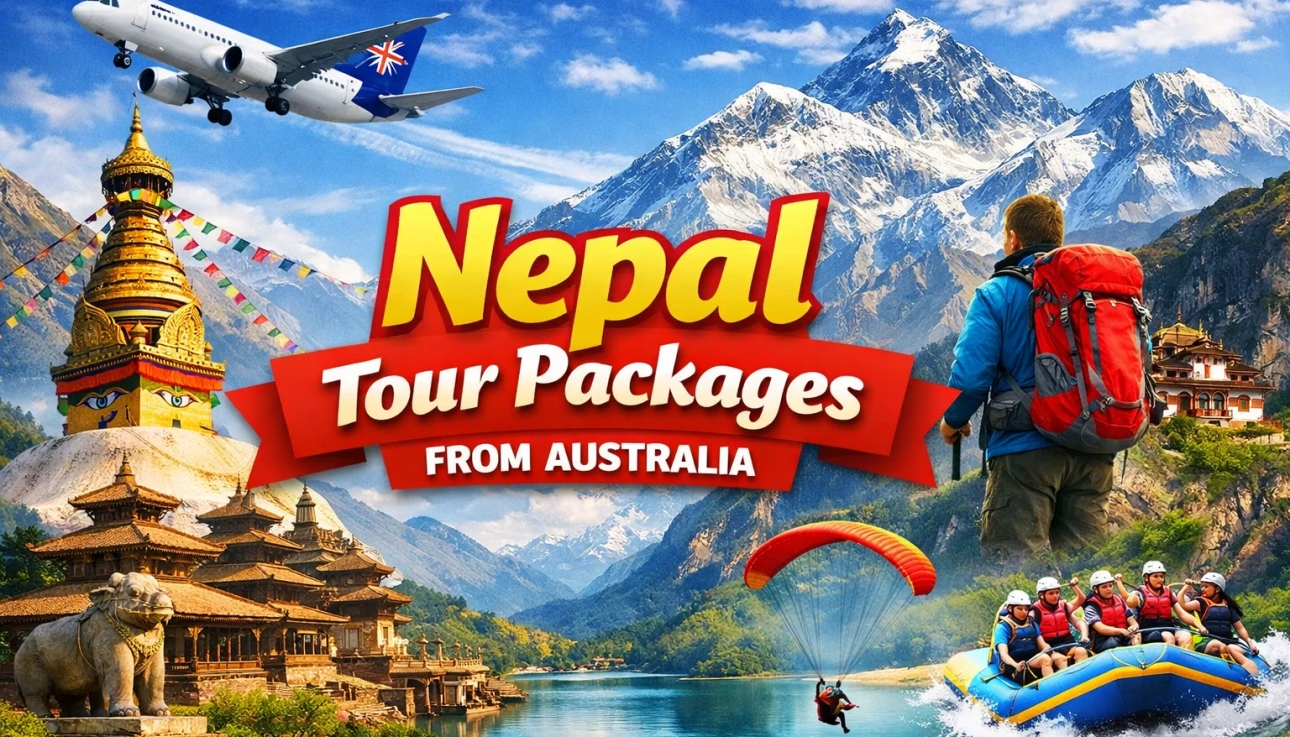
Travelling to Nepal from Australia? Nepal is one of the most rewarding international destinations for Australians seeking mountains, culture, wildlife, spirituality, and adventure in a single journey. From the towering Himalayan peaks of Everest and Annapurna to the ancient, alleyway-laced temples of the Kathmandu Valley, the dense jungle safaris of Chitwan, and the tranquil lakeside atmosphere of Pokhara, Nepal offers rich experiences that are difficult to find anywhere else on Earth.
Whether you are planning a solo high-altitude trek, a cultural holiday with family, or a multi-country Himalayan expedition, this comprehensive pillar guide covers every detail Australian citizens need to know before visiting Nepal—including visa requirements, transit routes, best seasons, budgeting, safety protocols, and how to seamlessly combine Nepal with Bhutan into a single unforgettable trip.
Why Nepal Is Becoming Increasingly Popular Among Australians
Australians are choosing Nepal not only for classic bucket-list trekking, but also for rich cultural immersion and deeply meaningful travel experiences.
Key Motivators for Australian Visitors
- World-Famous Himalayan Scenery: Home to eight of the world’s ten highest peaks, offering dramatic panoramic landscapes unmatched in scale.
- Exceptional Value for Money: High-end hospitality, private transfers, and multi-day guided treks cost a fraction of similar holidays in Europe, Japan, or North America.
- Accessible Communication: A widely English-speaking tourism industry makes navigating cities, lodges, and booking systems straightforward.
- Living Cultural Heritage: A rare, harmonious blending of ancient Hindu traditions and Vajrayana Buddhist heritage.
- Diverse Wildlife: Jungle safaris in the southern Terai plains bring visitors close to one-horned rhinoceroses, Royal Bengal tigers, and rare bird species.
- Established Trekking Infrastructure: A network of heritage tea houses, experienced sherpas, and well-maintained trails caters to every fitness level.
- Spiritual & Wellness Retreats: World-class hubs for yoga, Vipassana meditation, and traditional Ayurvedic wellness.
Nepal at a Glance for Travelling to Nepal from Australia
| Feature | Details |
| Capital | Kathmandu |
| Currency | Nepalese Rupee (NPR) |
| Language | Nepali (English widely spoken in tourism) |
| Time Difference | Nepal is 4 hours and 15 minutes behind Sydney/Melbourne (AEST) |
| Visa for Australians | Tourist Visa on Arrival available at Tribhuvan International Airport |
| Recommended Duration | 10 to 14 days (16+ days if adding Bhutan or high-pass treks) |
| Best Seasons | Autumn (October–November) and Spring (March–May) |
Nepal Visa Requirements for Australian Citizens
Australian passport holders can obtain an On-Arrival Tourist Visa upon landing at Tribhuvan International Airport (KTM) in Kathmandu, as well as at designated land border crossings.
+-------------------------------------------------------------------+
|                     NEPAL ON-ARRIVAL VISA                         |
+-------------------------------------------------------------------+
|  15 Days: USD $30   |   30 Days: USD $50   |   90 Days: USD $125   |
+-------------------------------------------------------------------+
Documents Required Upon Arrival
- Passport: Must have a validity of at least 6 months beyond your planned departure date from Nepal and at least two blank pages.
- Passport Photo: One physical passport photo (digital photo kiosks are available at the airport, but carrying printed photos speeds up the process).
- Visa Fee Payment: Cash in major foreign currencies (USD, AUD, EUR, or GBP) is strongly recommended, as card processing terminals can experience intermittent network downtime.
- Completed Arrival Card & Online Pre-Application Form: Can be filled out online via the official Department of Immigration portal within 15 days prior to arrival.
Recommendation for Australians: The 30-day tourist visa (USD $50) provides the ideal flexibility for a balanced itinerary covering Kathmandu sightseeing, Pokhara, a Chitwan safari, a short mountain trek, and potential flight delays or extensions to Bhutan.
Flights and Transit Routes from Australia to Kathmandu
While there are currently no non-stop direct flights connecting Australian capital cities to Kathmandu, several major international carriers operate smooth one-stop connections.
Australia (SYD / MEL / BNE / PER)
       │
       ├─► Singapore (SIN) ─────► Kathmandu (KTM) [Singapore Airlines]
       ├─► Kuala Lumpur (KUL) ──► Kathmandu (KTM) [Malaysia Airlines / Batik Air]
       ├─► Bangkok (BKK) ───────► Kathmandu (KTM) [Thai Airways]
       └─► Doha (DOH) ──────────► Kathmandu (KTM) [Qatar Airways]
Departure City Breakdown
From Sydney (SYD) & Melbourne (MEL)
- Singapore Airlines: SYD/MEL → SIN → KTM (Short layovers, high reliability)
- Malaysia Airlines / Batik Air: SYD/MEL → KUL → KTM (Budget-friendly options)
- Qatar Airways: SYD/MEL → DOH → KTM (Premium service, ideal for long-haul comfort)
- Thai Airways: SYD/MEL → BKK → KTM (Excellent connection timings)
From Perth (PER)
- Offers the shortest overall flight durations, routing efficiently via Singapore or Kuala Lumpur in approximately 12–14 hours total transit time.
Transit Time Averages
- Perth to Kathmandu: 12–16 hours
- Sydney to Kathmandu: 14–18 hours
- Melbourne to Kathmandu: 15–19 hours
- Brisbane to Kathmandu: 16–20 hours
Best Time Travelling to Nepal from Australia
Because Nepal’s seasons run opposite to Australia’s Southern Hemisphere climate, scheduling your holiday coincides well with Australian seasonal leave.
JAN  FEB  MAR  APR  MAY  JUN  JUL  AUG  SEP  OCT  NOV  DEC
[-- WINTER --] [--- SPRING ---] [--- MONSOON ---] [--- AUTUMN ---] [-- WINTER --]
  Fewer Crowds   Rhododendrons    Lush Greenery    Peak Clarity     Clear Skies
1. Autumn (October – November) — Peak Season
- Conditions: Post-monsoon air leaves the skies crystal clear, presenting the sharpest Himalayan view profiles. Daytime temperatures are comfortable, and mountain trails are dry.
- Culture: Coincides with Nepal’s largest festive season—Dashain and Tihar (Festival of Lights).
- Ideal For: First-time travellers, photographers, high-altitude trekkers, and cultural tour groups.
2. Spring (March – May) — Second Peak Season
- Conditions: Warmer days with longer daylight hours. Higher altitudes witness wild rhododendron forests blooming in brilliant pinks and reds.
- Ideal For: Everest and Annapurna climbing expeditions, nature lovers, and high-altitude trekking.
3. Winter (December – February) — Off-Peak / Shoulder
- Conditions: Crisp, dry, clear daytime skies in lower regions (Kathmandu, Pokhara, Chitwan), though night temperatures in high-altitude tea houses drop below freezing ($0^\circ\text{C}$).
- Ideal For: Lower-altitude trekking (under 3,000m), wildlife viewing, cultural tours, and avoiding crowds.
4. Monsoon (June – September) — Low Season
- Conditions: Heavy rain, frequent cloud cover obscuring mountain views, and increased leech activity on trails. However, rain-shadow regions remain dry.
- Ideal For: Mustang and Dolpo regions, lush terrace photography, and low-budget travel.
Complete 12-Day First-Time Nepal Itinerary
This carefully structured itinerary is engineered for Australian visitors seeking a complete balance of heritage, Himalayan vistas, and jungle wildlife without pushing into extreme altitude exhaustion.
[Kathmandu] ──► [Pokhara] ──► [Sarangkot / Annapurna Foothills] ──► [Chitwan] ──► [Kathmandu]
 (Days 1–3)      (Days 4–6)               (Days 7–8)               (Days 9–10)     (Days 11–12)
Days 1–3: Kathmandu Valley Culture & Heritage
- Day 1: Arrival & Thamel. Arrive at Tribhuvan International Airport, transfer to your hotel, and spend the afternoon strolling the vibrant streets of Thamel.
- Day 2: Sacred Stupas & Hindu Shrines. Visit Boudhanath Stupa (one of the world’s largest spherical stupas), Pashupatinath Temple along the holy Bagmati River, and climb the steps to Swayambhunath (The Monkey Temple) for a 360-degree panorama of the valley.
- Day 3: Royal Cities. Explore Patan Durbar Square and Bhaktapur Durbar Square, admiring ancient Newari brickwork, woodcarvings, and metalcrafts.
Days 4–6: Pokhara – Lakeside Relaxation & Adventure
- Day 4: Flight/Drive to Pokhara. Take a short 25-minute scenic flight from Kathmandu to Pokhara. Check into your hotel by Phewa Lake.
- Day 5: Phewa Lake & World Peace Pagoda. Take a traditional wooden boat across Phewa Lake and hike up to the World Peace Pagoda. Visit Davis Falls and Gupteshwor Mahadev Cave.
- Day 6: Adventure & Relaxation. Paragliding over Sarangkot (optional), café hopping along Lakeside, or relaxing with an Ayurvedic massage.
Days 7–8: Sarangkot & Annapurna Foothills
- Day 7: Sarangkot Sunrise. Drive to Sarangkot early in the morning for a golden sunrise over the Annapurna and Dhaulagiri mountain ranges.
- Day 8: Short Trek to Australian Camp / Dhampus. Embark on a light day trek through rhododendron woodlands and traditional Gurung villages, spending a night in a high-ridge lodge with panoramic views of Machhapuchhre (Fishtail Peak).
Days 9–10: Chitwan National Park Wildlife Safari
- Day 9: Journey to the Terai. Fly or drive south into the subtropical plains of Chitwan. Attend a Tharu cultural dance demonstration in the evening.
- Day 10: Deep Jungle Exploration. Enjoy an early morning canoe trip down the Rapti River to spot marsh crocodiles and migratory birds, followed by a full jeep safari through Chitwan National Park to view one-horned rhinos, deer, and wild elephants.
Days 11–12: Return to Kathmandu & Departure
- Day 11: Flight to Kathmandu & Mountain Flight. Fly back to Kathmandu. Optional early-morning Everest Mountain Flight for close-up aerial photos of Mount Everest. Final souvenir shopping in Thamel for pashminas, singing bowls, and tea.
- Day 12: Farewell Nepal. Transfer to the airport for your return flight back to Australia.
Best Treks in Nepal for Australian Visitors
Select a trek tailored to your available time, fitness preparation, and altitude tolerance.
       EASY TO MODERATE                          MODERATE TO CHALLENGING
[ Ghorepani Poon Hill ] ──► [ Mardi Himal ] ──► [ Annapurna Base Camp ] ──► [ Everest Base Camp ]
      (4–5 Days)               (5–7 Days)             (10–12 Days)              (12–14 Days)
1. Annapurna Base Camp (ABC) Trek
- Duration: 10–12 days
- Max Altitude: 4,130 m
- Difficulty: Moderate
- Why Choose It: Takes you directly into a $360^\circ$ ring of giant peaks (the Annapurna Sanctuary). Excellent lodge infrastructure, varied topography, and less flight-cancellation risk than the Everest region.
2. Everest Base Camp (EBC) Trek
- Duration: 12–14 days
- Max Altitude: 5,545 m (Kala Patthar)
- Difficulty: Moderate to Challenging
- Why Choose It: The quintessential Himalayan bucket-list adventure. High-altitude mountain flight to Lukla, rich Sherpa cultural stops in Namche Bazaar, visits to Tengboche Monastery, and close views of Mount Everest.
3. Ghorepani Poon Hill Trek
- Duration: 4–5 days
- Max Altitude: 3,210 m
- Difficulty: Easy to Moderate
- Why Choose It: Perfect for families, older travellers, or those short on time. Features iconic stone stair pathways through rhododendron forests and panoramic views from Poon Hill at sunrise.
4. Mardi Himal Trek
- Duration: 5–7 days
- Max Altitude: 4,500 m
- Difficulty: Moderate
- Why Choose It: A modern, quieter alternative to busier routes. Follows a high ridge line leading directly beneath the sheer face of Machhapuchhre (Fishtail Mountain).
Check our list of Top 10 Best Treks in Nepal: Ultimate Trekking Guide for Every Traveler
Travel Costs and Budgeting for Australians
Nepal offers exceptional value for money across every budget tier.
Daily Budget Breakdown (Per Person in AUD)
| Travel Style | Daily Estimate (AUD) | Accommodation Type | Dining & Transport |
| Budget | $45 – $70 | Hostels & Budget Guesthouses | Local eateries & tourist buses |
| Mid-Range | $90 – $160 | 3-Star / 4-Star Boutique Hotels | Mid-tier restaurants & domestic flights |
| Comfortable | $180 – $300 | Premium Boutique Hotels & MLN Lodges | Private vehicle transfers & fine dining |
| Luxury | $350 – $700+ | Luxury Resorts (Dwarika’s, Tiger Mountain) | Private guides, private cars & domestic flights |
Sample Budget: 12-Day Mid-Range Nepal Holiday
International Flights (SYD/MEL - KTM)  : $1,200 AUD
Nepal Visa (30-day)                    : $75 AUD
Accommodation (11 nights @ $80/night)  : $880 AUD
Domestic Flights (KTM-PKR-KTM)         : $220 AUD
Private Ground Transport & Transfers   : $150 AUD
Meals & Dining ($30/day)               : $360 AUD
Park Fees, Sightseeing & Safari Permits: $250 AUD
Miscellaneous / Shopping               : $150 AUD
---------------------------------------------------
ESTIMATED TOTAL PER PERSON             : ~$3,285 AUD
Health, Altitude, and Safety Protocols
Nepal is a safe destination for Australian tourists, maintaining low rates of violent crime. However, navigating terrain, food hygiene, and high altitude requires proper preparation.
1. Altitude Sickness (Acute Mountain Sickness – AMS)
When ascending above 2500m, the atmospheric pressure drops, reducing available oxygen molecules per breath.
       AMS SYMPTOMS TO WATCH:
 [ Headache ] ──► [ Nausea ] ──► [ Dizziness ] ──► [ Extreme Fatigue ]
- Prevention Checklist:
- Keep your daily ascent limits under 500m above 3000m.
- Schedule dedicated acclimatization rest days (e.g., Namche Bazaar on the EBC trek).
- Drink 3 to 4 liters of fluid (water and electrolyte solutions) daily.
- Avoid alcohol and sleeping pills at high elevation.
- Consider carrying Diamox (Acetazolamide) after consulting your GP.
- Rule: If severe symptoms persist, descend immediately.
2. Travel Insurance Warning for Australians
Ensure your travel insurance policy explicitly includes:
- Coverage for trekking up to your maximum altitude (standard policies often cap out at 2000m or 3,000m.
- Emergency Helicopter Evacuation coverage (which can cost upwards of $3,000–$5,000 USD out-of-pocket if uninsured).
3. Food, Water, and Vaccinations
- Water: Never drink untreated tap water. Use a UV purifier bottle, water purification tablets, or purchase filtered water.
- Vaccinations: Consult an Australian travel medical doctor 6–8 weeks before departure regarding Hepatitis A, Typhoid, Tetanus/Diphtheria, and Rabies.
What to Pack: From Cities to the Himalayas
Packing efficiently involves layering techniques to handle changing temperatures between warm jungle plains and freezing mountain passes.
Clothing Checklist
- City & Lower Altitude: Lightweight breathable t-shirts, quick-dry pants, comfortable walking shoes, modest shoulders/knees covering attire for temples.
- Trekking & High Altitude:
- Base layer: Thermal top and bottoms (merino wool recommended).
- Mid layer: Fleece sweater or insulated jacket.
- Outer layer: Windproof and waterproof shell jacket.
- Down Jacket: Rated down to -10C for evenings in high-altitude tea houses.
- Footwear: Sturdy, broken-in trekking boots with ankle support, plus quick-dry hiking socks.
Essential Gear Kiosk
- Universal power adapter (Types C, D, and M are common in Nepal).
- High-capacity power bank (cold temperatures drain phone and camera batteries quickly).
- High-SPF sunscreen 50+ and UV protection lip balm (higher UV index at altitude).
- Personal medical kit containing rehydration salts, blister pads, anti-diarrheal tablets, and broad-spectrum antibiotics.
Practical Cultural Etiquette in Nepal
       DO                                  DON'T
 [✔] Use your right hand            [✘] Touch anyone's head
 [✔] Walk clockwise around stupas   [✘] Wear shoes inside temples
 [✔] Ask before taking photos       [✘] Point feet at sacred objects
- Greetings: Place your palms together in front of your chest and say “Namaste” with a slight bow.
- Temple Dress: Keep shoulders and knees covered. Remove shoes and leather items (belts, bags) before entering Hindu temples or Buddhist prayer halls.
- Circumambulation: Always walk around Buddhist shrines, stupas, and mani walls in a clockwise direction.
- Monetary Exchange: Pass money, gifts, or food using your right hand (or with both hands as a sign of respect).
Luxury Travel in Nepal: Boutique & Premium Options
Travellers looking for enhanced comfort can enjoy Nepal’s growing collection of world-class luxury lodges and heritage hotels.
Heritage & Boutique Stays
- Dwarika’s Hotel (Kathmandu): A living museum hotel preserving ancient Newari wood carving and architectural heritage.
- Tiger Mountain Pokhara Lodge (Pokhara): Set high on a ridge above Pokhara Valley with panoramic views of the Annapurnas and eco-conscious hospitality.
- Pavilions Himalayas (Pokhara): Private luxury villas nestled in a rural farmland valley near Pokhara.
- Meghauli Serai, A Taj Safari (Chitwan): Ultra-luxury riverfront safari lodges situated right at the edge of Chitwan National Park.
Comfort Trekking (Mountain Lodges of Nepal)
For high-altitude trekking without basic tea house conditions, networks like Mountain Lodges of Nepal (MLN) provide high-end lodging along the Everest and Annapurna circuits featuring heated bedrooms, en-suite bathrooms, hot showers, and gourmet dining.
Multi-Country Advantage: Combining Nepal and Bhutan
Because Kathmandu operates as one of the few international flight gateways into Paro, Bhutan, combining both countries into a single 10-to-16-day holiday is a popular choice for Australian travellers.
Sydney / Melbourne ──► Kathmandu (Nepal) ──► Paro / Thimphu / Punakha (Bhutan) ──► Kathmandu ──► Australia
Country Comparison
| Aspect | Nepal | Bhutan |
| Atmosphere | Vibrant, energetic, bust-filled markets | Quiet, meditative, strictly preserved |
| Key Attraction | Soaring Himalayan peaks & treks | Ancient cliffside dzongs & monasteries |
| Culture Focus | Syncretic Hindu & Buddhist culture | Pure Vajrayana Buddhist heritage |
| Travel Style | Independent or Guided | Fully Guided Tour Packages mandatory |
Sample 10-Day Nepal & Bhutan Combined Itinerary
[Day 1-3: Kathmandu Highlights] ──► [Day 4-5: Pokhara Vistas] ──► [Day 6-7: Paro & Thimphu] ──► [Day 8-9: Punakha & Tiger's Nest] ──► [Day 10: Fly Home]
- Days 1–3 (Nepal): Explore Kathmandu’s UNESCO sites (Boudhanath, Pashupatinath, Patan).
- Days 4–5 (Nepal): Scenic flight to Pokhara for Phewa Lake boating and Sarangkot mountain views.
- Day 6 (Flight to Bhutan): Board a Drukair or Bhutan Airlines flight from Kathmandu to Paro (featuring stunning aerial views of Everest and Kanchenjunga). Drive to Thimphu to visit the Buddha Dordenma statue and Memorial Chorten.
- Day 7 (Thimphu to Punakha): Drive across the Dochula Pass ($3,100\text{ m}$) to visit the Punakha Dzong, situated at the confluence of two rivers.
- Day 8 (Paro): Hike to the world-famous Paro Taktsang (Tiger’s Nest Monastery) perched on a cliff wall $900\text{ m}$ above the valley floor.
- Days 9–10: Fly back to Kathmandu for your connecting evening flight home to Australia.
Local Logistics, SIM Cards, and Connectivity
- Mobile Connectivity: You can easily purchase a local tourist SIM card (Ncell or Nepal Telecom / NTC) inside the arrival hall at Kathmandu Airport.
- Cost: Packages range from $5 to $12 AUD for 10 GB to 30 GB of data valid for 30 days. You will need your passport and a passport photo to complete registration.
- Wi-Fi Availability: Most 3-star to 5-star hotels in Kathmandu and Pokhara offer fast, free Wi-Fi. In mountain tea houses, Wi-Fi is often available for an additional small fee ($2–$4 AUD per day).
Frequently Asked Questions (FAQs) for Australian Travellers
1. Do Australian citizens need a visa to enter Nepal, and how do I get one?
Yes. Australian citizens require a visa, which can easily be obtained on arrival at Tribhuvan International Airport in Kathmandu or via land border crossings. On-arrival tourist visa options include:
- 15 Days: USD $30
- 30 Days: USD $50 (Recommended for most itineraries)
- 90 Days: USD $125
You will need a passport valid for at least 6 months past your travel date, one passport-sized photo, and cash (USD or AUD) for the fee. You can also fill out the online pre-arrival visa application on the official Nepal Department of Immigration portal within 15 days of your flight to speed up airport processing.
2. Can I use Australian Dollars (AUD) in Nepal, or do I need local currency?
You can exchange physical AUD banknotes at licensed money exchangers in Kathmandu, Pokhara, and Chitwan. However, AUD is not accepted for everyday transactions in shops, local markets, tea houses, or taxis. All daily purchases must be made in Nepalese Rupees (NPR). Carry USD cash for airport visa fees or emergency reserves, and exchange cash for NPR once you arrive in city centers.
3. Are ATMs readily available, and do Australian debit/credit cards work?
International Visa and Mastercard debit and credit cards work reliably at ATMs in Kathmandu and Pokhara. Most local ATMs charge a transaction fee (around 500–800 NPR per withdrawal) and have a single-withdrawal limit of 20,000 to 35,000 NPR.
Important: ATMs are virtually non-existent along mountain trekking trails (such as Everest, Annapurna, or Langtang). Withdraw sufficient NPR cash in Kathmandu or Pokhara to cover all trail expenses, snacks, charging fees, and tips before heading into the mountains.
4. How long and complicated are flights from Australia to Nepal?
While there are currently no direct flights between Australia and Kathmandu, connecting routes are straightforward. Total travel time generally ranges from 12 to 19 hours, depending on your Australian departure city and layover duration.
- Sydney & Melbourne: Best routed via Singapore (Singapore Airlines), Kuala Lumpur (Malaysia Airlines/Batik Air), Bangkok (Thai Airways), or Doha (Qatar Airways).
- Perth: Features the fastest connections, taking roughly 12 to 14 hours total via Singapore or Kuala Lumpur.
5. What is the best month to visit Nepal from Australia?
The peak travel window for Australians is October to November (Autumn). This post-monsoon period offers crystal-clear Himalayan views, comfortable temperatures, dry trails, and major Nepalese cultural festivals (Dashain and Tihar).
March to May (Spring) is the second-best season, characterized by warmer days, blooming rhododendron forests, and ideal high-altitude trekking conditions.
6. Is English widely spoken in Nepal?
Yes. English is taught in schools across Nepal and is widely spoken across the entire tourism sector—including hotels, trekking lodges, travel agencies, restaurants, and transport services. You will have no trouble communicating in English in major cities and along established trekking routes. Learning a few basic Nepali words, such as “Namaste” (Hello/Greetings) and “Dhanyabad” (Thank you), is always warmly received by locals.
7. Is the tap water safe to drink in Nepal?
No. Tap water, well water, and unboiled stream water in Nepal are not safe for drinking. Always drink purified, boiled, or chemically treated water. To minimize single-use plastic waste while trekking, bring a reusable stainless steel or BPA-free water bottle paired with a UV purifier (like a SteriPEN), water purification tablets, or a squeeze-filter bottle (such as Grayl or LifeStraw).
8. What happens if I get sick or injured while trekking?
Licensed guides are trained in high-altitude wilderness first aid, oxygen administration, and recognizing Acute Mountain Sickness (AMS). For mild ailments, guides manage care on-site or arrange descent to a lower elevation.
In the event of severe altitude sickness, physical injury, or emergency medical needs, your trekking agency will coordinate an emergency helicopter evacuation to a international hospital in Kathmandu. This process is arranged directly through your travel insurance provider.
9. What specific travel insurance coverage do Australians need for Nepal?
Standard Australian travel insurance policies usually exclude high-altitude activities and helicopter rescues. Ensure your policy explicitly includes:
- High-Altitude Trekking: Coverage specifying your maximum planned altitude (e.g., up to 4,000m for Poon Hill/Mardi Himal, or up to 6,000m for Everest Base Camp and Annapurna Base Camp).
- Emergency Helicopter Evacuation: Mandatory for trekking, as medical air lifts can cost over $3,000 to $5,000 USD out-of-pocket if uninsured.
- Trip Cancellation & Delay: Protection against internal flight delays (particularly for Lukla flights in the Everest region).
10. How fit do I need to be to trek in Nepal?
Fitness requirements vary depending on the trek you select:
- Short/Low-Altitude Treks (Poon Hill, Australian Camp): Require moderate fitness. Anyone comfortable walking 4–5 hours a day with light elevation gain can complete them.
- Major Treks (Everest Base Camp, Annapurna Base Camp): Require good cardiovascular endurance and leg strength. You will be walking 5 to 8 hours daily over uneven stone stairs and steep inclines for consecutive days. Regular hiking, stair-climbing, and cardio training 2–3 months prior to departure is strongly recommended.
11. Is Nepal safe for Australian solo travellers and families Travelling to Nepal from Australia?
Yes. Nepal is consistently rated as one of the safest and most welcoming destinations in South Asia. Violent crime against tourists is extremely rare.
- Solo Travellers: Highly accessible for solo male and female travellers. However, hiring a licensed local guide is mandatory for most trekking zones to ensure safety on mountain trails.
- Families: Nepalese culture is warmly family-oriented. Low-altitude itineraries combining gentle village walks in Pokhara, lake boating, cable car rides, and Chitwan jungle safaris are ideal for children.
12. What electrical plugs and adapters do I need for Australian devices?
Nepal uses Type C, D, and M power sockets operating on a 230V supply voltage at 50Hz. Australian standard three-pin plugs (Type I) will not fit without an adapter.
Bring a universal travel adapter. In high-altitude tea houses, electricity is often solar-powered, and lodges may charge a small fee ($2 to $5 AUD) per device to charge phone batteries, cameras, or power banks.
13. How do SIM cards and mobile data work for Australian phones?
Getting connected upon arrival is cheap and straightforward. You can purchase a local prepaid tourist SIM card from Ncell or Nepal Telecom (NTC) at Tribhuvan International Airport in Kathmandu or in Thamel.
- Cost: 10 GB to 30 GB data packages valid for 30 days cost between $5 and $12 AUD.
- Requirements: Unlocked Australian phone, physical passport, and one passport photo.
- Coverage: Excellent 4G coverage in cities like Kathmandu, Pokhara, and Chitwan, with functional coverage along major portions of the Annapurna and Everest trekking trails.
14. What is the tipping culture in Nepal for guides, porters, and drivers?
Tipping is not customary in casual local eateries, but it is expected and appreciated in the tourism and hospitality sector:
- Trekking Guides: $12–$18 AUD ($10–$15 USD) per day per group.
- Trekking Porters: $8–$12 AUD ($7–$10 USD) per day per group.
- Tour Drivers: $5–$10 AUD per day for private transfers.
- City Restaurants: A 10% service charge is often included on the bill; otherwise, a 5–10% tip for good service is standard.
15. Can I easily combine a trip to Nepal with Bhutan from Australia?
Yes, combining Nepal and Bhutan is a popular multi-country combination. Paro Airport in Bhutan is connected by direct flights from Kathmandu via Drukair and Bhutan Airlines (approx. 1-hour flight with views of Mount Everest).
Most travellers opt for a 12-to-16-day combined itinerary spent exploring the heritage, lakes, and mountains of Nepal before taking a 4-to-5-day guided tour of Bhutan to visit Paro, Thimphu, and the iconic Tiger’s Nest Monastery (Paro Taktsang). Tour operators handle the mandatory Bhutan visa and minimum daily package arrangements directly from Kathmandu.
Planning Your Himalayan Expedition
Nepal offers Australian travellers an enriching blend of high-altitude adventure, historic heritage, diverse wildlife, and warm hospitality. Whether standing before the towering face of Mount Everest, taking in a calm lakeside morning in Pokhara, or extending your journey into the serene mountain valleys of Bhutan, proper planning ensures a smooth and memorable journey.
About the Author
Kishor Nepal is a Himalayan travel specialist and co-founder of Nepal Tours Packages, with over 25 years of experience crafting customized cultural, trekking, and multi-country itineraries across Nepal, Bhutan, and Tibet for international travellers.
GET A FREE ASSISTANCE PLANNING YOUR TOUR
