

Summary
Discover Pashupatinath Temple in Kathmandu, Nepal’s holiest Hindu shrine dedicated to Lord Shiva. Explore its ancient history, spiritual significance, sacred Bagmati River, traditional rituals, evening aarti, major festivals and practical visitor tips. Plan your visit as part of a private Kathmandu cultural tour with Nepal Tours Packages.
In the heart of Kathmandu, beside the sacred waters of the Bagmati River, stands Pashupatinath Temple, one of the most revered Hindu shrines in Nepal and an important pilgrimage destination for Hindus from around the world. Dedicated to Lord Shiva, this ancient temple is not simply a place of worship. It is a living expression of faith, devotion, spirituality and Nepal’s enduring cultural traditions.
For many Hindu devotees, visiting Pashupatinath is a deeply personal spiritual journey. For international travelers, it offers a rare opportunity to experience the religious traditions, sacred architecture and everyday spiritual life of Nepal.
As the sound of temple bells blends with the chanting of sacred mantras, priests perform traditional rituals, pilgrims offer flowers and prayers, and the gentle flow of the Bagmati River creates an atmosphere of reflection. Every corner of this remarkable temple complex reveals a connection between faith, history and the cycle of life.
Recognized as part of the UNESCO-listed Kathmandu Valley World Heritage property, Pashupatinath is among the most significant cultural and religious landmarks in Nepal. It is also one of the most meaningful places to include in a cultural exploration of Kathmandu.
Whether you are a pilgrim seeking blessings from Lord Shiva, a traveler fascinated by Hindu philosophy, or a visitor eager to discover the spiritual heritage of the Himalayas, Pashupatinath offers an experience that stays with you long after you leave.
1. Where Is Pashupatinath Temple Located?

Pashupatinath Temple is located on the eastern side of Kathmandu, Nepal’s capital city, along the banks of the holy Bagmati River. The temple is approximately 5 km from central Kathmandu and is easily accessible by private vehicle or taxi.
The temple complex is surrounded by smaller shrines, traditional religious structures, ancient stone monuments, sacred resting places and the beautiful greenery of the surrounding area. Together, these features create an extensive religious landscape that reflects centuries of Hindu worship and Nepalese architectural traditions.
Pashupatinath is one of the seven monument zones of the Kathmandu Valley UNESCO World Heritage property, inscribed in 1979. Its importance extends far beyond its main temple, as the wider precinct is a living center of pilgrimage and traditional religious ceremonies.
The location is particularly meaningful because the Bagmati River is considered sacred in Hindu tradition. For generations, pilgrims have visited its banks to pray, perform religious rites, honor their ancestors and reflect on the spiritual meaning of life and death.
Location: Pashupati Nath Road, Kathmandu, Nepal Distance from Thamel: Approximately 5–6 km by road Nearest landmark: Gaushala Chowk Best time to visit: Early morning or late afternoon Recommended duration: 1.5–3 hours, depending on interest in the rituals and surrounding complex
2. The History of Pashupatinath Temple

The history of Pashupatinath Temple is closely connected with the religious and cultural development of the Kathmandu Valley. Its origins are associated with ancient Hindu traditions, sacred legends and the patronage of Nepalese rulers across different historical periods.
Although the precise beginnings of the temple remain intertwined with mythology and historical evidence, the Pashupati area has been an important religious center for many centuries.
Ancient origins and sacred legends
According to Hindu tradition, Lord Shiva once visited the Kathmandu Valley and was captivated by its natural beauty. In one popular legend, Shiva and Goddess Parvati took the form of deer and wandered through the forests beside the Bagmati River.
When the gods eventually discovered Shiva, he was reluctant to leave the peaceful forest. The story is associated with the origin of his identity as Pashupati, the Lord of all living beings.
Another widely shared legend tells of a divine cow named Kamadhenu, which regularly poured milk over a particular spot in the forest. When people investigated, they discovered a sacred Shiva lingam beneath the ground.
This discovery is believed to have led to the establishment of the shrine at the present location.
These traditional stories are important to devotees because they explain the sacred connection between Lord Shiva, the natural world and the land surrounding Pashupatinath.
The Licchavi and Malla periods
Historical records and inscriptions indicate that the Pashupati area was already an established religious destination during the Licchavi period.
Over subsequent centuries, successive rulers and devotees contributed to the growth of the temple complex. The Malla kings played an important role in developing the architecture and religious infrastructure of Kathmandu Valley.
The present main temple is traditionally associated with reconstruction and restoration during the reign of King Bhupalendra Malla in 1697.
Its distinctive two-tiered pagoda roof, gilded details, silver-plated doors and intricately carved wooden elements reflect the craftsmanship that defines Nepalese temple architecture.
The surrounding area gradually developed into an extensive sacred landscape containing numerous smaller temples, shrines, religious shelters and ceremonial spaces.
Pashupatinath and UNESCO World Heritage recognition
In 1979, the Kathmandu Valley was inscribed on the UNESCO World Heritage List, with Pashupatinath included as one of its seven monument zones.
This recognition highlights the exceptional cultural and architectural value of the temple complex and its importance as a place where ancient traditions continue to thrive.
Unlike historical monuments that have become museums, Pashupatinath remains an active religious center. Daily worship, traditional festivals, pilgrimage and funeral rites continue to shape its identity.
This combination of living spirituality and historic architecture makes Pashupatinath one of the most fascinating cultural destinations in Nepal.
3. Why Is Pashupatinath Temple So Sacred to Hindus?

Pashupatinath is regarded as Nepal’s holiest Hindu shrine and one of the most important temples dedicated to Lord Shiva in the world.
The name Pashupatinath is derived from Sanskrit. Pashu refers to living beings, while Pati means lord or master. Together, Pashupati represents the Lord of all living beings.
In Hindu philosophy, Lord Shiva is associated with transformation, meditation, spiritual liberation and the balance of existence. His role is not simply connected with destruction but also with renewal, change and the possibility of spiritual awakening.
At Pashupatinath, Shiva is worshipped in the form of a sacred Shiva lingam, a symbolic representation of divine energy and the eternal nature of existence.
For devotees, offering prayers here is an expression of faith, gratitude and the search for spiritual peace.
The five-faced form of Lord Pashupatinath
One of the distinctive spiritual features associated with Pashupatinath is the five-faced form of Lord Shiva.
Each face represents a different aspect of the divine:
- Tatpurusha: Associated with spiritual discipline, meditation and the inner self.
- Aghora: Represents transformation, the overcoming of fear and the transcendence of negative influences.
- Sadyojata: Associated with creation and the emergence of existence.
- Vamadeva: Represents preservation, beauty and the nurturing aspects of the divine.
- Ishana: Symbolizes the supreme, all-pervading and transcendent nature of Lord Shiva.
Together, these aspects represent the many dimensions of Shiva’s divine presence.
For pilgrims, the sacred image at Pashupatinath is more than an object of worship. It represents a connection with the timeless spiritual principles at the heart of Hindu philosophy.
A sacred destination for spiritual liberation
Many Hindu devotees believe that visiting Pashupatinath, offering prayers and performing religious rites at the temple can bring spiritual blessings.
The nearby Bagmati River also plays an important role in traditional Hindu beliefs about purification, remembrance and the journey of the soul.
The relationship between the temple and the river makes Pashupatinath a significant destination for people seeking spiritual reflection and a deeper understanding of the Hindu perspective on life and death.
4. The Sacred Bagmati River and Its Spiritual Importance

The Bagmati River is inseparable from the spiritual identity of Pashupatinath Temple.
Flowing through the Kathmandu Valley, the river is considered sacred by Hindus and has served as an important setting for religious ceremonies, traditional bathing rituals and ancestral rites for centuries.
At Pashupatinath, the riverbanks contain a series of ghats, or traditional stone steps and platforms used for religious activities.
These ghats are particularly significant because they bring together two fundamental aspects of Hindu spirituality: devotion to the divine and respect for the cycle of life.
Arya Ghat and Hindu funeral traditions
One of the most well-known areas along the Bagmati River is Arya Ghat, a traditional cremation site located within the Pashupatinath complex.
For Hindu families, cremation is an important religious rite associated with the transition of the soul after death.
The funeral ceremonies performed beside the river are rooted in traditional beliefs about the temporary nature of the physical body and the continuing spiritual journey of the soul.
Visitors may witness these ceremonies from designated public areas. However, it is essential to remember that these are deeply personal moments for grieving families.
Travelers should observe quietly, avoid intrusive photography and maintain respectful distance.
For many international visitors, the experience can be emotionally moving. It offers a perspective on the Hindu understanding of mortality, remembrance and the relationship between life and spiritual liberation.
The meaning of the river in Hindu tradition
The Bagmati is regarded as a sacred river and is closely associated with religious purification.
Devotees believe that performing rituals along its banks can help cleanse spiritual impurities and honor ancestors.
The river also connects Pashupatinath with other important religious destinations in the Kathmandu Valley, including the nearby Guhyeshwari Temple.
Although the river faces environmental challenges, its spiritual significance remains deeply rooted in Nepalese religious life.
5. Pashupatinath Temple Architecture: A Masterpiece of Nepalese Craftsmanship
Pashupatinath Temple is an outstanding example of traditional Nepalese pagoda architecture.
The main shrine features a two-tiered roof, gilded decorative elements, beautifully crafted wooden struts and silver-plated doors. Its design reflects the artistic traditions that flourished in the Kathmandu Valley during the medieval period.
Although the main temple is the most recognizable structure, the wider complex contains numerous smaller shrines, sculptures and historic monuments.
The golden roofs and traditional pagoda design
The golden roofs of the main temple are among its most distinctive architectural features.
Their elegant proportions, layered design and decorative details create an impressive visual presence against the surrounding landscape.
The pagoda style is closely associated with Nepalese religious architecture and can also be seen at many temples throughout Kathmandu, Patan and Bhaktapur.
Intricate wood carvings and metalwork
The temple’s wooden struts, doorways and decorative elements demonstrate the extraordinary craftsmanship of traditional Nepalese artisans.
Carved figures, symbolic designs and detailed ornamentation reflect the religious beliefs and artistic heritage of the Kathmandu Valley.
The combination of wood, metal and traditional architectural techniques gives the temple its distinctive character.
A complex of shrines and sacred monuments
Beyond the main shrine, visitors can discover smaller temples, stone sculptures, traditional shelters and religious structures scattered throughout the Pashupati area.
Each structure contributes to the larger spiritual landscape, creating an environment where architecture, religious practice and cultural history are closely connected.
For travelers interested in history, architecture and traditional craftsmanship, Pashupatinath is an essential stop during a cultural tour of Kathmandu.
6. Important Rituals and Spiritual Experiences at Pashupatinath

One of the most remarkable aspects of visiting Pashupatinath is witnessing the religious traditions that continue to shape everyday life in the temple complex.
Rather than being limited to major festivals, the temple remains active throughout the year, with regular worship and ceremonies taking place from early morning until evening.
Morning prayers and puja
Early morning is a particularly peaceful time to visit Pashupatinath.
Devotees arrive to offer flowers, fruits, incense and other traditional offerings. Priests perform rituals, while the sound of bells and sacred chants creates an atmosphere of devotion.
For Hindu pilgrims, morning worship is an opportunity to seek the blessings of Lord Shiva and begin the day with spiritual reflection.
For non-Hindu visitors, observing the atmosphere from permitted areas offers a meaningful introduction to Nepal’s living religious traditions.
The evening Bagmati Aarti

The evening Bagmati Aarti is among the most memorable spiritual experiences at Pashupatinath.
As daylight fades, priests conduct a traditional worship ceremony beside the Bagmati River. Large brass oil lamps are raised in rhythmic movements, accompanied by devotional singing, sacred mantras and the sounds of traditional instruments.
The warm glow of the lamps reflects across the river as devotees gather along the riverbanks to participate in the ceremony.
The aarti is an expression of reverence toward the sacred river and the divine. It creates an atmosphere of devotion and collective spiritual participation.
For international travelers, the ceremony offers a fascinating insight into Hindu ritual traditions and the spiritual importance of the Bagmati River.
Best experience: Arrive before sunset to find a suitable viewing position and observe the ceremony without disturbing worshippers. The exact ceremony time may vary by season and local arrangements.
Rudrabhishek and other special pujas
Rudrabhishek is an important Hindu ritual dedicated to Lord Shiva.
During the ceremony, sacred offerings such as water, milk, flowers and other traditional materials are used in worship of the Shiva lingam, accompanied by the recitation of Vedic mantras.
Other special pujas and devotional ceremonies are also performed at Pashupatinath, depending on the religious occasion and the preferences of individual devotees.
Visitors planning a pilgrimage or a special religious ceremony should consult the Pashupati Area Development Trust for current arrangements and requirements.
7. Major Festivals Celebrated at Pashupatinath Temple

Pashupatinath becomes particularly vibrant during major Hindu festivals, when thousands of devotees travel to Kathmandu to participate in religious ceremonies and seek blessings.
Among the most important occasions are Maha Shivaratri, Teej and various Ekadashi observances.
Maha Shivaratri: The Great Night of Lord Shiva
Maha Shivaratri is the most significant annual festival celebrated at Pashupatinath.
Dedicated to Lord Shiva, the festival is observed on the fourteenth night of the dark fortnight in the Hindu month of Falgun, usually falling in February or March.
During Maha Shivaratri, pilgrims from across Nepal and India gather at the temple to offer prayers, observe fasting and participate in night-long devotional activities.
The temple complex becomes especially lively as sadhus, ascetics, religious leaders and ordinary devotees come together in celebration.
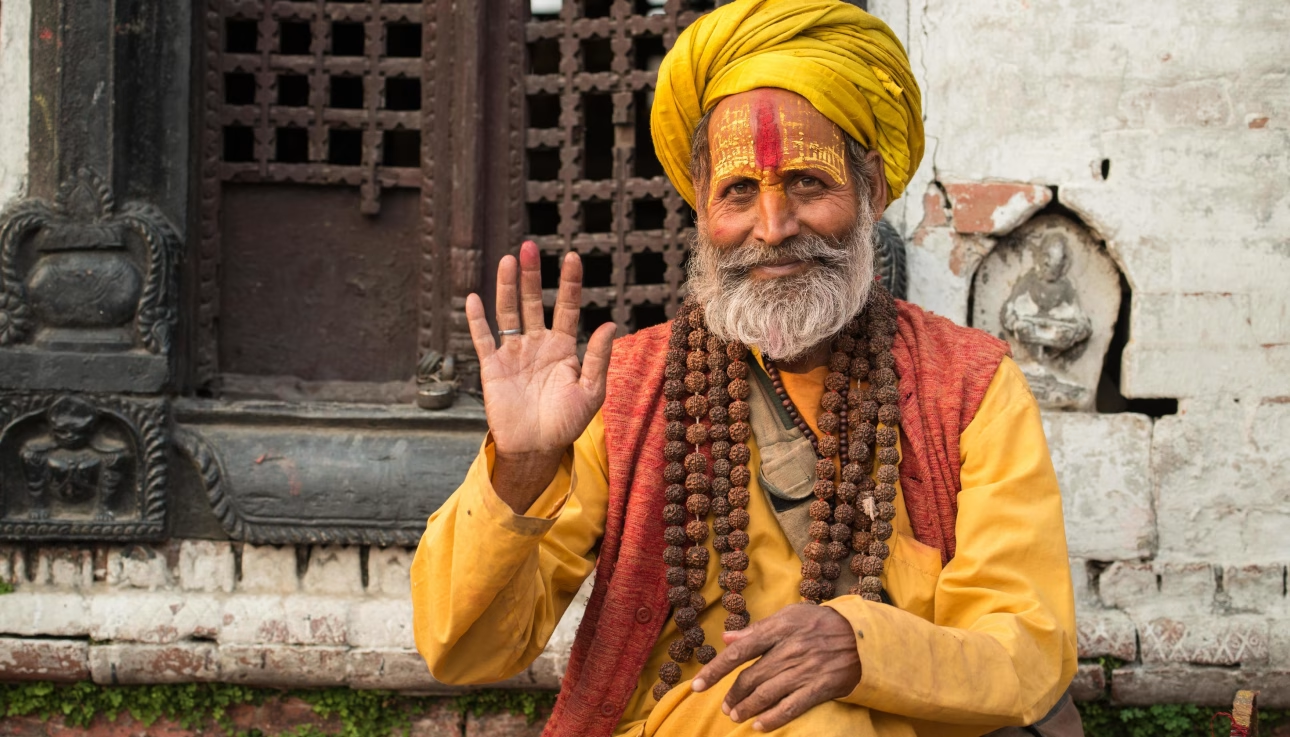
Sadhus are a particularly striking presence during the festival. Many wear traditional saffron or minimal clothing, cover their bodies with sacred ash and spend time in meditation and prayer.
The festival represents devotion, self-discipline and the spiritual significance of Lord Shiva.
For visitors, Maha Shivaratri offers a fascinating glimpse into one of the most important religious gatherings in Nepal. However, the temple becomes extremely crowded, so travelers should plan their visit carefully.
Teej: A Festival of Faith, Devotion and Celebration

Teej is one of the most colorful and culturally significant festivals celebrated at Pashupatinath.
Observed mainly by Hindu women, the festival is traditionally associated with Goddess Parvati, marital devotion, family well-being and spiritual dedication.
During Teej, thousands of women dressed in vibrant red saris gather at the temple to offer prayers, sing devotional songs and participate in religious rituals.
The atmosphere is filled with music, traditional celebrations and the sight of women carrying flowers and offerings.
For travelers interested in Nepalese culture, Teej offers a remarkable opportunity to witness the connection between religious belief, traditional dress and community celebration.
Ekadashi and other religious occasions
Ekadashi, the eleventh day of each lunar fortnight, is an important observance in Hindu religious traditions.
Although Ekadashi is especially associated with Lord Vishnu, the wider Pashupatinath complex also attracts devotees during important religious dates throughout the Hindu calendar.
Other occasions, including special Shiva worship days and seasonal religious festivals, contribute to the temple’s year-round spiritual significance.
8. Guhyeshwari Temple: Another Sacred Destination Near Pashupatinath

Located close to Pashupatinath Temple, Guhyeshwari Temple is one of Nepal’s important Shakti Peeth pilgrimage sites.
Dedicated to Goddess Guhyeshwari, the temple holds a special place in Hindu traditions associated with Shakti, the divine feminine energy.
According to Hindu mythology, the temple is connected with the story of Goddess Sati and Lord Shiva.
After Sati’s death, Shiva is said to have wandered across the world carrying her body. As the body was divided into different parts, sacred Shakti Peeth sites were believed to have emerged at the places where the parts fell.
Guhyeshwari is traditionally associated with one of these sacred locations.
For pilgrims, visiting both Pashupatinath and Guhyeshwari offers an opportunity to experience two important aspects of Hindu worship: devotion to Lord Shiva and reverence for the divine feminine.
The two temples are often included together in religious and cultural itineraries around Kathmandu.
Non-Hindu visitors should be aware that access to the inner sanctum is restricted at Guhyeshwari as well.
9. What Can International Travelers Experience at Pashupatinath?

Pashupatinath is an important destination not only for Hindu pilgrims but also for international travelers interested in religion, history, anthropology, architecture and local culture.
Although non-Hindu visitors cannot enter the main temple sanctum, they can explore many areas of the wider complex and observe its spiritual traditions from designated viewpoints.
Discover the atmosphere of a living Hindu pilgrimage site
Unlike monuments that are visited primarily for their historical significance, Pashupatinath remains an active center of religious life.
You may see pilgrims offering prayers, priests conducting ceremonies, religious teachers discussing spiritual philosophy and families participating in traditional rituals.
Observing these activities provides a deeper understanding of the role that faith plays in Nepalese society.
Observe traditional rituals along the Bagmati River
The riverbanks and ghats provide insight into traditional Hindu practices associated with worship, purification and funeral ceremonies.
With respectful behavior and suitable guidance, visitors can learn about the cultural and spiritual meaning of these rituals.
Explore the temple’s surroundings
The wider Pashupati area contains smaller shrines, sacred spaces, traditional architecture and peaceful walking paths.
Exploring these areas at a relaxed pace offers a fuller appreciation of the temple’s cultural and historical importance.
Learn from a knowledgeable local guide
A local cultural guide can make a substantial difference to the experience.
Understanding the symbolism of the Shiva lingam, the significance of the Bagmati River, the meaning of traditional offerings and the history of the temple helps travelers appreciate the site beyond its architectural beauty.
For visitors planning a cultural holiday, a guided visit to Pashupatinath can be combined with other important heritage sites across Kathmandu Valley.
10. How to Visit Pashupatinath Temple: A Practical Travel Guide

Planning a visit to Pashupatinath is relatively straightforward because the temple is located close to central Kathmandu and is included in many cultural sightseeing itineraries.
However, understanding the entry restrictions, appropriate clothing and local customs can help make your visit more comfortable and respectful.
Temple opening hours
The main temple follows a daily worship schedule, with gates opening before sunrise for morning rituals.
The exact schedule varies according to the season and religious arrangements. The temple’s evening aarti is generally held around sunset.
If you are planning a visit specifically to attend a ritual or special puja, check the current arrangements with the temple authorities before traveling.
Entry rules for international visitors
The main temple sanctum is open only to Hindus.
Non-Hindu visitors are welcome to explore permitted parts of the wider Pashupatinath complex and observe the main temple from designated viewing areas across the Bagmati River.
The following guidelines are important:
- Respect all religious restrictions and instructions from temple staff.
- Remove shoes before entering areas where this is required.
- Avoid leather items in restricted temple areas.
- Do not photograph inside the main temple or where photography is prohibited.
- Dress modestly and behave respectfully during religious ceremonies.
- Avoid disturbing pilgrims or families participating in private religious rites.
Entry arrangements and access restrictions can change, so follow the latest guidance provided by temple authorities.
How to reach Pashupatinath Temple
Pashupatinath is easily accessible from the main tourist areas of Kathmandu.
From Thamel, the journey usually takes around 15–25 minutes by private vehicle, depending on traffic.
Travelers can also reach the area by taxi or local public transportation.
For visitors following a full-day Kathmandu sightseeing itinerary, Pashupatinath can be conveniently combined with Boudhanath Stupa, Swayambhunath and Kathmandu Durbar Square.
How much time should you spend at Pashupatinath?
For a general sightseeing visit, around 1.5–2 hours is usually sufficient to explore the main permitted areas and understand the temple’s importance.
If you wish to observe the evening aarti, visit nearby Guhyeshwari Temple or spend more time learning about the rituals and history, allow 2–3 hours or longer.
Travelers on a pilgrimage or those with a particular interest in Hindu traditions may prefer to dedicate half a day to the area.
11. Best Time to Visit Pashupatinath Temple

Pashupatinath Temple can be visited throughout the year, as it remains an active religious center in every season.
However, certain months offer particularly pleasant conditions for sightseeing, while major religious festivals provide a different kind of cultural experience.
Autumn (September–November)
Autumn is one of the best seasons for exploring Kathmandu Valley. The weather is generally pleasant, skies are often clear and conditions are comfortable for walking around the temple complex.
This period is also associated with major Hindu celebrations, including Dashain and Tihar.
Winter (December–February)
Winter offers cooler mornings and generally comfortable daytime conditions for sightseeing.
The season can be particularly rewarding for travelers who prefer quieter sightseeing outside major festival dates.
Maha Shivaratri, usually in February or March, is a major exception when the temple attracts very large numbers of pilgrims.
Spring (March–May)
Spring brings warmer weather, blooming flowers and generally favorable conditions for cultural sightseeing.
It is also a popular time for visitors combining Kathmandu with Himalayan trekking and other destinations in Nepal.
Monsoon (June–August)
The monsoon season brings regular rainfall to Kathmandu Valley. The surrounding landscape becomes greener, although rain may affect outdoor sightseeing and visibility.
Visitors traveling during this period should keep their schedules flexible and allow extra time for transportation.
Best time of day: Early morning is ideal for a peaceful atmosphere and observing morning worship. Late afternoon is recommended for those wishing to experience the evening aarti.
12. Other Attractions to Visit Near Pashupatinath Temple
A visit to Pashupatinath can easily become part of a broader cultural exploration of Kathmandu Valley.
Several important religious and historical destinations are located within a relatively short driving distance, allowing travelers to experience Nepal’s rich cultural heritage in a single day.

Boudhanath Stupa
One of the largest Buddhist stupas in Nepal and an important center of Tibetan Buddhist culture. Its prayer wheels, monasteries and traditional surroundings create a peaceful contrast with the busy streets of Kathmandu.

Swayambhunath Stupa
Also known as the Monkey Temple, Swayambhunath sits on a hill overlooking Kathmandu Valley. The site is known for its Buddhist symbolism, ancient shrines and panoramic city views.

Kathmandu Durbar Square
A historic royal complex featuring traditional Newari architecture, ancient temples, courtyards and palace buildings. It offers an excellent introduction to the political and artistic history of the Kathmandu Valley.

Patan Durbar Square
Famous for its traditional architecture, intricately carved temples and historic courtyards, Patan is one of the finest places to experience the artistic heritage of the Newar community.

Bhaktapur Durbar Square
A beautifully preserved historic city with traditional brick streets, pagoda temples, pottery traditions and remarkable examples of medieval Nepalese architecture.
These destinations can be combined into a thoughtfully planned Kathmandu cultural tour, with the order and duration adjusted to suit your interests, travel dates and preferred pace.
13. Experience Pashupatinath Temple on a Kathmandu Tour

For travelers visiting Nepal for the first time, Kathmandu is the perfect introduction to the country’s spiritual and cultural heritage.
A well-planned Kathmandu sightseeing tour brings together ancient temples, Buddhist stupas, historic royal squares and traditional neighborhoods, offering a deeper understanding of Nepal beyond its famous Himalayan mountains.
A visit to Pashupatinath is particularly meaningful when combined with Boudhanath Stupa and Swayambhunath, as these destinations reveal the close relationship between Hindu and Buddhist traditions in Nepal.
At Nepal Tours Packages, we organize private, tailor-made cultural holidays that allow visitors to explore Kathmandu at a comfortable pace with knowledgeable local guides and private transportation.
Whether you have just a few days in Nepal or are planning a longer Himalayan holiday, your Kathmandu sightseeing experience can be customized to include the places that interest you most.

Explore Kathmandu with a Private Cultural Tour
Discover Pashupatinath Temple, Boudhanath Stupa, Swayambhunath, historic palace squares and the cultural treasures of the Kathmandu Valley with a personalized itinerary.
Explore Kathmandu Cultural Tour and Other Nepal Holidays
Discover the 10-Day All Nepal Tour Package
Explore Private Nepal Tour Packages
14. Frequently Asked Questions About Pashupatinath Temple
1. Why is Pashupatinath Temple famous?
Pashupatinath Temple is famous for being Nepal’s most revered Hindu shrine, dedicated to Lord Shiva. Located beside the sacred Bagmati River in Kathmandu, it is known for its ancient religious traditions, distinctive pagoda architecture, important Hindu festivals and UNESCO World Heritage significance.
2. Is Pashupatinath the holiest Hindu temple in Nepal?
Yes. Pashupatinath is widely regarded as the holiest Hindu temple in Nepal and is one of the most important pilgrimage destinations for devotees of Lord Shiva from Nepal, India and other parts of the world.
3. Can non-Hindus visit Pashupatinath Temple?
Non-Hindus are welcome to visit the permitted areas of the Pashupatinath complex, explore the surroundings and observe the main temple from designated viewing areas. However, entry into the main temple sanctum is restricted to Hindus.
4. What is the best time to visit Pashupatinath Temple?
Early morning is ideal for a peaceful visit and observing morning worship. Late afternoon is recommended for visitors interested in the evening Bagmati Aarti. Autumn and spring generally offer pleasant weather for sightseeing.
5. What is the Pashupatinath evening aarti?
The evening Bagmati Aarti is a traditional Hindu worship ceremony conducted beside the Bagmati River. Priests perform rituals using illuminated brass lamps, accompanied by devotional singing and sacred mantras. It is one of the most memorable spiritual experiences at Pashupatinath.
6. How long does a visit to Pashupatinath Temple take?
A typical sightseeing visit takes approximately 1.5–2 hours. Travelers wishing to attend the evening aarti, visit nearby Guhyeshwari Temple or explore the surrounding complex in greater detail should allow 2–3 hours or more.
7. What is the importance of the Bagmati River at Pashupatinath?
The Bagmati River is sacred in Hindu tradition and plays an important role in religious purification, ancestral rites and funeral ceremonies. Its banks form an essential part of the spiritual landscape surrounding Pashupatinath Temple.
8. When is Maha Shivaratri celebrated at Pashupatinath?
Maha Shivaratri is celebrated annually in the Hindu month of Falgun, usually in February or March. It is the most important annual festival at Pashupatinath, attracting thousands of devotees, pilgrims and sadhus.
9. Is Pashupatinath Temple included in Kathmandu sightseeing tours?
Yes. Pashupatinath is one of the major attractions included in many Kathmandu cultural sightseeing tours. It is commonly combined with Boudhanath Stupa, Swayambhunath and Kathmandu Durbar Square.
10. Is Pashupatinath Temple part of a UNESCO World Heritage Site?
Yes. Pashupatinath is one of the seven monument zones included in the Kathmandu Valley UNESCO World Heritage property, which was inscribed in 1979.
11. What should I wear when visiting Pashupatinath Temple?
Visitors should dress modestly and comfortably. Clothing that covers the shoulders and knees is recommended. Shoes must be removed in designated sacred areas, and visitors should follow all temple instructions concerning restricted items and photography.
12. Can I visit Pashupatinath Temple and Boudhanath Stupa on the same day?
Yes. Both destinations are located in eastern Kathmandu and are frequently included together in a half-day or full-day sightseeing itinerary. Many travelers also visit Swayambhunath or Kathmandu Durbar Square on the same day, depending on their available time.
Conclusion: Discover the Spiritual Heritage of Nepal at Pashupatinath

Pashupatinath Temple is much more than an architectural landmark or a popular tourist attraction. It is a place where ancient beliefs, everyday devotion, cultural traditions and the spiritual philosophy of Hinduism come together.
From the sacred Shiva lingam and the golden pagoda roof to the rituals along the Bagmati River and the vibrant celebrations of Maha Shivaratri, every aspect of Pashupatinath reflects the extraordinary spiritual heritage of Nepal.
For Hindu pilgrims, the temple represents an important destination for prayer and spiritual connection. For international travelers, it provides a rare opportunity to understand Nepal’s living religious traditions and appreciate the cultural depth of the Kathmandu Valley.
A visit to Pashupatinath is an essential part of discovering Kathmandu, particularly for travelers who wish to explore the country beyond its mountains and adventure activities.
With a knowledgeable local guide and a thoughtfully designed itinerary, your visit can become a meaningful cultural experience that brings Nepal’s history, spirituality and traditions to life.
Plan your Kathmandu cultural experience with Nepal Tours Packages. Explore the spiritual heart of Kathmandu and discover the many cultural treasures of Nepal with a private holiday tailored to your interests.
