

Summary
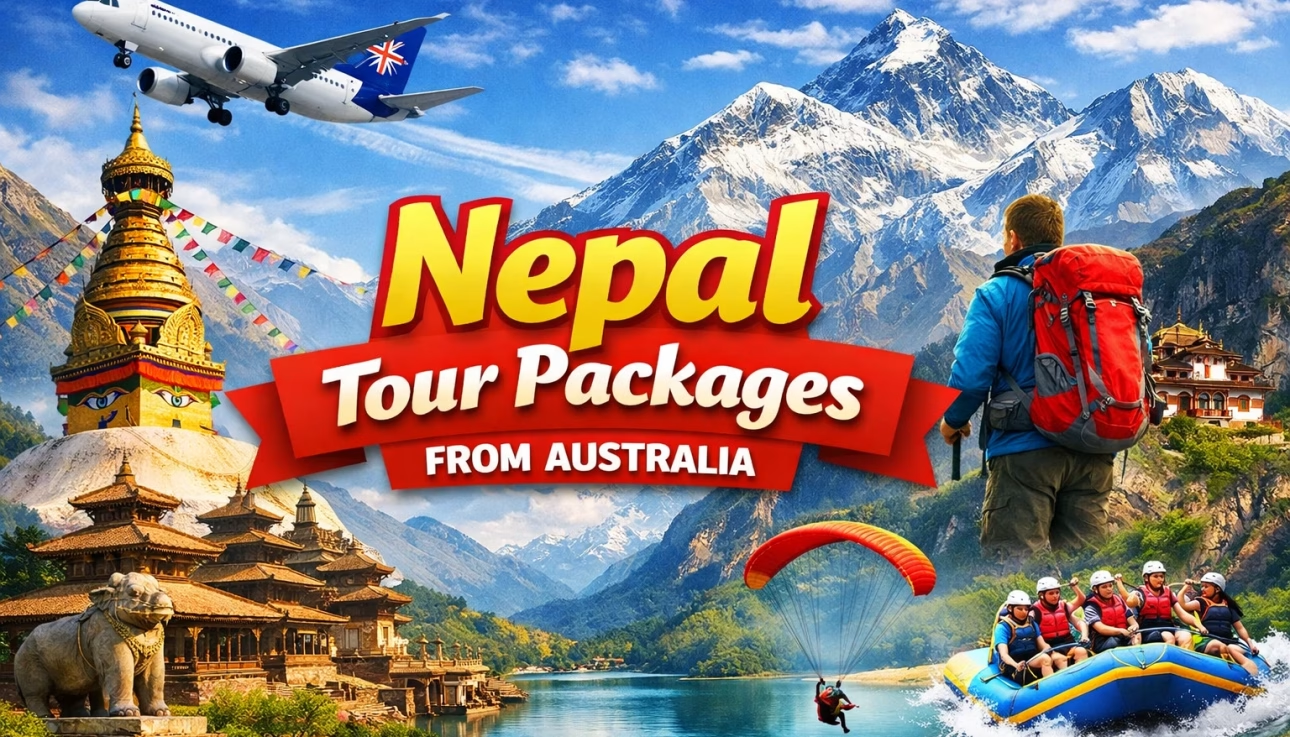
At Nepal Tours Packages, we eliminate costly corporate middlemen to deliver flexible, tailor-made itineraries backed by over 25 years of local ground handling. Whether you are seeking a classic trek to the iconic base camps of the Everest or Annapurna regions, an offbeat hidden wilderness trail, or a relaxing cultural journey through the Kathmandu Valley, our personalized packages offer true value for money. Handcrafted by local destination specialists like Kishor and Kul Bahadur Gurung, every itinerary balances authentic discovery with world-class safety. From coordinating single-layover flights out of Sydney, Melbourne, Brisbane, Adelaide, and Perth to managing smooth multi-country extensions into the mystical Kingdom of Bhutan, our Kathmandu-based ground control ensures a seamless, deeply immersive journey where the earth meets the sky.
Nepal Tour Packages from Australia: Detailed Travel Guide & Itineraries
Are you looking for the perfect Nepal tour packages from Australia? Do you dream of exploring an entirely unique country with comprehensive holiday packages customized just for you?
Planning a trip to Nepal from Australia brings up essential questions about value for money, choosing between the iconic Everest or Annapurna routes, or finding offbeat trails away from the crowds. As your direct local operator, Nepal Tours Packages eliminates costly third-party brokers to deliver flexible, tailor-made itineraries backed by over 25 years of Himalayan ground-handling experience.
This comprehensive guide provides Australian travelers with everything required for a flawless holiday—from popular single-layover flight connections out of Sydney, Melbourne, Brisbane, and Perth to step-by-step visa-on-arrival information, curated cultural highlights, and seamless multi-country extensions into Bhutan. Every itinerary integrates certified high-altitude safety protocols and an ethical commitment to local communities, ensuring a secure, deeply immersive journey where the earth meets the sky.
Perhaps you are seeking a classic adventure—like trekking to the iconic base camps in the legendary Everest or Annapurna regions? Or maybe a hidden, offbeat trail suits your sense of adventure better? You might even be wondering: Is Nepal worth visiting from Australia given the flight distance, and does it offer true value for money? Should you choose a cultural sightseeing tour or a dedicated trekking package?
It is completely natural to have these questions while planning your journey from the Southern Hemisphere.
We invite you to discover a land where the earth meets the sky. For generations, Australian adventurers, mountaineers, and cultural explorers have been drawn to the majestic heights and spiritual depth of the Himalayas. Whether you want to stand in awe at the foot of Mount Everest, track the elusive Royal Bengal tiger through subtropical jungles, or lose yourself in the ancient brick courtyards of the Kathmandu Valley, finding the right Nepal adventure package is your first step toward a life-changing experience.
At Nepal Tours Packages, we are local destination experts with decades of firsthand experience crafting bespoke journeys for Australian holidaymakers. This comprehensive guide details everything you need to plan your ultimate Himalayan escape.
Why Choose Nepal for Your Next Holiday from Australia?
Nestled securely between India and Tibet, Nepal is a land of vivid geographical contrasts. Within just a few hundred kilometers, the elevation rises from near sea level in the southern Terai plains to the highest point on Earth: the summit of Mount Everest (8,848.86m).
For Australian travelers, Nepal provides a complete sensory escape:
- The World’s Greatest Trekking: Home to 8 of the world’s 14 highest peaks, offering legendary trails like the Everest Base Camp Trek and the Annapurna Circuit.
- Living Cultural Heritage: Seven UNESCO World Heritage Sites are packed tightly within the Kathmandu Valley alone, featuring centuries-old pagodas, medieval royal squares, and holy stupas.
- Abundant Wildlife Safaris: Subtropical national parks like Chitwan and Bardia shelter endangered one-horned rhinoceroses, wild elephants, and Royal Bengal tigers.
- Warm Himalayan Hospitality: The Nepalese people are globally renowned for their genuine warmth, treating every guest as a form of god (Atithi Devo Bhava).
Expert Insight: “Many Australian travelers head to Nepal solely for the mountains, but they leave utterly enchanted by the vibrant culture, the ancient architecture, and the lifelong friendships made with local guides.”
The Value of Booking Directly with a Local Tour Operator
When booking a Nepal tour package from Australian cities like Sydney, Melbourne, Brisbane, or Perth, you face a strategic choice: book through a high-street travel agency back home or partner directly with a licensed local operator based in Kathmandu.
While Australian-based outbound brokers often pass your booking on to local ground handlers while charging heavy commissions, booking directly with Nepal Tours Packages ensures:
- Authentic E-A-T (Expertise, Authoritativeness, & Trustworthiness): Our team of experts and tour/trekking guides were born and raised in these valleys. They possess deep, generational knowledge of weather patterns, local dialects, and high-altitude safety protocols.
- 100% Tailor-Made Flexibility: Want to add an extra acclimatization day in Namche Bazaar? Or switch a standard teahouse for a luxury eco-lodge in Pokhara? We modify your itinerary instantly without corporate red tape.
- Direct Support to the Local Economy: Booking locally ensures your travel funds directly support mountain communities, porters, family-run lodges, and local conservation initiatives.
We are a fully registered tour company with over 25 years of operational history in the Himalayan region, including Nepal, Bhutan, and Tibet. The feedback about the custom holidays designed by our co-founders, Kishor and Kul Bahadur Gurung, can be verified by genuine international travelers across major travel platforms like Google and TripAdvisor.
Best Time to Visit Nepal from Australia
Nepal experiences distinct seasonal transformations. Use this seasonal breakdown to select your ideal travel window:
| Season | Months | Weather Conditions | Best Suited For |
| Autumn (Peak) | October – November | Crystal-clear skies, dry weather, warm days, and crisp nights. | High-altitude trekking, cultural festivals, and photography. |
| Spring (Peak) | March – May | Mild temperatures, blooming rhododendron forests, and longer daylight hours. | Everest Base Camp, Annapurna Circuit, and wildlife spotting. |
| Winter | December – February | Clear skies but freezing temperatures at night; snow on high passes. | Low-altitude trekking, Kathmandu cultural tours, and Chitwan safaris. |
| Monsoon | June – September | Heavy rainfall, cloudy skies, landslides on mountain tracks. | Upper Mustang trekking (rain-shadow region) and spiritual retreats. |
Comprehensive Classification of Nepal Tour Packages
To help Australian holidaymakers find their ideal itinerary, we categorize our signature travel experiences by travel style, budget, and physical intensity.
1. Luxury Nepal Tour Packages
For those who want to experience the rugged beauty of the Himalayas without sacrificing premium comfort.
- Signature Accommodations: Spend your nights in historic heritage properties like Dwarika’s Hotel in Kathmandu, iconic retreats like Fish Tail Lodge or The Pavilions Himalayas in Pokhara, and high-end jungle resorts like Meghauli Serai (A Taj Safari) or Barahi Jungle Lodge in Chitwan.
- Exclusive Experiences: Includes private helicopter charter flights to Everest Base Camp for an exclusive champagne breakfast facing Nuptse, Lhotse, and Everest, private transfers in luxury SUVs, and dedicated senior cultural historians as your private guides.
- Comfort Trekking: Enjoy luxury lodge trekking within the tree lines to avoid altitude sickness, walking an average of 4 hours a day in the Annapurna foothills.
2. Cultural & Heritage Holidays
Perfect for history enthusiasts and photographers who want to dive deep into the rich tapestry of Hinduism and Buddhism.
- Kathmandu Valley Core: Deep exploration of the three ancient medieval kingdoms: Kathmandu, Patan, and Bhaktapur Durbar Squares, focusing on Newari woodcarving, ancient stone sculptures, and the history of the Living Goddess (Kumari).
- Beyond the Valley: Journeys extending to Bandipur, a beautifully preserved hilltop Newari town with dramatic views of the Manaslu range, and Gorkha, the ancestral birthplace of modern Nepal.
3. Multi-Country Himalayan Extensions: Nepal and Bhutan Tour Packages
Many Australian travelers choose to combine their trip to Nepal with a visit to the mystical kingdom of Bhutan to optimize their flight distance from the Southern Hemisphere. We operate our own branch office in Bhutan, ensuring a seamless experience across both destinations.
- Logistics Handled Seamlessly: Our team coordinates international and regional connections, including flights from Kathmandu (KTM) to Paro (PBH) via Drukair or Bhutan Airlines. We process your official visas and clear all mandatory Bhutanese Sustainable Development Fees (SDF) upfront.
- The Blueprint Combined Itinerary Nepal Bhutan Tour:
- 7 Days in Nepal: Immerse yourself in the historic highlights of the Kathmandu Valley and relax by the lakeside in Pokhara, enjoying panoramic views of the Annapurnas.
- 6 Days in Bhutan: Fly over the high Himalayas to explore the pristine valleys of Thimphu and Punakha, culminating in an iconic trek up to the cliffside Tiger’s Nest Monastery (Paro Taktsang).
- Tailored Durations: Choose between our streamlined 10-day Nepal Bhutan Tour Package or the comprehensive 16-day Best of Nepal Bhutan Tour.
- Nepal Bhutan Tibet – 3 Countries at one Holiday Plan – Detailed Himalayan Discovery.
4. High-Altitude Trekking & Mountaineering Packages
For the true outdoor enthusiast, managed by IFMGA-certified climbing guides and elite mountain crews.
- Teahouse Treks: Classic routes like the Annapurna Base Camp, Poonhill Trek, or Langtang Valley trek, staying in charming, family-run mountain lodges. Excellent uncrowded alternatives include the Manaslu Trekking package , Ruby Valley Cultural Trek or the Manaslu Tsum Valley trek.
- Peak Climbing Expeditions: Outfitted climbing packages to Island Peak (6,189m), Mera Peak (6,476m), and Lobuche East (6,119m), inclusive of high-altitude base camps, technical gear, and fixed-line setup.
Detailed Day-by-Day Itinerary Profiles
Profile A: The Classic All Nepal Tour Package (10 to 12 Days)
Perfect for families, couples, and first-time visitors seeking a balance of culture, scenery, and wildlife without strenuous trekking.
- Day 1–3: The Medieval Soul of Kathmandu Arrive at Tribhuvan International Airport (KTM). Explore the ancient brick architecture of Kathmandu Durbar Square, observe sacred traditions at Pashupatinath Temple, and visit the massive Boudhanath Stupa.
- Day 4–6: Pokhara – Gateway to the Annapurnas Take a scenic drive or a 25-minute domestic flight to Pokhara. Cruise across Fewa Lake, take a morning excursion to Sarangkot for a panoramic sunrise over the Annapurna and Dhaulagiri mountain ranges, and visit the World Peace Stupa.
- Day 7–9: Wildlife Safari in Chitwan National Park Descend into the subtropical lowlands. Venture deep into the jungle on jeep safaris to spot one-horned rhinos and gharial crocodiles. Spend your evenings learning about the rich traditions of the indigenous Tharu community.
- Day 10: Return to Kathmandu via Bhaktapur Explore Bhaktapur Durbar Square, renowned for its preservation of woodcarving and traditional pottery, before your farewell dinner.
Profile B: The Iconic Everest Base Camp Trek (12 Days)
The ultimate bucket-list adventure tracing the footsteps of legendary mountaineers.
[Kathmandu] ➔ Fly to [Lukla (2,860m)] ➔ Trek to [Namche Bazaar (3,440m)]
                                                 │
[Everest Base Camp (5,364m)] ◄─ Trek to [Dingboche (4,410m)] ◄───┘
- The Journey: This rigorous trek features a thrilling flight into Lukla, followed by a steady ascent through the Khumbu Valley, passing through vibrant Sherpa villages, ancient monasteries like Tengboche, and dramatic suspension bridges.
- Safety First: Our packages incorporate two mandatory acclimatization days (at Namche Bazaar and Dingboche) to ensure your body adapts smoothly to the thinning air, maximizing your safety and success rate.
Practical Travel Information for Australian Citizens
1. Getting to Nepal from Australia
While there are currently no direct, non-stop flights from Australia to Kathmandu, several major airlines offer highly efficient connections with a single short layover:
- Singapore Airlines: Excellent single-stop connections from Sydney (SYD), Melbourne (MEL), Brisbane (BNE), Adelaide (ADL), and Perth (PER) via Singapore (SIN).
- Malaysia Airlines & Batik Air: Frequently chosen options from major Australian hubs via Kuala Lumpur (KUL).
- Thai Airways: Popular connections out of Melbourne, Sydney, and Perth via Bangkok (BKK).
- Air India: Connects Sydney and Melbourne via Delhi (DEL) to Kathmandu.
- Cathay Pacific: Offers reliable single-layover services via Hong Kong (HKG).
2. Nepal Visa Requirements for Australian Passport Holders
Australian citizens require a tourist visa to enter Nepal. This can be obtained through two primary methods:
- Visa on Arrival: Available at Tribhuvan International Airport in Kathmandu. You can fill out the online pre-arrival form via the official portal beforehand, bring physical passport photos, and pay the visa fee at the airport counter.
- Pre-arranged Visa: Apply online for an e-Visa or submit an application through the Embassy of Nepal in Canberra or the consulate offices in Sydney, Melbourne, or Perth before departure.
Current Tourist Visa Fees (Subject to official revisions):
- 15-Day Tourist Visa: $30 USD (approx. $45–$50 AUD)
- 30-Day Tourist Visa: $50 USD (approx. $75–$80 AUD)
- 90-Day Tourist Visa: $125 USD (approx. $190–$200 AUD)
3. Currency and Spending Money
The official currency is the Nepalese Rupee (NPR).
- ATMs: Widely available in Kathmandu and Pokhara for withdrawing local currency using Australian debit/credit cards.
- Cash in the Mountains: ATMs are virtually non-existent on mountain trails. We advise our clients to withdraw sufficient cash in Kathmandu to cover personal snacks, device charging fees, hot showers, and tips for your crew.
High-Altitude Safety & Operational Trust (E-A-T)
Acute Mountain Sickness (AMS) Mitigation
Your safety is our absolute priority. Our guides are fully certified in Wilderness First Aid and expertly trained to recognize the earliest symptoms of altitude sickness. Every trekking group carries a comprehensive medical kit, pulse oximeters to track blood-oxygen saturation levels daily, and supplemental oxygen cylinders.
Comprehensive Travel Insurance
It is a mandatory condition of booking with us that you hold travel insurance that explicitly covers high-altitude trekking (up to 6,000 meters) and emergency helicopter evacuation. In the rare event of severe illness, our ground control coordinates directly with your insurer to dispatch emergency services immediately.
Credentials & Corporate Social Responsibility
Nepal Tours Packages is fully licensed and accredited by the premier regulatory bodies governing South Asian tourism:
- Ministry of Culture, Tourism and Civil Aviation (MoCTCA), Government of Nepal
- Nepal Tourism Board (NTB)
- Trekking Agencies’ Association of Nepal (TAAN)
- Kathmandu Environmental Education Project (KEEP)
Porter Welfare and Ethical Commitment
- Fair Wages & Weight Limits: Our porters are paid well above the industry average, provided with specialized high-altitude gear, medical coverage, and limited to a maximum load weight of 20kg per person.
- Environmental Responsibility: We minimize single-use plastics on our treks by supplying advanced water filtration units.
- Giving Back: A fixed percentage of revenue from every booking goes directly toward funding primary school education and clean drinking water initiatives in the remote villages of the Solukhumbu and Dhading regions.
Major Asked Questions (MAQs) for Australian Travelers
1. Can I buy trekking gear in Kathmandu, or should I bring everything from Australia?
Kathmandu’s Thamel district is a world-famous hub for outdoor clothing and gear. You can find both premium flagship brand outlets and high-quality, budget-friendly local options. You can easily rent heavy winter items like down jackets and $-20^\circ\text{C}$ sleeping bags for around $2 to $3 USD per day, saving you valuable luggage weight on your flight out of Australia. However, we strictly advise bringing your own well-broken-in hiking boots from home to prevent blisters.
2. What is the standard protocol for tipping guides and porters?
Tipping is an integral part of the travel industry in Nepal, reflecting appreciation for the immense physical labor your crew undertakes. While voluntary, a standard benchmark for a trekking group is to pool together $15 to $20 AUD per day for the guide and $10 to $12 AUD per day for the porters, distributed at the end of the trek. On cultural tours, tipping your private driver and city guide $15 to $25 AUD per day collectively is customary.
3. How do you handle drinking water safely during a tour or trek?
Tap water in Nepal is not safe for direct consumption. In cities, we provide purified bottled mineral water. In the mountains, to prevent plastic pollution, we provide boiled water at the tea houses or utilize specialized water purification systems. Never drink untreated stream or tap water on the trails.
4. What type of food can I expect, and is it safe?
Food hygiene is a primary focus for our chosen partners. In hotels and tea houses, meals range from local specialties to continental, Italian, and Chinese options. The staple dish is Dal Bhat (lentils, rice, vegetable curry, and pickles), which is freshly cooked, highly nutritious, and recommended. To minimize stomach upsets, we recommend eating freshly cooked vegetarian food while on mountain trails.
5. What are the electricity plug standards, and will I have Wi-Fi in the mountains?
Nepal uses Type C, D, and M plugs, operating on a 230V supply and 50Hz frequency. Universal travel adapters work perfectly. Wi-Fi is widely available in Kathmandu and Pokhara hotels. On popular trekking routes, satellite Wi-Fi networks are available for a small fee ($3 to $5 USD per data card). Cellular networks like Ncell and NTC offer good 4G coverage even at high altitudes, and we can help you purchase a local SIM card upon your arrival at Kathmandu Airport.
6. Can I combine a tour of Nepal with Tibet and/or Bhutan?
Absolutely. Due to our regional network, we specialize in organizing multi-country Himalayan itineraries. We handle the specialized Tibet Travel Permits via the Chinese Embassy in Kathmandu or coordinate your Bhutanese visa and Drukair flights seamlessly.
7. Is it safe for a solo female traveler to book a package to Nepal?
Nepal is widely recognized as one of the safest, most welcoming, and respectful destinations in South Asia for solo female travelers. When booking a private package with us, you are accompanied by fully vetted, licensed guides who ensure your safety, comfort, and security from arrival to departure.
8. What happens if my flight to or from Lukla is delayed due to weather?
Mountain weather around Lukla (2,860m) is notoriously volatile, and flight delays or cancellations due to visibility issues can happen. To safeguard your international flight back to Australia, our itineraries are structured with 1 to 2 cushion days in Kathmandu at the end of the trek. If a prolonged weather block occurs, we can arrange emergency chartered helicopter transfers, which can fly under lower visibility ceilings than standard twin-otter planes.
Finalizing Your Journey: Step-by-Step Booking Guide
Phase 1: The Initial Discovery
Fill out our online inquiry form or drop us a message directly via WhatsApp at +977-9851150010. Share your ideal travel dates, preferred travel style (trekking, luxury, cultural, or wildlife), and any specific destinations on your bucket list.
Phase 2: Tailor-Made Customization
One of our senior destination planners (such as Kishor, Kul Bahadur Gurung, or Kabita Shakya) will connect with you within 12 hours. We provide a fully detailed blueprint itinerary, complete with hotel selections, flight logistics, and transparent, all-inclusive pricing. We will refine this itinerary back and forth until it matches your vision perfectly.
Phase 3: Secure Your Adventure
Once you are completely satisfied with the itinerary, you can secure your booking with a flexible, low-percentage deposit paid through our secure, encrypted online merchant gateway. We accept all major Australian credit and debit cards with no hidden transaction fees. The remaining balance can be conveniently cleared upon arrival in Kathmandu.
Contact Our Expert Team Today
The mountains are calling, and your trip of a lifetime is closer than you think. Trust your journey to local professionals who know every ridge, river, and ritual of this extraordinary nation. Contact us today to transition from planning to experiencing the breathtaking majesty of Nepal!
Detailed analysis and essential guidelines for Nepal Tour Packages from Australia for Australian Nationals with Local Experts
The Value of Direct Local Ground Handling
Planning a journey from Australia to the roof of the world involves critical decisions that shape your entire holiday experience. For most Australian travelers, embarking on a trip to Nepal is a long-haul adventure that raises immediate, practical questions: How do you maximize your value for money? Should you choose a classic lodge-to-lodge trek in the iconic Everest or Annapurna regions, or explore the untouched trails of the rain-shadow zones? Is a structured cultural sightseeing tour a better fit than a physically demanding mountaineering expedition?
As your direct local operator based right here in Kathmandu, Nepal Tours Packages eliminates the costly corporate middlemen, high-street retail markups, and third-party brokers typical of outbound Australian travel agencies. Backed by over 25 years of continuous Himalayan ground-handling experience, we specialize in delivering highly flexible, robustly supported, and completely custom-tailored itineraries.
This definitive guide provides Australian holidaymakers with everything required to design, secure, and experience a flawless Himalayan expedition. We cover every critical component: from navigating single-layover flight paths out of Sydney, Melbourne, Brisbane, Adelaide, and Perth to managing the step-by-step visa-on-arrival process, choosing seasonal windows, evaluating high-altitude safety protocols, and reviewing comprehensive itineraries—including premium multi-country extensions into the mystical Kingdom of Bhutan.
Every holiday package we design integrates rigorous, Western-standard safety frameworks alongside a transparent ethical commitment to mountain community welfare. The result is a seamless, deeply authentic, and highly secure travel experience where the earth meets the sky.
Why Nepal Captivates the Australian Soul
Nestled securely along the spine of the grand Himalaya between India and Tibet, Nepal represents one of the world’s most dramatic geographical and ecological cross-sections. Within a physical span of just a few hundred kilometers, the topography climbs from near sea level in the subtropical Terai plains of the south to the absolute highest point on our planet: the frozen summit of Mount Everest ($8,848.86\text{ m}$).
For travelers arriving from the vast landscapes of Australia, Nepal offers a total sensory and cultural shift:
- The World’s Absolute Peak Trekking Trails: Nepal is home to 8 of the 14 independent peaks on Earth that soar above eight thousand meters. This pristine topography hosts legendary routes such as the Everest Base Camp Trek, the Annapurna Circuit, and the dramatic high passes of Manaslu.
- Vibrant Living Cultural Heritage: The Kathmandu Valley functions as a virtual open-air museum, packing seven distinct UNESCO World Heritage Sites within a remarkably compact radius. Here, centuries-old brick pagodas, medieval royal courtyards, and massive Buddhist stupas remain deeply integrated into daily spiritual life.
- Untamed Subtropical Wildlife Safaris: Beyond the jagged ice walls of the north lies a completely different ecosystem. The low-altitude national parks of Chitwan and Bardia protect dense sal forests and riverine grasslands that shelter endangered greater one-horned rhinoceroses, wild elephants, gharial crocodiles, and the elusive Royal Bengal tiger.
- Genuine Himalayan Hospitality: Nepalese culture operates on the ancient Sanskrit philosophy of Atithi Devo Bhava, translating directly to “The Guest is a Form of God.” Australians routinely note that while the mountains command initial awe, it is the profound warmth, quick wit, and lifelong friendships forged with local guides and villagers that define their journey.
Expert Insight from our Co-Founder, Kishor:
“Australian adventurers possess an innate love for the rugged outdoors, but they are often surprised by what happens between the climbs. They arrive focused entirely on the high altitude, but they return home deeply moved by the ancient stone architecture, the intricate woodcarving heritages, and the calm spiritual rhythms of our mountain communities.”
The Structural Value of Booking Direct vs. Outbound Australian Agencies
When researching a holiday to Nepal from major Australian hubs like Sydney, Melbourne, Brisbane, Adelaide, or Perth, travelers generally encounter two distinct booking paths: organizing the trip through a mainstream, domestic high-street travel agency or contracting directly with a licensed destination management company operating natively on the ground in Kathmandu.
Understanding the operational differences between these two models can dramatically alter both the cost and the intrinsic quality of your holiday:
The Outbound Broker Model (High-Street Agencies)
Most local travel agencies based in Australia do not own vehicles, employ guides, or manage safety operations in Nepal. Instead, they act as wholesale or retail brokers. When you purchase a package through them, they collect a significant retail commission (often ranging from 20 to 40%) and subsequently forward your itinerary details to a local ground handler in Kathmandu to execute the actual work.
This introduces structural disadvantages:
- Inflated Costs: You pay an expanded premium to cover the outbound broker’s marketing, overhead, and profit margins.
- Communication Lag: Any adjustments you wish to make to your itinerary—such as adding an extra rest day or upgrading a hotel—must pass through an international chain of corporate emails, leading to delays and potential miscommunications.
- Lack of Direct Oversight: The agent selling you the trip in Australia has rarely stepped onto the remote mountain passes or assessed the current condition of the specific teahouses you will be occupying.
The Direct Local Operator Model (Nepal Tours Packages)
By partnering directly with a legally registered, indigenous ground handler like Nepal Tours Packages, you bypass the corporate middleman entirely. This direct relationship yields immediate operational advantages:
[Australian Traveler] ──(Direct Communication & Clear Pricing)──> [Nepal Tours Packages (Kathmandu Ground Control)]
                                                                           │
                                      ┌────────────────────────────────────┼──────────────────────────────────┐
                                      ▼                                    ▼                                  ▼
                         [In-House Certified Guides]             [Private Vehicle Fleet]            [Direct Teahouse/Hotel Ties]
- Authentic E-A-T (Expertise, Authoritativeness, & Trustworthiness): Our management team and field guides are born and raised in these mountain valleys. We hold deep, multi-generational knowledge of localized weather systems, changing trail conditions, regional dialects, and high-altitude safety parameters.
- Absolute Tailor-Made Flexibility: Because we control our operations directly, we can modify itineraries instantly. If you experience mild altitude symptoms and need to incorporate an immediate acclimatization night in Namche Bazaar, or if you simply wish to swap a standard hotel room for a luxury eco-lodge in Pokhara, our Kathmandu ground control executes the change seamlessly.
- Direct Economic Support to Mountain Communities: Booking locally ensures your travel capital stays within the host country. Your funds directly pay fair wages to the porters, support family-run mountain lodges, buy fresh produce from high-altitude farmers, and contribute to vital local conservation initiatives.
Our Verified Credentials
Nepal Tours Packages is built upon a solid foundation of legal accountability and deep operational history. Co-founders Kishor and Kul Bahadur Gurung have spent over 25 years actively guiding and managing logistics across the high-altitude landscapes of Nepal, Bhutan, and Tibet.
Our agency has successfully looked after more than 25,550 international travelers, organizing upwards of 728 bespoke itineraries annually. The real-world experiences of our trekkers and cultural holidaymakers are widely documented across independent travel networks, global agent feedback portals, Google Reviews, and TripAdvisor.
Comprehensive Seasonal Breakdown for Australian Travelers
Because Australia is located in the Southern Hemisphere, its seasons are reversed relative to the Indian subcontinent. When planning your departure, it is vital to synchronize your itinerary with Nepal’s distinct seasonal cycles to secure ideal trail conditions and clear mountain views.
                  JAN      FEB      MAR      APR      MAY      JUN      JUL      AUG      SEP      OCT      NOV      DEC
Nepal Seasons:  [   WINTER   ]  [       SPRING       ]  [         MONSOON         ]  [       AUTUMN       ]  [ WINTER ]
Aus Seasons:    [   SUMMER   ]  [       AUTUMN       ]  [         WINTER          ]  [       SPRING       ]  [ SUMMER ]
Autumn (Peak Season: October – November)
- Nepal Weather: Highly stable, dry atmospheric conditions. Days are pleasantly warm, while nights at high altitudes become crisp and freezing. The post-monsoon air is remarkably clean, offering spectacular, sharp mountain views.
- Australian Synergy: Aligns perfectly with spring in Australia. This is the absolute premier window for high-altitude trekking along the Everest Base Camp route, crossing the Annapurna Thorong La Pass, and capturing crisp landscape photography.
Spring (Peak Season: March – May)
- Nepal Weather: Mild, warming temperatures with longer daylight hours. Higher altitudes begin to thaw, while the lower valleys burst into color with massive blooms of wild rhododendron forests.
- Australian Synergy: Coordinates with autumn in Australia. This is a magnificent window for both classic alpine trekking and wildlife safaris in the south, as animals frequently emerge to seek water sources.
Winter (Low Season: December – February)
- Nepal Weather: Characterized by brilliant, clear daytime skies, but accompanied by severe, below-freezing temperatures during the night at high elevations. Heavy snowfall can temporarily close high mountain passes above $4,000\text{ m}$.
- Australian Synergy: Corresponds to the peak Australian summer holiday period. This is an excellent time for low-altitude trekking (such as the Ghorepani Poon Hill or Kathmandu Valley ridges), cultural heritage tours, and deep-jungle safaris in Chitwan where the weather remains mild and comfortable.
Monsoon (Low Season: June – September)
- Nepal Weather: Heavy daily rainfall driven by south Asian weather patterns. Skies are frequently overcast, and mountain transport can face disruptions from mud or landslides on exposed roads.
- Australian Synergy: Spans across the Australian winter. While standard trekking routes are not recommended, this is the ideal time to explore the unique rain-shadow regions of Nepal, such as Upper Mustang or the Tsum Valley, which are geographically shielded by the main Himalayan wall and remain arid and accessible.
Detailed Classification of Signature Nepal Tour Packages
To assist Australian travelers in selecting the most appropriate style of journey, we classify our core offerings by travel mechanics, physical intensity, and comfort level.
1. Luxury Nepal Tour Packages
Designed specifically for travelers who wish to experience the raw, untamed majesty of the high Himalayas while enjoying premium hospitality and comfort.
- Handpicked Accommodations: Avoid basic mountain dwellings. Our luxury itineraries feature iconic heritage properties like Dwarika’s Hotel in Kathmandu (a living museum showcasing preserved Newari architecture), elite lakeside retreats like Fish Tail Lodge or The Pavilions Himalayas in Pokhara, and award-winning safari lodges like Meghauli Serai (A Taj Safari) or Barahi Jungle Lodge along the Rapti River in Chitwan.
- Exclusive VIP Travel Elements: Travel via private helicopter charters directly to Everest Base Camp, landing at Kala Patthar (5550m) for an exclusive champagne breakfast facing the massive vertical walls of Nuptse, Lhotse, and Everest. Ground transfers are conducted using late-model luxury SUVs, accompanied throughout by senior destination historians.
- Annapurna Luxury Foothill Treks: Walk comfortably through lower alpine elevations, remaining well within the safety of the tree line to mitigate altitude risks, while spending your evenings in boutique luxury eco-lodges featuring hot running water, electric blankets, and organic farm-to-table cuisine.
2. Cultural, Heritage, & Spiritual Holidays
Perfect for families, couples, and photography enthusiasts who want to explore the history, art, and spiritual philosophies of the Kathmandu Valley and beyond.
- The Royal Medieval Kingdoms: A detailed, unhurried exploration of the three ancient rival seats of power: Kathmandu, Patan, and Bhaktapur Durbar Squares. The focus centers on studying stone sculptures, observing the living heritage of the Kumari (the Living Goddess), and wandering through labyrinthine brick alleyways unchanged since the 14th century.
- Spiritual Anchors: Spend tranquil mornings listening to monastic chanting at the ancient Swayambhunath (Monkey Temple), observing traditional Hindu rituals along the holy Bagmati River at Pashupatinath, and circumambulating the colossal white dome of Boudhanath Stupa alongside devout Tibetan pilgrims.
- Rural Hinterlands: Travel beyond the main urban centers to the beautifully preserved hilltop settlement of Bandipur, a living museum of Newari merchant architecture offering expansive views of the Manaslu massif, and explore Gorkha, the historic ancestral birthplace of modern unified Nepal.
3. High-Altitude Trekking & Mountaineering Expeditions
For dedicated outdoor enthusiasts looking to test their endurance on the world’s most famous alpine trails.
- Classic Teahouse Trekking: Fully supported journeys along the classic routes of the Khumbu (Everest) and Annapurna regions. You travel light with our team of strong, friendly local porters, staying in family-run mountain teahouses that provide warm hospitality, hearty meals, and a cozy evening hearth.
- Offbeat Wilderness Trails: For trekkers seeking wilderness away from popular routes, we coordinate expeditions into the pristine Manaslu Circuit Trek or the deeply spiritual, culturally isolated Tsum Valley, where Tibetan Buddhist traditions remain fully intact.
- Technical Peak Climbing Packages: Designed for adventurous trekkers looking to transition into mountaineering. We run fully outfitted, safety-first climbing itineraries to non-expedition peaks such as Island Peak (6,189m), Mera Peak (6,476m), and Lobuche East (6,119m). These packages include comprehensive base camp setups, high-quality technical gear rental, fixed-line installation, and guidance from IFMGA-certified climbing Sherpas.
Multi-Country Extensions: Nepal and Bhutan Tour Packages
Given the long-haul flight distance from Australia to South Asia, many travelers choose to maximize their journey by combining their trip to Nepal with a visit to the isolated Kingdom of Bhutan.
As a regional tour operator, Nepal Tours Packages maintains its own dedicated operational branch office in Bhutan. This means you travel under the care of our unified team across both nations, ensuring consistent quality control and seamless coordination.
                    ┌───────[ Fly from Australia ]────────┐
                    ▼                                     ▼
      [ 7 Days in Nepal Exploration ]       [ 6 Days in Bhutan Exploration ]
       - Kathmandu Heritage Sites            - Thimphu & Punakha Valleys
       - Lakeside Pokhara & Annapurnas       - Paro Taktsang (Tiger's Nest)
                    └───────────┬─────────────────────────┘
                                ▼
                   [ Direct Return to Australia ]
Complete Logistics Coordination
We manage every single micro-detail of your multi-country journey from start to finish:
- Himalayan Aviation Access: We secure your regional flights between Kathmandu (KTM) and Paro (PBH) using our direct ticketing access with the national carriers Drukair and Bhutan Airlines. This route offers stunning views, flying directly past Mount Everest, Makalu, and Kanchenjunga.
- Regulatory Visas & Fees: Our administrative team processes your official Bhutanese visa clearance documents and pays the mandatory Sustainable Development Fee (SDF) upfront on your behalf, completely eliminating administrative hassle.
The Signature Combined Itinerary Blueprint
- 7 Days in Nepal: Immerse yourself in the historic highlights of the Kathmandu Valley, followed by a trip to the tranquil, lakeside city of Pokhara to enjoy panoramic mountain views of the Annapurna range.
- 6 Days in Bhutan: Fly into the valley of Paro, explore the fortress-monasteries (Dzongs) of the capital Thimphu and the ancient winter capital of Punakha, and culminate your journey with the iconic hike to the cliffside Tiger’s Nest Monastery (Paro Taktsang).
- Flexible Durations: Depending on your timeframe, you can select our optimized 10-day introductory multi-country tour or choose the comprehensive 16-day Best of Nepal & Bhutan experience.
Standalone “Bhutan-Only” Custom Packages
If your primary travel objective is to focus entirely on the Thunder Dragon Kingdom, our direct local office network inside Bhutan allows us to craft premium, independent itineraries built completely around your personal timeline:
- Short Cultural Introductions: Targeted 4 to 6-day journeys exploring the essential highlights of Paro, Thimphu, and the Punakha Valley.
- Cross-Country Deep Dives (8 to 12 Days): Travel eastward past the Dochu La Pass into the pristine, lesser-visited valleys of Gangtey (Phobjikha)—the winter home of the rare black-necked cranes—and the sacred cultural heartlands of Bumthang.
- Wilderness Trekking Circuits: Combine deep cultural immersion with rugged mountain treks along routes like the Druk Path Trek or the spectacular Jhomolhari Trek.
Comprehensive Day-by-Day Itinerary Profiles
Profile A: The Classic All Nepal Tour Package (10 to 12 Days)
This gentle, multi-destination itinerary requires no strenuous trekking and is perfectly suited for families, couples, and first-time visitors seeking an immersive balance of culture, scenery, and wildlife.
Day 1: Arrival in the Ancient Capital of Kathmandu
Arrive at Tribhuvan International Airport (KTM). After clearing customs and securing your tourist visa, you will be met at the arrivals terminal by our airport representative holding a personalized greeting placard. Transfer via a private, air-conditioned vehicle to your hotel. Receive a comprehensive evening trip briefing accompanied by a welcome dinner featuring traditional Newari cuisine and cultural dance performances.
Day 2: The Spiritual Foundations of the Kathmandu Valley
Begin your guided tour with an exploration of Kathmandu Durbar Square, marveling at the intense concentration of wooden temples, the multi-tiered Hanuman Dhoka palace complex, and the intricately carved windows of the Kumari Ghar. In the afternoon, ascend the stone stairs to Swayambhunath Stupa, enjoying panoramic views over the valley floor while learning about the harmonious synthesis of Hindu and Buddhist devotion. Finish the day at Pashupatinath Temple, observing the evening Aarti light rituals along the banks of the sacred Bagmati River.
Day 3: The Monumental Stupa of Boudhanath & Historic Patan
Spend your morning at Boudhanath Stupa, one of the largest spherical stupas in the world. Walk along the circular mandala pathway alongside pilgrims spinning bronze prayer wheels. In the afternoon, transfer to the ancient city of Patan (Lalitpur), renowned for its fine arts and metal casting. Explore Patan Durbar Square, visit the exquisite Golden Temple (Hiranya Varna Mahavihar), and tour the Patan Museum to view a world-class collection of sacred bronze statues.
Day 4: Overland Journey or Scenic Flight to Pokhara
Following breakfast, choose between a scenic 25-minute domestic flight or a 6 to 7-hour overland private drive tracing the Trishuli and Marsyangdi rivers to the lakeside resort city of Pokhara ($822\text{ m}$). Upon arrival, check into your hotel and enjoy a relaxing afternoon exploring the vibrant Lakeside district, set against the striking backdrop of the Annapurna range.
Day 5: Sarangkot Sunrise & Pokhara Sightseeing
Wake up before dawn for a private drive up to the hilltop viewpoint of Sarangkot ($1,600\text{ m}$). As the sun rises, watch the first light illuminate the snow-capped faces of Dhaulagiri ($8,167\text{ m}$), the Annapurna massif, and the distinct, double-peaked summit of Machhapuchhre (Fish Tail, $6,993\text{ m}$). Return to the hotel for breakfast. Spend the afternoon touring the deep fissures of Davis Falls, exploring Gupteshwor Mahadev Cave, and taking a wooden boat across Fewa Lake to hike up to the white World Peace Stupa.
Day 6: The Peace of Begnas Lake & Traditional Villages
Travel slightly off the main tourist track to the tranquil waters of Begnas Lake, located about 15 kilometers east of Pokhara. Enjoy a peaceful boating experience far from the crowds. Spend the afternoon exploring the nearby Gurung farming villages along the ridge lines, interacting with local families, and observing traditional agrarian lifestyles.
Day 7: Journey into the Subtropical Jungle of Chitwan
Depart Pokhara for a private drive descending into the fertile southern lowlands of the Terai region, arriving at Chitwan National Park (a UNESCO World Heritage site). Check into your jungle safari lodge and meet your dedicated naturalist guide. In the evening, walk along the banks of the Rapti River to view the sunset, followed by a traditional stick-dance performance by the indigenous Tharu community.
Day 8: Deep Jungle Safari & Wildlife Exploration
Dedicate your entire day to exploring the biodiversity of Chitwan National Park. Embark on an early morning dugout canoe ride along the Rapti River to spot rare fish-eating Gharial crocodiles and various migratory birds. Afterward, transition to a deep-jungle jeep safari through the park’s core areas, tracking greater one-horned rhinoceroses, wild boars, barking deer, sloth bears, and, if you are exceptionally fortunate, the Royal Bengal tiger.
Day 9: Bird Watching & Transfer to the Medieval City of Bhaktapur
Enjoy an early morning bird-watching walk led by your naturalist guide. After breakfast, depart Chitwan for your return journey toward the Kathmandu Valley. Instead of staying in the main city, transfer directly to the beautifully preserved medieval city of Bhaktapur. Enjoy a quiet evening strolling through cobblestone streets completely free of motor vehicle traffic.
Day 10: The Living Heritage of Bhaktapur & Departure
Spend the morning exploring Bhaktapur Durbar Square, widely considered the most architecturally intact of the valley’s three royal squares. Marvel at the 55-Window Palace, the Golden Gate, and the towering, five-tiered Nyatapola Temple, a masterpiece of Newari engineering. Visit the traditional Pottery Square to watch artisans work with clay wheels. In the afternoon, return to Tribhuvan International Airport for your international connection back to Australia.
Profile B: The Iconic Everest Base Camp Trek (12 Days)
The ultimate alpine challenge designed for active trekkers who wish to walk in the footsteps of legendary mountaineers.
[Kathmandu] ──(Fly)──> [Lukla (2,860m)] ──(Trek)──> [Phakding (2,610m)] ──(Trek)──> [Namche Bazaar (3,440m)]
                                                                                          │
                                                                                 (Acclimatization Day)
                                                                                          │
                                                                                          ▼
[Pheriche (4,240m)] ◄──(Trek)─── [Tengboche (3,860m)] ◄──(Trek)─── [Deboche (3,820m)] ◄──┘
         │
         ├───> [Lobuche (4,940m)] ───> [Gorak Shep (5,164m)] ───> [EVEREST BASE CAMP (5,364m)]
         │                                      │
         │                                (Ascend Peak)
         │                                      │
         │                                      ▼
         └────────◄───(Descend Trek)──── [Kala Patthar (5,545m)]
- Day 1: The Mountain Flight to Lukla & Trek to Phakding (2610m) Board an early morning flight from Kathmandu to the mountain airstrip of Lukla ($2,860\text{ m}$). Meet your porter team and begin your trek, descending gently along the Dudh Koshi River valley to the village of Phakding. Trekking duration: 3–4 hours.
- Day 2: Upward Climb to the Sherpa Capital of Namche Bazaar (3,440m) Follow the river trail northward through pine forests, crossing high suspension bridges draped in colorful prayer flags. Enter the Sagarmatha National Park at Monjo. Undertake the steep, continuous zigzag climb up the Namche hill, catching your very first glimpse of Mount Everest through the trees. Trekking duration: 5–6 hours.
- Day 3: Mandatory Acclimatization Day in Namche Bazaar (3,440m) Do not climb higher today. Spend the day allowing your body to adapt to the reduced oxygen levels. Take an active acclimatization hike up to the Everest View Hotel ($3,880\text{ m}$) for a panoramic view of Everest, Lhotse, and Ama Dablam. Return to Namche to visit the local Sherpa culture museum.
- Day 4: Trek to the Spiritual Anchor of Tengboche Monastery (3,860m) Walk along a spectacular trail carved into the valley wall, enjoying views of Ama Dablam. Descend to the river at Phunki Thenga for lunch, then tackle the steady afternoon climb through rhododendron forests to the ridge of Tengboche, home to the most significant Buddhist monastery in the Khumbu region. Trekking duration: 5–6 hours.
- Day 5: Trek to the High-Altitude Plain of Dingboche (4,410m) Descend through birch and pine woods to Deboche, then cross the Imja Khola via a rushing gorge. Walk past the ancient Mani walls to the village of Pangboche. Continue ascending out of the tree line into the high alpine zone, entering the windswept valley of Dingboche. Trekking duration: 5–6 hours.
- Day 6: Second Mandatory Acclimatization Day in Dingboche (4,410m) A critical rest day to mitigate Acute Mountain Sickness (AMS) risks before entering the extreme altitude zone. Take a steep acclimatization walk up the ridges of Nangkartshang Peak ($5,083\text{ m}$) to take in views of Makalu, Island Peak, and the massive south face of Lhotse.
- Day 7: Trek Through the Glacial Moraine to Lobuche (4,940m) Climb gently along the wide valley floor toward Thukla. Stop for lunch at the base of the massive Khumbu Glacier terminal moraine. Climb the steep Thukla Pass hill, passing the moving stone memorials dedicated to climbers who have lost their lives on Everest. Continue alongside the lateral moraine to Lobuche. Trekking duration: 4–5 hours.
- Day 8: The Summit Push to Everest Base Camp (5,364m) & Gorak Shep (5,164m) Walk along the rocky paths of the Khumbu Glacier to the final outpost of Gorak Shep. After a quick lunch, continue along the glacial spine to Everest Base Camp ($5,364\text{ m}$). Stand at the foot of the Khumbu Icefall, surrounded by towering peaks. Celebrate your achievement before walking back to Gorak Shep for the night. Trekking duration: 7–8 hours.
- Day 9: Ascend Kala Patthar Peak (5,545m) & Descend to Pheriche (4,240m) Wake up before dawn in freezing conditions to ascend the black rock dome of Kala Patthar ($5,545\text{ m}$). This is the highest point of the trek, offering an unparalleled view of Mount Everest’s summit pyramid. Descend to Gorak Shep for breakfast, then make a long, steady descent down the valley past Lobuche and Thukla to the lower valley village of Pheriche. Trekking duration: 6–7 hours.
- Day 10: Return Trek to Namche Bazaar (3,440m) Descend along the Imja River valley, passing through Pangboche and climbing back up to the Tengboche ridge. Make a steep descent back down to the river, then trace the valley walls back to Namche Bazaar. Enjoy a hot shower and celebrate with your trekking crew. Trekking duration: 6–7 hours.
- Day 11: Final Descent to Lukla Airstrip (2,860m) Retrace your original steps down the Namche hill, crossing the suspension bridges over the Dudh Koshi River. Pass through Monjo and Phakding, making a final uphill push to reach the town of Lukla for your last evening in the mountains. Trekking duration: 6–7 hours.
- Day 12: Morning Flight Return to Kathmandu Board your early morning flight from Lukla back to Kathmandu. Transfer directly to your hotel. Enjoy a free afternoon for souvenir shopping in Thamel or relaxing, capped by a celebratory farewell dinner with our team.
Practical Aviation & Logistics for Australian Citizens
Navigating Flights from Australia to Kathmandu
Because there are no direct, non-stop flights between Australia and Nepal, travelers can utilize a variety of convenient single-layover routes operated by world-class international airlines out of major domestic airports:
[Sydney / Melbourne / Brisbane / Adelaide / Perth]
                       │
       ┌───────────────┼───────────────┐
       ▼               ▼               ▼
  [Singapore]    [Bangkok]     [Kuala Lumpur]
 (Singapore Air)  (Thai Air)  (Malaysia Airlines)
       │               │               │
       └───────────────┼───────────────┘
                       ▼
            [Kathmandu (KTM) Arrival]
- Singapore Airlines (Via Singapore – SIN): Widely considered one of the most reliable routes for Australians. Offers daily connections from Sydney (SYD), Melbourne (MEL), Brisbane (BNE), Adelaide (ADL), and Perth (PER). The connection times in Singapore are efficient, and baggage is checked straight through to Kathmandu.
- Thai Airways (Via Bangkok – BKK): A highly popular option for travelers departing from eastern Australia and Perth. It features convenient flight timings and excellent customer service, with short layovers at Suvarnabhumi Airport.
- Malaysia Airlines & Batik Air (Via Kuala Lumpur – KUL): This route provides highly competitive pricing and reliable service from major Australian hubs down into Kathmandu’s international terminal.
- Air India (Via Delhi – DEL): Runs consistent operations out of Sydney and Melbourne, connecting directly into Delhi before making the short 1.5-hour jump across the plains into Kathmandu.
- Cathay Pacific (Via Hong Kong – HKG): Connects major Australian capital cities through its primary hub in Hong Kong, offering excellent connections to Kathmandu.
Step-by-Step Tourist Visa Protocols for Australians
Australian passport holders require a tourist visa to enter Nepal. This can be secured through two primary channels:
Option A: Visa on Arrival (Recommended for Speed and Simplicity)
You can obtain your visa upon arrival at the immigration hall inside Tribhuvan International Airport in Kathmandu.
- Pre-Arrival Form: Fill out the online Tourist Visa pre-arrival application form via the official Department of Immigration portal within 15 days of your landing date. Print out the confirmation slip with the barcode.
- Payment Processing: Upon landing, proceed directly to the airport bank counter before the main immigration desks. While the bank accepts various major foreign currencies (including USD, Euros, and GBP), we recommend carrying crisp, physical US Dollar banknotes to ensure a smooth transaction.
- Visa Sticker Issuance: Present your payment receipt, passport, and printed pre-arrival form to the immigration officer to receive your visa sticker.
Option B: Pre-Arranged Visa via the Embassy
If you prefer to bypass airport arrival queues completely, you can apply for a tourist visa before departure through the Embassy of Nepal in Canberra or the various consular offices located in Sydney, Melbourne, Adelaide, and Perth.
Mandatory Passport Parameters
To clear Nepalese immigration without issue, your Australian passport must carry an absolute minimum validity of six months beyond your intended date of departure from Nepal. Additionally, the passport must contain at least one completely blank page to accommodate the entry/exit visa stamps.
Advanced High-Altitude Safety Protocols & E-A-T
Trekking within the extreme environments of the Himalayas involves real environmental challenges. At Nepal Tours Packages, your physical safety is the single most important parameter governing our operations. We maintain strict, professional safety frameworks designed to mitigate altitude risks:
[Daily Monitoring: Pulse Oximeter & AMS Checklist] ───> [Symptoms Detected?]
                                                               │
                                         ┌─────────────────────┴─────────────────────┐
                                         ▼ YES                                       ▼ NO
                      [Immediate Descent to Lower Altitude]               [Continue Trek Safely]
                                         │
                        (If Symptoms Are Severe / Critical)
                                         │
                                         ▼
                     [Coordinate Emergency Helicopter Evacuation]
Acute Mountain Sickness (AMS) Mitigation Frameworks
- Wilderness First Aid Certification: Every single one of our primary trekking guides undergoes mandatory, comprehensive training through the International Federation of Mountain Guides Associations (IFMGA) and Wilderness First Aid specialists. They are experts at detecting the earliest subtle indicators of altitude distress.
- Biometric Monitoring: Our expedition teams carry medical kits containing pulse oximeters and supplemental oxygen systems. Your guide will record your blood oxygen saturation percentages and heart rate every evening during dinner to ensure your body is adjusting safely to the altitude.
- Conservative Ascent Schedules: Our itineraries are specifically engineered with built-in, non-negotiable acclimatization days (such as the mandatory rest days at Namche Bazaar and Dingboche on the Everest route). We carefully monitor our daily sleeping elevations to prevent rapid ascent issues.
Mandatory Travel Insurance Protections
It is a strict condition of booking a trekking package with us that you hold a comprehensive travel insurance policy that explicitly covers high-altitude trekking (up to 6,000 meters) and comprehensive emergency helicopter medical evacuation. In the rare event of severe mountain illness or orthopedic trauma, our Kathmandu ground control coordinates directly with your insurance provider’s international emergency assistance desk to dispatch a rescue helicopter immediately.
Deep-Dive Frequently Asked Questions (FAQs) for Australian Travelers
1. Can I purchase high-quality trekking gear locally in Kathmandu, or should I pack everything from Australia?
Kathmandu’s Thamel district is a world-renowned retail hub for outdoor clothing and technical gear. Here, you will find both premium flagship brand outlets (such as The North Face, Mountain Hardwear, and Marmot) alongside a vast array of local shops selling budget-friendly imitation gear.
For heavy items that take up significant luggage space, you can easily rent high-loft down jackets and extreme $-20^\circ\text{C}$ sleeping bags directly through our office in Kathmandu for approximately $2 to $4 AUD per day. However, we strongly advise purchasing your primary hiking boots in Australia well before your trip, ensuring they are thoroughly broken in to prevent painful blisters on the trail.
2. What is the standard currency protocol, and can I use Australian dollars in Nepal?
The official legal tender is the Nepalese Rupee (NPR). While major hotels and upscale restaurants in Kathmandu and Pokhara accept international credit cards (Visa and Mastercard), cash remains essential throughout the rest of the country. Modern ATMs linked to global networks (Plus, Cirrus) are widely available in Kathmandu and Pokhara, allowing you to withdraw local currency using standard Australian debit cards.
However, ATMs do not exist along mountain trekking trails. We advise all our clients to withdraw or exchange sufficient cash in Kathmandu to cover personal incidentals—such as hot showers, device charging fees, Wi-Fi access codes, snacks, and bottled drinks.
3. What is the standard tipping convention for local guides and porters?
Tipping is a deeply embedded part of the tourism industry in Nepal, serving as a meaningful way to show appreciation for the physical labor your mountain crew performs. While entirely voluntary, standard industry benchmarks for an individual traveler or small group are to pool together approximately $15 to $20 AUD per day for your primary guide, and $10 to $14 AUD per day for your porter team, distributed at the conclusion of the trek. For cultural city tours, tipping your private driver and historical guide roughly $15 to $25 AUD per day collectively is customary.
4. How do you manage drinking water safely on mountain trails to prevent plastic waste?
Tap and river water in Nepal is not safe for direct consumption. In major cities, we provide unlimited access to sealed, purified mineral water. In the mountains, to prevent plastic pollution along pristine alpine trails, we discourage the use of single-use plastic bottles. Instead, we provide boiled water at the teahouses or use advanced water purification systems (such as UV filters, Katadyn filtration pumps, or chlorine dioxide drops) to ensure your water is completely safe.
5. What type of food is served on treks, and how do you prevent stomach upsets?
Food hygiene is a top operational priority for our chosen lodge and restaurant partners. In mountain teahouses, menus are surprisingly diverse, ranging from local specialties to continental pasta, eggs, porridge, and noodle dishes. The core staple is Dal Bhat (a nutritious, freshly prepared platter of lentil soup, rice, seasonal vegetable curry, and pickles).
Because it is freshly cooked and high in energy, it is highly recommended for trekkers. To minimize the risk of stomach upsets, we advise travelers to stick to a freshly prepared vegetarian diet while at high altitudes and avoid unpeeled fruits or raw salads in small, informal trailside diners.
6. What plug adapters do I need to charge my devices, and is there Wi-Fi on the trails?
Nepal primarily utilizes Type C, D, and M electrical plugs, operating on a standard 230V frequency. We recommend purchasing a universal travel adapter before leaving Australia. In Kathmandu and Pokhara, high-speed Wi-Fi is standard across all hotels.
On major trekking trails like Everest and Annapurna, satellite networks (such as Everest Link) allow you to purchase internet access cards for a small fee ($3 to $5 USD per data card). Additionally, local mobile networks like Ncell and NTC provide good 4G cellular coverage across many mountain valleys. Our team can help you purchase a local prepaid SIM card upon arrival at the Kathmandu airport.
7. Is Nepal a safe destination for solo female travelers?
Nepal is widely recognized as one of the safest, most respectful, and peaceful countries in South Asia for solo female travelers. Crime rates targeting international tourists are exceptionally low. When booking a private package with us, you are paired with licensed guides who ensure your safety, comfort, and peace of mind from the moment you land until your departure.
8. How do you handle flight disruptions at the high-altitude Lukla airport?
The mountain airstrip at Lukla ($2,860\text{ m}$) is situated in a high-alpine valley where weather conditions can change rapidly. Flight delays or temporary cancellations due to low visibility or cloud cover are common.
To ensure you don’t miss your international connection back to Australia, all of our itineraries are designed with 1 to 2 cushion days in Kathmandu at the end of the trek. If prolonged weather disruptions occur, our ground control team can coordinate emergency charter helicopter flights, which operate under lower visibility limits than standard fixed-wing aircraft.
9. What are the laundry options available during an extended mountain trek?
In Kathmandu and Pokhara, fast, same-day laundry services are inexpensive and readily available. In remote mountain teahouses, basic hand-washing is the only option, and clothes take significantly longer to dry due to the cold alpine air. We advise packing quick-drying, synthetic base layers and technical underwear so you can easily wash and cycle through your gear.
10. Do I need to bring my own cold-weather sleeping bag for a teahouse trek?
Yes, we strongly recommend it. While mountain teahouses provide beds, mattresses, pillows, and heavy blankets, the individual guest rooms are unheated and temperatures routinely drop below freezing at night. A high-quality down sleeping bag rated for at least $-10^\circ\text{C}$ to $-20^\circ\text{C}$ ensures excellent personal comfort and hygiene. As noted, these can easily be rented through our Kathmandu office if you wish to avoid purchasing one in Australia.
11. What is the maximum group size for your shared fixed-departure treks?
For our private, custom-tailored packages from Australia, the group size is entirely up to you—whether you are traveling solo, as a couple, or as a family group. For our shared, fixed-departure trekking groups, we intentionally limit the size to a maximum of 12 to 14 participants. This small group setting ensures that our lead guides can closely monitor everyone’s physical condition, pace, and acclimatization progress.
12. What medical facilities are available along the primary trekking circuits?
The popular Everest and Annapurna trekking regions feature basic health posts and specialized high-altitude clinics staffed by international volunteer physicians (such as the Himalayan Rescue Association installations at Pheriche and Manang). These facilities specialize in treating altitude-related conditions. For serious medical emergencies, our ground control initiates an immediate helicopter evacuation to premium, international-standard hospitals in Kathmandu.
13. Is Nepal accessible for travelers with limited physical mobility?
While high-altitude alpine trekking routes require excellent physical fitness, our cultural heritage, photography, and wildlife tour packages are highly adaptable. We provide private, comfortable transport, select hotels featuring step-free access and elevators, and design scenic tours utilizing smooth mountain roads or scenic helicopter flights to enjoy the mountain views without physical strain.
14. How far in advance should I book my Nepal holiday from Australia?
For travel during the peak autumn (October–November) and spring (March–May) seasons, we advise booking your package at least 4 to 6 months in advance. This window allows us to lock in preferred domestic flight times, secure accommodations at top-tier boutique hotels, and assign our most experienced senior guides to your team. It also gives you ample time to secure competitive international airfares out of Australia.
Step-by-Step Guide to Secure Your Himalayan Holiday
Embarking on an expedition to the grand Himalayas is an exciting milestone. At Nepal Tours Packages, we make the transition from dreaming to departing completely straightforward and secure:
[Phase 1: Initial Discovery] ───> Fill out inquiry form or WhatsApp +977-9851150010
                 │
                 ▼
[Phase 2: Tailor-Made Design] ──> Receive custom itinerary & transparent pricing quote
                 │
                 ▼
[Phase 3: Secure Booking] ──────> Pay flexible low deposit via secure gateway
                 │
                 ▼
[Phase 4: Final Prep] ──────────> Receive pre-departure kit & prepare for arrival
Phase 1: The Initial Discovery
Reach out through our streamlined online inquiry form at Nepal Tours Packages or message our planning team directly via WhatsApp at +977-9851150010. Share your preferred travel windows, anticipated group size, physical fitness levels, and the specific destinations on your bucket list.
Phase 2: Tailor-Made Itinerary Design
One of our senior destination specialists—such as Kishor, Kul Bahadur Gurung, or Kabita Shakya—will get back to you within 12 hours. We will provide a comprehensive, day-by-day blueprint itinerary complete with specific hotel options, domestic flight logistics, and transparent, all-inclusive pricing. We will work with you to refine the details until the plan perfectly matches your goals.
Phase 3: Securing Your Booking
Once you are completely satisfied with your custom itinerary, you can secure your booking by placing a flexible, low-percentage deposit through our secure, encrypted online payment gateway. We accept all major Australian credit and debit cards with no hidden transaction fees. The remaining balance can be conveniently cleared upon your arrival in Kathmandu.
Phase 4: Final Preparation
Upon receiving your deposit, we issue formal booking vouchers, provide an exhaustive pre-departure packing checklist, and share practical training guides. Our team remains available to answer any questions as you prepare for your journey.
Book Your Dream Himalayan Adventure Today
The grand peaks of the Himalayas are calling, and your trip of a lifetime is within reach. Do not leave your dream holiday to chance or overpay through outbound brokers. Trust your journey to local professionals who know every ridge, river, and ritual of this extraordinary nation.
Connect with our expert planning team today to transition from planning to experiencing the breathtaking majesty of Nepal!
