

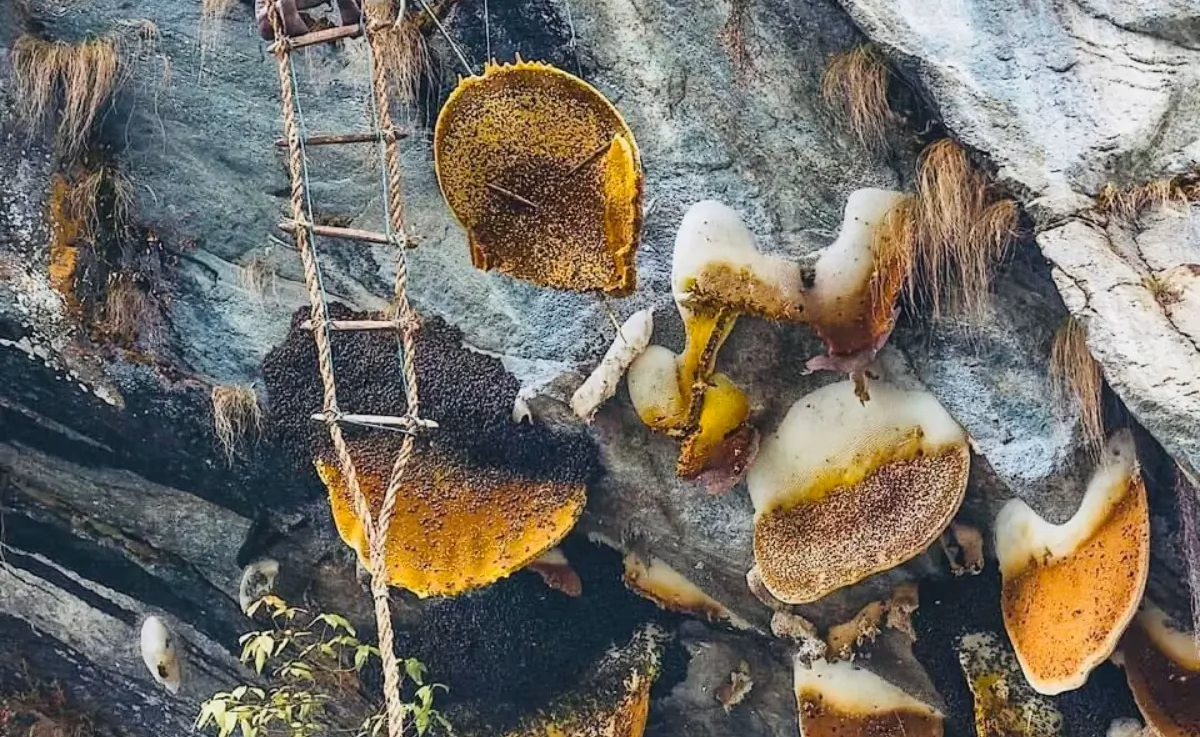
Honey Hunting Tour in Nepal is a unique cultural and adventure experience that takes travelers beyond the country’s famous trekking trails and into traditional Himalayan communities.
High on dramatic cliffs, experienced local honey hunters descend using traditional ropes and bamboo ladders to collect honey from wild Himalayan honeybee colonies. The sight of a hunter suspended against a giant cliff, surrounded by bees and Himalayan scenery, is one of the most extraordinary experiences visitors can witness in rural Nepal.
But a honey-hunting journey is much more than watching a traditional harvest. It can include Himalayan village walks, Gurung culture, local homestays, traditional food, forest hikes, mountain views, community interaction, and seasonal honey harvesting.
This complete guide covers everything you need to know about planning a Honey Hunting Tour in Nepal, including destinations, itinerary, best time, difficulty, accommodation, transportation, safety, packing, costs, and frequently asked questions.
What Is Honey Hunting in Nepal?
A Traditional Himalayan Practice
Honey hunting is the traditional collection of honey from wild bee colonies that naturally establish their nests in forests and on cliffs.
Unlike commercial beekeeping, the bees are not kept in artificial boxes. Local hunters travel to natural habitats where wild colonies are found.
In the Himalayan region, giant honeybees can build enormous colonies on steep, exposed cliffs.
Reaching these colonies requires exceptional skill and knowledge.
Traditional honey hunters use equipment such as:
- Ropes
- Bamboo ladders
- Baskets
- Cutting tools
- Smoke
- Locally made equipment
The harvest is generally a community activity, with several people working together.
The Himalayan Giant Honeybee
The Himalayan giant honeybee, Apis laboriosa, is closely associated with high-altitude honey hunting.
These bees are adapted to mountainous environments and often build their nests on large cliff faces.
The difficult location of the colonies is one of the reasons traditional honey hunting requires such specialized skills.
Honey Hunting, Culture and Local Communities
More Than Just Honey
Honey hunting represents an important connection between Himalayan communities and their natural environment.
The knowledge involved in harvesting wild honey can include understanding:
- Bee behavior
- Seasonal changes
- Flowering patterns
- Forest resources
- Mountain weather
- Cliff locations
- Traditional harvesting methods
This knowledge has traditionally been passed between generations.
Gurung Culture
Many honey-hunting experiences are connected with villages where Gurung communities live.
A trip can therefore provide travelers with opportunities to experience:
- Traditional villages
- Local architecture
- Gurung hospitality
- Traditional meals
- Village lifestyles
- Local customs
- Mountain landscapes
A homestay can make the journey particularly memorable because travelers have more time to interact with local families.
Supporting Local Communities
A responsible honey-hunting tour can provide economic opportunities for local residents through:
- Homestays
- Local guides
- Porters
- Transportation
- Food
- Community tourism services
- Local products
Choosing locally operated services helps ensure that tourism benefits the people who maintain these traditions.
Where Can You Experience Honey Hunting in Nepal?
Honey hunting is seasonal and is not available at every destination throughout the year.
The exact harvesting location can also change according to weather, bee activity, flowering conditions, and community decisions.
Bhujung, Lamjung
Bhujung is one of the destinations commonly associated with traditional honey hunting and Gurung culture.
The village provides a combination of:
- Traditional Himalayan culture
- Mountain scenery
- Village trails
- Forests
- Homestay experiences
- Seasonal honey hunting
For travelers seeking an authentic rural experience, Bhujung can be incorporated into a dedicated honey-hunting itinerary.
Ghalegaun
Ghalegaun is another well-known Gurung cultural destination in the Lamjung region.
It can be combined with village exploration, hiking, mountain views, and other community-based tourism experiences.
Honey hunting availability depends on the local season and community schedule.
Khudi and Surrounding Areas
The Khudi area provides access to rural mountain landscapes and traditional settlements.
Depending on local arrangements and seasonal conditions, honey hunting may form part of a wider Himalayan cultural experience.
Other Areas
Traditional honey harvesting is also practiced in various mountainous regions of Nepal.
Potential areas include parts of:
- Kaski
- Myagdi
- Dhading
- Lamjung
- Other Himalayan and mid-hill districts
Because harvesting is seasonal, travelers should confirm the current location and schedule before making a trip specifically for honey hunting.
How Traditional Honey Hunting Works
Watching a traditional honey harvest is the highlight of the journey.
Step 1: Locating the Colony
Experienced hunters identify suitable bee colonies on cliffs and assess whether the honey is ready for harvesting.
Their knowledge of local cliffs and bee behavior is extremely important.
Step 2: Preparing the Equipment
The team prepares ropes, ladders, baskets, smoke, and other equipment.
Preparation can take considerable time.
Step 3: Preparing Smoke
Traditional smoke is used to help manage the bees during harvesting.
Step 4: Descending the Cliff
The hunter carefully descends from the top of the cliff using ropes or traditional ladders.
This is the most dramatic part of the experience.
Step 5: Harvesting the Honeycomb
Once the hunter reaches the colony, sections of honeycomb are carefully removed.
The honeycomb is collected in a basket and brought back toward the ground.
Step 6: Processing
The harvested honeycomb can then be processed according to local practices.
Some honey may be consumed locally, while some may be sold to visitors or local markets.
Best Time for Honey Hunting in Nepal
Honey hunting is a seasonal activity.
Spring and autumn are commonly associated with traditional honey harvesting, with some tourism operators promoting periods around:
Spring: March–April
Autumn: October–November
However, travelers should not assume that honey hunting will take place on a specific date every year.
The actual timing can depend on:
- Weather
- Flowering patterns
- Bee activity
- Honey maturity
- Colony conditions
- Local community decisions
Important Travel Tip
If your primary reason for visiting is to see the honey harvest, confirm the current harvesting schedule before booking your transportation and accommodation.
Complete Honey Hunting Tour Itinerary
The following is an example of a 5-day Honey Hunting Tour in Nepal.
The itinerary can be adjusted depending on the selected village, road conditions, harvesting schedule, and traveler preferences.
Day 1: Kathmandu to Lamjung Region
Driving distance: Depending on the selected village
Accommodation: Hotel, lodge, or local homestay
Meals: Lunch and dinner
Leave Kathmandu in the morning and travel toward the Lamjung region.
The journey passes through Nepal’s changing landscapes, including rivers, agricultural areas, traditional settlements, and green hills.
Upon arrival, meet the local community and settle into your accommodation.
In the evening, enjoy a traditional Nepali or local village meal.
Overnight in the village.
Day 2: Village Exploration and Cultural Experience
Walking: Easy to moderate
Accommodation: Homestay
Meals: Breakfast, lunch, and dinner
After breakfast, explore the village with a local guide.
You can learn about:
- Local culture
- Traditional houses
- Agriculture
- Community life
- Honey-hunting traditions
Depending on the location and season, your guide may also explain where the honey-hunting activity will take place.
Spend the evening with the host family and experience local hospitality.
Overnight at a local homestay.
Day 3: Traditional Honey Hunting Experience
Walking: Moderate
Accommodation: Homestay
Meals: Breakfast, lunch, and dinner
Today is the main highlight of the journey.
After breakfast, walk with your local guide toward the honey-hunting area.
The local team prepares the traditional equipment and begins the harvesting process.
From a safe viewing area, observe:
- Preparation of equipment
- Traditional smoke preparation
- The hunter’s descent
- Wild Himalayan bees
- Honeycomb harvesting
- Community cooperation
Photography may be possible, subject to local permission and safety requirements.
After the harvest, return to the village.
Enjoy an evening meal and learn more about the traditional use of honey.
Overnight at the village homestay.
Day 4: Hiking and Himalayan Village Experience
Walking: Easy to moderate
Accommodation: Homestay or lodge
Meals: Breakfast, lunch, and dinner
After the main honey-hunting experience, enjoy a relaxed day exploring the surrounding area.
Depending on the destination, activities may include:
- Forest hiking
- Village walks
- Mountain viewpoints
- Cultural sites
- Photography
- Interaction with local families
This day can also be used as a flexible day if weather or local conditions cause the honey harvest to be delayed.
Overnight in the village.
Day 5: Return to Kathmandu
Meals: Breakfast and lunch
After breakfast, say goodbye to your hosts and begin the journey back to Kathmandu.
Arrive in Kathmandu later in the day, depending on road conditions and traffic.
End of the Honey Hunting Tour.
Optional Longer Itinerary
Travelers who have more time can extend the experience to 6–8 days.
Additional activities can include:
- Extra village stays
- Longer forest hikes
- Cultural experiences
- Nearby viewpoints
- Additional trekking
- Local festivals
- Community activities
- Other destinations in the Lamjung region
This option is particularly suitable for travelers who want a slower and more immersive rural Nepal experience.
Tour Duration
A Honey Hunting Tour can be arranged in different durations.
Short Experience
3–4 days
Suitable for travelers with limited time.
Standard Experience
5 days
Allows enough time for travel, village exploration, honey hunting, and cultural activities.
Extended Experience
6–8 days
Provides more time for hiking, homestays, cultural activities, and nearby destinations.
Tour Difficulty
The overall difficulty depends on the destination and itinerary.
Most travelers do not participate in the actual cliff climbing.
Instead, they hike to a suitable viewing area and observe experienced local hunters.
General difficulty: Moderate
You should be comfortable with:
- Walking on uneven trails
- Short or moderate uphill hikes
- Rural roads
- Variable weather
- Basic village accommodation
The actual cliff harvesting is performed by experienced local hunters.
Visitors should never attempt the cliff descent themselves.
Accommodation During the Tour
Accommodation depends on the destination.
Local Homestay
A homestay provides the most immersive cultural experience.
You may stay with a local family and enjoy home-cooked meals.
Local Lodge
Some destinations have small local lodges or guesthouses.
Facilities are generally simpler than hotels in Kathmandu or Pokhara.
Travelers should expect a rural environment rather than luxury accommodation.
Meals During the Honey Hunting Tour
Meals can vary depending on the village.
Typical Nepali meals may include:
- Dal bhat
- Rice
- Lentils
- Seasonal vegetables
- Pickles
- Local bread
- Tea
- Local snacks
Vegetarian meals are generally easy to arrange.
Travelers with food allergies or dietary restrictions should inform the tour operator in advance.
Transportation
Transportation generally involves a combination of:
Private vehicle or tourist vehicle + local road transportation + walking/hiking
The exact driving time depends on the selected honey-hunting destination.
Mountain road conditions can change due to weather, construction, and seasonal conditions, so travel times should be treated as approximate.
Honey Hunting Tour Cost in Nepal
The price of a Honey Hunting Tour depends on several factors.
Major cost factors include:
- Number of travelers
- Number of days
- Private or group transportation
- Accommodation type
- Meals
- Local guide
- Porter requirements
- Village/community arrangements
- Season
- Additional trekking or cultural activities
For this reason, a fixed price should be quoted according to the final itinerary rather than using one price for every traveler.
A typical package may include:
- Kathmandu transportation
- Local transportation
- Accommodation
- Meals
- Local guide
- Honey-hunting community arrangements
- Village activities
- Necessary trekking support
Always check exactly what is included before booking.
What Is Included in a Honey Hunting Tour?
A package can be customized, but common inclusions may include:
✓ Private or shared transportation
✓ Accommodation during the tour
✓ Breakfast, lunch, and dinner
✓ English-speaking local guide
✓ Village homestay
✓ Honey-hunting experience
✓ Local community arrangements
✓ Hiking and village walks
✓ Government or local fees where applicable
What Is Not Included?
Depending on the package, exclusions may include:
✗ International flights
✗ Nepal visa
✗ Travel insurance
✗ Personal expenses
✗ Alcoholic beverages
✗ Personal shopping
✗ Emergency evacuation
✗ Tips
✗ Additional activities not listed in the itinerary
Your tour operator should provide a clear list of inclusions and exclusions before booking.
Permits and Local Arrangements
The permits and local arrangements required depend on the specific destination and itinerary.
Because honey hunting is generally organized at the community level, local coordination can be particularly important.
Your tour operator should check the current requirements before departure and arrange any necessary permissions, entrance fees, or community contributions.
What to Pack for a Honey Hunting Tour
Pack light but prepare for changing mountain weather.
Essential items
- Comfortable hiking shoes
- Lightweight trousers
- T-shirts
- Warm jacket
- Rain jacket
- Hat
- Sunglasses
- Sunscreen
- Reusable water bottle
- Small backpack
- Headlamp
- Personal toiletries
- Personal medicines
- Basic first-aid items
- Camera
Optional items
- Trekking poles
- Binoculars
- Power bank
- Lightweight sleeping bag
- Waterproof backpack cover
Honey Hunting Safety
Safety is extremely important because traditional honey harvesting takes place on steep cliffs and around wild bees.
Visitors should:
- Stay at designated viewing areas
- Follow the local guide’s instructions
- Keep a safe distance from bee colonies
- Avoid approaching the harvesting area without permission
- Never attempt to climb the cliff
- Wear appropriate hiking footwear
- Carry sufficient water
- Be prepared for changing weather
The traditional hunters are highly experienced, but the activity itself remains inherently hazardous.
A responsible tour should prioritize the safety of both visitors and local hunters.
Is Himalayan Honey Safe to Eat?
Wild Himalayan honey is a natural product, but travelers should be aware that some honey collected from rhododendron-dominated areas may contain grayanotoxins.
This type of honey is often popularly called “mad honey.”
Depending on its concentration and the amount consumed, grayanotoxins can cause effects such as:
- Dizziness
- Nausea
- Vomiting
- Weakness
- Changes in blood pressure
- Changes in heart rate
The concentration can vary considerably.
Travelers should therefore avoid consuming large quantities of unknown wild honey.
If honey is offered during the tour, ask your guide or host about its source before tasting it.
Responsible Honey Hunting Tourism
A memorable tour should also help protect the communities and environment involved.
Respect the Community
Follow local customs and instructions.
Photograph Responsibly
Always ask permission before photographing local people, especially during cultural activities.
Do Not Disturb the Harvest
Observe from a safe location and allow hunters to work without interference.
Protect the Environment
Do not leave plastic, food packaging, or other waste in the village or forest.
Support Local People
Use local homestays, guides, restaurants, and community services where possible.
Who Is a Honey Hunting Tour Suitable For?
This experience can appeal to a wide variety of travelers.
Adventure Travelers
Those interested in unusual Himalayan experiences.
Cultural Travelers
Those who want to learn about traditional communities and local lifestyles.
Photographers
The combination of dramatic cliffs, hunters, forests, villages, and Himalayan scenery provides unique photography opportunities.
Nature Lovers
The journey takes travelers into natural environments where wild bees and forest ecosystems thrive.
Families
Families may enjoy the experience when appropriate viewing locations and easier walking routes are selected.
Responsible Travelers
Travelers interested in community-based tourism can combine cultural immersion with support for local village economies.
Best Honey Hunting Tour Itinerary From Kathmandu
For travelers starting in Kathmandu, a practical plan is:
Kathmandu → Lamjung Region → Gurung Village → Honey Hunting Area → Village Experience → Kathmandu
For a longer holiday, the honey-hunting experience can also be combined with other Nepal destinations.
Possible combinations include:
Kathmandu + Honey Hunting + Pokhara
or
Kathmandu + Honey Hunting + Annapurna Region
or
Kathmandu + Honey Hunting + Cultural Village Experience
The best combination depends on the season, available time, and road conditions.
Frequently Asked Questions About Honey Hunting in Nepal
How much does a Honey Hunting Tour in Nepal cost?
The cost depends on duration, group size, transportation, accommodation, guide services, and local community arrangements. A customized quotation is recommended.
How many days do I need?
A 4–5 day itinerary is suitable for a dedicated honey-hunting experience. Longer trips can include additional hiking and cultural activities.
What is the best month for honey hunting?
Spring and autumn are commonly associated with honey harvesting, but exact dates vary by destination and year.
Can I climb the honey-hunting cliff?
No. The cliff harvest should be performed only by experienced local hunters. Visitors should observe from a safe location.
Where is honey hunting most famous in Nepal?
Bhujung and other villages in the Lamjung region are among the destinations associated with traditional honey hunting.
Is honey hunting available every day?
No. It is a seasonal activity and depends on local harvesting schedules.
Can I stay with a local family?
Yes. Homestays can be arranged in some destinations and are an excellent way to experience local culture.
What type of food is available?
Traditional Nepali meals such as dal bhat, rice, lentils, vegetables, pickles, and tea are commonly available.
Do I need trekking experience?
Extensive trekking experience is generally not required for a basic itinerary, but travelers should be comfortable walking on uneven mountain trails.
Can honey hunting be combined with other Nepal tours?
Yes. It can be combined with cultural tours, village stays, Pokhara, trekking, and other Himalayan experiences.
Is the tour available during monsoon?
The main challenge during the monsoon season is weather and road conditions. Honey-hunting availability also depends on the local harvesting cycle.
Can I photograph the honey hunters?
Photography may be possible, but always ask permission and follow the instructions of your local guide and the community.
Why Book a Honey Hunting Tour With a Local Nepal Tour Operator?
A local operator can help coordinate the many parts of this experience.
These may include:
- Transportation
- Local guides
- Village accommodation
- Community communication
- Honey-hunting schedules
- Local permissions
- Meals
- Hiking routes
- Safety arrangements
Most importantly, local coordination helps ensure that travelers arrive at the right community at the right time.
Because honey hunting is seasonal, planning with people who understand the local conditions can make a significant difference.
Final Thoughts
A Honey Hunting Tour in Nepal offers an extraordinary combination of Himalayan adventure, traditional culture, nature, and community-based tourism.
It takes travelers away from the usual tourist routes and into villages where traditional knowledge remains connected to the forests, cliffs, bees, and mountains.
Watching experienced honey hunters work high above the ground is an unforgettable sight—but the deeper value of the journey is meeting the communities behind the tradition and understanding how their knowledge has developed over generations.
From a peaceful Gurung village in Lamjung to the dramatic cliffs where Himalayan giant honeybees build their colonies, the journey provides a completely different perspective on Nepal.
If you are looking for an experience that combines culture, adventure, nature, photography, hiking, and authentic village life, a Honey Hunting Tour can be an exceptional addition to your Nepal itinerary.
Ready to Experience Honey Hunting in Nepal?
Plan your journey around the traditional honey-hunting season and discover rural Himalayan Nepal with local guides and communities.
Contact us to customize your Honey Hunting Tour in Nepal.
We can help arrange the itinerary, transportation, accommodation, local guides, village experience, and seasonal honey-hunting activities according to your travel dates and group size.
Contact Nepal Tours Packages
Plan your private Bhutan holiday from Australia with a local Himalayan travel expert. We can assist with customized itineraries, Bhutan visa/e-Visa arrangements, accommodation, transportation, guides and combined Nepal–Bhutan holidays.
- Company: Nepal Tours Packages
- Email: nepalholidaytravels@gmail.com
- WhatsApp: +977 9851150010
- Destination expertise: Nepal, Bhutan & Tibet
- Service: Private and customized tours, holidays and trekking
- Head Office: Kathmandu, Nepal
Author — General
Kishor Nepal
Co-Founder & Holiday Expert – Nepal, Bhutan & Tibet
Kishor Nepal is a Himalayan travel professional with 25+ years of tourism experience, specializing in private and customized travel experiences across Nepal, Bhutan and Tibet. He works with international travellers to create personalized cultural, adventure, trekking and luxury holidays with local expertise and destination support.
