

Summary
Tea House Trek in Nepal: What Every Trekker Needs to Know
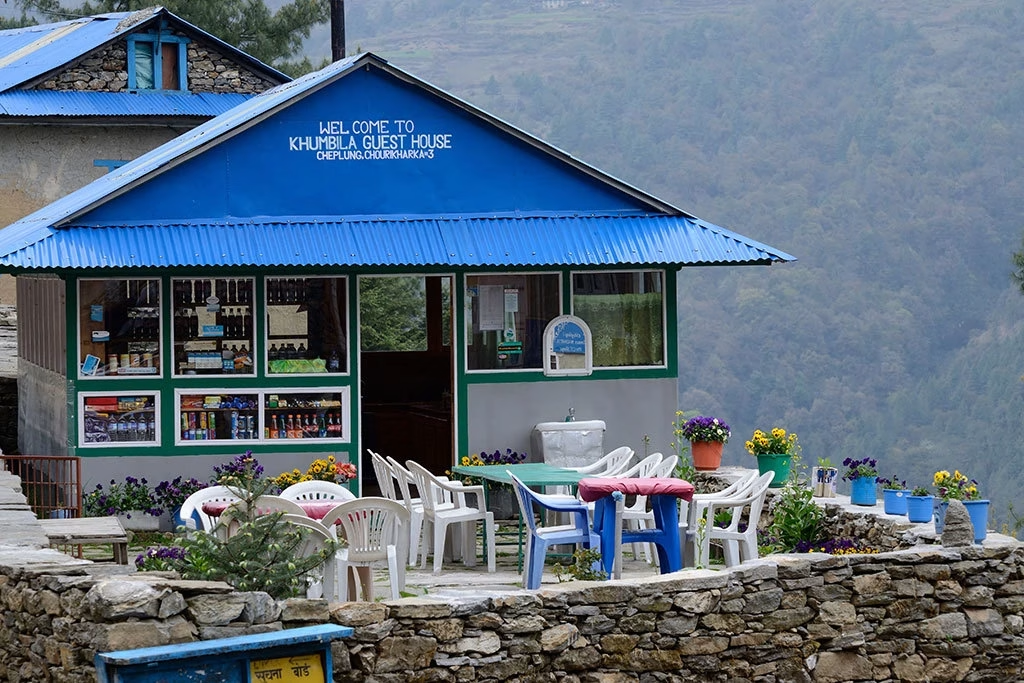
Planning a tea house trek in Nepal? Understanding how tea houses operate will help you avoid unexpected costs, stay comfortable at high altitude, and respect local customs. While tea houses provide a warm meal and a place to sleep, conditions become increasingly basic as you climb higher into the Himalayas.
🛏️ The Reality of Tea House Rooms
Tea house rooms are simple, unheated twin-share bedrooms with thin plywood walls that offer very little insulation. Once the dining room stove is extinguished in the evening, indoor temperatures often fall close to the freezing outdoor temperature. During winter and at higher elevations, temperatures inside the room can drop to -10°C to -20°C, making a high-quality sleeping bag and a pair of earplugs essential for a comfortable night's sleep.
🍛 Always Eat Where You Stay
Tea houses charge only a small amount for accommodation because they rely almost entirely on food sales to support their business. For this reason, trekkers are expected to have both dinner and breakfast at the lodge where they spend the night. Choosing to eat elsewhere may result in additional room charges. The most reliable meal is the traditional Dal Bhat, which is freshly prepared, nutritious, and usually comes with unlimited refills.
🔋 Electricity, Hot Showers and Wi-Fi
As you climb higher into the mountains, basic services become limited and are charged separately.
Charging phones or camera batteries usually costs USD 2–5 per device or hour.
Gas or solar-powered hot showers typically cost USD 3–7, although the water may only be lukewarm in colder months.
Shared Wi-Fi is available in many villages for USD 3–6, but speeds are often slow and unreliable, especially during busy trekking seasons.
Cold temperatures also drain battery life quickly, so keep phones, cameras, and power banks inside your sleeping bag overnight.
🔥 Tea House Dining Room Etiquette
The communal dining room is the heart of every tea house and often the only heated space, warmed by a stove burning wood or dried yak dung. It is considered disrespectful to hang wet clothes or sweaty socks over or directly beside the stove, as this creates unpleasant odors for other trekkers and presents a fire risk. Always use the drying areas recommended by your host.
💧 Safe Drinking Water
Many trekking regions discourage or prohibit single-use plastic bottles to help protect the fragile Himalayan environment. Most trekkers refill reusable bottles with boiled water purchased from tea houses or purify local water using UV sterilizers or purification tablets. If you carry a membrane water filter, keep it warm overnight because freezing temperatures can damage the filter element.
🚻 Bathroom Facilities at High Altitude
Above approximately 3,500 metres, most tea houses use traditional squat toilets with manual bucket-flushing systems because conventional plumbing freezes during winter. Toilet paper should never be flushed. Instead, place used paper and wet wipes in the waste bins provided to prevent blocked pipes and costly repairs.
💰 Carry Enough Cash
Tea house trekking routes operate almost entirely on cash. Beyond the main trekking hubs, ATMs are unavailable and card payments are rarely accepted. Carry enough Nepalese Rupees to cover meals, accommodation, charging, showers, Wi-Fi, snacks, and drinks. A daily budget of approximately USD 20–35 (or the equivalent in Nepalese Rupees) is generally sufficient for most trekkers.
When planning an iconic journey like the Everest Base Camp trek, the Annapurna Circuit, or a rugged walk through the Langtang Valley, you will quickly learn that “tea houses” are the lifeblood of the Himalayan trail network. This is precisely why a Tea House Trek in Nepal is so globally popular and uniquely convenient: it eliminates the logistical nightmare of hauling heavy tents, alpine stoves, and weeks of freeze-dried rations through some of the highest terrain on Earth.
But there is a massive, often shocking gap between what generic, glossy travel brochures tell you and the raw operational realities on the ground. When you are sitting at 4,000+ meters above sea level with a pounding altitude headache, small logistical surprises can ruin an otherwise life-changing experience.
To ensure you aren’t caught off guard, our team of veteran Himalayan trekking guides has compiled this definitive, brutally honest insider guide to Nepal’s tea houses. Whether you are booking a fixed itinerary or planning a customized adventure, this is what you actually need to know before stepping onto the trail.
1. The Room Reality: Temperature, Insulation, and Plywood Walls
Many first-time trekkers expect rustic alpine cabins or cozy wooden lodges with central heating. The reality of a standard Tea House Trek in Nepal is far more minimalist.
Structurally Bare, Drastically Cold
In the lower altitudes (below 2,500 meters), tea houses are often built of brick or stone. However, as you ascend higher into alpine territory, construction materials shift due to the sheer difficulty of transporting heavy goods. Most high-altitude tea house bedrooms are simple, unheated twin-sharing rooms constructed with thin plywood walls. They are essentially wooden boxes containing two narrow twin beds, thin foam mattresses, a pillow, and perhaps a small bedside table.
+---------------------------------------------------------+
|                  TYPICAL TEA HOUSE LAYOUT               |
|                                                         |
|  [Twin Bed]      ====== Thin Plywood ======    [Twin Bed] |
|                  |   (Nepal Tours Packages)               |
|  [Twin Bed]      ==========================    [Twin Bed] |
|                                                         |
|  ================== Cold Central Corridor ============= |
+---------------------------------------------------------+
The Thermal Truth
There is no insulation and no heating in the sleeping quarters. The ambient temperature inside your bedroom at night will match the outside temperature almost exactly. If it is -10 Degree Celsius outside in Gorak Shep or Thorong Phedi, it will be roughly -15 degree Celsius right next to your pillow.
💡 Insider Operational Tip: Because the interior walls are made of thin plywood, sound travels instantly across the entire lodge. You will hear your neighbors snoring, unpacking their trekking gear, coughing, and zipping up their sleeping bags. Always bring a high-quality pair of earplugs (or noise-canceling earbuds) if you are a light sleeper.
More importantly, never rely on the tea house blankets for warmth. While hosts will gladly provide a heavy quilted blanket (sirak) upon request, these are often not washed between guests during peak season due to freezing conditions. A certified – 10 degree Celsius comfort-rated sleeping bag is an absolute, non-negotiable necessity, even during the prime trekking months of October, November, April, and May.
2. The Unwritten “Food Commandment” of the Himalayas
To understand the economy of a Tea House Trek in Nepal, you must understand how these remote businesses survive. Local lodge owners operate on incredibly thin, almost non-existent profit margins for lodging. In many regions, a twin room costs as little as $3 to $7 USD per night. They do not make their living on accommodation; they survive entirely on the food and beverages you consume.
Because of this economic reality, there is a strict, unwritten, yet fiercely enforced rule on the trails: You must eat dinner and breakfast at the exact tea house where you are registered to sleep.
+-----------------------------------------------------------+
|              THE HIMALAYAN LODGING ECO-SYSTEM             |
|                                                           |
|   Low Room Cost ($3 - $7)  -->  Subsidized by Food Sales  |
|                                                           |
|   Violation: Eating Elsewhere = Heavy Room Surcharges    |
+-----------------------------------------------------------+
What Happens If You Break the Rule?
If you decide to sleep at Lodge A but wander down the trail to eat dinner at Lodge B because it has a nicer bakery or cheaper menu items, you disrupt this fragile ecosystem. Your host at Lodge A will find out immediately. When you check out, they will likely charge you a significantly higher premium for the room—often 3 to 4 times the standard room rate—or they may simply politely ask you to pack your bags and find alternative accommodation before nightfall.
Fueling Your Trek: The Power of Dal Bhat
When looking at a tea house menu, you will see an astonishing variety of options, from spring rolls and pizza to spaghetti and fried rice. However, cooking Western food at 4,500 meters without modern appliances is difficult, and the ingredients are carried up by porters or yaks over several days.
- Our Core Recommendation: Stick to the ultimate local favorite: Dal Bhat (a hearty platter of lentil soup, steamed rice, vegetable curry, and pickled greens).
- The Golden Trail Rule: Dal Bhat is freshly prepared daily in massive batches, making it the safest, most hygienic option on the mountain. Best of all, it is the only meal on the trail that operates on a free-refill policy (Dal Bhat Power, 24 Hour!). The kitchen staff will walk around refilling your rice, lentils, and curry until you are completely full. This is crucial for replacing the 3,000 to 5,000 calories your body burns daily while trekking uphill under a heavy load.
3. The Logistical Truth About Hot Showers, Electricity, and Wi-Fi
As your trail winds higher into major hub settlements like Namche Bazaar (3,440m) in the Everest region or Manang (3,540m) on the Annapurna Circuit, resource management becomes highly complex. Every single watt of electricity and drop of hot water requires immense logistical effort or specialized infrastructure.
Power, Devices, and Charging Surcharges
Most remote tea houses rely entirely on solar panels or small local micro-hydro schemes. When dozens of trekkers arrive at a lodge between 2:00 PM and 4:00 PM, a massive bottleneck occurs as everyone rushes to plug in their smartphones, cameras, and power banks.
- The Reality: High-altitude lodges do not offer free wall outlets in the bedrooms. Charging is controlled strictly at the main dining room counter. You will be charged a fee ranging from $2 to $5 USD per hour to charge a device, or a flat fee of $5 to $10 USD to fully charge a high-capacity power bank.
- Pro-Tip on Battery Preservation: The brutal mountain cold is the ultimate enemy of lithium-ion batteries. Even if your phone is turned completely off, a sub-zero bedroom will drain its battery from 100% to 0% overnight. Always keep your smartphone, camera batteries, and power banks inside your sleeping bag with you at night. Keeping them close to your core body heat preserves their life and saves you significant money on charging fees.
+-------------------------------------------------------------+
|               HIGH-ALTITUDE ADD-ON COST EXPECTATIONS        |
|                                                             |
|   * Device Charging:     $2 - $5 USD per hour / flat fees   |
|   * Hot Gas/Solar Shower: $3 - $7 USD per session            |
|   * Wi-Fi Access:        $3 - $6 USD (or prepaid card data)  |
|   * Boiled Drinking Water:$1 - $4 USD per liter             |
+-------------------------------------------------------------+
The Lukewarm Reality of Hot Showers
Showers in the mountains are a luxury. They are typically heated in one of two ways: via roof-mounted solar water heaters or by gas cylinders carried up the trails on the backs of porters. Expect to pay anywhere from $3 to $7 USD for a hot shower experience.
- The Reality: On cloudy, snowy, or foggy days, solar showers fail completely, turning lukewarm within minutes. Furthermore, gas-heated showers can suffer from fluctuating water pressure or frozen pipes.
- Operational Protocol: Always ask your guide or the lodge owner to physically check the water temperature before you pay your money and strip down in a freezing, unheated communal bathroom block. If you are trekking above 4,000 meters, our guides actually recommend avoiding showers altogether. The rapid drop in body temperature when exiting a shower in a freezing room significantly increases your vulnerability to catching a cold or worsening symptoms of Acute Mountain Sickness (AMS). Rely on wet wipes instead until you descend.
Navigating Mountain Wi-Fi and Connectivity
Do not expect to stream movies or upload massive raw video files smoothly at high altitudes. While networks like Everest Link or local SIM cards (Ncell and Nepal Telecom) provide surprising connectivity along major trails, the bandwidth is heavily shared. Tea houses sell Wi-Fi access via scratch cards or login codes for $3 to $6 USD for a set amount of data. During peak hours (5:00 PM to 8:00 PM), when hundreds of trekkers are online simultaneously, the connection can drop entirely. Treat connectivity as an emergency tool rather than a guaranteed comfort.
4. High-Altitude Etiquette: The Communal Dining Lounge
The central dining room is the undisputed heart and soul of trail culture during a Tea House Trek in Nepal. It is usually the only heated space in the entire building. The heat is generated by a central potbelly stove positioned right in the middle of the room. Depending on the altitude and availability of resources, this stove is fueled by wood at lower elevations, and by dried yak dung at higher elevations above the tree line.
                  +-------------------------------+
                  |      COMMUNAL LOUNGE ETIOUETTE |
                  |                               |
                  |     [Perimeter Benches]       |
                  |     (Hang/Dry Gear Here)      |
                  |              |                |
                  |              v                |
                  |      (  Potbelly Stove  )     |
                  |      ( DO NOT HANG SOCKS)     |
                  |                               |
                  +-------------------------------+
Because everyone gathers here to stay warm, play cards, and share trail stories, respecting communal boundaries is vital for maintaining a peaceful environment.
The Sacred Stove: No Sweaty Socks
When you finish a grueling 7-hour trekking day, your hiking socks, base layers, and insoles will likely be damp with sweat. It is incredibly tempting to walk up to the roaring central stove and drape your wet clothes directly over it or on the safety railing.
- The Taboo: This is considered highly disrespectful. It creates an unpleasant odor in a tightly packed, enclosed space where people are eating dinner, and it is a major fire hazard. Furthermore, in local Sherpa and Tamang cultures, the hearth or cooking fire holds deep cultural and spiritual significance.
- The Right Way: Utilize the perimeter benches, chair backs, or dedicated drying lines installed along the outer walls of the dining room. The ambient heat of the room will dry your gear slowly overnight without offending your companions or hosts.
The Golden Rule of Early Alpine Departures
In high-altitude base camps or pass crossings—such as Gorak Shep (5,164m) before climbing Kala Patthar, or Thorong Phedi (4,450m) before tackling the Thorong La Pass—departure times are exceptionally early.
- The Schedule: Our veteran guides routinely advise groups to wake up at 4:30 AM and clear out of the lodge by 6:00 AM or 7:00 AM at the very latest. Why? Because the high Himalayan passes experience extreme, dangerous gale-force winds that sweep through the terrain every single afternoon. Crossing early ensures safety.
- The Etiquette: If you are waking up before dawn, keep your voice to a whisper. Plywood walls amplify every sound. Pack your backpack the night before so you aren’t loudly ripping velcro or rustling plastic dry-bags at 4:00 AM while other weary trekkers are trying to sleep.
5. Water Sanitation: Managing Your Hydration Without Trashing the Environment
Staying properly hydrated is one of the most effective physiological defenses against Acute Mountain Sickness (AMS). At high altitudes, you need to consume between 3 to 4 liters of water per day to counteract the dry air and increased respiration rates. However, how you acquire that water matters immensely for both your wallet and the preservation of the trails.
+-------------------------------------------------------------+
|                  WATER PURIFICATION ANALYSIS                |
|                                                             |
|  [Plastic Bottles]  --> Costly ($1-$4) / Severe Pollution   |
|  [Boiled Water]     --> Safe / Costs money per liter        |
|  [Water Filtration] --> Chlorine/UV/Pump / Eco-Friendly     |
+-------------------------------------------------------------+
The Problem with Single-Use Plastic Bottles
In the past, trekkers relied heavily on purchasing commercially sealed plastic water bottles at tea houses. Today, this practice is heavily discouraged, and in some regions like the Khumbu (Everest) community, single-use plastic bottles are strictly banned by local authorities. The mountains have no recycling infrastructure; plastic bottles are either burned in open pits—releasing toxic fumes into pristine mountain air—or dumped into fragile ecosystems. Furthermore, as you climb higher, the price of a single bottle skyrockets from 100 NPR ($0.75 USD) to over 400 NPR ($3.00 USD) due to transportation costs.
Your Best Alternatives
To maintain high environmental standards and keep your budget intact, utilize these professional filtration and purification methods:
- Boiled Water from the Tea House: You can hand your reusable wide-mouth bottles (like a Nalgene) to the kitchen staff at night. They will fill them with boiling water for a small fee ($1 to $4 USD per liter). This serves a dual purpose: it provides perfectly safe drinking water for the next day, and it acts as an excellent hot-water bottle inside your sleeping bag to keep your feet warm during freezing nights.
- UV Purifiers (SteriPEN): A handheld UV light purifier destroys 99.9% of bacteria, viruses, and protozoa in clear tap water or stream water within 90 seconds. Always carry spare lithium batteries, as the cold can impair the device’s performance.
- Hollow Fiber Membrane Filters (Sawyer Squeeze / Katadyn BeFree): These lightweight filters are incredibly efficient at straining out micro-organisms. However, a major high-altitude operational warning: Do not let your water filter freeze. If water is left inside the microscopic fibers of the filter overnight in a sub-zero room, the water expands as it freezes, cracking the internal mechanisms and rendering the filter completely useless without showing any outward signs of damage. Keep your filter inside your pocket or sleeping bag at night.
- Chemical Purification Tablets (Aquatabs / Chlorine Dioxide): Cheap, ultra-lightweight, and foolproof. Drop a tablet into water collected from a tea house tap, wait 30 minutes, and it is completely safe to drink. The only downside is a slight chemical taste, which can easily be masked by adding electrolyte powders or hydration tablets.
6. Bathroom Realities and Sanitation Protocols
Let’s talk openly about a topic that many guidebooks avoid: the bathroom configuration on a Tea House Trek in Nepal. Sanitary standards vary wildly depending on your elevation and how far you venture off the main commercial highway.
+------------------------------------------------------------+
|                BATHROOM CONFIGURATIONS BY ALTITUDE         |
|                                                            |
|  Lower Altitudes:   Western Flush Toilets / Attached Baths |
|  Higher Altitudes:  Communal Squat Toilets / Cold Buckets   |
+------------------------------------------------------------+
Squat Toilets vs. Western Seats
In lower villages and modern premium lodges, you will frequently find Western-style sit-down flush toilets, and sometimes even attached bathrooms. However, once you cross the 3,500-meter threshold, communal bathrooms are the standard. These often feature traditional Asian squat toilets—a porcelain or concrete hole in the floor.
- The Flush Mechanism: Traditional plumbing pipes freeze solid at high altitudes. Therefore, mechanical flush systems are replaced by a large barrel of cold water sitting in the corner of the bathroom with a plastic scoop. After using the toilet, you manually pour a scoop or two of water down the basin to clear it.
The No-Flushing Toilet Paper Rule
Because tea house plumbing relies on gravity and simple septic pits, you must never, under any circumstances, flush toilet paper, wet wipes, or sanitary products down the toilet. Doing so causes immediate, catastrophic blockages that the lodge staff must clear manually by hand in freezing conditions.
- The System: Every tea house bathroom contains a small waste bin next to the toilet specifically designed for used paper products.
- Guide Pro-Tip: Always pack a few small, opaque ziplock bags and a roll of duct tape in your daypack. If you need to use the restroom while hiking between villages, or if a communal bin is full, you can safely and hygienically pack out your own waste until you reach a proper disposal point. Always carry a small bottle of high-alcohol hand sanitizer in your pocket at all times; running water at sink basins is frequently frozen solid in the mornings.
7. Understanding Hidden Trail Costs: Budgeting for the Extras
When travelers book a Tea House Trek in Nepal, they often assume their upfront tour package covers every single expense. While premium agencies cover accommodation and primary meals, the remote mountain economy dictates that small, personal luxuries are billed as individual add-ons. To avoid running out of physical currency at 4,000 meters, you must factor these hidden costs into your daily cash budget.
The mountain economy is strictly cash-only; there are no ATMs past major hubs like Ghandrung, Ghorepani/Poonhill, Namche or Manang, and credit card machines are highly unreliable due to satellite connectivity issues. We recommend carrying an additional $20 to $35 USD equivalent in Nepalese Rupees (NPR) per person, per day to cover the following standard expenses:
| Item / Service | Estimated Cost (NPR) | Estimated Cost (USD) | Frequency / Notes |
| Hot Shower | 400 – 1,000 NPR | $3.00 – $7.50 | Per shower; prices increase drastically with altitude. |
| Device Charging | 200 – 600 NPR | $1.50 – $4.50 | Per hour or per full charge of a large power bank. |
| Wi-Fi Access / Cards | 300 – 800 NPR | $2.25 – $6.00 | Per card or 24-hour access token; bandwidth varies. |
| Boiled Drinking Water | 100 – 400 NPR | $0.75 – $3.00 | Per 1-liter bottle refill; crucial for high-altitude hydration. |
| Toilet Paper Roll | 200 – 500 NPR | $1.50 – $3.75 | Purchased at tea house shops; much cheaper to buy in Kathmandu. |
| Snacks / Snickers Bars | 200 – 600 NPR | $1.50 – $4.50 | Luxury comfort foods carried up manually by mountain porters. |
8. Essential Packing Checklist for a Flawless Tea House Experience
To ensure complete self-reliance and comfort during your trek, weave these specific, tea-house-focused items into your master packing list. These go beyond standard hiking boots and jackets:
- A Four-Season Sleeping Bag (Rated to -10 Degree Celsius): Do not skip this. Your sleep quality directly affects your body’s ability to acclimatize and repair muscle tissue overnight.
- A Headlamp with Fresh Batteries: Power outages are frequent, and navigating an unfamiliar, pitch-black corridor to find a communal bathroom at 2:00 AM without a headlamp is highly hazardous.
- Multi-Plug Outlet Adapter or Travel Power Strip: Tea house dining rooms often have limited outlets. Bringing a small power strip allows you to share a paid outlet with fellow trekkers, maximizing your charging efficiency.
- Microfiber Quick-Dry Towel: Tea houses do not provide towels. A compact, antimicrobial microfiber towel dries quickly even in cool indoor air.
- Individually Wrapped Wet Wipes / Body Wipes: Your saving grace on days when it is simply too cold to take a physical shower.
- A Pack of Earplugs and an Eye Mask: The ultimate defense against paper-thin plywood walls and early-morning packers.
Final Thoughts from the Trail
A Tea House Trek in Nepal is an unforgettable immersion into the heart of the Himalayas. It offers a beautiful, community-centric way to experience the mountains, connecting you directly with the incredible hospitality of local families who have called these high valleys home for generations.
By arriving with realistic expectations, understanding the unique mountain economy, and practicing impeccable trail etiquette, you protect the fragile Himalayan environment, support local communities responsibly, and set yourself up for a safe, extraordinary adventure.
🗺️ Plan Your Next Himalayan Adventure With Us
Are you ready to experience the magic of the Himalayas firsthand without the logistical stress? Explore our fully guided, ethically run itineraries, backed by the exact local expertise featured in this guide:
- Everest Base Camp Trekking Packages – 12 Days
- Annapurna Circuit Trek
- Manaslu Circuit Trek
- Kanchanjunga Trek – 20 Days
Have questions about high-altitude gear or customizing a private trek? Leave a comment below or contact our expert trip planning team today!
