

Summary
Preparing for a Himalayan adventure? Explore our complete Nepal trekking equipment list, covering essential clothing, footwear, backpacks, sleeping bags, personal accessories and high-altitude gear for Everest, Annapurna, Manaslu, Langtang and Mustang treks.
Preparing the right trekking equipment is one of the most important parts of planning a Himalayan adventure in Nepal. Whether you are heading towards Everest Base Camp, exploring the Annapurna region, crossing Larke Pass on the Manaslu Circuit, discovering the Langtang Valley or trekking through the remote landscapes of Upper Mustang, having suitable clothing, footwear and personal equipment can make your journey more comfortable and enjoyable.
Nepal offers trekking experiences at different altitudes, from gentle walks through traditional villages to demanding high-altitude adventures above 5,000 metres. Your packing requirements will therefore depend on the trekking route, season, duration, accommodation, weather conditions and whether you are travelling with porter support.
At Nepal Tours Packages, we help travellers prepare for their Himalayan adventures with practical advice, route-specific equipment recommendations and locally organised trekking support.
With more than 25 years of experience in Nepal’s tourism industry, our team understands the different equipment requirements for popular trekking routes and remote Himalayan journeys.
This comprehensive Nepal trekking equipment list explains what to pack, what to wear, what can be rented in Kathmandu and which additional items you may need for high-altitude trekking.
If you are planning your next Himalayan adventure, explore our Trekking Packages in Nepal and start preparing for your journey.
1. Why Is the Right Trekking Equipment List for Nepal is Important?
Trekking in Nepal involves walking through changing landscapes and weather conditions. You may begin your journey in a warm valley, walk through forests during the day and reach a cold mountain village in the evening.
At higher elevations, temperatures can drop significantly, particularly during early mornings and overnight stays. Wind, rain, snow and changing trail conditions can also affect your comfort.
Having appropriate equipment helps you:
- Stay warm in cold mountain conditions.
- Protect yourself from rain, wind and snow.
- Walk comfortably on uneven mountain trails.
- Reduce the risk of blisters and foot injuries.
- Carry essential personal items during daily walks.
- Protect yourself from strong sunlight and UV exposure.
- Stay prepared for changing weather conditions.
- Maintain comfort during longer trekking days.
You do not need to purchase expensive mountaineering equipment for every trekking holiday. A standard teahouse trek requires a relatively simple packing list, while remote camping treks and technical climbing expeditions need additional specialist equipment.
The most important rule is to pack according to your actual itinerary rather than carrying unnecessary items.
2. Complete Trekking Equipment List for Nepal Checklist
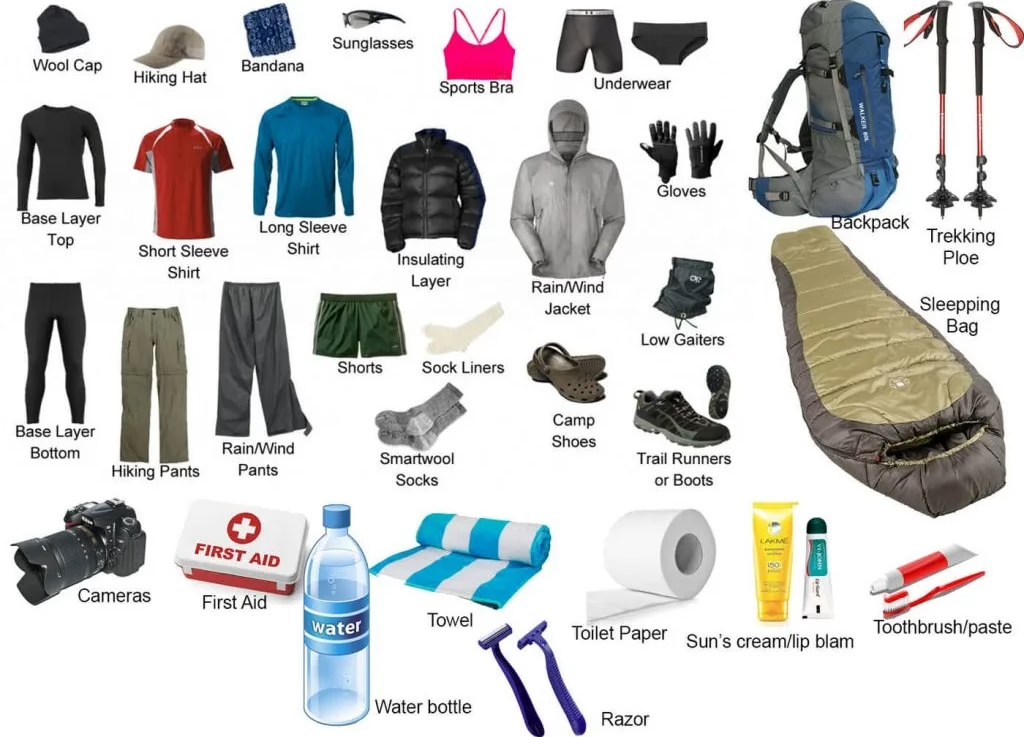
The following is a general equipment checklist for a typical teahouse trek in Nepal.
Clothing and layering
- Moisture-wicking base-layer tops.
- Thermal base-layer trousers.
- Trekking shirts.
- Lightweight fleece jacket.
- Insulating mid-layer.
- Warm down jacket.
- Waterproof and windproof outer jacket.
- Waterproof trekking trousers.
- Comfortable trekking trousers.
- Thermal underwear.
- Trekking socks.
- Warm wool socks.
- Lightweight inner gloves.
- Insulated outer gloves.
- Warm hat or beanie.
- Sun hat or cap.
- Neck warmer or buff.
- Comfortable evening clothing.
Footwear
- Well-fitted trekking boots.
- Lightweight shoes or sandals for evenings.
- Moisture-wicking trekking socks.
- Gaiters, where appropriate.
Bags and luggage
- 25–35 litre daypack.
- Duffel bag or trekking kit bag.
- Waterproof backpack cover.
- Small dry bags or packing organisers.
Sleeping equipment
- Sleeping bag suitable for the season and route.
- Sleeping bag liner, optional.
- Small travel pillow, optional.
Personal accessories
- UV-protection sunglasses.
- Sunscreen.
- Lip balm with sun protection.
- Water bottles or hydration system.
- Water purification tablets or filter.
- Headlamp.
- Spare batteries.
- Trekking poles.
- Quick-drying towel.
- Personal toiletries.
- Hand sanitiser.
- Wet wipes.
- Power bank.
- Charging cables.
- Universal travel adapter.
- Camera or mobile phone.
Personal health and safety
- Personal medication.
- Small first-aid kit.
- Blister treatment.
- Plasters and wound dressings.
- Antiseptic wipes.
- Oral rehydration salts.
- Personal medical information.
- Travel insurance documents.
Important documents
- Passport.
- Nepal visa information.
- Trekking permits, where applicable.
- Travel insurance policy.
- Emergency contact details.
- Flight tickets and hotel confirmations.
- Digital and physical copies of important documents.
3. Clothing for Trekking in Nepal – The Layering System
A proper layering system is essential for Himalayan trekking. Instead of relying on one very thick jacket, it is better to wear several layers that can be added or removed according to temperature and activity.
We recommend three main clothing layers.
A. Base Layer – Keeping Your Body Dry
The base layer is worn next to your skin. Its main purpose is to move moisture away from your body and help regulate temperature.
Recommended items:
- Two or three moisture-wicking trekking tops.
- Thermal base-layer trousers.
- Lightweight long-sleeved thermal shirt.
- Comfortable underwear.
Merino wool and synthetic fabrics are suitable choices. Avoid relying on ordinary cotton clothing for long trekking days because cotton retains moisture and takes longer to dry.
B. Insulating Layer – Keeping You Warm
The insulating layer helps retain body heat, particularly during cold mornings, evenings and high-altitude stops.
Recommended items:
- Lightweight fleece jacket.
- Warm mid-layer.
- Down jacket or suitable synthetic insulated jacket.
A good down jacket is particularly useful for higher-altitude treks such as Everest Base Camp, Manaslu Circuit and Annapurna Circuit.
C. Outer Layer – Protection from Wind and Rain
The outer layer protects you from wind, rain and snow.
Recommended items:
- Waterproof and breathable jacket.
- Waterproof trekking trousers.
- Wind-resistant outer layer.
Weather conditions in the Himalayas can change quickly. A waterproof jacket is useful even during the main trekking seasons.
Our recommendation: Choose lightweight, quick-drying and comfortable clothing. You should be able to adjust your layers easily as you move between warmer valleys and colder mountain environments.
4. Trekking Boots and Footwear
Your trekking boots are among the most important items on your packing list.
A comfortable pair of boots can make a major difference during long walking days, especially on rocky trails, uneven paths, steep descents and high-altitude routes.
What type of trekking boots should you choose?
For most multi-day teahouse treks, we recommend:
- Good-quality trekking boots with reliable grip.
- Comfortable fit with enough room for your toes.
- Suitable ankle support for uneven terrain.
- Water-resistant or waterproof construction.
- A sole with good traction.
- Comfortable cushioning for long walking days.
For high-altitude routes, choose boots appropriate for the expected terrain and weather.
Should you buy new trekking boots before travelling?
Yes, if your current boots are not suitable, but never begin a long Himalayan trek with completely new footwear.
Wear your boots during training walks before arriving in Nepal. This helps you identify uncomfortable areas and reduces the risk of blisters.
Other footwear
You may also want to carry:
- Lightweight sandals or shoes for lodge evenings.
- Comfortable footwear for rest days.
- Extra trekking socks.
- Gaiters for snow, mud or wet trail conditions.
5. Backpack and Luggage for Nepal Trekking
Choosing the correct backpack depends on whether you are carrying your own luggage or using porter support.
Daypack – 25 to 35 Litres
For most private teahouse treks with porter support, a daypack of approximately 25–35 litres is suitable.
Your daypack should carry the essential items you may need during the walking day.
Recommended contents:
- Water bottle.
- Snacks.
- Sunscreen.
- Sunglasses.
- Camera or phone.
- Rain jacket.
- Warm layer.
- Personal medication.
- Small first-aid items.
- Passport or necessary documents, when required.
Choose a daypack with comfortable shoulder straps, a supportive back system and a waist belt.
Duffel Bag – For Porter-Carried Luggage
If you are trekking with porter support, a suitable duffel bag is useful for carrying your main clothing and personal equipment.
Your porter generally carries the main luggage while you walk with your daypack.
The luggage allowance depends on the trekking package, porter arrangements and company policy. We will explain the applicable weight limit before departure.
For responsible trekking operations, luggage should be kept within the agreed weight allowance.
Waterproof Backpack Cover
Rain can occur unexpectedly, even during spring and autumn. A waterproof cover or dry bags help protect your clothing, electronics and other important items.
6. Sleeping Bag – Do You Need One for Nepal Trekking?
A sleeping bag is recommended for many Himalayan treks, particularly at higher elevations and during colder seasons.
Although many popular trekking routes offer teahouse accommodation, room temperatures can be very cold at night. Bedding quality and availability can vary between lodges.
A sleeping bag provides an additional layer of warmth and personal comfort.
Recommended sleeping bag temperature ratings
The following are general planning suggestions, not guaranteed minimum temperature requirements.
| Trekking conditions | Indicative sleeping bag rating |
|---|---|
| Lower-altitude and warm-season treks | 0°C to -5°C |
| Moderate-altitude spring and autumn treks | Around -5°C to -10°C |
| Cold high-altitude trekking | Around -10°C to -15°C |
| Winter or particularly cold conditions | A specialist winter-rated bag may be needed |
The appropriate rating depends on the season, altitude, individual cold tolerance and the insulation provided by lodge bedding.
Can you rent sleeping bags in Kathmandu?
Yes. Sleeping bags and other trekking equipment are available for rent in Kathmandu, particularly around Thamel.
However, check the condition, cleanliness, zip and temperature rating before renting.
If you already own a comfortable sleeping bag suitable for your trek, bringing it from home may be preferable.
7. Essential Personal Accessories
Small accessories are easy to overlook when preparing for a trekking holiday, but they can make daily walking more comfortable.
Sunglasses
Strong sunlight and UV exposure are common at higher elevations.
Choose good-quality sunglasses with UV protection. For snow-covered routes and very bright conditions, suitable high-altitude eyewear is particularly important.
Sunscreen and Lip Balm
Carry sunscreen with high SPF and lip balm with sun protection.
Apply sunscreen regularly, especially to exposed areas such as your face, ears, neck and hands.
Water Bottles and Hydration
Staying hydrated is important during trekking.
Carry reusable water bottles or a suitable hydration system. A water purification method, such as purification tablets or a filter, is also recommended.
Avoid depending entirely on buying bottled water along the trail.
Headlamp
A headlamp is useful for early morning departures, particularly when crossing high passes such as Larke Pass or Thorong La.
Choose a reliable headlamp and carry spare batteries or a rechargeable power source.
Trekking Poles
Trekking poles help improve balance and reduce the strain on your knees during steep ascents and descents.
They are particularly useful on routes with uneven terrain and high mountain passes.
Power Bank and Charging Accessories
Electricity and charging facilities are available in many trekking lodges, but availability can vary by location and season. Charging may also involve an additional fee.
Carry a suitable power bank and charging cables for your electronic devices.
8. Personal First-Aid Kit and Medical Supplies
A small personal medical kit is recommended for every trekker.
You do not need to carry a complete medical clinic, but having basic supplies can help manage minor problems during the journey.
Suggested items include:
- Personal prescription medication.
- Blister plasters.
- Regular adhesive plasters.
- Small sterile dressings.
- Antiseptic wipes.
- Oral rehydration salts.
- Basic pain relief, if suitable for you.
- Personal hygiene supplies.
- Any medication recommended by your doctor.
If you have an existing medical condition or take regular medication, consult your healthcare professional before undertaking a high-altitude trek.
Altitude sickness preparation
Altitude sickness can affect anyone, regardless of age or physical fitness.
You should understand the symptoms of acute mountain sickness, including headache, nausea, dizziness, loss of appetite and unusual tiredness.
More serious symptoms, such as difficulty breathing at rest, confusion or loss of coordination, require urgent medical attention and descent.
Your guide should be informed immediately if you feel unwell at altitude.
Do not continue ascending when you have symptoms that could indicate altitude illness.
9. Trekking Equipment for Different Regions of Nepal
Not every trekking route requires the same equipment. A short Poon Hill trek has different requirements from crossing Larke Pass or trekking through remote Dolpo.
Here is a practical comparison.
A. Everest Region Trekking Equipment
The Everest region includes popular routes such as Everest Base Camp, Gokyo Lakes and the Three High Passes.
Recommended equipment:
- Warm down jacket.
- Thermal base layers.
- Waterproof outer jacket and trousers.
- Comfortable trekking boots.
- Warm gloves and hat.
- Sleeping bag suitable for cold high-altitude nights.
- Sunglasses and sunscreen.
- Trekking poles.
- Headlamp.
- Water purification system.
The higher sections of the Everest region can become extremely cold, particularly during early morning and evening hours.
Explore our Everest Base Camp and other Everest trekking packages.
B. Annapurna Region Trekking Equipment
The Annapurna region offers a variety of trekking routes, including Poon Hill, Mardi Himal, Annapurna Base Camp and the Annapurna Circuit.
For shorter routes at lower elevations, you may need fewer heavy winter items.
For Annapurna Circuit and Thorong La Pass, additional cold-weather equipment is essential.
Recommended equipment:
- Layered trekking clothing.
- Waterproof jacket.
- Warm insulated jacket.
- Trekking boots.
- Warm socks and gloves.
- Suitable sleeping bag.
- Trekking poles.
- Headlamp.
- Sunglasses.
- Sunscreen.
Explore our Annapurna trekking packages.
C. Manaslu Circuit Trekking Equipment
The Manaslu Circuit includes the high-altitude crossing of Larke Pass at approximately 5,106 metres.
The crossing involves a long walking day, early departure and potentially cold, snowy or icy conditions.
Recommended equipment:
- Warm down jacket.
- Thermal base layers.
- Waterproof outer clothing.
- Warm gloves.
- Insulated hat.
- Good-quality trekking boots.
- Trekking poles.
- Suitable sleeping bag.
- Headlamp.
- Sunglasses with UV protection.
- Water bottles and purification method.
Depending on the weather and snow conditions, your guide may recommend microspikes or crampons.
Read our detailed Larke Pass Crossing – Manaslu Circuit Trek Guide before preparing for the pass.
You can also explore our Manaslu Circuit Trek – 17 Days.
D. Langtang Valley Trekking Equipment
The Langtang Valley Trek is a rewarding Himalayan adventure with beautiful mountain scenery and traditional Tamang villages.
Recommended equipment:
- Comfortable trekking boots.
- Layered clothing.
- Fleece jacket.
- Warm down jacket for colder conditions.
- Waterproof jacket.
- Trekking trousers.
- Sleeping bag suitable for the season.
- Sunglasses.
- Sunscreen.
- Daypack.
- Trekking poles.
Explore our Langtang Valley Trek.
E. Upper Mustang Trekking Equipment
Upper Mustang lies in the rain-shadow region of the Himalayas. Although rainfall is generally lower than in many other parts of Nepal during the monsoon, strong winds, dust and changing temperatures are common considerations.
Recommended equipment:
- Windproof jacket.
- Waterproof outer layer.
- Comfortable trekking boots.
- Sun hat.
- Sunglasses.
- Sunscreen.
- Lip balm.
- Warm layers for cold evenings.
- Dust protection, where needed.
- Reusable water bottles.
- Personal toiletries.
Explore our Upper Mustang Trek.
F. Nar Phu Valley Trekking Equipment
The Nar Phu Valley Trek is a remote and challenging adventure in the Annapurna region.
If your itinerary includes crossing Kang La Pass, you should prepare for high-altitude conditions and possible snow.
Recommended equipment:
- Warm down jacket.
- Thermal base layers.
- Waterproof clothing.
- Insulated gloves.
- Suitable trekking boots.
- Trekking poles.
- Warm sleeping bag.
- Headlamp.
- Sunglasses.
- Sunscreen.
- Microspikes or other traction equipment if recommended for current conditions.
Explore our Nar Phu Valley Trek.
10. Equipment for High-Altitude Passes and Technical Climbing
There is an important difference between ordinary trekking equipment and mountaineering equipment.
Most standard teahouse treks in Nepal do not require technical climbing equipment. However, high mountain passes, winter routes and climbing expeditions may require specialist gear.
High-altitude trekking passes
For routes such as:
- Larke Pass – Manaslu Circuit.
- Thorong La Pass – Annapurna Circuit.
- Kang La Pass – Nar Phu Valley.
- Cho La Pass – Everest region.
- Kongma La Pass – Everest region.
- Renjo La Pass – Everest region.
You may need additional equipment depending on snow, ice and weather conditions.
Possible additional items include:
- Microspikes.
- Crampons.
- Ice axe, if specifically required.
- Mountaineering-compatible boots.
- Gaiters.
- Additional insulation.
- Technical gloves.
These are not automatically required for every departure. Your guide should assess the conditions and advise you before the trek.
Peak climbing and mountaineering
Technical climbing expeditions require a separate equipment list.
Depending on the mountain, route and season, equipment may include:
- Climbing harness.
- Helmet.
- Mountaineering boots.
- Crampons.
- Ice axe.
- Climbing carabiners.
- Ascenders and descenders.
- Safety ropes.
- Technical clothing.
- Expedition sleeping bag.
- Specialist expedition equipment.
If you are planning a climbing adventure, read our Mountain Climbing Equipment List for additional guidance.
Our Island Peak Climbing and Ama Dablam Climbing programmes require equipment planning specific to the mountain and expedition.
11. Trekking Equipment for Different Seasons in Nepal
Your equipment requirements change according to the season.
Spring: March to May
Spring is one of the most popular trekking seasons in Nepal.
The weather is generally pleasant at lower and middle elevations, although higher areas can remain cold and may still have snow.
Recommended additional equipment:
- Lightweight down jacket.
- Waterproof jacket.
- Thermal layers.
- Warm gloves.
- Sun hat.
- Sunglasses.
- Sunscreen.
- Suitable sleeping bag for higher elevations.
Autumn: September to November
Autumn is traditionally one of the best seasons for many Nepal trekking routes.
The weather often becomes clearer after the monsoon, but temperatures can fall significantly at higher elevations.
Recommended additional equipment:
- Warm down jacket.
- Thermal base layers.
- Insulated gloves.
- Warm hat.
- Waterproof outer layer.
- Sleeping bag suitable for the route.
- Headlamp.
- Trekking poles.
Winter: December to February
Winter trekking requires additional preparation, especially at higher elevations.
Recommended additional equipment:
- Warm insulated jacket.
- Heavy thermal layers.
- Insulated gloves.
- Warm hat and neck warmer.
- Winter-appropriate trekking boots.
- Warm sleeping bag.
- Gaiters.
- Additional traction equipment when conditions require it.
High mountain passes may become difficult or unsafe due to snow and ice. Route suitability must be checked before departure.
Monsoon: June to August
Monsoon trekking involves rain, muddy trails, leeches and possible landslides in many regions.
Recommended additional equipment:
- Waterproof jacket.
- Waterproof trousers.
- Backpack rain cover.
- Waterproof dry bags.
- Quick-drying clothing.
- Extra socks.
- Comfortable waterproof footwear.
- Leech protection where appropriate.
For monsoon trekking, destinations such as Upper Mustang and selected rain-shadow areas may be more suitable, depending on access and weather conditions.
12. What Trekking Equipment Can You Rent in Kathmandu?
You do not need to buy every item before arriving in Nepal.
Kathmandu, particularly the Thamel area, has many shops offering trekking equipment for rent and purchase.
Commonly available rental items include:
- Down jackets.
- Sleeping bags.
- Trekking poles.
- Duffel bags.
- Some cold-weather clothing.
- Selected trekking accessories.
The availability, quality and condition of equipment vary between shops.
What should you bring from home?
We recommend bringing the personal equipment that needs to fit properly or is difficult to replace during your trip.
These include:
- Trekking boots.
- Personal base layers.
- Trekking socks.
- Comfortable underwear.
- Prescription medication.
- Personal sunglasses.
- Personal toiletries.
What can you rent in Kathmandu?
Depending on availability, you may rent:
- Down jackets.
- Sleeping bags.
- Trekking poles.
- Duffel bags.
- Selected accessories.
Before renting, check the condition, cleanliness, zips and suitability of each item for your trekking route.
Our Kathmandu team can provide practical advice about the equipment you need and what can be arranged locally.
13. How Much Should Your Trekking Backpack Weigh?
Packing light makes a significant difference during a multi-day trek.
You should carry only the items you genuinely need.
For a typical teahouse trek with porter support, a daypack of approximately 25–35 litres is usually sufficient for daily essentials.
Your main luggage can be carried by a porter within the agreed weight allowance.
Suggested daypack contents
- Water.
- Snacks.
- Sunglasses.
- Sunscreen.
- Camera or phone.
- Rain jacket.
- Warm layer.
- Personal medication.
- Headlamp.
- Important documents when needed.
Suggested main luggage contents
- Clothing.
- Sleeping bag.
- Personal toiletries.
- Spare footwear.
- Additional personal accessories.
Porter weight limits and luggage arrangements depend on the trekking package and group size. We will explain the applicable allowance before departure.
Please remember that porters are also working in high-altitude conditions. Responsible luggage planning is important for their safety and well-being.
14. Common Trekking Equipment Mistakes to Avoid
Even experienced travellers sometimes pack unnecessary or unsuitable equipment.
Here are some common mistakes to avoid when preparing for Nepal.
1. Bringing brand-new trekking boots
New boots can cause blisters and discomfort. Break them in before the trek.
2. Carrying too many clothes
Choose lightweight clothing that can be layered. You do not need a separate outfit for every trekking day.
3. Ignoring cold evenings
Even when daytime temperatures are comfortable, mountain nights can be extremely cold.
4. Using cotton clothing as your main trekking layer
Cotton retains moisture and dries slowly. Synthetic and merino wool fabrics are generally more suitable.
5. Forgetting rain protection
Weather can change quickly. Always carry a waterproof jacket and protect your main luggage.
6. Not carrying a headlamp
Early morning departures and dark lodge surroundings make a headlamp very useful.
7. Packing unsuitable sleeping equipment
Choose a sleeping bag according to the actual season and altitude of your trek.
8. Buying technical equipment unnecessarily
Do not purchase crampons, ice axes or climbing harnesses unless your particular route and conditions require them.
9. Carrying too much weight
Unnecessary luggage makes trekking more difficult and places additional pressure on porter arrangements.
10. Ignoring travel insurance
Ensure your insurance covers the altitude and activities included in your itinerary, including emergency helicopter evacuation where applicable.
15. Responsible Trekking – Pack with Care for the Himalayas
Responsible trekking is an important part of protecting Nepal’s mountain environment and supporting local communities.
We encourage all trekkers to follow simple practices:
- Carry reusable water bottles.
- Reduce single-use plastic.
- Take your rubbish back where appropriate.
- Use designated trails.
- Respect local customs and traditions.
- Avoid disturbing wildlife.
- Support local teahouses and communities.
- Use water responsibly.
- Respect the work and welfare of porters and guides.
A responsible trekking experience helps preserve the natural and cultural heritage that makes Nepal such a special destination.
16. Final Trekking Equipment Checklist Before Leaving Home
Before travelling to Nepal, use this final checklist to make sure you have prepared the essential items.
Clothing
- Base-layer tops.
- Thermal trousers.
- Trekking shirts.
- Fleece jacket.
- Down jacket.
- Waterproof jacket.
- Waterproof trousers.
- Trekking trousers.
- Trekking socks.
- Warm gloves.
- Warm hat.
- Sun hat.
- Neck warmer.
Footwear
- Broken-in trekking boots.
- Evening shoes or sandals.
- Spare trekking socks.
- Gaiters, if required.
Bags and sleeping equipment
- Daypack.
- Duffel bag, if required.
- Backpack rain cover.
- Dry bags.
- Sleeping bag, if required.
Personal accessories
- Sunglasses.
- Sunscreen.
- Lip balm.
- Water bottles.
- Water purification method.
- Headlamp.
- Trekking poles.
- Power bank.
- Charging cables.
- Camera or phone.
Health and documents
- Personal medication.
- First-aid kit.
- Blister treatment.
- Travel insurance.
- Passport.
- Visa information.
- Trekking permits, where applicable.
- Emergency contacts.
Once you have prepared your equipment, check your trekking itinerary and confirm whether any additional items are required for your chosen route.
Frequently Asked Questions About Trekking Equipment in Nepal
1. What equipment do I need for trekking in Nepal?
For most standard teahouse treks, you need comfortable trekking boots, layered clothing, a waterproof jacket, a warm down jacket, trekking trousers, a daypack, sunglasses, sunscreen, water bottles, a headlamp and personal medication. Higher-altitude routes may require a suitable sleeping bag and additional cold-weather equipment.
2. What is the most important trekking equipment for Nepal?
Good-quality, well-fitted trekking boots are among the most important items. A suitable layering system, waterproof protection and warm clothing are also essential, particularly for high-altitude trekking.
3. Do I need a sleeping bag for trekking in Nepal?
A sleeping bag is recommended for many high-altitude treks because lodge rooms can be cold, particularly during spring, autumn and winter. The required temperature rating depends on your route and season.
4. Can I rent trekking equipment in Kathmandu?
Yes. Down jackets, sleeping bags, trekking poles, duffel bags and selected accessories are available for rent in Kathmandu, especially around Thamel. Check the quality and suitability of rented equipment before starting your trek.
5. What size backpack should I carry for a Nepal trek?
For most teahouse treks with porter support, a daypack of approximately 25–35 litres is suitable. It should hold your water, snacks, rain protection, camera, personal medication and other daily essentials.
6. Do I need trekking poles for Nepal?
Trekking poles are strongly recommended for many Himalayan routes. They can help with balance and reduce strain on your knees during steep descents and uneven terrain.
7. Do I need crampons for the Everest Base Camp Trek?
Crampons are not normally required for the standard Everest Base Camp trekking route. However, snow and ice conditions on particular routes and passes can vary. Your guide should advise whether microspikes or other traction equipment are necessary.
8. What equipment do I need for crossing Larke Pass?
For Larke Pass on the Manaslu Circuit, you should carry warm insulated clothing, a suitable sleeping bag, waterproof outer layers, trekking boots, gloves, a headlamp, sunglasses and trekking poles. Depending on snow and ice conditions, additional traction equipment may be recommended.
9. What is the best clothing for trekking in Nepal?
A three-layer clothing system is recommended: a moisture-wicking base layer, an insulating fleece or down layer, and a waterproof outer layer. This allows you to adjust your clothing as temperatures and weather conditions change.
10. Can I wear running shoes for trekking in Nepal?
Running shoes may be suitable for some short and easy walks, but proper trekking footwear is generally recommended for multi-day Himalayan treks. Rocky trails, steep descents, uneven surfaces and changing weather require suitable grip and support.
11. How cold does it get while trekking in Nepal?
Temperatures vary greatly according to altitude, season and weather. Lower valleys can be relatively warm during the day, while high-altitude villages and mountain passes can become very cold, particularly at night and before sunrise.
12. How much luggage can a porter carry?
The permitted luggage allowance depends on the trekking company, package and porter arrangements. At Nepal Tours Packages, we explain the applicable weight allowance before departure and organise porter support according to the group size.
13. Do I need special equipment for Upper Mustang?
Upper Mustang generally requires standard trekking equipment, including comfortable boots, layered clothing, sun protection and wind-resistant outerwear. Strong winds and dusty conditions make sunglasses and face protection useful.
14. Do I need technical climbing equipment for Nepal trekking?
Most standard teahouse treks do not require technical climbing equipment. However, peak climbing and mountaineering expeditions require specialist gear such as helmets, harnesses, crampons and ice axes, depending on the mountain and route.
15. Should I buy all my trekking equipment before travelling to Nepal?
No. Many items are available for purchase or rent in Kathmandu. However, it is advisable to bring your own well-fitted trekking boots, personal clothing, prescription medication and other essential personal items.
16. When should I start preparing my trekking equipment?
Begin planning several weeks before your trip, particularly if you need to purchase boots or clothing. For a challenging high-altitude trek, start physical preparation around 8–12 weeks before departure and confirm the route-specific equipment list with your trekking company.
Plan Your Nepal Trek with Local Experts
Having the right trekking equipment is an important step towards enjoying your Himalayan adventure. However, suitable equipment is only one part of successful trekking. Choosing the right route, allowing sufficient acclimatisation, selecting the appropriate season and arranging reliable local support are equally important.
At Nepal Tours Packages, we specialise in private, tailor-made trekking holidays throughout Nepal. Whether you are planning the classic Everest Base Camp Trek, the Annapurna Circuit, the Manaslu Circuit with Larke Pass, the beautiful Langtang Valley or a remote adventure in Mustang, our team can help you prepare.
We provide practical equipment advice, experienced local trekking guides, porter arrangements, permits, accommodation and transport coordination according to your selected itinerary.
Planning a trek in Nepal in 2027? Contact us today for a personalised itinerary and trekking quotation.
Explore our Nepal Trekking Packages and discover the right Himalayan adventure for your travel plans.
Contact Nepal Tours Packages
- Website: www.nepaltourspackages.com
- Email: nepalholidaytravels@gmail.com
- WhatsApp: +977 9851150010
- Office: Thamel, Kathmandu, Nepal
Kishor Nepal
Co-Founder & Holiday Expert – Nepal, Bhutan & Tibet
Nepal Tours Packages
Local Travel Expert with 25+ Years of Tourism Experience
About the Author
Kishor Nepal – Co-Founder & Holiday Expert, Nepal Tours Packages
Kishor Nepal is a Nepal-based travel professional with more than 25 years of experience in the tourism industry. As a local travel expert, he specialises in private tailor-made holidays, Himalayan trekking, cultural journeys, peak climbing and multi-country adventures across Nepal, Bhutan and Tibet.
Through his experience working with international travellers and local trekking teams, Kishor shares practical insights into Himalayan trekking routes, equipment preparation, mountain conditions, cultural experiences and responsible travel. His focus is on helping travellers plan well-organised, personalised journeys supported by local knowledge and professional service.
Discover more about Nepal Tours Packages.
