

Summary
Discover everything about crossing Larke Pass on the Manaslu Circuit Trek. Explore the route from Samagaon to Dharamsala, crossing-day challenges, acclimatisation, best seasons and alternative Himalayan treks with local experts.
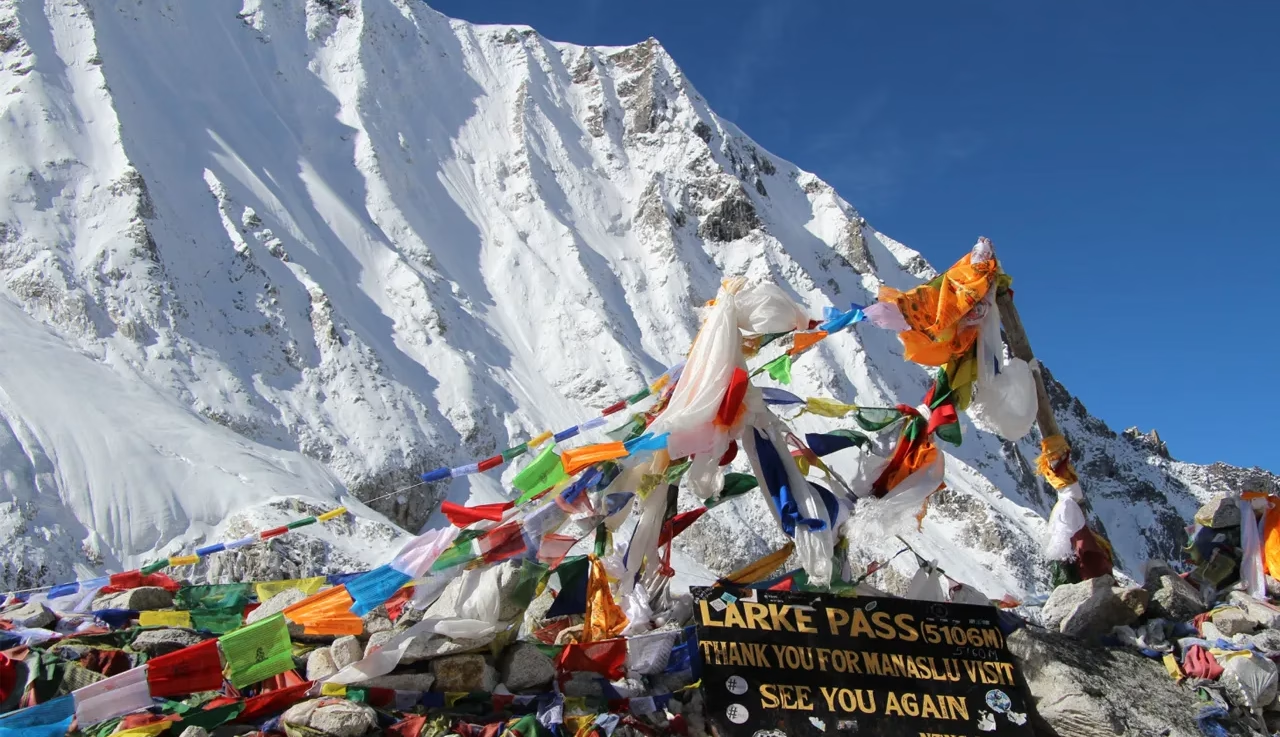
Larke Pass Crossing on the Manaslu Circuit Trek is the defining highlight of the Manaslu Circuit Trek and one of the most rewarding high-altitude trekking experiences in Nepal. Located in the remote Manaslu region of the Nepalese Himalayas, this spectacular mountain pass takes trekkers to an elevation of approximately 5,106 metres, offering breathtaking views of snow-covered peaks, glaciers and dramatic alpine landscapes.
The Manaslu Circuit is much more than a high mountain pass. It is a journey through traditional Himalayan villages, ancient Buddhist monasteries, deep river valleys, suspension bridges, forests and remote settlements influenced by Tibetan culture. The trail gradually climbs through the Budhi Gandaki Valley towards Samagaon, Samdo and Dharamsala before reaching the challenging crossing of Larke Pass.
For trekkers seeking a less-crowded alternative to the popular Everest Base Camp and Annapurna routes, the Manaslu Circuit offers an exceptional combination of adventure, cultural discovery and wilderness.
At Nepal Tours Packages, we organise private, tailor-made Manaslu trekking holidays with experienced local guides, carefully planned acclimatisation and dependable logistical support. With more than 25 years of experience in Nepal’s tourism industry, our team can help you prepare for this remarkable Himalayan journey.
Explore our Manaslu Circuit Trek – 17 Days and start planning your next adventure.
Larke Pass (Larkya La Pass) – Quick Facts
| Trekking information | Details |
|---|---|
| Destination | Manaslu Circuit, Nepal |
| Mountain pass | Larke Pass / Larkya La |
| Elevation | Approximately 5,106 metres |
| Trek duration | Around 14–18 days |
| Published package | 17 days |
| Difficulty | Moderate to challenging |
| Trekking style | Teahouse trekking |
| Starting point | Machha Khola / Soti Khola access |
| Highest overnight stop | Dharamsala, approximately 4,460m |
| Pass crossing | Dharamsala to Bimthang |
| Typical crossing time | Around 8–10 hours, sometimes longer |
| Best seasons | Spring and autumn |
| Main permits | Manaslu RAP, MCAP and ACAP |
| Guide | Licensed trekking guide required under applicable restricted-area rules |
Note: Elevation figures vary between published maps and trekking itineraries. Some itineraries quote 5,160 metres for Larke Pass. Your guide will brief you on the current route information before the crossing.
Where Is Larke Pass Located?
Larke Pass lies in the Manaslu region of north-central Nepal, connecting the Budhi Gandaki Valley on the eastern side with the Dudh Khola and Marsyangdi Valley towards the Annapurna region.
The pass forms the highest point of the Manaslu Circuit Trek, which circles Mount Manaslu (8,163m), the world’s eighth-highest mountain.
The trekking route begins in the lower Budhi Gandaki Valley and gradually ascends through traditional settlements such as Machha Khola, Jagat, Deng, Namrung, Samagaon and Samdo. From Dharamsala, also known as Larkya Phedi, trekkers make an early morning start to cross the high mountain pass before descending towards Bimthang.
The landscapes change dramatically along the route. Lower sections feature subtropical vegetation, waterfalls, suspension bridges and terraced farmland. Higher up, the scenery becomes increasingly alpine, with glacial valleys, snow-covered mountains, yak pastures and traditional stone settlements.
The Manaslu Circuit is also an important cultural journey through the Nubri Valley, where Tibetan Buddhist traditions remain deeply connected to everyday village life.
Why Is Crossing Larke Pass the Highlight of the Manaslu Circuit Trek?
The crossing of Larke Pass is often considered the most challenging and memorable day of the entire Manaslu Circuit.
After days of walking through remote Himalayan villages and gradually gaining altitude, trekkers reach Dharamsala, the final overnight stop before the pass. The following morning usually begins very early, often before sunrise, to allow sufficient time for the long ascent and descent.
The experience is demanding, but the scenery makes the effort worthwhile.
1. Spectacular Himalayan Mountain Views
From the upper sections of Larke Pass, trekkers can enjoy magnificent views of the surrounding Himalayan peaks, including Himlung Himal, Cheo Himal, Kang Guru and Annapurna II.
The mountain panorama is particularly impressive on clear mornings, when the first sunlight illuminates the surrounding snow-covered peaks.
2. An Incredible High-Altitude Experience
Reaching an elevation above 5,000 metres is a significant achievement for any trekker. The pass is marked by prayer flags, creating a memorable setting for photographs and a moment to appreciate the scale of the Himalayas.
3. A Dramatic Change in Landscape
The eastern approach follows the rugged upper Budhi Gandaki Valley, while the western descent towards Bimthang reveals a different mountain environment with glaciers, open alpine terrain and beautiful meadows.
4. A Rewarding Sense of Achievement
Crossing Larke Pass requires endurance, patience, proper acclimatisation and favourable weather. Reaching the top after several days of trekking is a memorable personal achievement.
However, reaching the pass should never become more important than safety. The decision to cross must always depend on weather, snow conditions, the group’s health and the judgement of the trekking guide.
Manaslu Circuit Trek Route – From Machha Khola to Larke Pass
The traditional Manaslu Circuit Trek follows the Budhi Gandaki River before gradually climbing into the high Himalayan region.
Below is an overview of the main trekking route.
1. Machha Khola – The Starting Point
Machha Khola is the traditional starting point for the Manaslu Circuit Trek. The drive from Kathmandu takes you through rural settlements, green hills, river valleys and mountain roads.
From Machha Khola, the trekking trail follows the Budhi Gandaki River through forests, suspension bridges, waterfalls and small settlements.
2. Jagat – Entering the Manaslu Restricted Region
Jagat is an important settlement and permit checkpoint along the route. The village features traditional stone houses and a welcoming Himalayan atmosphere.
Beyond Jagat, the trail continues through narrow river valleys and forested landscapes towards Deng.
3. Deng and Namrung – Entering the Tibetan-Inspired Highlands
As trekkers move towards Deng and Namrung, the landscape gradually changes.
The route passes through traditional settlements, mani walls, prayer flags and Buddhist cultural sites. Mountain views become increasingly impressive as the trail climbs towards the Nubri Valley.
Namrung is an important village where trekkers can experience the distinctive culture and traditions of the higher Manaslu region.
4. Samagaon – The Heart of the Manaslu Region
Samagaon is one of the most beautiful settlements on the Manaslu Circuit.
Situated beneath the impressive northern slopes of Mount Manaslu, the village offers magnificent mountain scenery and a glimpse into traditional Himalayan life.
It is also an important acclimatisation stop before continuing towards higher elevations.
During the rest day, trekkers can consider optional excursions such as:
- Birendra Lake.
- Manaslu Base Camp, subject to fitness, conditions and an appropriate acclimatisation plan.
- Pungyen Gompa.
- Exploring the traditional village and surrounding viewpoints.
The acclimatisation day should not be treated as a compulsory strenuous hiking day. The guide should recommend an appropriate activity based on how the group is adjusting to altitude.
5. Samdo – A Traditional Village Near the Tibetan Border
Samdo is another culturally significant settlement on the Manaslu Circuit.
Located at approximately 3,860 metres, it offers spectacular mountain scenery and a peaceful Himalayan atmosphere. The village is an important stopping point before the final approach to Dharamsala.
An additional acclimatisation walk or rest day may be appropriate depending on the itinerary and the group’s condition.
6. Dharamsala (Larkya Phedi) – Preparing for the Pass
Dharamsala, also called Larkya Phedi, is the last major overnight stop before crossing Larke Pass.
Situated at approximately 4,460 metres, it provides basic teahouse accommodation for trekkers preparing for the high-altitude crossing.
The afternoon should be used for rest, hydration, checking equipment and receiving a briefing from the guide.
Weather conditions can change quickly at this altitude. Your guide should assess the forecast, snow conditions and the group’s physical condition before confirming the crossing.
Crossing Larke Pass – What to Expect on the Big Day
The crossing of Larke Pass is the most demanding day of the Manaslu Circuit Trek.
Trekkers generally leave Dharamsala very early in the morning, often around 3:00–4:00 AM, depending on weather, daylight and the group’s walking pace.
The early departure allows sufficient time to reach the pass and complete the long descent to Bimthang.
The Ascent to Larke Pass
The initial trail gradually climbs through rocky terrain and glacial landscapes. As the altitude increases, walking becomes more demanding because of the reduced oxygen available at high elevations.
Trekkers should maintain a steady pace, take short breaks when necessary and follow the guide’s instructions.
There is no advantage in rushing. A consistent pace is more important than speed.
Reaching the Summit of Larke Pass
After several hours of walking, trekkers reach the high point of the Manaslu Circuit.
The summit area is marked by prayer flags and offers impressive views of the surrounding Himalayan mountains.
On a clear day, the scenery is spectacular. Trekkers can take photographs and enjoy the achievement, but should avoid spending too much time exposed to cold winds and low temperatures.
The Descent Towards Bimthang
The descent from Larke Pass towards Bimthang is an important part of the crossing.
Depending on the season, the trail may include snow, ice, loose stones and uneven glacial terrain. Some sections can be steep and physically demanding.
Trekking poles are particularly useful, and appropriate footwear is essential. If snow or ice conditions require it, the guide may recommend additional traction equipment.
Bimthang, at approximately 3,720 metres, is the first major overnight destination after crossing the pass.
After a long day at high altitude, reaching Bimthang is a rewarding experience.
Important: Crossing time can vary considerably. Fresh snowfall, strong winds, icy conditions, fitness and group pace may make the day longer than expected. A flexible itinerary is essential.
How Difficult Is Larke Pass Crossing?
Larke Pass is considered a moderately challenging to challenging high-altitude trekking experience.
It is generally a non-technical trekking pass in normal seasonal conditions, meaning that mountaineering climbing skills are not ordinarily required. However, the altitude, cold temperatures, long walking day and demanding descent make it a serious undertaking.
The main challenges include:
- Walking for approximately 8–10 hours or longer on crossing day.
- Reaching an elevation above 5,000 metres.
- Dealing with cold temperatures and possible strong winds.
- Walking over rocky, snowy or icy terrain.
- Managing the steep descent towards Bimthang.
- Maintaining energy and hydration throughout the day.
Is Larke Pass Suitable for Beginners?
The Manaslu Circuit is not an ideal first choice for someone with no experience of multi-day trekking.
A reasonably fit beginner with good preparation may be able to complete the trek, but previous experience walking for several consecutive days is helpful.
We recommend that trekkers prepare with regular hill walking, endurance training and practice carrying a daypack.
The most important requirements are good fitness, appropriate acclimatisation, suitable equipment and a willingness to follow the guide’s advice.
Best Time to Cross Larke Pass
The two main trekking seasons for the Manaslu Circuit are spring and autumn.
Spring Season: March to May
Spring is an attractive time for trekking in the Manaslu region.
Temperatures gradually become warmer, lower forests become colourful with rhododendron flowers and mountain scenery can be spectacular.
However, snow may remain on the higher sections of Larke Pass, particularly early in the season. Conditions should be checked carefully before departure.
Recommended period: Late March, April and early May, subject to weather and snow conditions.
Autumn Season: September to November
Autumn is traditionally one of the best periods for the Manaslu Circuit.
Following the monsoon, the atmosphere often becomes clearer, trails are generally drier and mountain views can be excellent.
October and early November are particularly popular months.
However, temperatures at Dharamsala and Larke Pass can be very cold, especially during early morning hours. Late November may bring increased snowfall and more difficult crossing conditions.
Recommended period: October and early November, depending on current conditions.
Winter: December to February
Winter trekking is not generally recommended for the standard Manaslu Circuit crossing.
Heavy snowfall, freezing temperatures and difficult pass conditions can make Larke Pass impassable. Accommodation availability at higher elevations may also be limited.
Monsoon: June to August
The Manaslu region receives substantial monsoon rainfall in the lower valleys.
Landslides, river crossings, damaged trails, leeches and transport disruptions can affect trekking. The lower Budhi Gandaki corridor is particularly vulnerable to heavy rainfall.
For most trekkers, spring and autumn are the preferred seasons.
Essential Equipment for Larke Pass Crossing
Proper equipment is essential for a comfortable and safer high-altitude trekking experience.
The weather around Larke Pass can be very cold, particularly before sunrise. Trekkers should carry suitable layered clothing and equipment appropriate for the season.
Clothing
- Moisture-wicking base layers.
- Warm thermal top and trousers.
- Fleece or insulating mid-layer.
- Good-quality down jacket.
- Waterproof and windproof outer jacket.
- Waterproof trekking trousers.
- Warm trekking socks.
- Insulated gloves and inner gloves.
- Warm hat or beanie.
- Neck warmer or buff.
Footwear
- Well-fitted and broken-in trekking boots.
- Warm trekking socks.
- Gaiters where snow conditions require them.
- Comfortable footwear for evenings at lodges.
Trekking Equipment
- 25–35 litre daypack.
- Trekking poles.
- Headlamp with spare batteries.
- Sunglasses with good UV protection.
- Water bottles or hydration system.
- Water purification tablets or filter.
- Sunscreen and lip balm.
- Personal first-aid kit.
- Power bank and charging accessories.
Sleeping Equipment
A suitable sleeping bag is strongly recommended for the colder high-altitude nights. The required temperature rating depends on the season and the expected conditions.
A sleeping bag rated around -10°C to -15°C may be suitable for many cold-season trekking arrangements, but this should be checked against the actual route and forecast.
Are Crampons or Microspikes Required?
Not necessarily.
In normal autumn conditions, many trekkers cross Larke Pass without technical climbing equipment. However, fresh snow or icy sections can change the situation.
Depending on the conditions, the guide may recommend microspikes, crampons or other suitable traction equipment.
Do not purchase technical equipment without first checking the expected route conditions and your guide’s advice.
Travel Insurance
Travel insurance is essential for a high-altitude trek such as Manaslu.
Make sure your policy specifically covers:
- Trekking at elevations above 5,000 metres.
- Emergency medical expenses.
- Helicopter evacuation where medically necessary and operationally available.
- Accident and emergency assistance.
- Trip interruption where covered by the policy.
Check the policy’s altitude limits and exclusions carefully before travelling.
Acclimatisation and Safety on the Manaslu Circuit
Altitude is one of the most important considerations when crossing Larke Pass.
As trekkers climb higher, the amount of available oxygen decreases. Even physically fit individuals can experience altitude-related symptoms.
Proper acclimatisation should therefore be included in the itinerary.
Why Is Acclimatisation Important?
A gradual ascent gives the body time to adjust to the lower oxygen availability at higher elevations.
Samagaon is a particularly important acclimatisation stop. Depending on the itinerary, fitness and individual response to altitude, an additional rest or acclimatisation day around Samdo may also be useful.
Trekkers should avoid rushing the route to save time.
Recognising Altitude Sickness
Possible symptoms of acute mountain sickness include:
- Headache.
- Nausea or loss of appetite.
- Dizziness.
- Unusual tiredness.
- Difficulty sleeping.
More serious symptoms, such as difficulty breathing at rest, confusion, loss of coordination or a worsening cough, require urgent medical attention and descent.
Inform your guide immediately if you experience symptoms. Never continue ascending simply because you have a planned itinerary or a pass crossing scheduled for the following morning.
Your guide should prioritise the health of the group and adjust the plan when necessary.
Manaslu Circuit Trek After the October 2026 Flood – Latest Route Information
The Manaslu region experienced a significant Budhi Gandaki River flood on 11 October 2026, affecting sections of the trekking trail, bridges and access routes.
Following community-led repair work, the Manaslu Circuit was reported to have reopened by 25 October 2026. However, reopening does not mean every section has returned to its previous condition.
The reported restoration included temporary route arrangements and a short bypass near Yaru Bagar. Trekkers were advised to proceed carefully and confirm local conditions before departure.
The higher route towards Samagaon, Samdo and Larke Pass was also reported accessible, but weather and snow conditions at the pass remain separate considerations.
For the latest detailed information, read our dedicated article:
Manaslu Circuit Trek Open? Latest Flood Update, Trail Conditions and Safety Guide
Before confirming a trek, our recommendation is to verify:
- Current road access to Machha Khola.
- The condition of bridges and temporary crossings.
- Trail conditions around Yaru Bagar, Jagat and Philim.
- Accommodation availability along the route.
- Current snow and weather conditions around Larke Pass.
The route should be assessed close to the actual departure date. A private vehicle, flexible itinerary and experienced local guide can help manage changes in access and walking conditions.
Manaslu Circuit Trek Itinerary – 17 Days
Our Manaslu Circuit Trek – 17 Days is designed to include the main highlights of the region, with time for acclimatisation before crossing Larke Pass.
The following is a general itinerary outline. Actual arrangements may be adjusted according to road access, trail conditions, weather and individual acclimatisation requirements.
| Day | Route | Activity |
|---|---|---|
| 1 | Arrival in Kathmandu | Airport transfer and hotel |
| 2 | Kathmandu | Sightseeing and trek preparation |
| 3 | Kathmandu – Machha Khola | Overland journey |
| 4 | Machha Khola – Jagat | Trek along Budhi Gandaki |
| 5 | Jagat – Deng | Enter the higher Manaslu region |
| 6 | Deng – Namrung | Forests and traditional villages |
| 7 | Namrung – Samagaon | Himalayan mountain scenery |
| 8 | Samagaon | Acclimatisation and optional hike |
| 9 | Samagaon – Samdo | Gradual ascent |
| 10 | Samdo | Rest or acclimatisation as required |
| 11 | Samdo – Dharamsala | Prepare for Larke Pass |
| 12 | Dharamsala – Larke Pass – Bimthang | High-pass crossing |
| 13 | Bimthang – Tilije | Descend through alpine landscapes |
| 14 | Tilije – Dharapani | Continue towards Annapurna region |
| 15 | Dharapani – Besisahar | Road journey |
| 16 | Besisahar – Kathmandu | Return to Kathmandu |
| 17 | Kathmandu | Departure |
The final itinerary should be planned around a sensible acclimatisation schedule. Extra days may be added if needed.
Manaslu Circuit Trek Permits and Guide Requirements
The Manaslu region is a restricted trekking area. Trekkers must follow the current Nepal government regulations and arrange the appropriate permits through an authorised trekking agency.
The main permits for the classic Manaslu Circuit generally include:
1. Manaslu Restricted Area Permit (RAP)
This is required for entry into the designated restricted area. The fee varies according to the season and the duration spent within the restricted area.
2. Manaslu Conservation Area Permit (MCAP)
This permit is required for trekking within the Manaslu Conservation Area.
3. Annapurna Conservation Area Permit (ACAP)
The classic Manaslu Circuit exits through the Annapurna Conservation Area, so the relevant permit is also required.
A licensed trekking guide and authorised agency arrangement are required under the applicable restricted-area rules. Permit eligibility, minimum group rules and fees should be reconfirmed for your travel dates.
At Nepal Tours Packages, we assist with permit preparation and trekking arrangements before your departure.
Alternatives to the Manaslu Circuit Trek
The Manaslu Circuit is an outstanding high-altitude adventure, but it may not be the right route for every traveller.
Some trekkers prefer a different mountain landscape, a shorter itinerary, more comfortable accommodation or an alternative high-pass experience.
Nepal offers several excellent alternatives.
1. Annapurna Circuit Trek – Cross Thorong La Pass
The Annapurna Circuit is one of the most rewarding alternatives to the Manaslu Circuit.
The trek passes through beautiful mountain villages, forests, river valleys and high-altitude landscapes before reaching Thorong La Pass at approximately 5,416 metres.
Compared with Manaslu, the Annapurna Circuit has a more developed trekking infrastructure and a wider choice of accommodation and transport arrangements along parts of the route.
Why choose Annapurna Circuit?
- Cross the spectacular Thorong La Pass.
- Explore the traditional villages of Manang.
- Enjoy impressive views of Annapurna and Dhaulagiri.
- Visit Muktinath, an important pilgrimage destination.
- Experience a classic Himalayan circuit.
Best for: Trekkers who want a high mountain pass experience similar to Larke Pass, with a different landscape and cultural setting.
Explore our Annapurna Circuit Trek – 10 Days.
2. Nar Phu Valley Trek – A Remote Alternative to Manaslu
For travellers who love the remote atmosphere of Manaslu, Nar Phu Valley is another excellent trekking destination.
Located in the Annapurna region, Nar Phu is known for its traditional stone villages, ancient Buddhist culture, dramatic mountain landscapes and relatively quiet trekking trails.
The route explores the remote villages of Nar and Phu before crossing Kang La Pass, approximately 5,320 metres, depending on the route and measurement reference.
The trek offers an experience quite different from the more established Annapurna trails.
Why choose Nar Phu Valley?
- Discover remote Himalayan settlements.
- Experience traditional Tibetan-influenced culture.
- Explore ancient monasteries and traditional villages.
- Cross the challenging Kang La Pass.
- Enjoy a quieter and less-developed trekking environment.
Best for: Experienced trekkers looking for a remote Himalayan adventure and a high mountain pass.
Explore our Nar Phu Trekking Package – 12 Days.
3. Manaslu and Tsum Valley Trek – A Longer Cultural Journey
If you have additional time and want to explore more of the Manaslu region, combining the Manaslu Circuit with Tsum Valley is an excellent option.
Tsum Valley is often called the Hidden Valley of Happiness. It is known for its Buddhist heritage, traditional settlements and peaceful Himalayan landscapes.
The extended journey includes places such as Chumling, Nile, Mu Gompa and Rachen Gompa before rejoining the Manaslu Circuit and continuing towards Larke Pass.
Why choose Manaslu and Tsum Valley?
- Explore two distinct Himalayan trekking areas.
- Visit ancient Buddhist monasteries.
- Experience traditional Tibetan-influenced culture.
- Enjoy a longer and more immersive journey.
- Cross Larke Pass as part of the Manaslu Circuit.
Best for: Travellers with sufficient time who want a combination of cultural exploration and high-altitude trekking.
Explore our Manaslu Tsum Valley Trek – 26 Days.
4. Langtang Valley Trek – A Shorter Himalayan Adventure
If you prefer a shorter trek without crossing a demanding high mountain pass, Langtang Valley is a wonderful alternative.
Located north of Kathmandu, the region offers spectacular mountain scenery, traditional Tamang villages, forests and beautiful alpine landscapes.
It is particularly suitable for travellers who want to experience the Himalayas without undertaking a long and demanding circuit trek.
Why choose Langtang Valley?
- Convenient access from Kathmandu.
- Beautiful Himalayan mountain scenery.
- Traditional Tamang culture.
- Ancient Buddhist monasteries.
- A shorter itinerary compared with Manaslu.
Best for: First-time Himalayan trekkers, travellers with limited time and those seeking a moderate trekking experience.
Explore our Langtang Valley Trek – 8 Days.
Which Alternative Should You Choose?
| Trekking route | Highest point | Main attraction | Suitable for |
|---|---|---|---|
| Manaslu Circuit | Larke Pass, approx. 5,106m | Remote circuit and Tibetan culture | Moderate to challenging |
| Annapurna Circuit | Thorong La, approx. 5,416m | Classic high-pass adventure | Moderate to challenging |
| Nar Phu Valley | Kang La, approx. 5,320m | Remote villages and culture | Challenging |
| Manaslu Tsum Valley | Larke Pass, approx. 5,106m | Extended cultural and mountain journey | Moderate to challenging |
| Langtang Valley | Kyanjin Ri / Tserko Ri viewpoints | Mountain scenery and culture | Moderate |
The elevations above are approximate; the maximum altitude reached on each itinerary depends on optional hikes and route variations.
Why Book Your Manaslu Circuit Trek with Nepal Tours Packages?
Choosing the right local trekking company is an important part of planning a high-altitude Himalayan adventure.
Nepal Tours Packages is a locally based travel company specialising in private, tailor-made holidays and trekking experiences across Nepal, Bhutan and Tibet.
With more than 25 years of experience in Nepal’s tourism industry, our team understands the importance of careful planning, local knowledge, responsible trekking and reliable support.
When arranging your Manaslu Circuit Trek, we focus on:
Private and personalised arrangements: Your trek can be planned around your preferred dates, walking pace and group size.
Experienced local guides: We arrange appropriately licensed trekking guides familiar with the Manaslu region.
Acclimatisation and safety: We plan suitable rest days and gradual altitude gain, with flexibility for changes when necessary.
Permit and logistics support: We coordinate the applicable permits, accommodation, transportation and other trekking arrangements.
Porter support: Porter arrangements can be organised according to group size and luggage requirements.
Local assistance: Our Kathmandu team remains available throughout the journey to assist with practical arrangements and unexpected changes.
Responsible tourism: We encourage respect for local traditions, mountain communities and the natural environment.
Learn more about Why Book with Nepal Tours Packages? and our company credentials.
Frequently Asked Questions About Larke Pass and Manaslu Circuit Trek
1. What is Larke Pass in Nepal?
Larke Pass, also known as Larkya La Pass, is the highest point of the Manaslu Circuit Trek. It is a high Himalayan mountain pass at approximately 5,106 metres, connecting the Budhi Gandaki Valley with the Bimthang and Marsyangdi side of the route.
2. How high is Larke Pass?
Larke Pass is commonly listed at approximately 5,106 metres above sea level. Some trekking itineraries and published sources use 5,160 metres. The elevation figure can vary between references.
3. How difficult is crossing Larke Pass?
Crossing Larke Pass is challenging because of the high altitude, cold weather, long walking day and demanding descent. It is generally non-technical in normal seasonal conditions, but good fitness, proper acclimatisation and suitable equipment are essential.
4. How long does it take to cross Larke Pass?
The crossing from Dharamsala to Bimthang generally takes around 8–10 hours, although fresh snow, weather conditions and walking pace can make it longer.
5. What time should I start crossing Larke Pass?
Trekkers generally start around 3:00–4:00 AM from Dharamsala. The exact departure time depends on weather, daylight, snow conditions and the guide’s assessment.
6. What is the best month for crossing Larke Pass?
October and early November are popular periods because of generally favourable autumn conditions and good mountain visibility. April and early May are also attractive spring months. Conditions should always be checked before the crossing.
7. Is Larke Pass more difficult than Thorong La Pass?
Both are challenging high-altitude trekking passes. Larke Pass involves a long and demanding day in a relatively remote region, while Thorong La is higher at approximately 5,416 metres. Difficulty depends on weather, snow, acclimatisation, fitness and itinerary planning rather than elevation alone.
8. Do I need previous trekking experience for the Manaslu Circuit?
Previous multi-day trekking experience is helpful. The route involves several consecutive days of walking and a high-altitude pass crossing. Beginners should prepare carefully and discuss their fitness and experience with the trekking company before booking.
9. Do I need a guide for the Manaslu Circuit Trek?
Yes. The Manaslu restricted region requires an authorised trekking arrangement with a licensed guide under the applicable regulations. A registered trekking agency can assist with the necessary permits and logistics.
10. What permits are required for the Manaslu Circuit?
The classic Manaslu Circuit generally requires a Manaslu Restricted Area Permit (RAP), Manaslu Conservation Area Permit (MCAP) and Annapurna Conservation Area Permit (ACAP). Current permit rules and fees should be confirmed before travel.
11. Is the Manaslu Circuit Trek open after the October 2026 flood?
The Manaslu Circuit was reported to have reopened following community-led repair work after the October 11, 2026 flood. However, some sections required temporary arrangements and additional caution. Check our latest Manaslu Circuit trail update and confirm route conditions close to your departure.
12. What happens if Larke Pass is closed due to snow?
If snow, wind or other conditions make the crossing unsafe, your guide may recommend waiting, changing the itinerary or turning back. The decision must be based on current conditions and safety rather than a fixed schedule. Extra days in your itinerary are helpful.
13. Can I combine Manaslu Circuit with Tsum Valley?
Yes. Tsum Valley can be combined with the Manaslu Circuit for a longer trekking journey. The extended route offers additional cultural experiences, monasteries and remote Himalayan settlements. Explore our Manaslu Tsum Valley Trek – 26 Days.
14. What are the best alternatives to the Manaslu Circuit Trek?
The Annapurna Circuit, Nar Phu Valley and Langtang Valley are excellent alternatives, depending on your fitness, available time and trekking interests. The Annapurna Circuit and Nar Phu are particularly suitable for travellers interested in high mountain passes.
15. How many days do I need for the Manaslu Circuit Trek?
A typical Manaslu Circuit itinerary takes approximately 14–18 days, depending on transport, acclimatisation, walking pace and route conditions. Our published itinerary is 17 days.
16. Can I book a private Manaslu Circuit Trek?
Yes. Nepal Tours Packages specialises in private, tailor-made trekking arrangements. You can choose your preferred travel dates and discuss the itinerary, accommodation and support services with our team.
Plan Your Larke Pass Crossing – Book Your Manaslu Circuit Trek
Crossing Larke Pass is an unforgettable Himalayan experience. From the beautiful villages of the Budhi Gandaki Valley to the spectacular mountain scenery around Samagaon, Samdo and Dharamsala, the Manaslu Circuit offers an exceptional combination of natural beauty, culture and adventure.
Whether you are planning to cross Larke Pass for the first time, return to the Himalayas for another trekking experience or explore a quieter alternative to Everest and Annapurna, our local team is ready to help.
At Nepal Tours Packages, we specialise in private trekking holidays designed around your interests, fitness and travel schedule. We provide practical advice, local expertise and carefully coordinated trekking arrangements to help you enjoy the Himalayas with confidence.
Planning your Manaslu Circuit Trek for 2027? We are welcoming enquiries and bookings for the spring and autumn seasons. Early planning gives you more flexibility to select your preferred dates and prepare for this high-altitude adventure.
Explore our Manaslu Circuit Trek – 17 Days or contact us for a personalised itinerary and quotation.
Contact Nepal Tours Packages
- Website: www.nepaltourspackages.com
- Email: nepalholidaytravels@gmail.com
- WhatsApp: +977 9851150010
- Office: Thamel, Kathmandu, Nepal
Kishor Nepal
Co-Founder & Holiday Expert – Nepal, Bhutan & Tibet
Nepal Tours Packages
Local Travel Expert with 25+ Years of Tourism Experience
About the Author
Kishor Nepal is the Co-Founder and Holiday Expert at Nepal Tours Packages, with more than 25 years of experience in Nepal’s tourism industry. As a local travel expert, he specialises in private tailor-made holidays, Himalayan trekking, cultural journeys, peak climbing and multi-country adventures across Nepal, Bhutan and Tibet.
Through his experience working with international travellers and local trekking teams, Kishor shares practical insights into Himalayan routes, mountain conditions, cultural experiences and responsible travel. His focus is on creating well-organised, personalised journeys supported by local knowledge and professional service.
Read more about Kishor Nepal and Nepal Tours Packages.
