

Summary
Prepare for your Himalayan adventure with our complete mountain climbing equipment list. Discover essential climbing gear, mountaineering boots, clothing, sleeping equipment and safety accessories for peak climbing and expeditions in Nepal.
Preparing for a mountain climbing adventure requires more than physical fitness, determination and a passion for the mountains. Having the right equipment is equally important for comfort, performance and safety in high-altitude environments.
Whether you are planning your first Himalayan peak climbing adventure or preparing for a demanding mountaineering expedition in Nepal, choosing suitable equipment can make a significant difference to your overall experience.
Nepal is home to some of the world’s most spectacular mountains and climbing destinations. From popular trekking peaks such as Island Peak (6,189m), Mera Peak 6,476m) and Lobuche East (6,119m) to technically demanding expeditions such as Ama Dablam (6,812m), the country offers mountaineering opportunities for different levels of experience.
However, every mountain has different terrain, weather conditions, technical requirements and equipment needs. A trekking peak does not require exactly the same equipment as an 8,000-metre expedition.
At Nepal Tours Packages, we understand the importance of proper preparation for Himalayan adventures. Our local trekking and climbing team provides guidance on equipment, clothing, personal packing requirements and expedition preparation to help travellers prepare for their journey.
In this comprehensive guide, we explain the essential climbing mountain equipment list, including clothing, footwear, technical climbing gear, sleeping equipment, personal accessories and other important items you should consider before travelling to Nepal.
1. Understanding Climbing Mountain Equipment List
Before preparing your equipment, it is important to understand the type of mountain you intend to climb.
The equipment required depends on several factors:
- Mountain elevation and expected temperatures.
- Technical difficulty and climbing route.
- Snow, ice, glacier and rock conditions.
- Duration of the expedition.
- Number of nights spent at high-altitude camps.
- Availability of accommodation and support facilities.
- Season and expected weather conditions.
For example, a climber attempting Island Peak needs appropriate mountaineering boots, crampons, an ice axe, a climbing harness, a helmet and other technical equipment.
An expedition to Ama Dablam requires more advanced technical climbing equipment and previous mountaineering experience.
Similarly, an Everest expedition requires specialised high-altitude equipment, including expedition down suits, oxygen systems where used, and specialised boots.
Important: Always follow the final equipment list supplied by your climbing operator and expedition leader. The following checklist is a general preparation guide, not a substitute for a route-specific technical gear assessment.
2. Complete Mountain Climbing Equipment Checklist
The following is a practical checklist of personal equipment for Himalayan peak climbing and mountaineering.
A. Clothing and Layering System

Proper clothing is essential in the Himalayas, where temperatures can change quickly depending on elevation, wind and weather conditions.
A good layering system allows climbers to regulate body temperature while walking, resting and climbing.
1. Base Layers
Base layers are worn next to the skin and help manage moisture during physical activity.
Recommended items:
- Thermal base-layer tops – 2 sets.
- Thermal base-layer bottoms – 2 sets.
- Moisture-wicking underwear – 4–5 pairs.
- Lightweight synthetic or merino wool shirts.
- Comfortable sports clothing.
Avoid relying on ordinary cotton clothing because it retains moisture and takes longer to dry.
2. Mid Layers
Mid layers provide insulation and help retain body heat.
Recommended items:
- Fleece jacket – 1–2.
- Softshell jacket – 1.
- Fleece trousers – 1.
- Lightweight insulated jacket – 1.
These layers are particularly useful during trekking days and when temperatures become colder at higher elevations.
3. Outer Shell Clothing
The outer shell protects you from wind, snow and rain.
Recommended items:
- Waterproof and breathable climbing jacket with hood.
- Waterproof climbing trousers.
- Windproof shell layer.
- Waterproof over-trousers where required.
A good-quality waterproof jacket and trousers are particularly important when climbing in exposed mountain environments.
4. Insulated Down Clothing
Down clothing is essential for cold conditions, particularly at high-altitude camps and during summit attempts.
Recommended items:
- Warm down jacket.
- Insulated down trousers where required.
- Expedition down suit for demanding high-altitude expeditions.
- Warm insulated camp clothing.
For 6,000-metre peaks, the exact insulation requirements depend on the route, season and expected summit temperatures.
B. Mountaineering Boots and Footwear
Footwear is one of the most important investments for mountain climbing.
The wrong boots can cause discomfort, blisters, cold feet and difficulty using crampons.
Your footwear should be selected according to the altitude, climbing conditions and technical requirements of your objective.
Essential footwear checklist:
- High-quality trekking boots.
- Insulated mountaineering boots.
- Crampon-compatible climbing boots.
- Warm wool or merino socks – 4–5 pairs.
- Thermal liner socks – 2 pairs.
- Waterproof gaiters.
- Comfortable camp shoes or sandals.
- Spare boot laces.
- Insulated summit socks.
For Island Peak and Lobuche East, suitable insulated mountaineering boots compatible with the selected crampons are essential.
For higher and colder expeditions, more protective double or expedition boots may be necessary.
Important tip: Never bring brand-new climbing boots directly to the Himalayas. Wear and test them before your expedition to ensure a comfortable fit with your climbing socks and crampons.
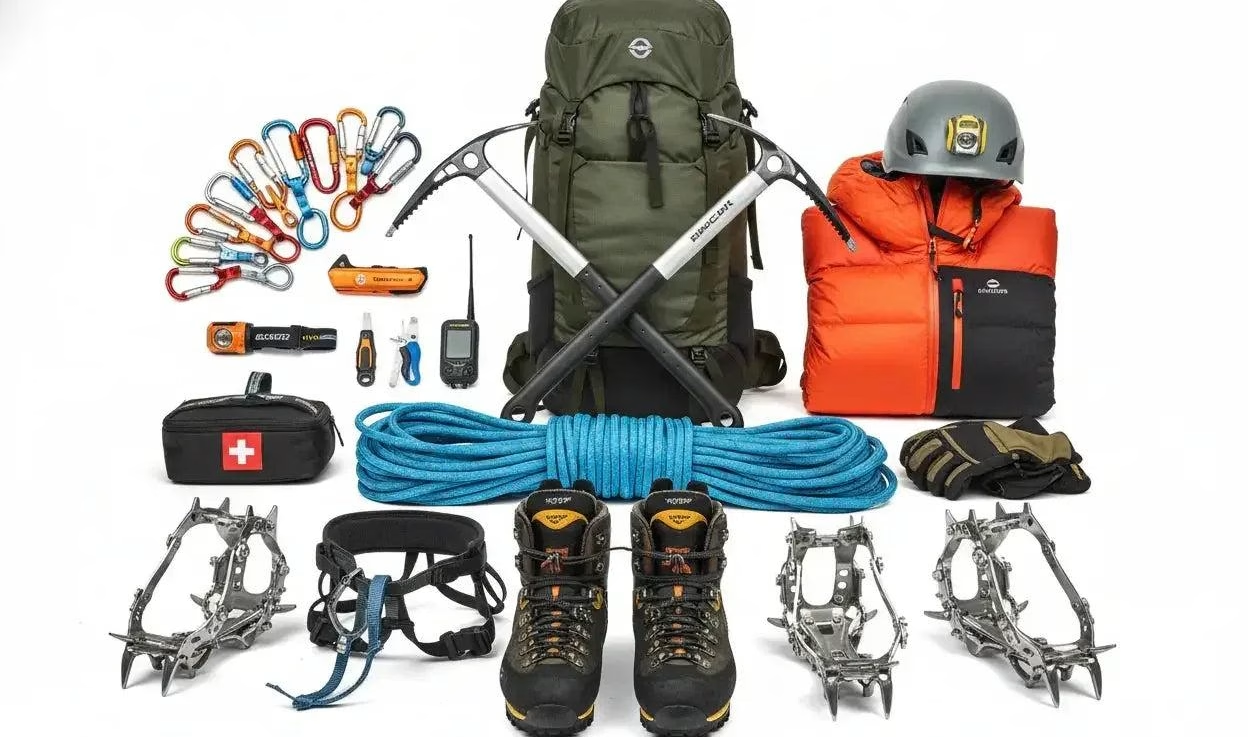
C. Technical Mountain Climbing Equipment
Technical climbing equipment is essential when crossing glaciers, climbing snow slopes and negotiating fixed ropes.
The following items are commonly required for Nepal trekking peaks and mountaineering routes, depending on the route and climbing conditions.
| Equipment | Purpose |
|---|---|
| Climbing helmet | Protection against falling objects and impacts |
| Mountaineering harness | Connecting the climber to the rope system |
| Ice axe | Balance, support and self-arrest where appropriate |
| Crampons | Secure movement on snow and ice |
| Ascender / Jumar | Ascending fixed ropes |
| Belay device | Rope management and controlled descent |
| Locking carabiners | Secure connections |
| Non-locking carabiners | Equipment and rope-system connections |
| Climbing slings | Anchoring and attachment |
| Prusik loops | Backup and rope-based systems |
| Safety lanyard | Attachment to fixed protection where appropriate |
| Climbing helmet-compatible headlamp | Hands-free lighting |
These items must be appropriate for the climbing route and compatible with one another.
For example, crampons must fit the mountaineering boots correctly, and the harness must fit comfortably over the clothing worn during the climb.
Climbers should also learn how to use each piece of equipment before the expedition rather than attempting to understand technical gear for the first time on the mountain.
D. Headwear and Hand Protection
Your head, face and hands are particularly vulnerable to cold temperatures and strong mountain winds.
Recommended headwear:
- Warm wool or synthetic beanie.
- Sun hat or baseball cap.
- Balaclava.
- Neck gaiter or Buff.
- Glacier sunglasses.
- Snow goggles.
Recommended hand protection:
- Lightweight liner gloves.
- Mid-weight insulated gloves.
- Waterproof climbing gloves.
- Heavy insulated summit mittens.
- Expedition down mittens for very cold conditions.
It is advisable to carry spare gloves because wet or damaged gloves can quickly become a serious problem in cold environments.
E. Sleeping Equipment
Good-quality sleeping equipment is important for recovery during multi-day climbing expeditions.
At high-altitude camps, temperatures can fall significantly below freezing, particularly during the night.
Recommended sleeping equipment:
- High-altitude sleeping bag.
- Sleeping bag liner.
- Insulated sleeping mat.
- Inflatable pillow (optional).
- Lightweight camp pillow.
- Sleeping bag compression sack.
- Dry bags for keeping sleeping equipment protected.
The sleeping bag temperature rating should be selected according to expected overnight temperatures and the manufacturer’s rating system. For many 6,000-metre peak climbs, a sleeping bag around -20°C is commonly considered, but the actual requirement varies by season, route and camp altitude.
For more demanding expeditions, a colder-rated expedition sleeping bag may be necessary.
F. Backpack and Duffel Bags
A suitable backpack helps you carry essential items comfortably during the trek and climbing period.
Recommended bags:
- 35–45 litre daypack.
- Larger expedition backpack where required.
- Waterproof duffel bag.
- Backpack rain cover.
- Small personal dry bags.
- Lightweight stuff sacks.
- Duffel bag lock.
A 35–45 litre backpack is often suitable for carrying personal essentials during trekking and climbing, although the exact capacity depends on the expedition arrangement.
Your main duffel bag is generally used for clothing and personal equipment transported by porters or expedition support staff.
G. Trekking and Personal Accessories
In addition to technical equipment, several small accessories can make your climbing experience more comfortable.
Recommended accessories:
- Trekking poles.
- Headlamp with spare batteries.
- Water bottles.
- Insulated thermos flask.
- Water purification tablets or filter.
- Power bank.
- Camera and spare batteries.
- Universal travel adapter.
- GPS device or watch where appropriate.
- Sunglasses.
- Sunscreen SPF 50+.
- SPF lip balm.
- Quick-drying towel.
- Reusable dry bags.
- Small repair kit.
- Personal toiletries.
A headlamp is particularly important because summit attempts often begin during the night or early morning.
Keep spare batteries protected from extreme cold, as low temperatures can reduce battery performance.
H. Personal First Aid and Medical Kit
A personal first-aid kit is an important part of every mountain climbing equipment list.
Recommended items include:
- Personal prescription medicines.
- Blister treatment supplies.
- Adhesive bandages.
- Antiseptic wipes.
- Medical tape.
- Small dressing materials.
- Pain relief medication if appropriate.
- Oral rehydration salts.
- Personal hygiene supplies.
- Hand sanitiser.
- High-altitude medication only as prescribed by a qualified medical professional.
Climbers should discuss altitude-related health risks with a medical professional before travelling.
A first-aid kit does not replace professional medical support, proper acclimatization or an emergency evacuation plan.
I. Important Documents and Travel Essentials
Before travelling to Nepal, prepare the following documents:
- Valid passport.
- Nepal tourist visa.
- Recent passport-size photographs if required.
- Trekking and climbing permits.
- Comprehensive travel insurance.
- Emergency contact information.
- Flight tickets and travel itinerary.
- Copies of important travel documents.
- Relevant medical information.
- Climbing experience records where required by the expedition.
Travel insurance is particularly important. Ensure that your policy specifically covers the maximum altitude and mountaineering activities planned, including emergency helicopter evacuation and medical treatment where applicable.
3. Mountain Climbing Equipment for Different Himalayan Peaks in Nepal
Not every Himalayan mountain requires the same climbing equipment. The technical difficulty, altitude, weather conditions and climbing route determine what you need to carry.
Here is a general comparison of equipment requirements for popular climbing objectives in Nepal.
Island Peak (6,189m)
Island Peak is one of the most popular introductory Himalayan climbing peaks.
It involves glacier travel, snow slopes and fixed-rope climbing sections.
Important equipment includes:
- Insulated mountaineering boots.
- Crampons.
- Ice axe.
- Climbing harness.
- Helmet.
- Ascender or Jumar.
- Belay device.
- Locking carabiners.
- Insulated gloves.
- Warm summit clothing.
- Glacier sunglasses.
Explore our Island Peak Climb with Everest Base Camp Trek for details of the climbing programme and equipment arrangements.
Mera Peak (6,476m)
Mera Peak is famous for its impressive high-altitude summit and spectacular views of the Himalayan giants.
Although much of the standard route is considered less technically demanding than some other trekking peaks, its altitude and cold conditions make proper equipment essential.
Important equipment includes:
- Insulated mountaineering boots.
- Crampons.
- Ice axe.
- Climbing harness.
- Helmet.
- Warm down jacket.
- Waterproof outer clothing.
- Glacier sunglasses.
- Warm gloves and mittens.
- High-altitude sleeping bag.
Lobuche East (6,119m)
Lobuche East offers a more technical climbing experience than many standard trekking peaks.
The equipment requirements depend on the selected route and current mountain conditions.
Important equipment includes:
- Mountaineering boots.
- Crampons.
- Ice axe.
- Climbing harness.
- Helmet.
- Ascender.
- Belay device.
- Carabiners and slings.
- Insulated climbing clothing.
- Glacier protection equipment.
Ama Dablam (6,812m)
Ama Dablam is one of the most beautiful and technically demanding mountains in Nepal.
Unlike introductory trekking peaks, Ama Dablam requires previous technical mountaineering experience and confidence on exposed rock, snow and ice terrain.
Its equipment requirements are considerably more advanced and may include:
- Technical mountaineering boots.
- High-quality crampons.
- Technical climbing harness.
- Climbing helmet.
- Ice axe and technical climbing tools as required.
- Ascenders and descenders.
- Locking and non-locking carabiners.
- Climbing slings and safety lanyards.
- Technical gloves and insulated mittens.
- Expedition-grade down clothing.
- Appropriate high-altitude sleeping equipment.
For climbers interested in this challenging expedition, explore our Ama Dablam Climb – 15 Days Technical Expedition.
Remember: This comparison is a general guide. Your climbing leader must confirm the final equipment list based on the chosen route, season and expedition conditions.
4. Equipment Differences: 6,000m, 7,000m and 8,000m Expeditions
One of the most common mistakes among new mountaineers is assuming that the same equipment can be used for every mountain.
A 6,000-metre trekking peak and an 8,000-metre expedition have very different environmental and technical demands.
| Equipment category | 6,000m peaks | 7,000m peaks | 8,000m peaks |
|---|---|---|---|
| Mountaineering boots | Insulated, crampon-compatible | More protective expedition boots | High-altitude double or triple boots |
| Down clothing | Heavy insulated jacket | Expedition-grade insulation | Full expedition down suit |
| Sleeping bag | Commonly around -20°C, depending on conditions | Colder expedition-rated bag | Often around -35°C to -40°C, depending on conditions |
| Crampons | Suitable mountaineering crampons | Expedition-grade crampons | Expedition-grade crampons |
| Climbing equipment | Standard technical climbing kit | Advanced expedition kit | Full expedition climbing systems |
| Oxygen system | Generally not required | Route and expedition dependent | Commonly used on many commercial expeditions |
| Technical experience | Previous trekking and climbing preparation | Strong mountaineering experience | Extensive high-altitude experience |
The temperature figures above are planning examples, not guaranteed minimum requirements. Always follow the expedition leader’s specifications and equipment compatibility requirements.
5. What Climbing Equipment Can You Rent or Buy in Kathmandu?
Kathmandu is a convenient place to prepare for a Himalayan trekking or climbing expedition.
The Thamel area has numerous outdoor equipment shops selling trekking clothing, sleeping bags, backpacks, mountaineering accessories and other travel essentials.
Depending on the climbing programme, some personal equipment can also be rented.
Items commonly available to purchase or rent include:
- Down jackets.
- Sleeping bags.
- Trekking poles.
- Backpacks.
- Waterproof jackets and trousers.
- Trekking boots.
- Gloves and hats.
- Crampons and ice axes.
- Climbing harnesses.
- Helmets.
- Headlamps.
However, availability, quality and sizes can vary between shops.
Which Equipment Should You Bring from Home?
We recommend bringing your own:
- Well-fitted trekking and mountaineering boots.
- Personal base layers and underwear.
- Comfortable trekking socks.
- Personal prescription medicines.
- Sunglasses and prescription eyewear.
- Personal climbing clothing.
- Any specialist equipment that requires a precise fit.
Boots are particularly important. It is better to use a familiar, properly fitted pair that you have already tested.
Which Equipment Can You Rent in Kathmandu?
Depending on availability and quality, you may rent:
- Sleeping bags.
- Down jackets.
- Trekking poles.
- Backpacks.
- Some climbing hardware.
- Other expedition accessories.
Before renting technical equipment, inspect its condition and ensure that it is appropriate for your climbing objective. Do not use damaged or poorly maintained safety equipment.
6. Personal Equipment vs Group Climbing Equipment
It is important to understand the difference between personal equipment and group climbing equipment before joining an expedition.
Personal Equipment
These are items each climber is generally responsible for bringing or arranging.
Examples include:
- Clothing and footwear.
- Sleeping bag.
- Personal backpack.
- Headlamp.
- Sunglasses.
- Personal climbing harness.
- Helmet.
- Gloves.
- Personal toiletries.
- Individual medical kit.
Group Climbing Equipment
Group equipment is normally organised by the expedition operator and climbing team according to the route and conditions.
Examples may include:
- Fixed ropes.
- Dynamic climbing ropes.
- Ice screws.
- Snow anchors.
- Group communication equipment.
- Base camp tents.
- Dining and kitchen tents.
- Group medical equipment.
- Technical rescue equipment.
The exact arrangement varies between climbing programmes. Always check what your package includes before purchasing or renting expensive equipment.
7. Important Safety Tips Before Your Mountain Climbing Expedition
Having the right equipment is only one part of safe mountaineering. Knowing how to use it correctly is equally important.
Here are some important preparation tips.
1. Test all your equipment before departure
Do not wait until reaching base camp to discover that your boots, harness or gloves are uncomfortable.
2. Check crampon compatibility
Your crampons must fit your mountaineering boots correctly. Practise fitting and removing them before the climb.
3. Learn basic climbing techniques
Understand how to use an ice axe, harness, ascender and belay device under the supervision of a qualified climbing instructor.
4. Dress in layers
Avoid wearing too many layers during strenuous walking. Adjust your clothing to prevent excessive sweating and becoming cold during rest periods.
5. Protect yourself from the sun
High-altitude sunlight and snow reflection can be intense. Use suitable glacier sunglasses, sunscreen and lip protection.
6. Keep essential items dry
Use waterproof bags to protect spare clothing, sleeping equipment, electronics and documents.
7. Follow proper acclimatization
Do not rush the ascent. Follow the planned acclimatization schedule and report symptoms of altitude illness immediately to your guide.
8. Understand emergency procedures
Know how to communicate with your climbing team and understand the evacuation arrangements and insurance coverage.
9. Check the weather
Mountain conditions can change rapidly. Summit attempts should always depend on weather, route conditions and the climbing leader’s safety assessment.
10. Never compromise on safety equipment
Avoid using damaged, unsuitable or incompatible climbing equipment just to save money or reduce weight.
8. How to Prepare Physically for Mountain Climbing in Nepal
Physical preparation is just as important as choosing the correct equipment.
Himalayan climbing requires cardiovascular endurance, leg strength, balance and mental resilience.
We recommend starting a structured training programme several months before your expedition, depending on your current fitness and climbing objective.
Useful preparation activities include:
- Regular uphill hiking.
- Stair climbing with a weighted backpack.
- Long-distance walking.
- Cardiovascular training.
- Leg-strength exercises.
- Core-strength exercises.
- Balance and stability training.
- Practice hikes in varied terrain.
If you are preparing for your first Himalayan climbing experience, consider completing a demanding trek before attempting a technical peak.
Our Best Nepal Trekking Guide provides an introduction to the different trekking experiences available in Nepal.
You can also explore our Trekking in Nepal programmes to find an adventure suited to your experience and fitness level.
9. Best Time for Mountain Climbing in Nepal
Nepal offers different climbing opportunities throughout the year, although spring and autumn are generally the main seasons for Himalayan mountaineering.
Spring Season (March–May)
Spring is one of the most popular climbing seasons in Nepal.
Advantages include:
- Generally favourable climbing opportunities.
- Longer daylight hours.
- Warmer temperatures at lower elevations.
- Popular climbing and expedition programmes.
- Beautiful mountain scenery.
Autumn Season (September–November)
Autumn is another excellent season for Himalayan adventures.
Advantages include:
- Generally clearer mountain views after the monsoon.
- Pleasant conditions at lower elevations.
- Popular trekking and climbing opportunities.
- Excellent photography conditions.
However, the best season varies according to the mountain, route and weather pattern. Some expeditions have specific seasonal windows.
For your planned expedition, consult your climbing operator before finalising travel dates and equipment purchases.
10. Why Choose Nepal Tours Packages for Your Himalayan Climbing Adventure?
Choosing a reliable local operator is an important part of planning a Himalayan climbing adventure.
At Nepal Tours Packages, we specialise in private and tailor-made trekking, peak climbing and Himalayan travel experiences.
With more than 25 years of local tourism experience, our team understands the importance of preparation, proper logistics, experienced mountain staff and personalised support.
We focus on:
- Experienced local trekking and climbing teams.
- Carefully designed itineraries.
- Proper acclimatization planning.
- Reliable climbing and trekking logistics.
- Equipment guidance before departure.
- Quality accommodation and transportation.
- Personalised private climbing programmes.
- Safety-focused expedition planning.
Whether you are planning your first trekking peak or a more demanding Himalayan expedition, we can help you understand the requirements and prepare accordingly.
Explore our Nepal trekking and adventure packages to discover different mountain experiences.
You can also browse our complete Nepal tour and adventure packages.
11. Final Mountain Climbing Equipment Checklist
The following summary can be used as a practical packing checklist before travelling to Nepal.
Clothing
- Thermal base-layer tops.
- Thermal base-layer bottoms.
- Fleece jacket.
- Softshell jacket.
- Warm down jacket.
- Waterproof climbing jacket.
- Waterproof trousers.
- Trekking trousers.
- Warm climbing trousers.
- Insulated summit clothing as required.
Footwear
- Trekking boots.
- Mountaineering boots.
- Wool or thermal socks.
- Liner socks.
- Gaiters.
- Camp shoes.
- Spare boot laces.
Technical Climbing Equipment
- Climbing helmet.
- Mountaineering harness.
- Crampons.
- Ice axe.
- Ascender / Jumar.
- Belay device.
- Locking carabiners.
- Non-locking carabiners.
- Climbing slings.
- Prusik loops.
- Safety lanyard where required.
Head and Hand Protection
- Sun hat.
- Warm beanie.
- Balaclava.
- Neck gaiter.
- Glacier sunglasses.
- Snow goggles.
- Liner gloves.
- Insulated gloves.
- Summit mittens.
Sleeping and Backpacking
- High-altitude sleeping bag.
- Sleeping bag liner.
- Insulated sleeping mat where required.
- Daypack.
- Duffel bag.
- Waterproof backpack cover.
- Dry bags.
Personal Accessories
- Headlamp and spare batteries.
- Trekking poles.
- Water bottles.
- Insulated thermos.
- Water purification system.
- Power bank.
- Camera.
- Sunscreen.
- Lip balm.
- Toiletries.
- Personal first-aid kit.
- Personal medication.
Documents
- Passport.
- Nepal visa.
- Climbing permits.
- Travel insurance.
- Emergency contact details.
- Travel documents.
Tick off each item after confirming that it is suitable for your particular mountain, route and expedition arrangements. Some equipment will be supplied by the climbing operator.
12. Frequently Asked Questions About Mountain Climbing Equipment
1. What equipment do I need for mountain climbing in Nepal?
You need suitable mountaineering clothing, insulated boots, crampons, an ice axe, climbing harness, helmet, gloves, sleeping bag, backpack, headlamp, sunglasses and personal safety accessories. The exact list depends on your climbing destination and altitude.
2. Can I rent mountain climbing equipment in Kathmandu?
Yes. Many trekking and mountaineering shops in Thamel offer equipment for rent and purchase. However, we recommend bringing your own properly fitted boots, personal clothing and essential items.
3. Do I need special boots for Island Peak climbing?
Yes. Island Peak requires suitable insulated mountaineering boots that are compatible with the crampons used for the climbing route.
4. What sleeping bag is required for Himalayan climbing?
A sleeping bag rated around -20°C is a common starting point for many 6,000-metre climbing programmes. Colder-rated sleeping bags may be necessary for higher or colder expeditions.
5. Is climbing equipment provided by Nepal Tours Packages?
Equipment arrangements depend on the selected climbing package. Certain group climbing equipment and technical gear may be included, while personal clothing and footwear are generally the climber’s responsibility. We confirm the exact inclusions before departure.
6. What is the difference between trekking and mountaineering equipment?
Trekking equipment is primarily designed for walking on mountain trails, whereas mountaineering equipment includes specialised safety gear such as crampons, ice axes, climbing harnesses, helmets and rope systems for snow, ice and technical terrain.
7. Do beginners need previous climbing experience?
Not necessarily for some introductory trekking peaks. However, good physical fitness, high-altitude trekking preparation and basic mountaineering training are essential. More technical mountains require previous climbing experience.
8. What is the best season for mountain climbing in Nepal?
Spring (March–May) and autumn (September–November) are the principal climbing seasons for many Himalayan peaks. The ideal period depends on the specific mountain and route.
9. How much does mountain climbing equipment cost?
The cost depends on equipment quality, brand, technical specifications and whether you purchase or rent it. Specialist mountaineering boots, technical clothing and safety equipment can represent a significant investment.
10. How can I get a mountain climbing equipment list for my Nepal expedition?
Contact Nepal Tours Packages with your preferred mountain, climbing dates and experience level. Our team can provide a more specific equipment checklist according to your expedition arrangements.
Plan Your Himalayan Climbing Adventure with Nepal Tours Packages
A successful Himalayan climbing adventure begins long before reaching the mountain. Proper equipment, physical preparation, experienced guides and careful expedition planning all contribute to a safer and more rewarding experience.
Whether you are preparing for Island Peak, Mera Peak, Lobuche East or a more technical mountain such as Ama Dablam, choosing the right equipment is an essential part of your preparation.
At Nepal Tours Packages, we are committed to helping travellers experience the Himalayas through professionally organised, personalised and safety-focused adventures.
Our local team can assist with itinerary planning, climbing logistics, accommodation, transportation, permits and equipment guidance.
Explore our Nepal Tour Packages and Nepal Trekking Adventures to discover your next Himalayan journey.
Ready to climb a Himalayan peak?
Contact our team to discuss your preferred mountain, travel dates and climbing experience.
- Website: https://nepaltourspackages.com/
- Email: nepalholidaytravels@gmail.com
- WhatsApp: +977 9851150010
Your Himalayan adventure starts with the right preparation.
About the Author
Kishor Nepal – Co-Founder & Holiday Expert, Nepal Bhutan & Tibet
Kishor Nepal is a local travel expert with more than 25 years of experience in Nepal’s tourism industry. As Co-Founder of Nepal Tours Packages, he specialises in private tailor-made holidays, Himalayan trekking, peak climbing, cultural journeys and multi-country adventures across Nepal, Bhutan and Tibet.
With extensive local knowledge and first-hand experience in Nepal’s tourism sector, Kishor is passionate about helping international travellers discover the Himalayas, understand local cultures and experience Nepal through authentic and responsibly organised journeys.
His focus is on personalised service, experienced local teams, quality travel arrangements and meaningful mountain experiences.
