

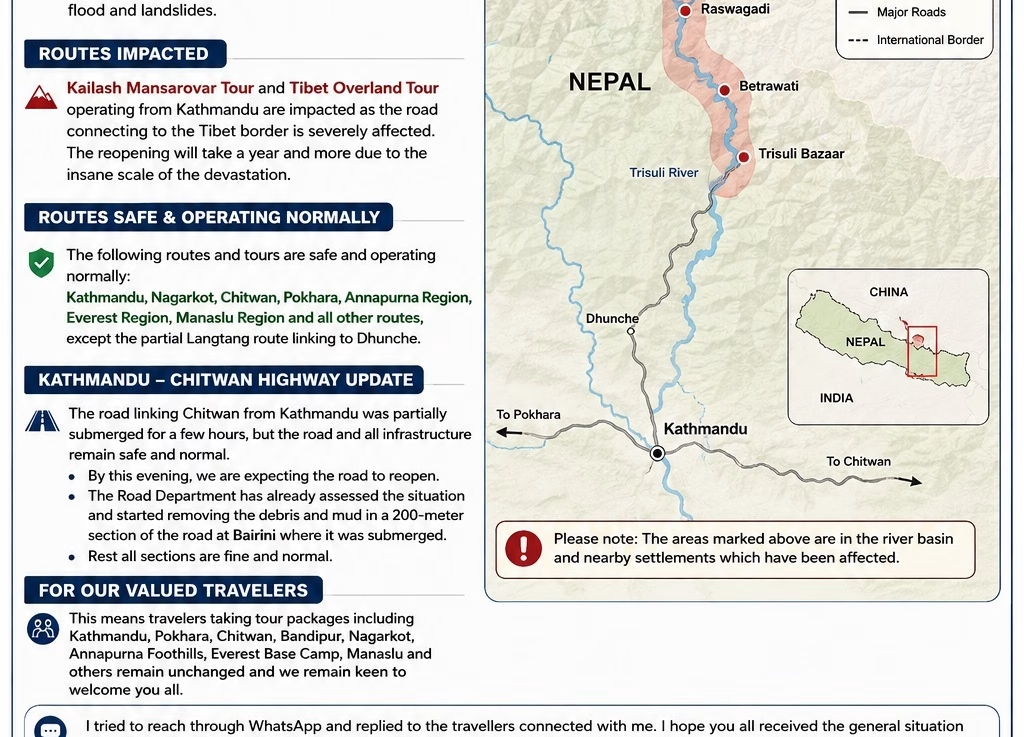
The devastating flash flood that struck the Nepal–Tibet border on 26 August 2026 has understandably raised an important question for travellers planning to visit Nepal:
Is Nepal Safe to Travel After the Flash Flood at the Nepal–Tibet Border?
The short answer is: the situation is serious in the directly affected areas, but the disaster is geographically concentrated and does not mean that the whole of Nepal is affected in the same way.
The most severe destruction has occurred around the Rasuwa–Bhotekoshi–Trishuli corridor, including areas around Rasuwagadhi, Timure and Syabrubesi, with flooding and infrastructure damage extending downstream. The Nepal Tourism Board has advised travellers to avoid affected areas and postpone non-essential travel to locations impacted by the disaster.
At the same time, many of Nepal’s major tourist destinations are outside the immediate flood-affected zone.
However, road conditions, weather and access routes can change quickly, so travellers should check the latest local information before starting an overland journey.
What Happened at the Nepal–Tibet Border?
On 26 August 2026, a catastrophic flash flood and debris flow struck the Bhotekoshi/Lhende River corridor in Rasuwa District, close to the Nepal–Tibet border.
The flood caused extensive destruction around Rasuwagadhi and Timure and affected settlements and infrastructure downstream. Roads, bridges, homes, hydropower facilities and border infrastructure were damaged or destroyed.
The floodwater subsequently travelled through the Trishuli River system, creating serious risks for communities farther downstream.
The scale of the disaster has resulted in a major national rescue operation involving the Nepal Army, Nepal Police, Armed Police Force, medical teams and local communities. Helicopters have been deployed to evacuate people from locations that cannot be reached by road.
The situation remains active, and authorities are continuing rescue, search and relief operations.
Is Nepal Safe to Travel After the Flash Flood at the Nepal–Tibet Border? – Tourist Areas and Travel Updates
There is an important distinction between:
1. The flood-affected areas, and
2. Other parts of Nepal that are geographically separate from the disaster zone.
The flood has not affected every tourist destination in Nepal.
However, at this moment, it would also be irresponsible to say that every destination and every road in Nepal is completely safe.
For travellers, the most important consideration is not only whether the destination itself has been flooded, but also whether the road, bridge, airport or trekking route required to reach it is operational.
For this reason, we recommend travellers consider their itinerary destination-by-destination rather than treating the entire country as either “safe” or “unsafe.”
Which Tourist Areas in Nepal Are Currently Affected?
1. Rasuwa and the Langtang Region – Major Disruption
Rasuwa is one of the most seriously affected areas.
The flood directly affected the Bhotekoshi corridor, including Rasuwagadhi, Timure and surrounding settlements.
The normal road corridor toward the Nepal–Tibet border has suffered major damage, and access remains restricted.
This has implications for:
- Langtang Trek
- Gosainkunda Trek
- Rasuwagadhi
- Nepal–Tibet overland tours
- Tibet tours entering through Rasuwagadhi
- Other travel using the Dhunche–Syabrubesi corridor
Travellers should not currently travel into the affected sections without confirmation from local authorities and their trekking or travel operator.
2. Gosainkunda Trek – Temporarily Suspended Via Dhunche
The Gosainkunda trekking route via Dhunche has been temporarily affected by the recent disaster.
The Government and relevant authorities are working to restore access and, if necessary, establish alternative routes.
For travellers planning later in the season, the situation may improve considerably once restoration work is completed.
Our current expectation is that the route can be restored before the main autumn trekking season, but this should be treated as a forecast rather than a guarantee until the authorities confirm reopening.
Travellers planning Gosainkunda should therefore check the route status before departure.
3. Langtang Trek – Current Situation
The Langtang region is also accessed through Rasuwa, meaning that the damage to the road corridor has an important impact on Langtang trekking arrangements.
This does not necessarily mean that the entire Langtang trekking trail has been destroyed.
The immediate issue is safe access to the trekking starting area.
Until the road and trail access are officially assessed and reopened, travellers should postpone journeys into the affected corridor.
For future travellers, we will continue monitoring the condition of the route and provide updates as access becomes available.
4. Kathmandu Valley – Outside the Main Flood Disaster Zone
Kathmandu Valley itself is not the centre of the Rasuwa–Bhotekoshi disaster.
Major cultural attractions such as:
- Kathmandu Durbar Square
- Swayambhunath
- Pashupatinath Temple
- Boudhanath Stupa
- Patan Durbar Square
- Bhaktapur Durbar Square
are geographically separate from the main flood-affected corridor.
However, travellers should still consider how they are travelling to and from Kathmandu, particularly if their itinerary involves long-distance overland travel.
For a normal Kathmandu Valley sightseeing programme, the flood at the Nepal–Tibet border does not mean that Kathmandu’s major cultural sites have been swept away or closed.
5. Pokhara – Not Directly Affected by the Rasuwa Flood
Pokhara is geographically separate from the Rasuwa–Bhotekoshi flood zone.
The famous tourist attractions around Pokhara, including:
- Phewa Lake
- Sarangkot
- World Peace Pagoda
- Davis Falls
- Gupteshwor Cave
- Begnas Lake
are not located in the direct flood corridor that was devastated at the Nepal–Tibet border.
However, there is an important distinction:
Destination safety and road safety are different things.
The condition of the road connecting Kathmandu with Pokhara can be affected by landslides, flooding and other monsoon-related disruptions.
Therefore, travellers planning to travel overland from Kathmandu to Pokhara should check the latest road conditions before departure.
If road conditions are unsuitable, travellers may consider flying between Kathmandu and Pokhara where flights are operating normally.
6. Chitwan – Check the Route Before Travelling
Chitwan National Park is another major tourist destination that is outside the immediate Rasuwa–Bhotekoshi flood corridor.
The main attractions include:
- Chitwan National Park
- Jungle safari
- Canoeing
- Birdwatching
- Tharu cultural experiences
- Wildlife observation
However, because Chitwan is reached from Kathmandu through major highway corridors that can experience monsoon-related disruption, the current road condition must be checked before travelling.
In other words:
Chitwan itself should not be confused with the Rasuwa flood zone, but access from Kathmandu must be checked.
7. Everest Region – Different Geographic Area
The Everest region is also not located in the Rasuwa–Bhotekoshi flood corridor.
Everest Base Camp trekking normally begins with travel toward Lukla, followed by trekking through the Khumbu region.
Therefore, the Rasuwa disaster does not automatically mean that the Everest Base Camp trekking trail has been affected.
However, weather remains an important factor for Lukla flights, especially during the monsoon season.
Travellers planning Everest trekking should therefore check:
- Lukla flight operations
- Weather conditions
- Trekking trail conditions
- Local government notices
- Current trekking permits and access requirements
8. Annapurna Region – Outside the Rasuwa Flood Zone
The Annapurna region is located in a different part of Nepal from Rasuwa.
Popular trekking routes such as:
- Annapurna Circuit
- Annapurna Base Camp
- Ghorepani Poon Hill
- Mardi Himal
are not located in the direct flood corridor that was devastated at the Nepal–Tibet border.
Nevertheless, Nepal is currently experiencing the monsoon season, and landslides and road conditions can affect individual routes independently of the Rasuwa disaster.
For this reason, travellers should obtain a current route assessment before setting out.
9. Mustang – Different Region and a Possible Alternative
Mustang is geographically separate from the Rasuwa flood zone.
For travellers who have had to reconsider a Tibet journey, Upper Mustang can provide an interesting alternative, particularly because of its dramatic Himalayan landscapes and strong Tibetan cultural influence.
Upper Mustang offers:
- Lo Manthang
- Tibetan Buddhist monasteries
- Ancient cave settlements
- High-altitude desert landscapes
- Traditional Mustang villages
- Tibetan-influenced culture
For travellers who originally planned a Tibet experience and cannot travel through the affected Nepal–Tibet border, Nepal’s Upper Mustang region may be worth considering as an alternative itinerary.
Travel timing and route conditions should still be assessed carefully, particularly during the monsoon.
10. Nepal’s Other Tourist Destinations
Nepal is a geographically diverse country.
The recent flood has been devastating in the affected river corridors, but it does not mean that all of Nepal’s mountains, cities, national parks and tourism areas have been affected equally.
Other destinations can include:
- Kathmandu Valley
- Pokhara
- Annapurna region
- Everest region
- Lumbini
- Bandipur
- Bardia National Park
- Upper Mustang
However, each route must be assessed individually, especially during the monsoon season.
What About Nepal–Tibet Overland Tours?
This is one of the areas most seriously affected.
The Rasuwagadhi–Gyirong border corridor has suffered severe damage.
As a result, normal tourism movement through this route has been disrupted.
We had initially hoped that the Tatopani/Zhangmu border could provide an alternative route for travellers. Unfortunately, the latest information indicates that the border is not currently being reopened for normal new tourism permits and is being prioritised for rescue and people already trapped in the affected region.
Therefore, travellers with existing Tibet overland arrangements should not assume that another border will automatically become available.
We are continuing to monitor official information and will update affected travellers as soon as reliable information becomes available.
What About Travelling to Lhasa by Flight?
For travellers considering replacing a Nepal–Tibet overland journey with a flight to Lhasa, this is technically a different type of experience.
A flight itinerary can allow travellers to visit Lhasa and other parts of Tibet subject to current Chinese/Tibet travel regulations and permits.
However, it does not provide the same experience as travelling overland from Kathmandu.
There can also be a significant cost difference because of:
- International/sector flight arrangements
- Limited flight availability
- Internal Tibet flights
- Permits
- Accommodation
- Acclimatisation requirements
- Additional transportation within Tibet
For travellers who specifically wanted the overland experience, postponing the journey may therefore be preferable.
What Is the Safest Way to Travel in Nepal Right Now?
For travellers already in Nepal or arriving soon, we recommend a few simple principles.
1. Avoid the directly affected areas
Do not travel toward:
Rasuwagadhi – Timure – affected Bhotekoshi corridor – severely affected sections of Rasuwa and downstream flood zones
unless authorities and your local operator confirm that travel is safe.
2. Check roads before every long-distance journey
A road that was open yesterday may be blocked today because of a landslide or flood.
3. Consider domestic flights where appropriate
For destinations such as Pokhara, flying can sometimes reduce dependence on long-distance roads.
Flights remain weather-dependent, particularly during monsoon.
4. Travel with a local operator
A local operator can monitor:
- Road conditions
- Weather
- Airport operations
- Trekking routes
- Government notices
- Local conditions
This is especially important after a major natural disaster.
5. Do not rely only on social media
There is a large amount of rapidly changing information online.
Some reports may be outdated, exaggerated or incorrect.
Travellers should rely on official government information and experienced local operators for route-specific advice.
Nepal Army and Rescue Teams Continue Working
The Nepal Army has played a central role in the emergency response.
Army helicopters and ground teams have been deployed to rescue people from affected areas, while medical teams have provided assistance to injured survivors.
Nepal Army personnel have also been involved in transporting emergency relief materials to communities that have been cut off by damaged roads and bridges.
The Government has also ordered free medical treatment for people injured in the Rasuwa disaster through government and military medical facilities.
These operations are continuing under extremely difficult conditions.
Is Nepal Safe to Travel After the Flash Flood at the Nepal–Tibet Border? – Our First-Hand Situation Update
As a Nepal-based travel company, we are closely monitoring the situation.
Some travellers who were travelling towards the Langtang and Gosainkunda areas were affected by the disruption caused by the flood.
Thankfully, we were able to coordinate their safe evacuation, and our team members and staff are safe.
We are continuing to monitor the condition of the trekking routes, roads and border areas and are advising travellers based on the latest information available to us.
Our priority is simple:
The safety of our travellers, guides, porters and local partners comes first.
We will never recommend travelling through an affected route simply to keep an itinerary running.
So, Is Nepal Safe to Travel After the Flash Flood at the Nepal–Tibet Border?
The answer depends on where you are travelling.
The Rasuwa–Bhotekoshi–Trishuli disaster zone:
❌ Avoid / travel suspended until authorities confirm safe access.
Rasuwagadhi and the Nepal–Tibet border:
❌ Severely affected; normal tourism access disrupted.
Langtang / Gosainkunda via affected Rasuwa access routes:
⚠️ Temporarily affected; check for reopening and alternative routes.
Kathmandu Valley:
✅ Outside the direct flood zone, but check road conditions before overland travel.
Pokhara:
✅ Outside the direct Rasuwa flood zone; check the Kathmandu–Pokhara road or consider flights.
Chitwan:
✅ Outside the direct Rasuwa flood zone; check current road conditions.
Everest / Khumbu:
✅ Geographically separate from the Rasuwa disaster; check weather and Lukla flight conditions.
Annapurna:
✅ Geographically separate from the Rasuwa disaster; check local trail and road conditions.
Upper Mustang:
✅ Geographically separate; route and seasonal conditions should still be checked.
This distinction is important.
Nepal is not one single destination. It is a geographically diverse country, and the impact of the current disaster varies significantly from one region to another.
Should You Cancel Your Nepal Trip?
Not necessarily.
If your itinerary is centred around the directly affected Rasuwa–Bhotekoshi–Trishuli corridor, postponement or an alternative itinerary may be the responsible choice.
If your trip is focused on destinations such as Kathmandu, Pokhara, Chitwan, Everest or Annapurna, the situation should be assessed based on the specific route, current weather and road conditions rather than assuming that the entire country is closed.
For trips planned several weeks or months from now, the situation may be very different from what it is today.
Nepal’s authorities, security forces, local communities and tourism industry are already working to restore damaged infrastructure.
A Message to Travellers Who Love Nepal
We understand why travellers are worried.
The images coming from Rasuwa and the Nepal–Tibet border are heartbreaking.
Many people who have visited Nepal will recognise the roads, mountains and communities shown in the news. Some will have travelled through these areas only a few months ago.
But Nepal is much larger than the affected corridor.
Our message is therefore one of caution, not fear.
Please avoid the disaster-affected areas.
Please follow official advice.
Please check your route before travelling.
But do not assume that the entire country has been devastated.
Nepal’s tourism destinations are spread across a vast and geographically diverse landscape, and many remain outside the direct impact zone.
Final Travel Advice
The situation following the 26 August 2026 Nepal–Tibet border flash flood remains dynamic.
Roads, trekking routes and border crossings can change as rescue, assessment and reconstruction work continues.
If you are planning to visit Nepal, we recommend contacting your local travel operator before departure and asking for a route-specific assessment rather than simply asking whether “Nepal is safe.”
For travellers with existing bookings with us, we will continue to monitor the situation and advise individually if any change to the itinerary is required.
Traveller safety will always come before itinerary convenience.
Frequently Asked Questions
Is Nepal safe to travel after the flash flood in Nepal near the Tibet border?
Many parts of Nepal are outside the direct flood-affected area, but the Rasuwa–Bhotekoshi–Trishuli corridor has suffered severe damage and should currently be avoided unless authorities confirm safe access. Other destinations should be assessed individually based on current road, weather and route conditions.
Is Kathmandu safe after the Nepal–Tibet flood?
Kathmandu is outside the main Rasuwa–Bhotekoshi flood corridor. However, travellers should check the condition of roads connecting Kathmandu with other destinations before starting overland journeys.
Is Pokhara safe after the Nepal flash flood?
Pokhara is geographically separate from the Rasuwa disaster zone. However, the road between Kathmandu and Pokhara can be affected by monsoon conditions, so travellers should check the latest road status or consider flying.
Is Chitwan safe to visit after the Nepal flood?
Chitwan is outside the direct Rasuwa–Bhotekoshi flood corridor. However, travellers should check the current road conditions before travelling from Kathmandu.
Is Langtang safe after the Rasuwa flood?
The Langtang region is accessed through Rasuwa, and the flood has significantly affected the access corridor. Travel should be postponed until the relevant roads and trails are assessed and confirmed open.
Is Gosainkunda Trek open after the flood?
The Gosainkunda route via Dhunche is currently affected and temporarily suspended. Authorities are working to restore access and may establish alternative routing. Travellers should obtain the latest confirmation before trekking.
Can I still travel to Nepal in 2026?
Potentially, yes. Whether you should travel depends on your destination and itinerary. Travellers should avoid affected areas while assessing other destinations based on current local conditions.
Can I travel from Nepal to Tibet overland?
The recent disaster has severely disrupted the Rasuwagadhi–Gyirong border corridor. Normal tourism access is currently disrupted, and travellers should not assume that an alternative border will be available without official confirmation.
Latest Update
This article was updated on 28 August 2026.
The flood situation remains active, with rescue and relief operations continuing. Conditions around the affected Nepal–Tibet border and downstream river corridors can change rapidly. Recent reports also indicate additional flood risks associated with a debris-formed lake near the border, reinforcing the need to avoid affected areas until authorities confirm safe access.
For the latest itinerary-specific advice, please contact Nepal Tours Packages before travelling.
Kishor
WhatsApp: +9779851150010
Send us your message / Email
